Research Vessel Recommissioned at UConn Avery Point
The 19-year-old R/V Connecticut has been upgraded over the past year and now has capacity for research missions at sea of up to two weeks.
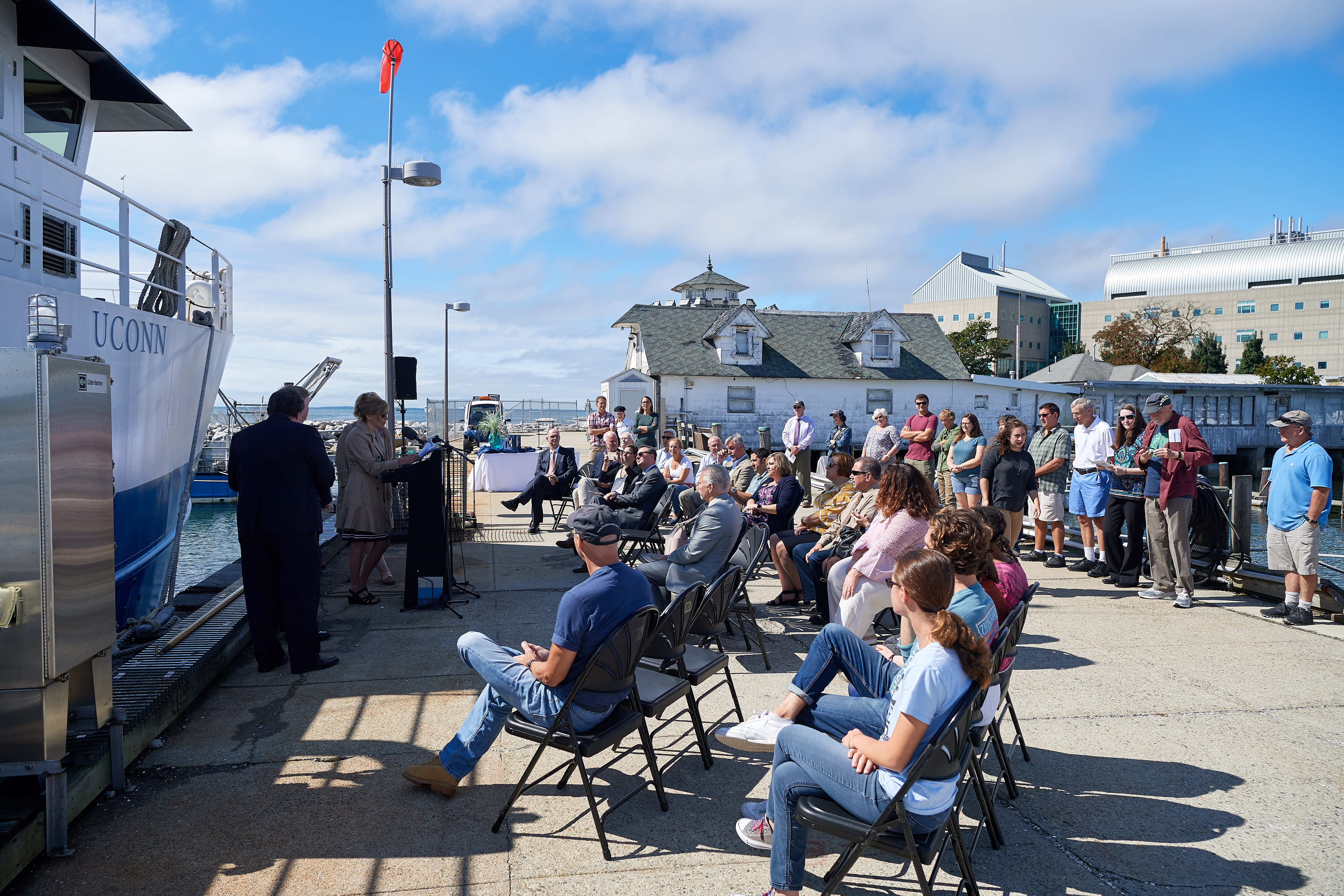
The recommissioning ceremony for the R/V Connecticut held at the Avery Point campus on Sept. 13, 2018. The 19-year-old ship has been upgraded so it has capacity for research missions at sea of up to two weeks. (Peter Morenus/UConn Photo)
The University of Connecticut held a recommissioning ceremony on Thursday morning for the school’s marine research ship, the Research Vessel Connecticut, at its home on the UConn Avery Point campus.
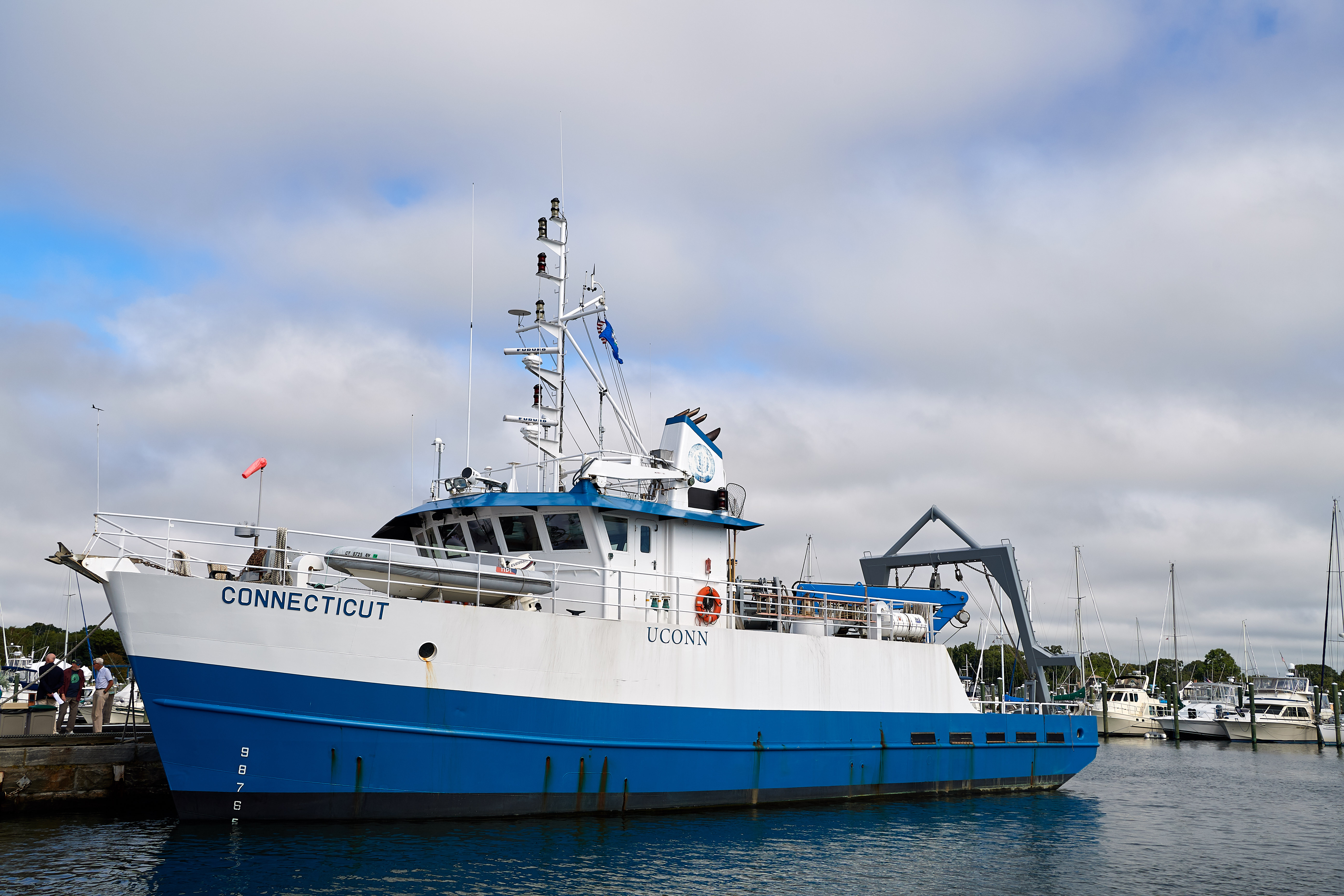
A view of the R/V Connecticut at the Avery Point campus on Sept. 13, 2018. (Peter Morenus/UConn Photo)
RVCT180913a005
A view of the R/V Connecticut at the Avery Point campus on Sept. 13, 2018. (Peter Morenus/UConn Photo)
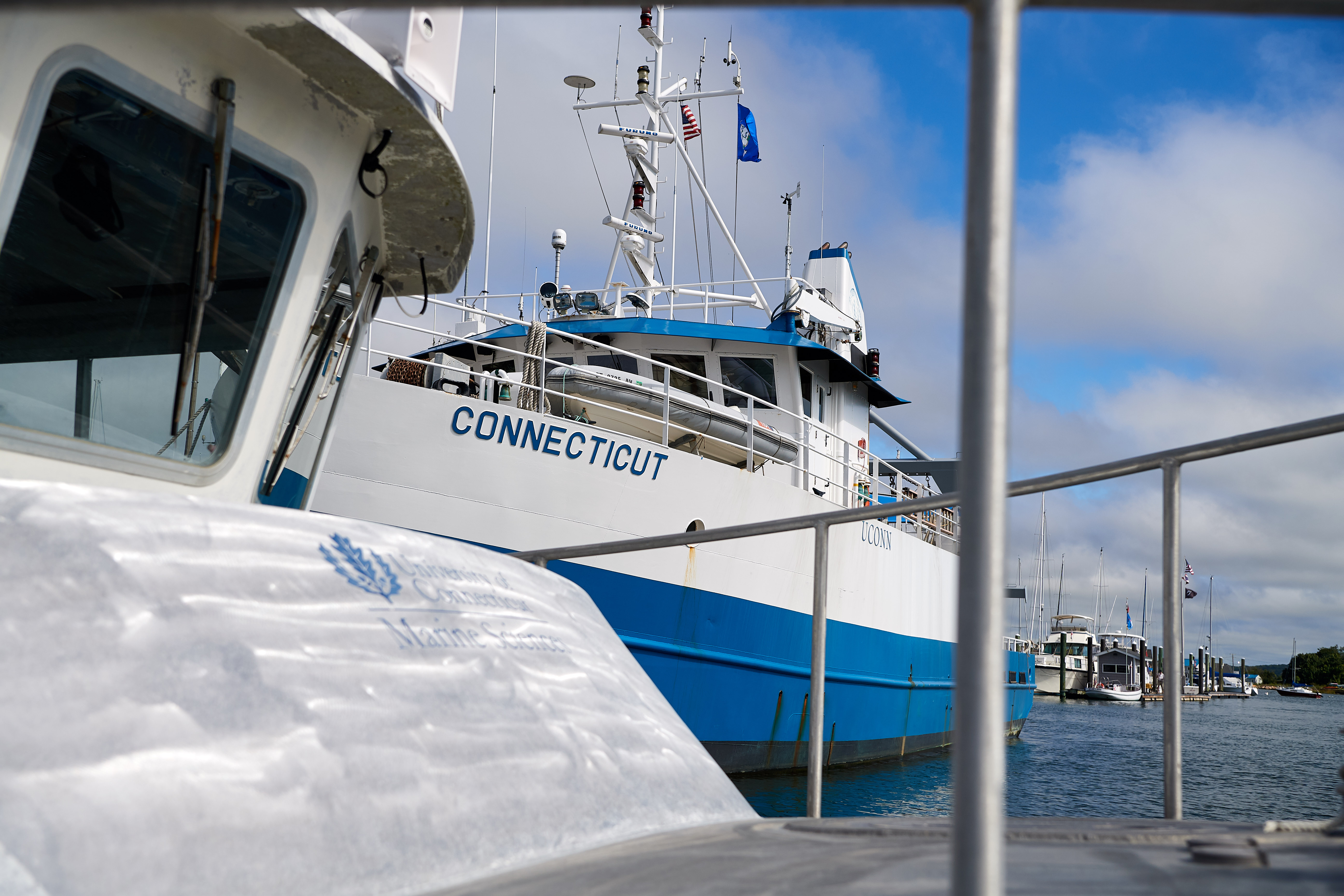
Looking over the R/V Lowell Weicker toward the R/V Connecticut docked at the Avery Point campus. (Peter Morenus/UConn Photo)
RVCT180913a008
Looking over the R/V Lowell Weicker toward the R/V Connecticut docked at the Avery Point campus. (Peter Morenus/UConn Photo)
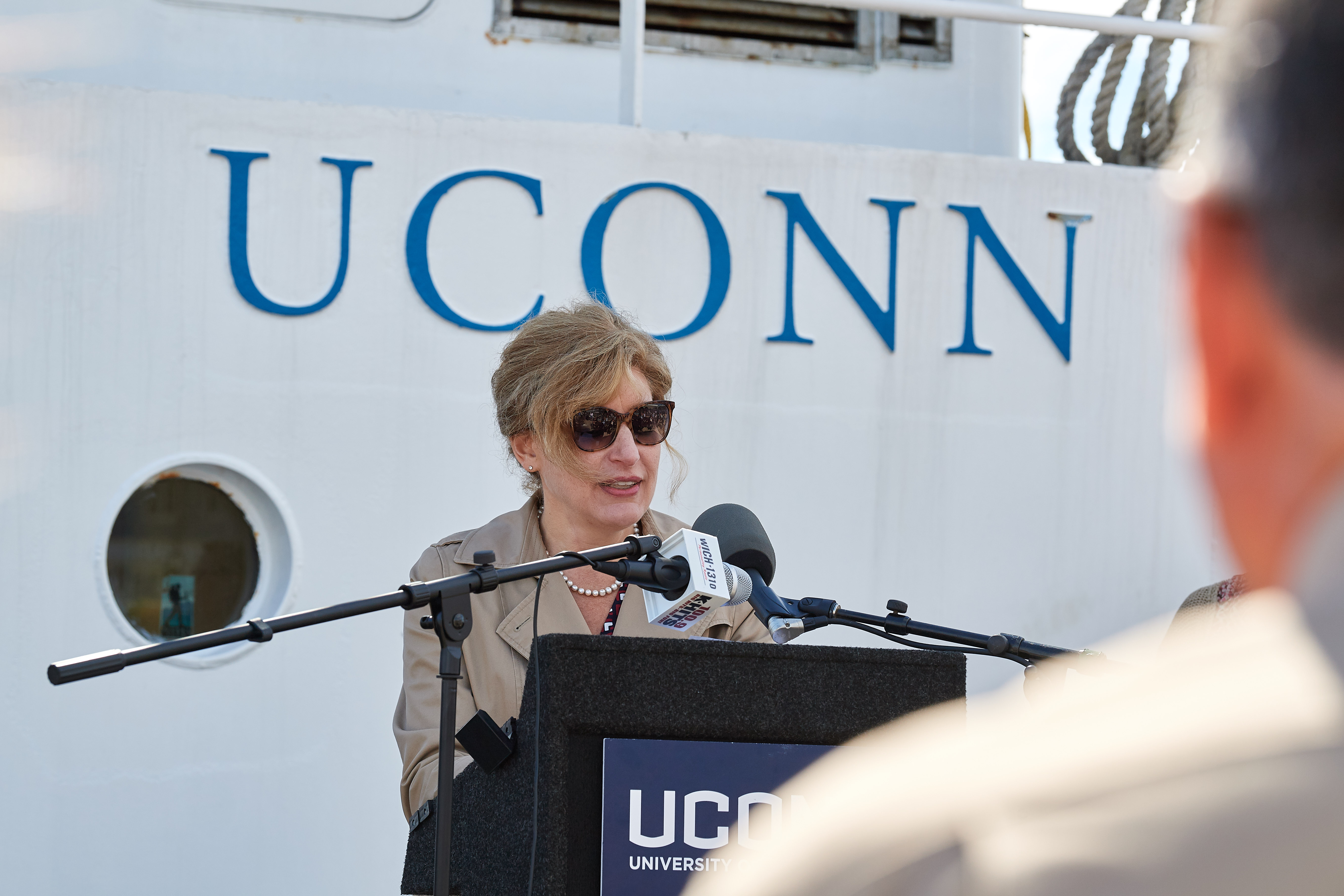
“There is great work being done on this ship, from the study of coastal resilience to the study of maritime activity,” said President Susan Herbst during the recommissioning ceremony for the R/V Connecticut. (Peter Morenus/UConn Photo)
RVCT180913a035
“There is great work being done on this ship, from the study of coastal resilience to the study of maritime activity,” said President Susan Herbst during the recommissioning ceremony for the R/V Connecticut. (Peter Morenus/UConn Photo)
The recommissioning ceremony for the R/V Connecticut held at the Avery Point campus on Sept. 13, 2018. (Peter Morenus/UConn Photo)
RVCT180913a044
The recommissioning ceremony for the R/V Connecticut held at the Avery Point campus on Sept. 13, 2018. (Peter Morenus/UConn Photo)
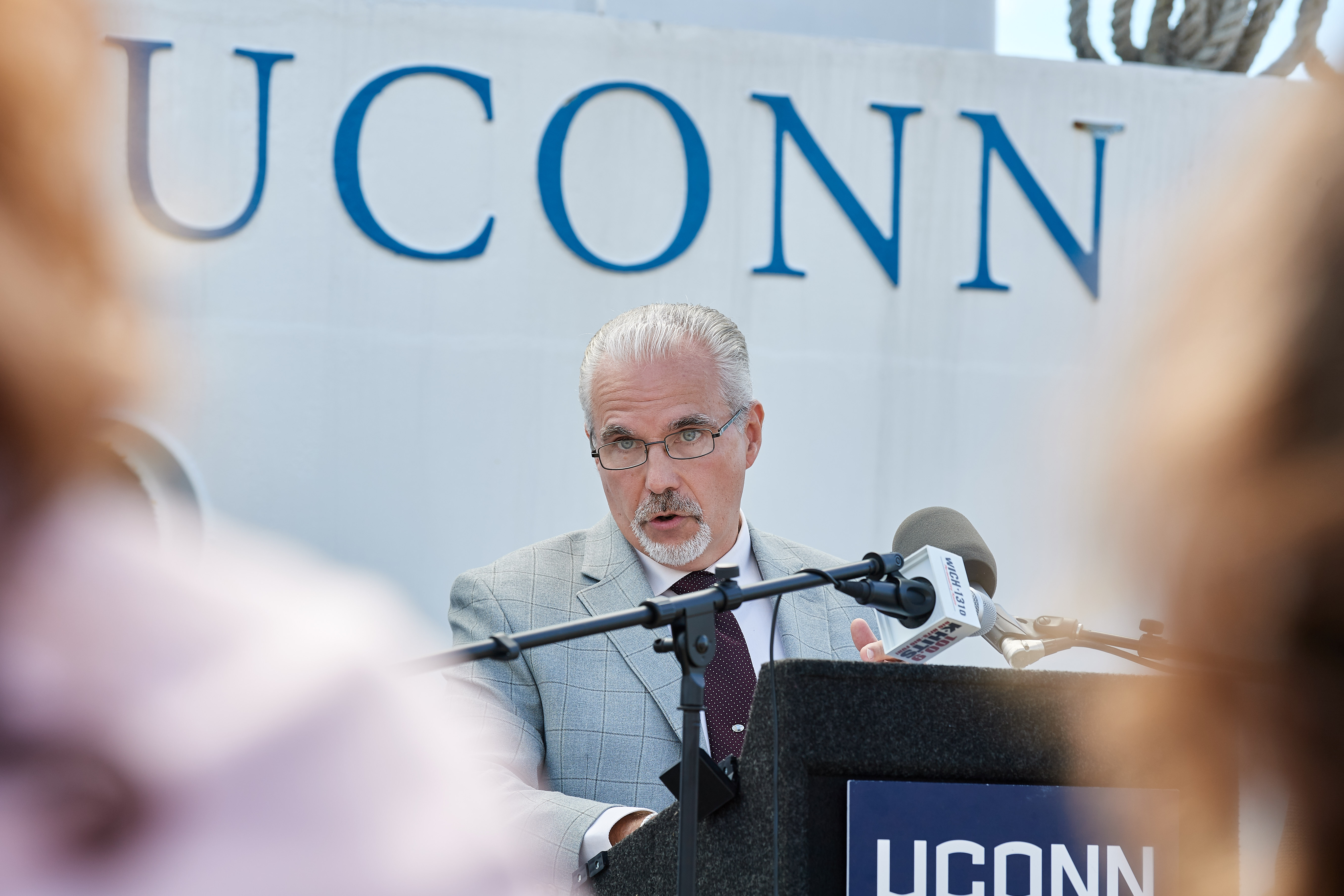
J. Evan Ward, marine sciences department head, speaks during the recommissioning ceremony. (Peter Morenus/UConn Photo)
RVCT180913a098
J. Evan Ward, marine sciences department head, speaks during the recommissioning ceremony. (Peter Morenus/UConn Photo)
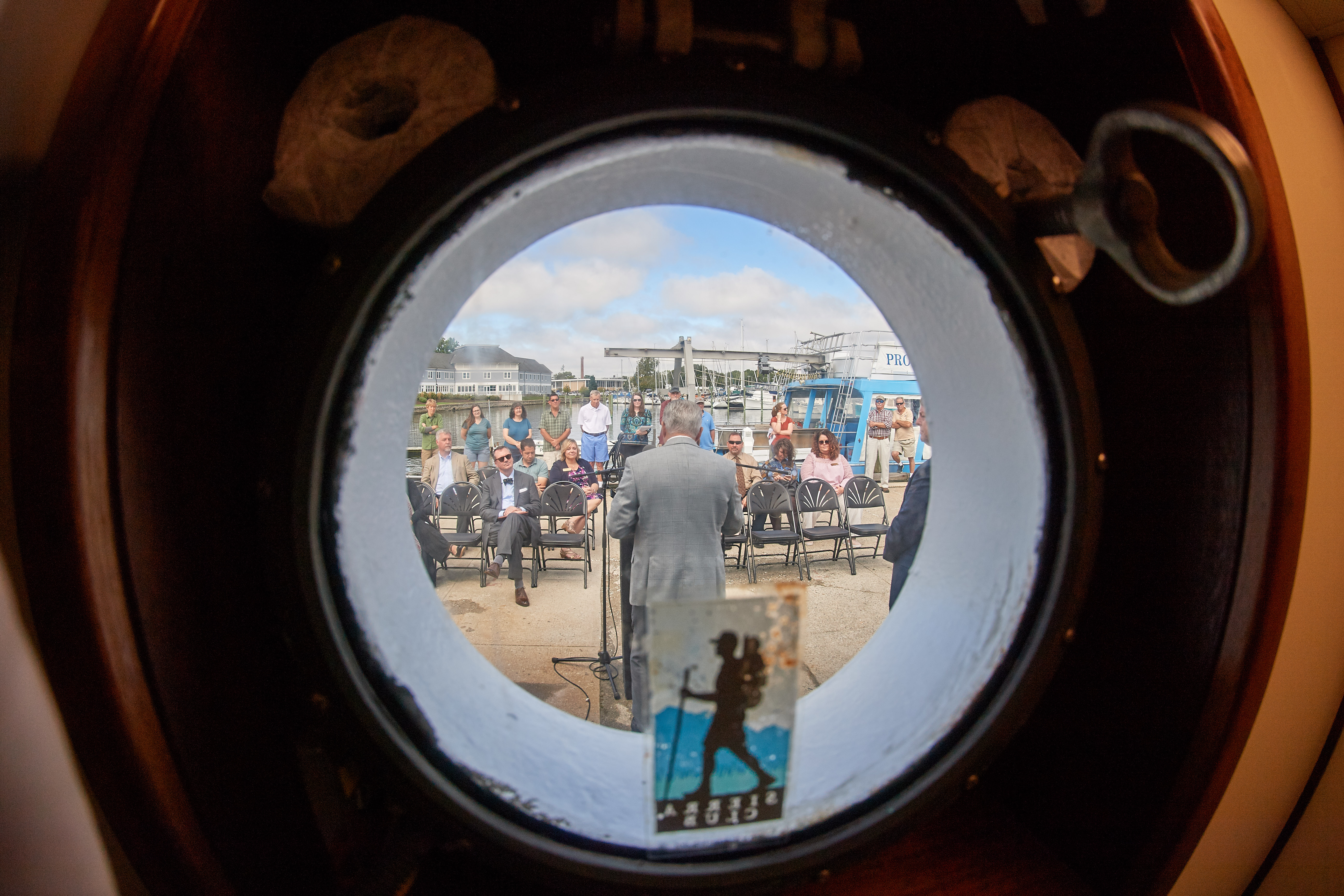
The recommissioning ceremony seen though a porthole on the R/V Connecticut. (Peter Morenus/UConn Photo)
RVCT180913a109
The recommissioning ceremony seen though a porthole on the R/V Connecticut. (Peter Morenus/UConn Photo)
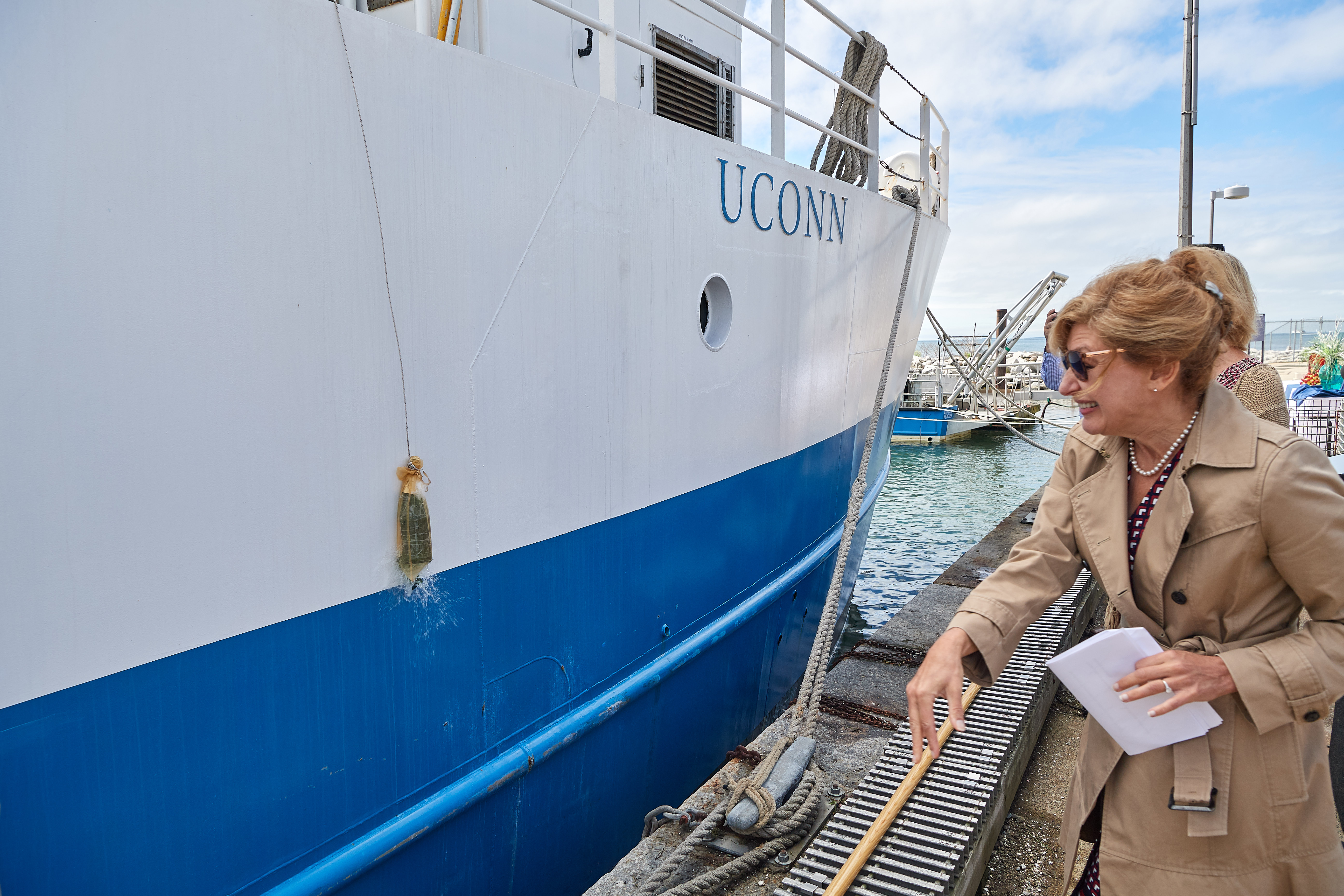
“Not every University president gets to recommission a vessel,” said President Susan Herbst, moments before she performed the traditional breaking of a bottle of champagne against the ship's hull during the recommissioning ceremony. (Peter Morenus/UConn Photo)
RVCT180913a117
“Not every University president gets to recommission a vessel,” said President Susan Herbst, moments before she performed the traditional breaking of a bottle of champagne against the ship's hull during the recommissioning ceremony. (Peter Morenus/UConn Photo)
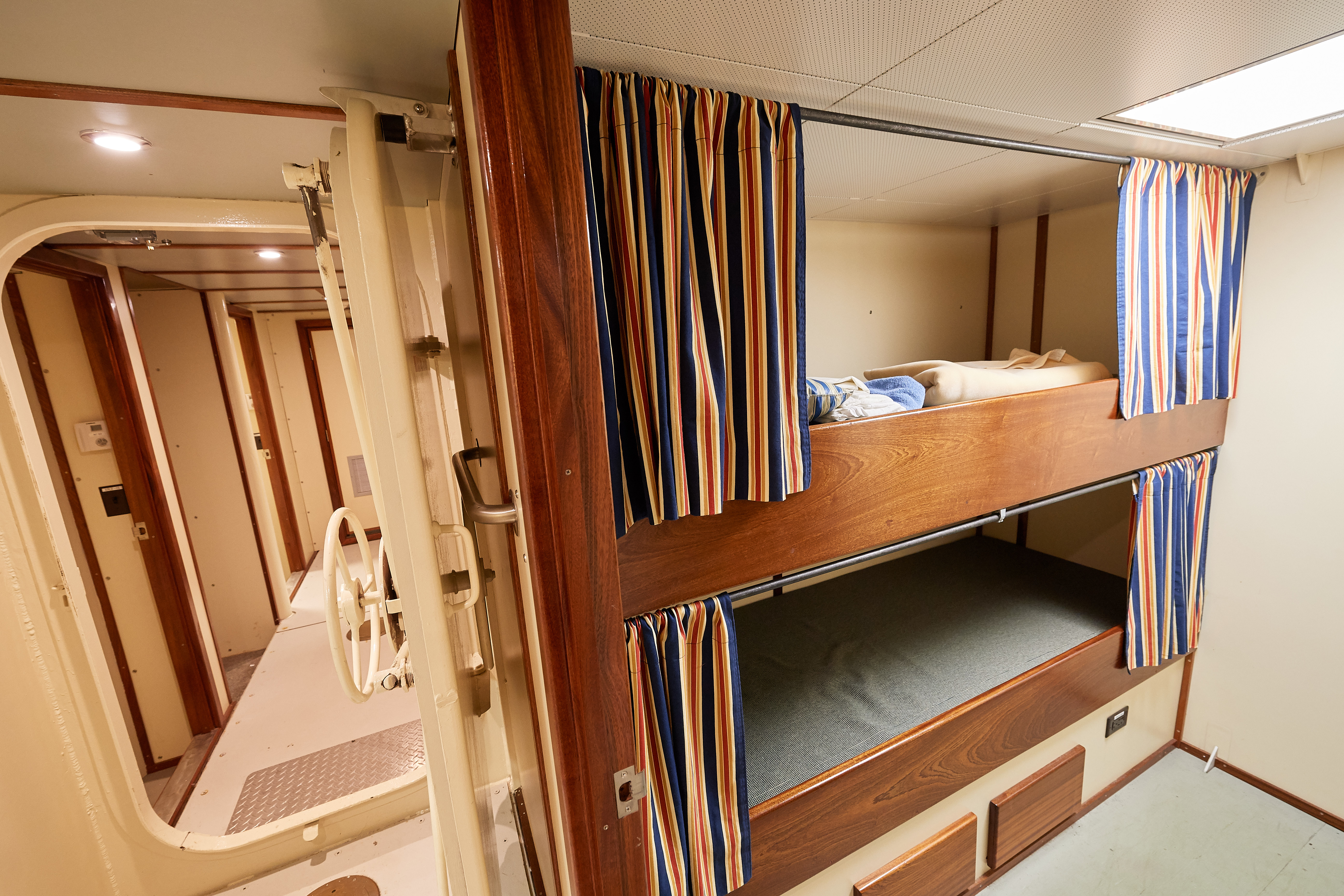
As part of a makeover of the R/V Connecticut over the past year, the number of bunks was increased from 12 to 18, allowing for missions at sea of up to 14 days. (Peter Morenus/UConn Photo)
RVCT180913a172
As part of a makeover of the R/V Connecticut over the past year, the number of bunks was increased from 12 to 18, allowing for missions at sea of up to 14 days. (Peter Morenus/UConn Photo)
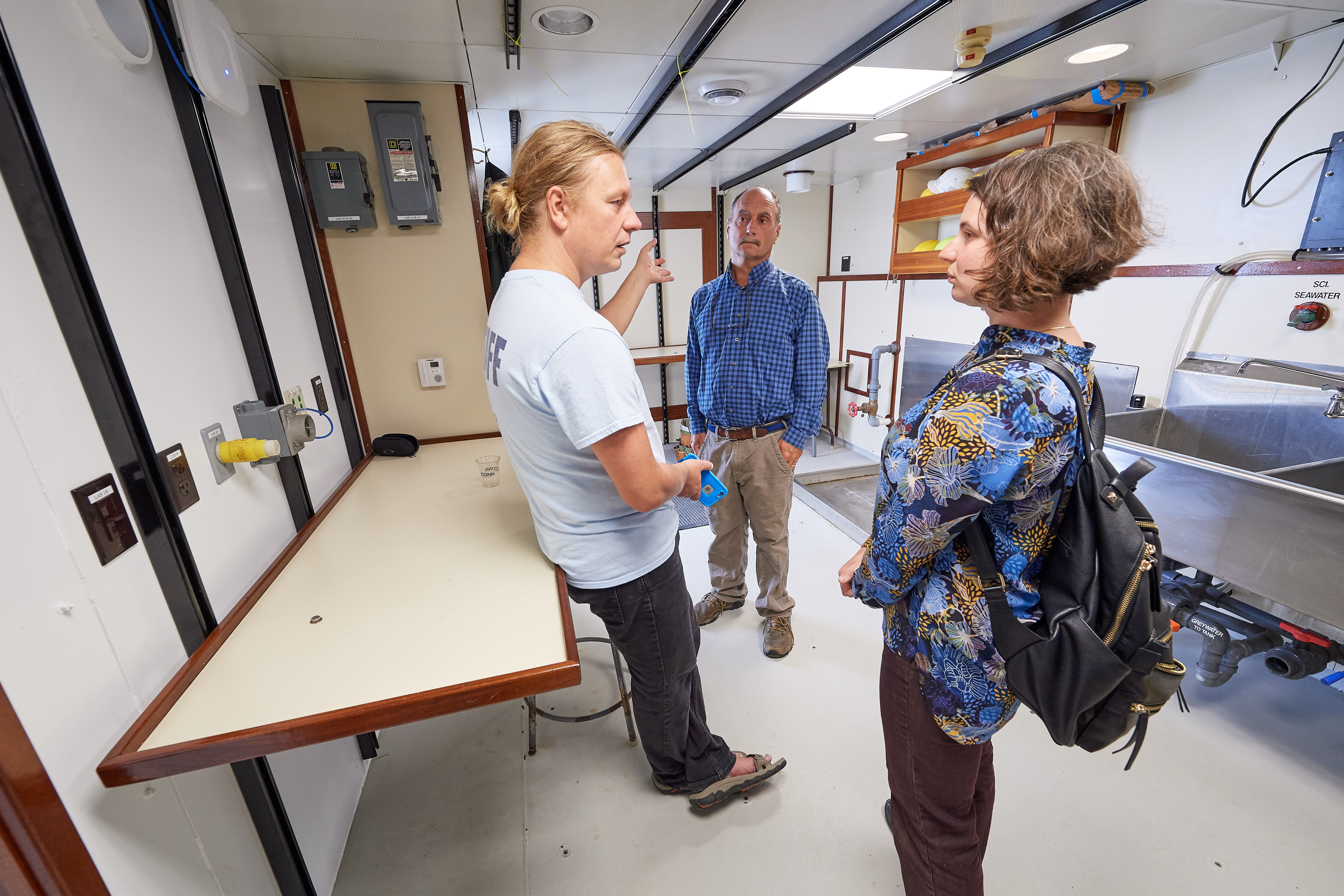
Hannes Baumann, left, assistant professor of marine sciences, speaks with Turner Cabaniss, marine and waterfront operations manager, and Zophia Baumann, assistant research professor of marine sciences, in the expanded wet laboratory space aboard the R/V Connecticut. The upgrades to the vessel included doubling the laboratory space on board. (Peter Morenus/UConn Photo)
RVCT180913a176
Hannes Baumann, left, assistant professor of marine sciences, speaks with Turner Cabaniss, marine and waterfront operations manager, and Zophia Baumann, assistant research professor of marine sciences, in the expanded wet laboratory space aboard the R/V Connecticut. The upgrades to the vessel included doubling the laboratory space on board. (Peter Morenus/UConn Photo)
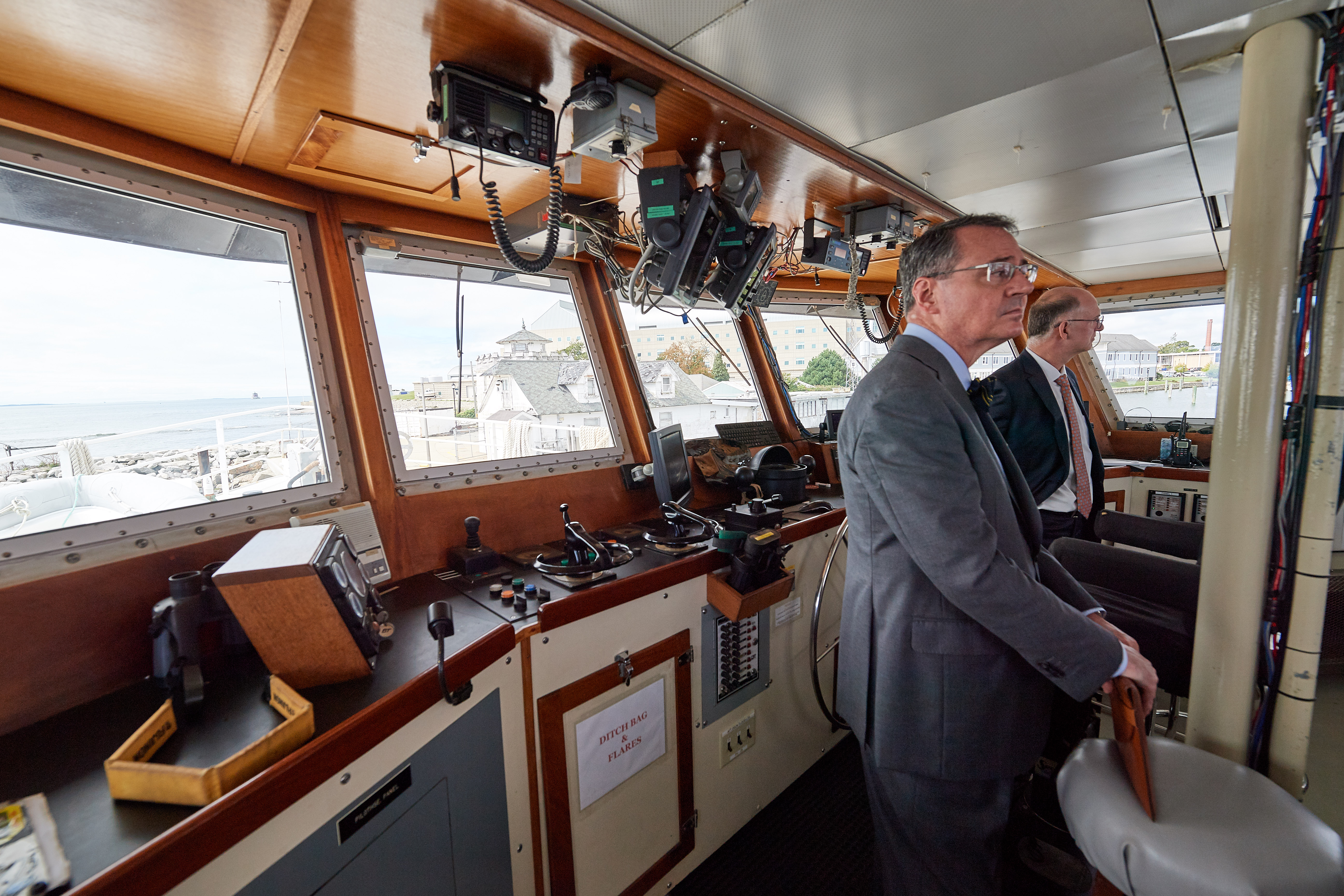
Provost Craig Kennedy and Robin Cote, associate dean of physical sciences in CLAS, check out the bridge of the R/V Connecticut after the recommissioning ceremony at the Avery Point campus on Sept. 13, 2018. (Peter Morenus/UConn Photo)
RVCT180913a178
Provost Craig Kennedy and Robin Cote, associate dean of physical sciences in CLAS, check out the bridge of the R/V Connecticut after the recommissioning ceremony at the Avery Point campus on Sept. 13, 2018. (Peter Morenus/UConn Photo)
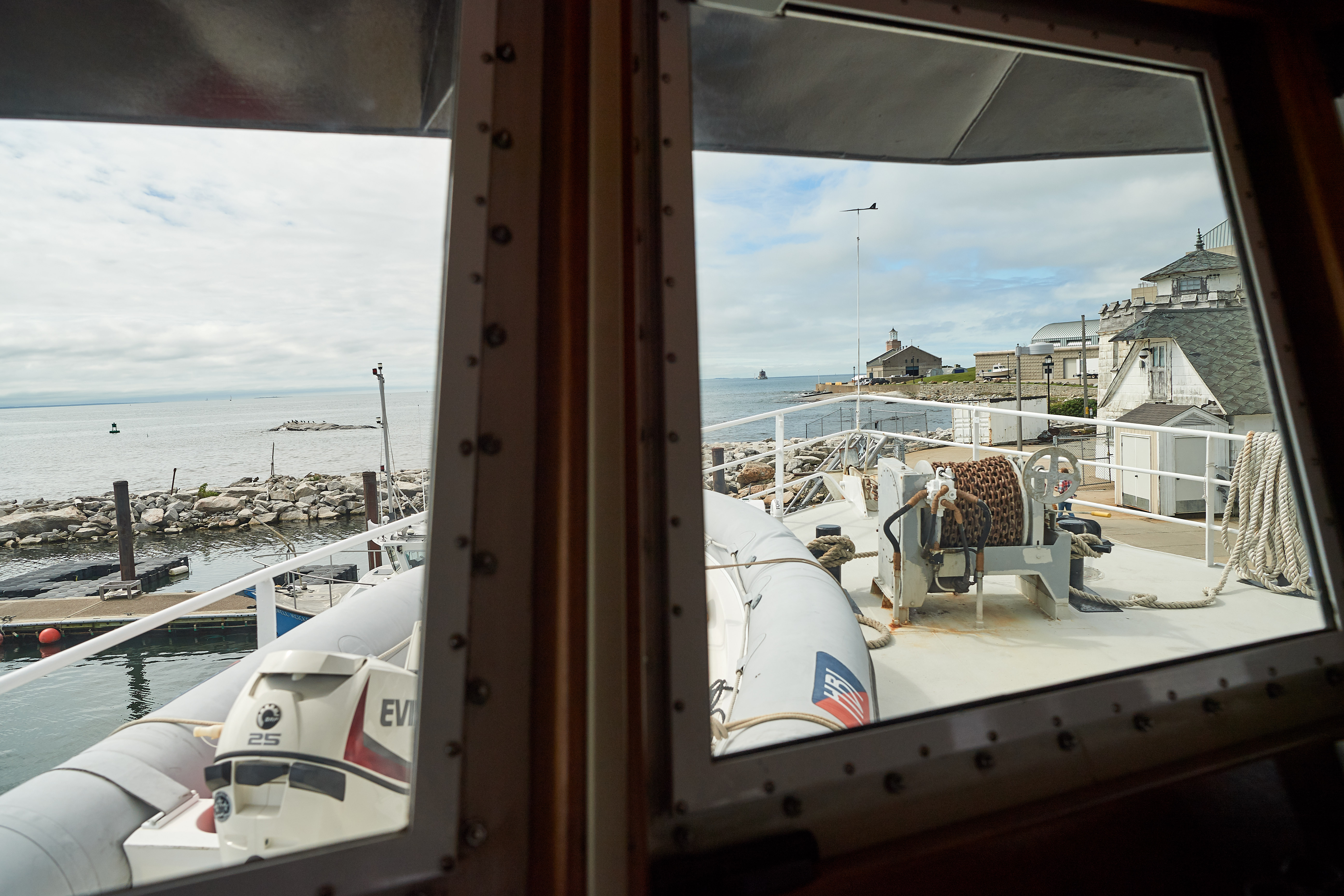
A view from the bridge of the R/V Connecticut docked at the Avery Point campus on Sept. 13, 2018. (Peter Morenus/UConn Photo)
RVCT180913a183
A view from the bridge of the R/V Connecticut docked at the Avery Point campus on Sept. 13, 2018. (Peter Morenus/UConn Photo)
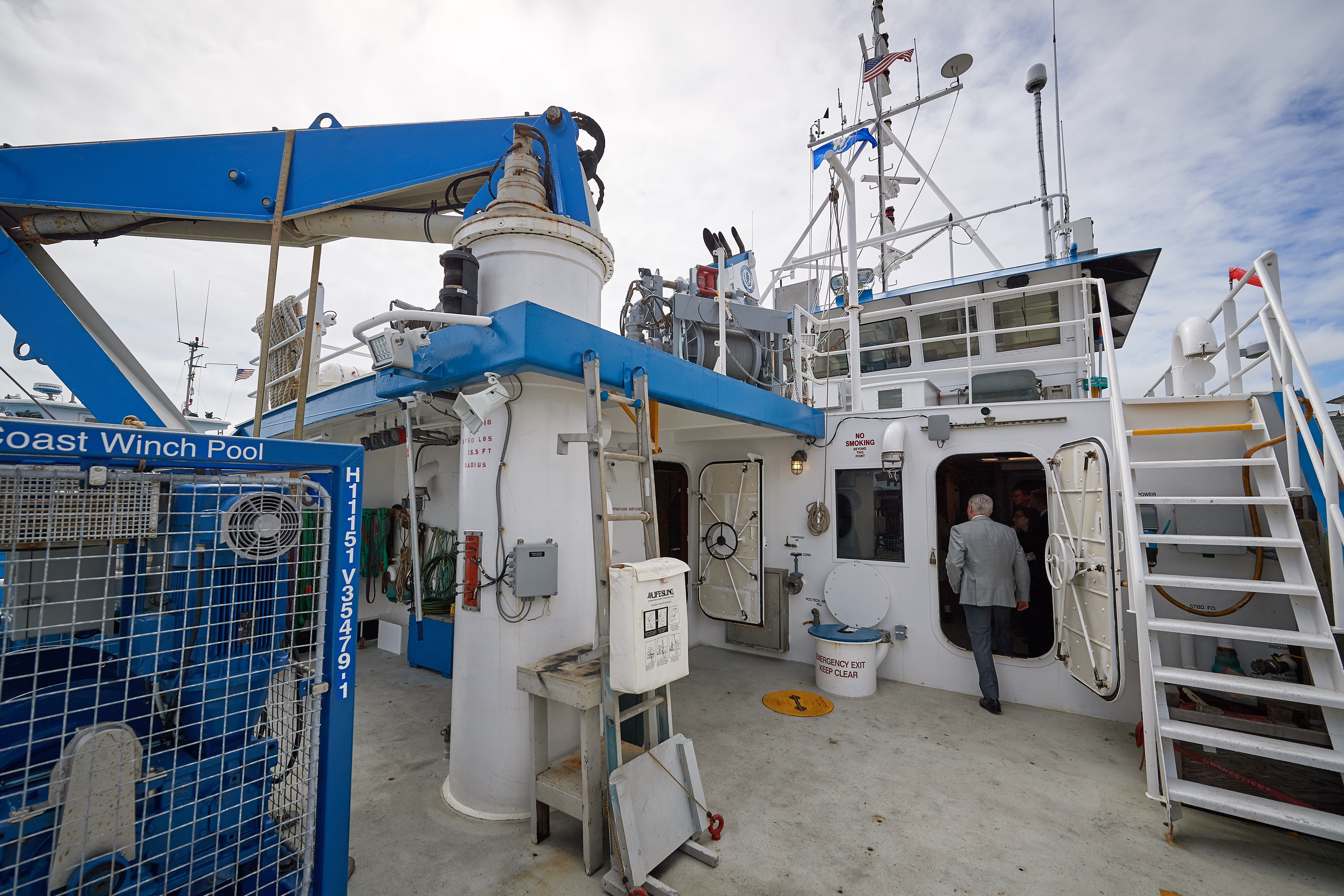
The rear of the R/V Connecticut docked at the Avery Point campus on Sept. 13, 2018. (Peter Morenus/UConn Photo)
RVCT180913a187
The rear of the R/V Connecticut docked at the Avery Point campus on Sept. 13, 2018. (Peter Morenus/UConn Photo)
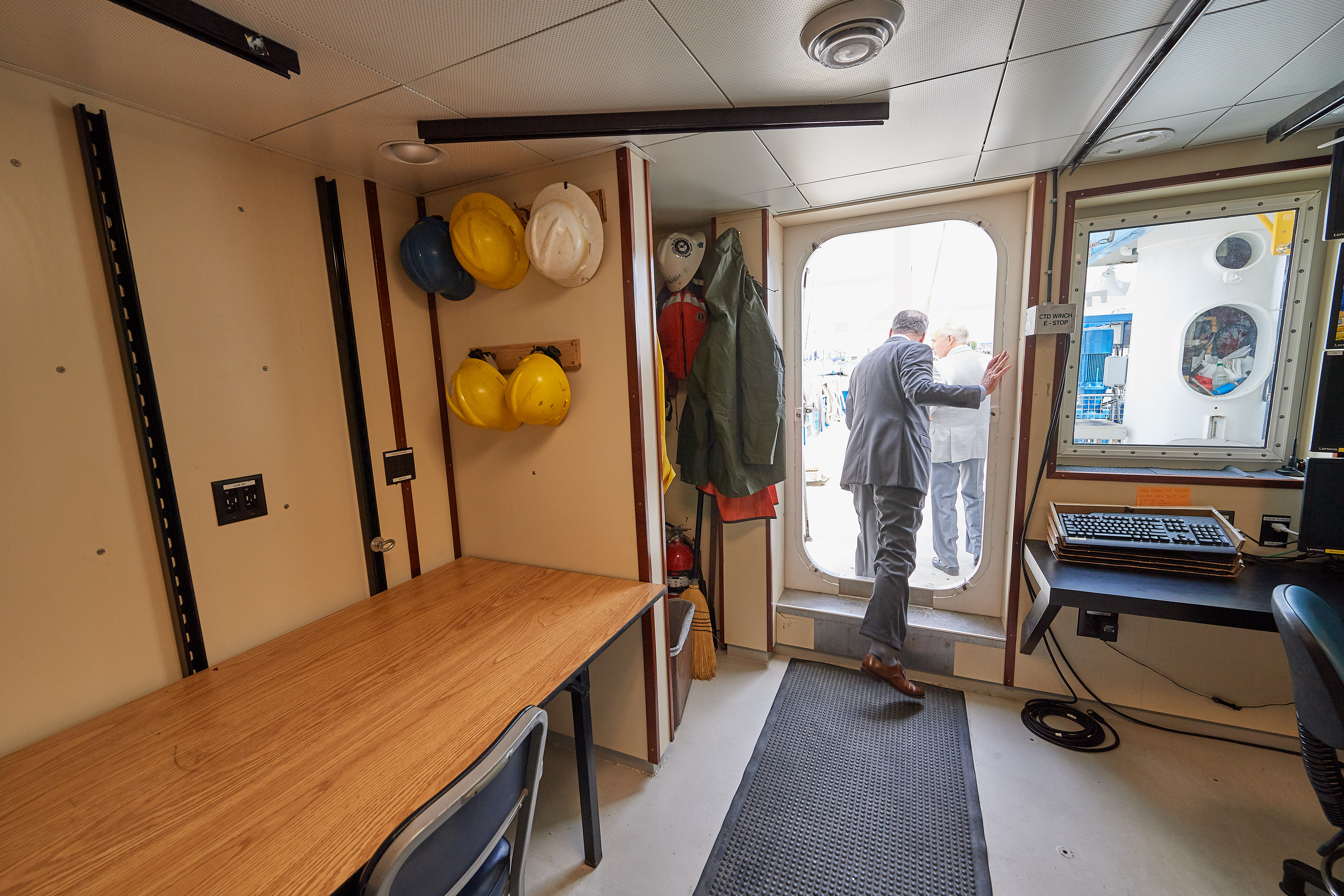
Dry laboratory space aboard the R/V Connecticut. (Peter Morenus/UConn Photo)
RVCT180913a196
Dry laboratory space aboard the R/V Connecticut. (Peter Morenus/UConn Photo)
The 19-year-old ship has gone through a total makeover over the past year that increased its length from 76 feet to 90 feet. The work doubled the laboratory space on board and increased the number of bunks from 12 to 18, allowing for missions at sea of up to 14 days.
“Not every university president gets to recommission a vessel,” said President Susan Herbst, moments before she performed the traditional breaking of a bottle of champagne against the ship. “I feel bad for those land-locked presidents. We are a Sea Grant institution, and that is a very important part of our mission.”
The R/V Connecticut has been used extensively over the years by UConn researchers in addition to other groups that have chartered it, including the U.S. Navy, the National Oceanic and Atmospheric Administration, the U.S. Geological Survey, and the Woods Hole Oceanographic Institution.
In its previous five years of service, the ship spent 474 days at sea and traveled 38,721 miles.
“There is great work being done on this ship, from the study of coastal resilience to the study of maritime activity,” said Herbst. “With the R/V Connecticut now being able to spend up to 14 days at sea, it greatly increases our research opportunities.”
The head of the marine sciences department, J. Evan Ward, discusses the significance of the research vessel to the department’s research efforts in this video clip:
UConn’s Department of Marine Sciences, which is housed at Avery Point, has 55 undergraduate majors and 40 graduate students, with 20 tenure/tenure track faculty.
During the past 18 months, the faculty of the department have been awarded over $10 million in federal and state grant support.
“With the modern infrastructure, and continuous support such as that provided for the refurbishing of the R/V Connecticut, the faculty of marine sciences has been able to accomplish great things and fulfill their commitment to excellence in scientific research and graduate and undergraduate research,” said Professor J. Evan Ward, head of the marine sciences department.
“So where are we going from here with our renovated vessel? As one quick example, this semester marks the inaugural class of a newly developed interdisciplinary graduate course in which students are preparing for and then undertaking a three-day, two-night research expedition on Long Island Sound. The course is a stimulating and exciting experiential learning opportunity.”
Our websites may use cookies to personalize and enhance your experience. By continuing without changing your
cookie settings, you agree to this collection. For more information, please see our University Websites Privacy Notice.
What are cookies?
Web cookies (also called HTTP cookies, browser cookies, or simply cookies) are small pieces of data that websites store on your device (computer, phone, etc.) through your web browser. They are used to remember information about you and your interactions with the site.
Purpose of Cookies:
Session Management:
Keeping you logged in
Remembering items in a shopping cart
Saving language or theme preferences
Personalization:
Tailoring content or ads based on your previous activity
Tracking & Analytics:
Monitoring browsing behavior for analytics or marketing purposes
Types of Cookies:
Session Cookies:
Temporary; deleted when you close your browser
Used for things like keeping you logged in during a single session
Persistent Cookies:
Stored on your device until they expire or are manually deleted
Used for remembering login credentials, settings, etc.
First-Party Cookies:
Set by the website you're visiting directly
Third-Party Cookies:
Set by other domains (usually advertisers) embedded in the website
Commonly used for tracking across multiple sites
Authentication Cookies
Authentication cookies are a special type of web cookie used to identify and verify a user after they log in to a website or web application.
What They Do:
Once you log in to a site, the server creates an authentication cookie and sends it to your browser. This cookie:
Proves to the website that you're logged in
Prevents you from having to log in again on every page you visit
Can persist across sessions if you select "Remember me"
What's Inside an Authentication cookie?
Typically, it contains:
A unique session ID (not your actual password)
Optional metadata (e.g., expiration time, security flags)
Analytics Cookies
Analytics cookies are cookies used to collect data about how visitors interact with a website. Their primary purpose is to help website owners understand and improve user experience by analyzing things like:
How users navigate the site
Which pages are most/least visited
How long users stay on each page
What device, browser, or location the user is from
What They Track:
Some examples of data analytics cookies may collect:
Page views and time spent on pages
Click paths (how users move from page to page)
Bounce rate (users who leave without interacting)
User demographics (location, language, device)
Referring websites (how users arrived at the site)
Opt Out
Here's how you can disable cookies in common browsers:
1. Google Chrome
Open Chrome and click the three vertical dots in the top-right corner.
Go to Settings > Privacy and security > cookies and other site data.
Choose your preferred option:
Block all cookies (not recommended, can break most websites).
Block third-party cookies (can block ads and tracking cookies).
2. Mozilla Firefox
Open Firefox and click the three horizontal lines in the top-right corner.
Go to Settings > Privacy & Security.
Under the Enhanced Tracking Protection section, choose Strict to block most cookies or Custom to manually choose which cookies to block.
3. Safari
Open Safari and click Safari in the top-left corner of the screen.
Go to Preferences > Privacy.
Check Block all cookies to stop all cookies, or select options to block third-party cookies.
4. Microsoft Edge
Open Edge and click the three horizontal dots in the top-right corner.
Go to Settings > Privacy, search, and services > cookies and site permissions.
Select your cookie settings from there, including blocking all cookies or blocking third-party cookies.
5. On Mobile (iOS/Android)
For Safari on iOS: Go to Settings > Safari > Privacy & Security > Block All cookies.
For Chrome on Android: Open the app, tap the three dots, go to Settings > Privacy and security > cookies.
Be Aware:
Disabling cookies can make your online experience more difficult. Some websites may not load properly, or you may be logged out frequently. Also, certain features may not work as expected.