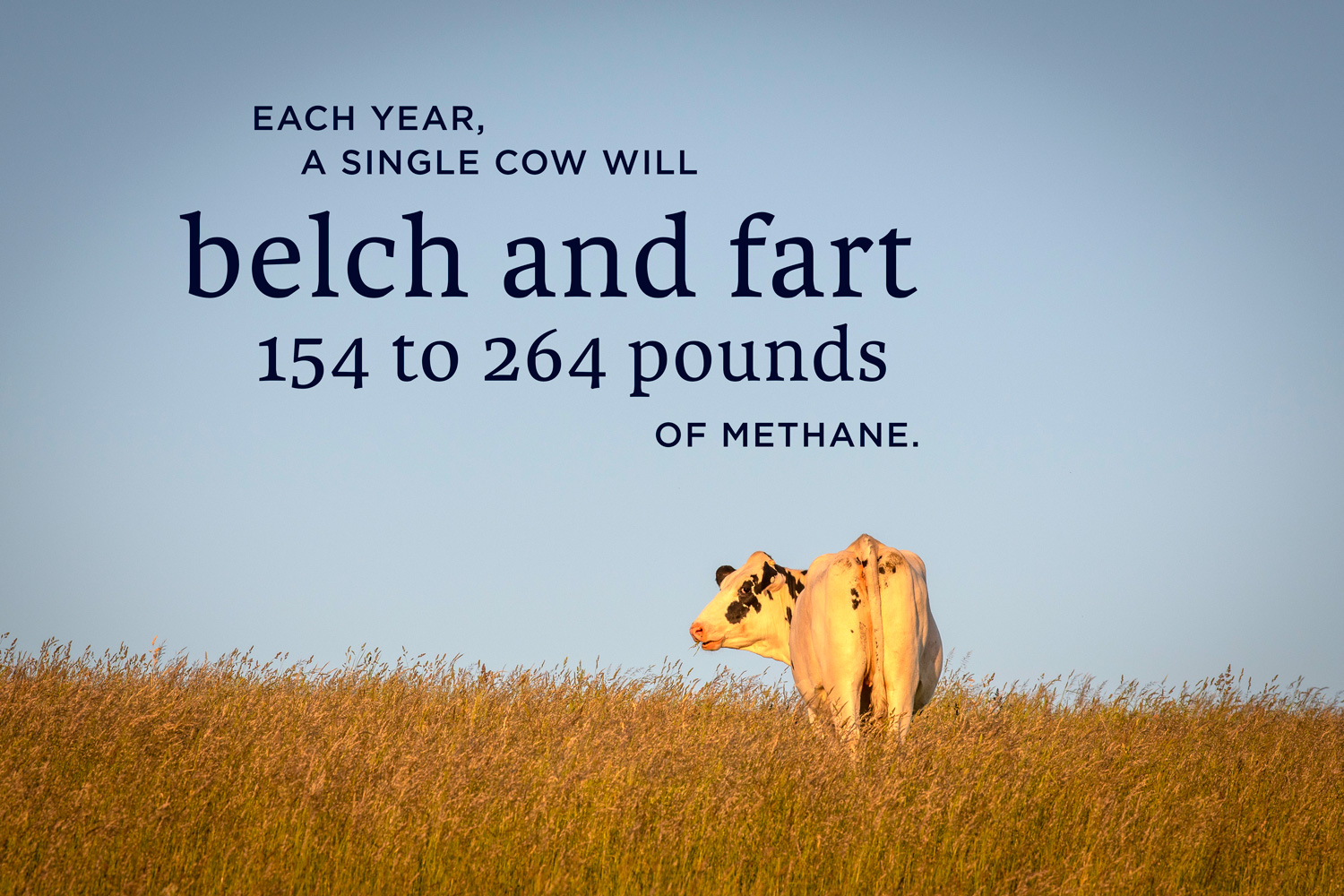
Each year, a single cow will belch and fart 154 to 264 pounds of methane.
Methane is a greenhouse gas 28 times more potent than carbon dioxide. While agriculture only accounts for about 11% of the U.S.’s anthropogenic greenhouse gas emissions, cows’ digestive systems are responsible for 27% of the total methane emissions in the U.S., according to the U.S. Environmental Protection Agency.
These facts combined with the need to feed a growing global population have led researchers including several in the College of Agriculture, Health and Natural Resources to look at ways to make cattle production more sustainable on a warming planet.
Designing a Low-Emission Diet
Elias Uddin, assistant professor of animal nutrition, is investigating how changing ruminant nutrition can reduce the amount of methane cattle produce. While all ruminants produce methane, the amount they produce is changeable based on what you feed the animals.
Ruminants, including cows, have a unique form of digestion. They ferment their food in a special compartment of their stomach prior to digestion thanks to microbes in their guts. This process allows ruminants to absorb nutrients from their feed. However, these microbes also produce methane, a potent greenhouse gas, which cows emit through flatulence and other respiratory processes.
Uddin studies how dietary changes can reduce the amount of methane cows produce. More fibrous diets have increased methane production. Swapping out some fibrous elements, such as hay, for less fibrous ones such as grain can reduce methane.
“You can switch the diet to change the substrate needed by the microbiome to produce methane,” Uddin says.
Uddin also looks at feed additives that can reduce methane production. One promising additive is Asparagopsis, a type of red seaweed, which contains a compound known as bromoform. Bromoform inactivates an enzyme that the microbes need to produce methane. However, feed additives are currently very expensive. To offset this, Uddin combines Asparagopsis with other additives that increase the cows’ productivity.
“There’s no single silver bullet,” Uddin says. “So, you have to find multiple options that work alongside one another.”
A Lab-to-Table Alternative
Beef production generates significant methane emissions because of what happens when cows eat — but what if beef could be made without live cows?
Xiuchun “Cindy” Tian, professor of animal science, is using stem cells to improve technology for lab-grown meat, a more sustainable alternative to traditional agriculture.
Tian and her collaborators demonstrated the first successful induced pluripotent stem cells (iPSCs) for bovine. These cells can be reprogrammed to act as embryonic stem cells. Pluripotent means they function as building blocks that gradually give rise to every kind of organ and tissue cell. The researchers are working with UConn Technology Commercialization Services to patent this technology.
Bovine iPSCs have applications for lab-grown beef, as they could allow scientists to grow entire cuts of meat from muscle stem cells differentiated from a single iPSC. Previously, bovine stem cells had two major issues: they couldn’t silence the genes used to reprogram them, and they couldn’t renew themselves for the long term. Tian’s cells overcome both issues by silencing a methylation event that was previously identified as a barrier for embryo development in mice and humans.
Tian is now working with bovine embryonic stem cells to similar ends.
“Bovine embryonic stem cells are great sources for cultivated meat,” Tian says. “They are similar to iPSCs, but better in this application because they don’t contain foreign genes.”
These cells could also be used for the establishment of in vitro breeding technology and developing disease-resistant animals, another important consideration for sustainably feeding a growing population.
Genetic Research Protecting Cows From Heat
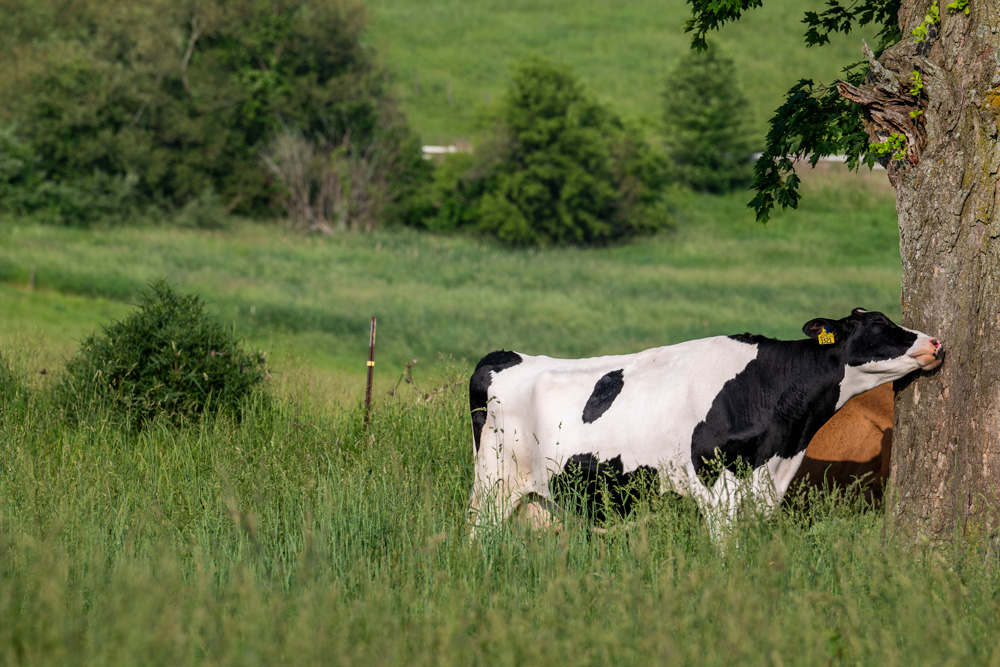
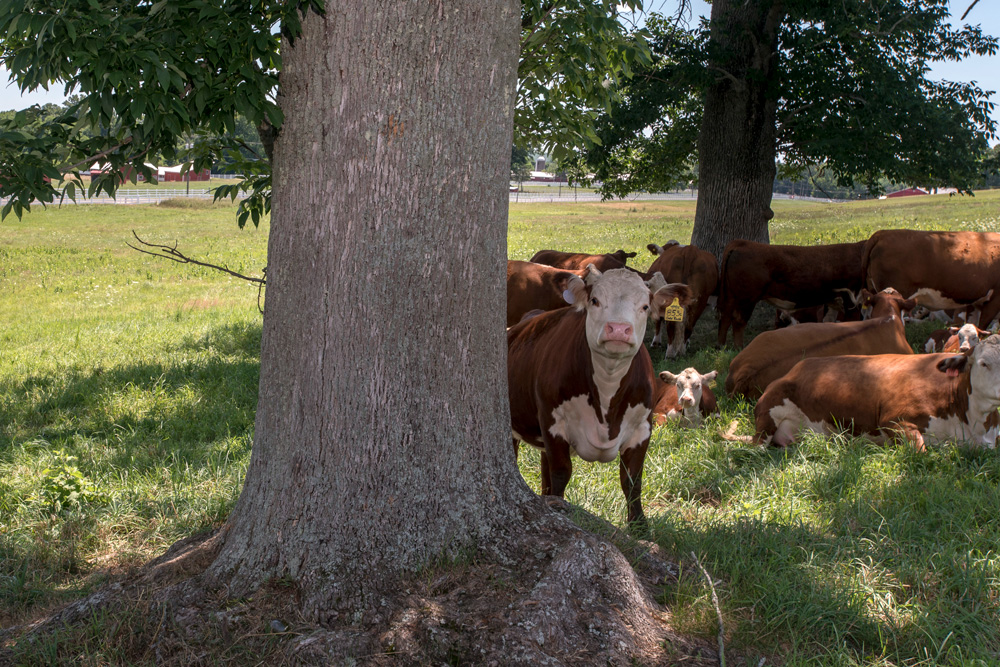
Overheated cows produce less milk, according to Breno Fragomeni, associate professor of animal science, who is using cutting-edge genetic technologies to determine which genetics make cows better suited to endure heat stress.
Comparing data related to milk production and reproduction with local temperature and humidity data, Fragomeni has found that when cows experience heat stress, they produce 5% less milk. Studies have shown that the dairy industry loses an estimated $1.2 billion from heat stress annually.
In the heat, cows tend to eat less and hence produce less milk. But Fragomeni is also finding that cows that reduce their milk production when it’s hot may have more producing years than cows that don’t, meaning they are generally better able to endure heat stress and will save farmers money in the long run.
Fragomeni evaluates the complete genomes of bulls, compares that with hundreds of female offspring across the country, and sees which are better suited to handle the heat.
Fragomeni is comparing cattle in Wisconsin and Texas, two of the largest dairy producers in the U.S. with radically different management systems and climates. He is also comparing data from Connecticut and California.
The long-term goal of this work is to identify the best genetics for cows in each climatic region of the U.S.
“The best bull for one region may not be the best for another,” Fragomeni says.
Fragomeni is also using milk and fecal samples from cattle at the Kellogg Dairy Center at UConn to determine if heat stress changes the animals’ microbiomes. This will help develop better non-invasive measurements for heat stress.
Understanding How Wildfires Impact Cattle
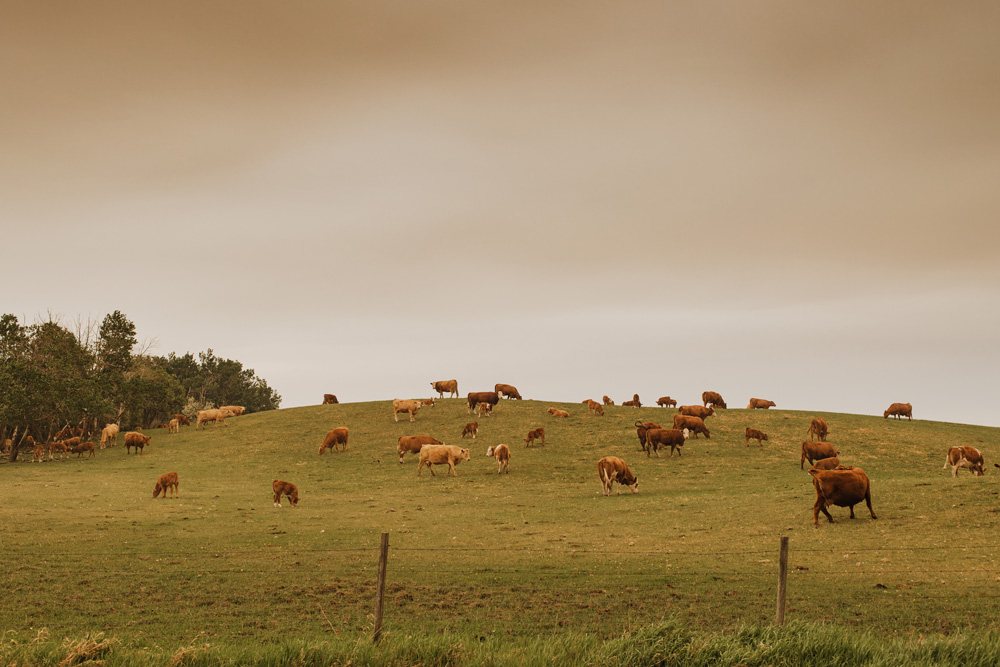
While wildfires have historically been common in the Pacific Northwest, because of climate change they are becoming more frequent and severe. The Northeast has also experienced several significant wildfire events in the past few years.
Pedram Rezamand, professor and department head of animal science, is studying the impact of wildfire inhalation on dairy cattle in the Pacific Northwest in collaboration with researchers at the University of Idaho.
The team is particularly interested in understanding the impact of inhaling fine particulate matter that can enter the bloodstream through the lungs and pose serious systemic health problems.
The team has found that after a wildfire, cows produce less milk for several days.
They are also analyzing biomarkers associated with immune function when cows at various stages of life are exposed to wildfire smoke.
The researchers have developed smoke chambers so that they can control precisely how much smoke the cows inhale to establish cause-and-effect relationships through experimentation.
“At the end of the day, we are working to develop interventions and solutions for producers to better protect their animals,” Rezamand says. “The ultimate goal is to make sure our animals are healthy and productive.”
Big ideas come from out of the blue.
Behind every breakthrough, there’s a story of creativity and commitment. One where individuals come together, fueled by a shared vision and sustained by imagination and persistence.