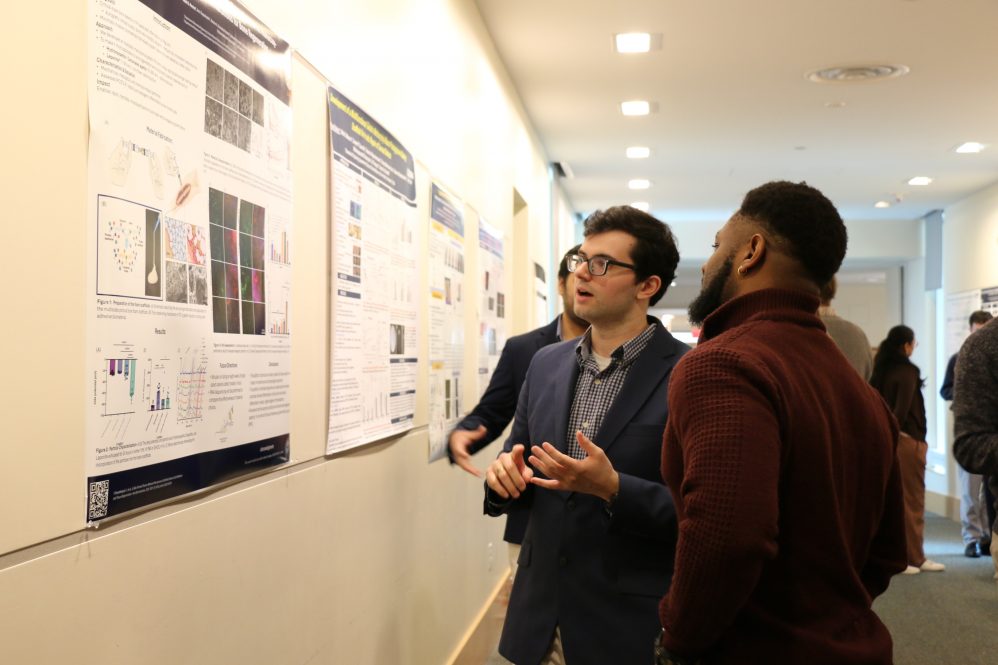
Graduate and postdoctoral research trainees in the T90/R90 NIH/NIDCR research training, Skeletal Biology and Regeneration (SBR), and biomedical engineering programs at the UConn School of Dental Medicine presented their work and celebrated research achievements and accomplishments at the annual Skeletal, Craniofacial, and Oral Biology training program symposium.
This is the symposium’s 20th year.
“Most of you probably know this, but this is one of the longest, continuously funded training programs anywhere,” said Dr. Steven Lepowsky, dean of the School of Dental Medicine in his welcome remarks. “Today’s event is not only a celebration of the incredible work that’s performed by all the trainees in the T90 training program, but also by their colleagues in the skeletal biology and regeneration program and biomedical engineering.”
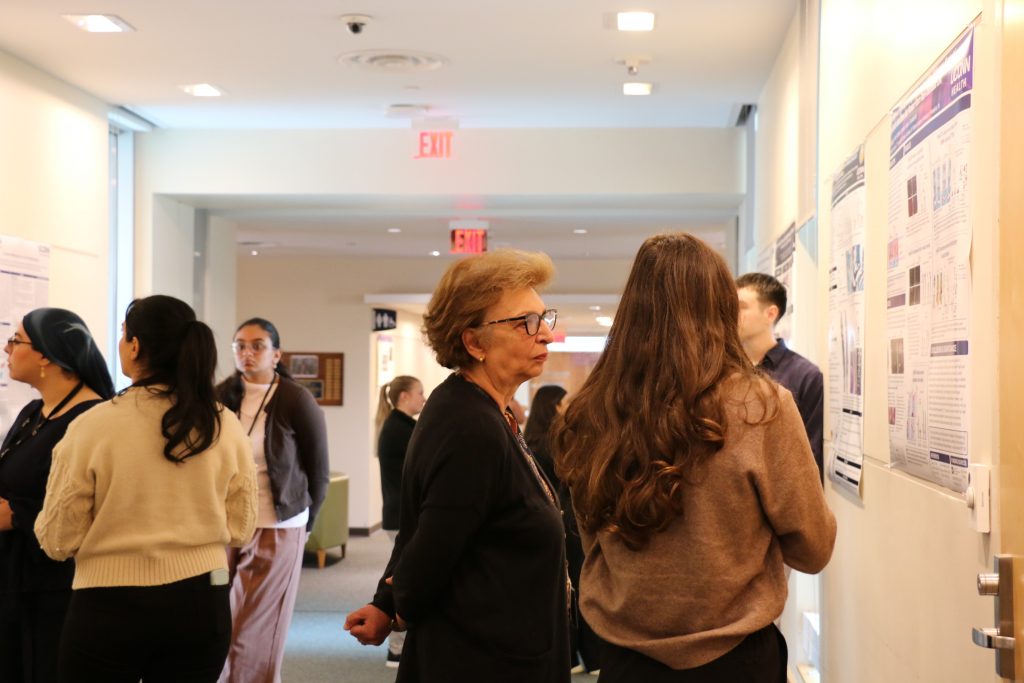
“There is a lot of pride in this program,” said Dr. Mina Mina, professor emeritus of pediatric dentistry and co-director of the symposium. “Any type of the NIH grant—either a training grant or R01—the success of that grant is the trainees, and how well they do, and what they do is a reflection of their mentors. And thank you for all the mentors over the years, and the trainees that have been in the program and have gone to be successful in their career.”
The T90/R90 Research Training Program, funded by the National Institutes of Health/ National Institute of Dental and Craniofacial Research (NIH/NIDCR), supports and enhances the training of individuals preparing to be independent scientists in academics, industry and government, and related careers. The program is an interdisciplinary, research-intensive training program that primarily focuses on skeletal, craniofacial, and oral biology research, and has been funded by the NIDCR for 42 years. During this time, the T32 and T90/R90 programs have graduated 86 trainees, including 17 combined residency/Ph.D., 25 DMD/Ph.D., and 14 Ph.D. students. It also has supported 31 postdoctoral fellows, and supports nine trainees, including five Ph.D. students, one DMD/Ph.D. student, and three postdoctoral fellows.
The SBR program at UConn Health focuses on the cellular, molecular, and genetic processes related to skeletal development, diseases, injuries, and skeletal regeneration. Research labs within SBR also focus on the biomechanical and material properties of skeletal components in health and in diseased states, as well as novel regenerative engineering approaches. The program, which includes over 25 research labs, spans both the Schools of Dental Medicine and Medicine.
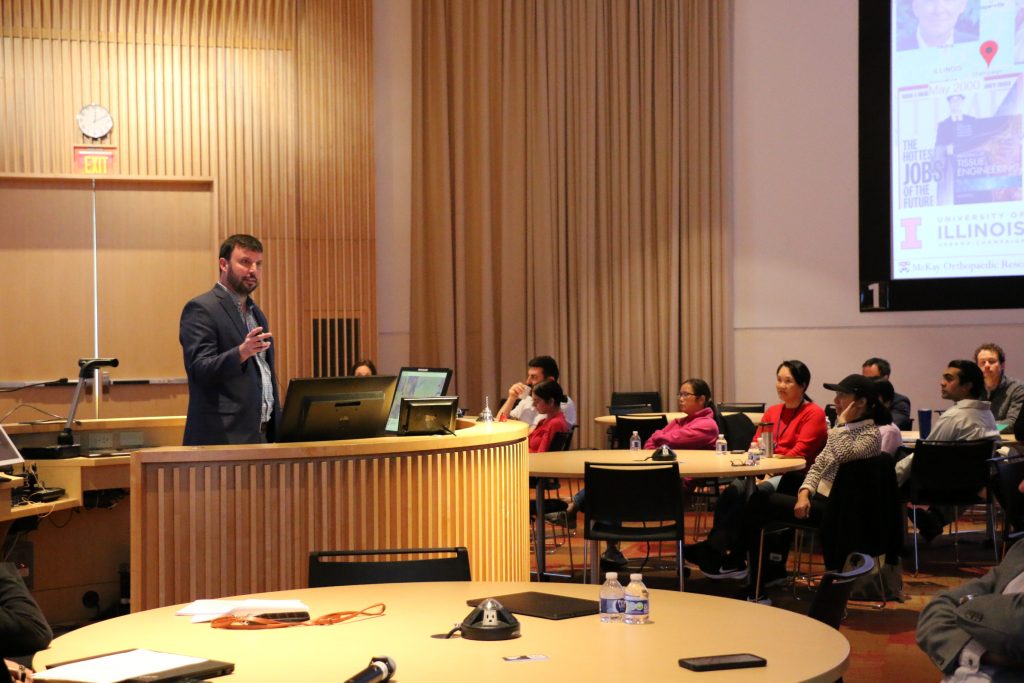
The symposium’s keynote speaker, Dr. Nathaniel Dyment, is a graduate of the T90 training program. Dyment, an associate professor of orthopedic surgery at the University of Pennsylvania, discussed his career path and opportunities in the field, in addition to his scientific presentation, “How Biophysical Cues Shape Dense Connective Tissues.”
In addition to poster presentations and oral sessions, the symposium included the presentation of several prestigious awards.
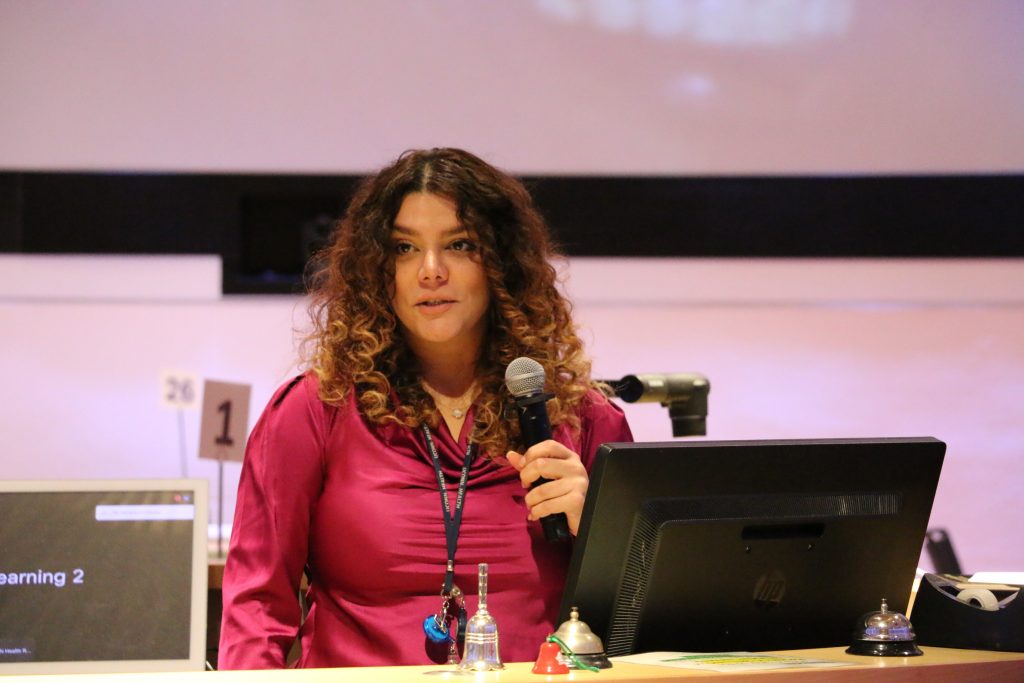
Fatemeh Hosseini, a student in the SBR program, received the Eric N. James Scholar Award, honoring James’ scientific achievements and reflecting his deep commitment to helping others through teaching and mentorship. Consistent with James’ mission to promote education and training of diverse individuals, the award emphasizes service to underrepresented groups, as well as scholarly and research achievement, especially by members of underrepresented groups.
In her remarks, Hosseini thanked her mentors, family, and friends.
Justin King, in the SBR program, received the William B. Upholt Achievement Award, which was established to honor former SBR director Dr. William Upholt’s impact on research and graduate education, as well as his lifelong personal commitment to human rights, civic activism, and to the environment. Upholt’s wife, Mary Lee, gave King the award.
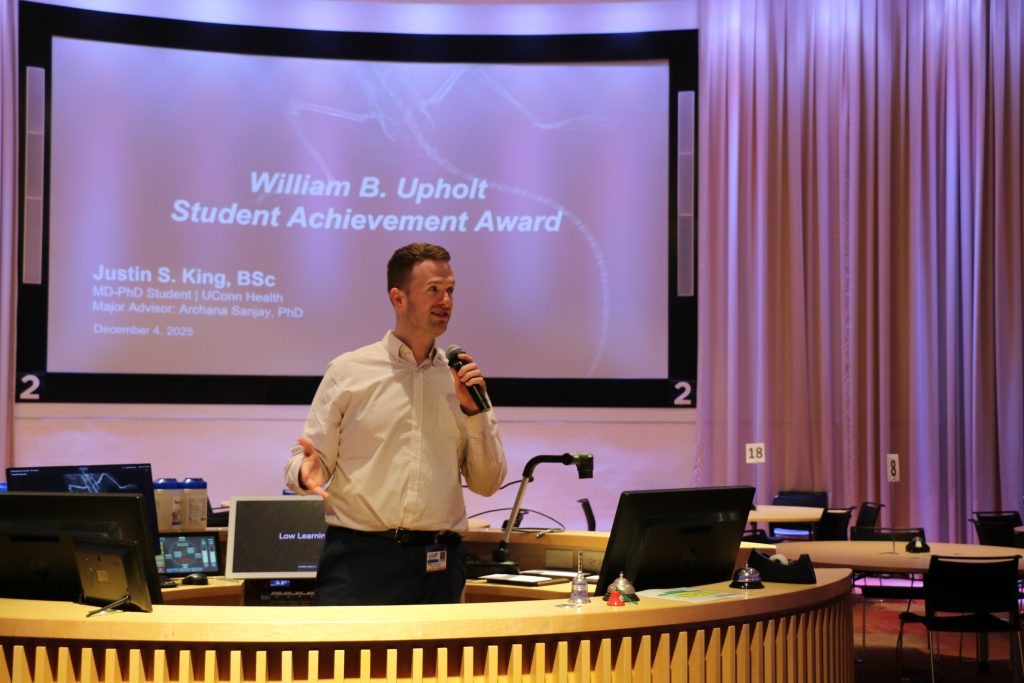
King gave a short presentation on his research, and talked about his work mentoring local high school students and what his hopes are for the future.
“I am really passionate about regenerative medicine. My goal is become a physician scientist and just more broadly, I look forward to mentoring people in the future, similar to as Dr. Upholt did,” King said.
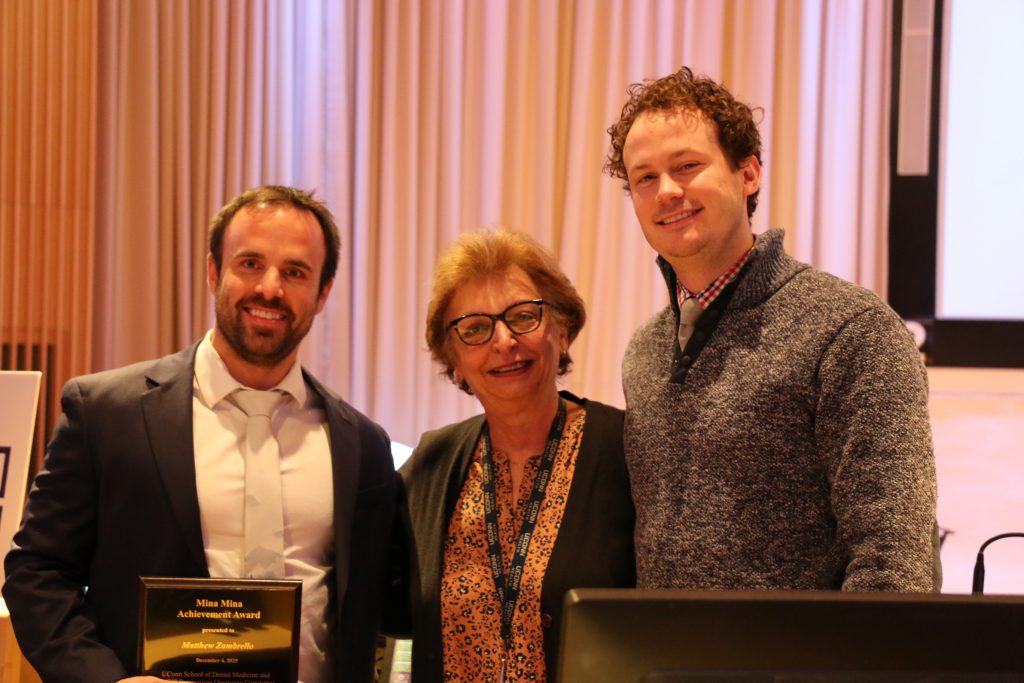
Matthew Zambrello and Jacob Quint in the T90 program received the first Dr. Mina Mina Achievement Award, honoring Dr. Mina’s impact on dental research and the education of researchers in the field of oral and craniofacial sciences.
The awards are made possible by donations from alumni and faculty, private donors, the UConn Foundation, and the School of Dental Medicine.