Two UConn graduate students took home the first-place and runner-up awards in the ACORD Student Challenge, an insurance-industry competition that drew dozens of participants from across the country.
Manasa Ramaka, a graduate student in the Business Analytics and Project Management (BAPM) program, took first place and accepted the $5,000 grand prize. Rutendo Mahanzu, a graduate student enrolled in the Financial and Enterprise Risk Management (FERM) program, shared the runner-up prize with a student from Georgia Tech, and took home a $2,000 award.
Participants in the ACORD challenge apply AI and data science skills to a real-world insurance problem. This year, they addressed the underwriting challenges for pet insurance, a more than $21 billion industry worldwide that is growing rapidly.
‘I Felt Prepared to Build Something Thoughtful and Detailed’
Both women said their UConn education had prepared them well for the competition.

“My education at UConn gave me a solid foundation in analytics and practical problem solving,’’ Ramaka said. “Experiential learning opportunities helped me work comfortably with real data and to think independently. I’m grateful for that environment because it encouraged me to take on large, open-ended challenges. When ACORD created this platform, I felt prepared to bring my own ideas forward and build something thoughtful and detailed.’’
“I do not have a pet of my own, but my best friend has a dog named Shero, and he cares for him a lot,’’ Ramaka said. “Hearing about their experiences made me more curious about pet insurance and helped me understand why the topic matters to many families. That personal connection made the project more engaging for me.’’
She blended AI-generated insights with real insurance carrier information and then spend a great deal of time refining, organizing, and clarifying the data, focusing on depth, accuracy, and purpose. Ramaka said believes her ability to turn assorted data into something structured helped her work stand out. She also appreciated the competition allowing her the creativity to address the project in the way she felt was best.
After her completing her degree, Ramaka plans to seek a role where she can combine analytics with product development and communication.
“I enjoy solving complex problems and creating structure where it is needed. I am interested in industries where good data can improve experiences for people …a position where I can contribute meaningful insights and lead projects with real impact,’’ she said.
Coursework Teaches Students to Think Like Professionals
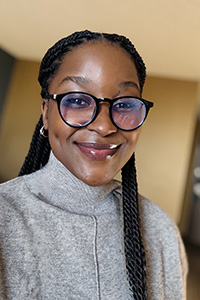
Mahanzu said UConn gave her a strong foundation in risk management, data modeling, and applied analytics through coursework that pushes students to think like industry practitioners.
Experiential learning and industry events showed her how insurers think, how standards drive decision-making, and how innovation occurs.
“I hope to build a career in insurance and enterprise risk analytics, ideally working at the intersection of data science, emerging technology, and risk strategy,’’ Mahanzu said. “Long term, I’m passionate about contributing to innovative solutions in cyber, parametric, or specialty insurance, and helping organizations better understand and manage evolving risks.’’
As the owner of four dogs, Mahanzu said the challenge resonated with her.
“It definitely made the topic more personal and exciting. When you’ve loved animals your whole life, building systems that protect them feels meaningful,’’ she said.
Mahanzu said what she enjoyed most about the competition was working on a real-world problem that tested her curiosity, creativity, and technical depth. She believes her work stood out because of the depth of validation she applied, the way she connected ACORD frameworks to actual insurance provider workflows, and the clarity of her presentation. “I wanted to show not just what I built, but why it matters for the industry,’’ she said.
Dominating the insurance competition was particularly poignant, Mahanzu said.
“Connecticut has a long, proud history as the Insurance Capital of the World, and UConn sits right at the center of that ecosystem. Being here means you’re constantly surrounded by smart, innovative people, from faculty to students to the industry leaders we meet through partnerships, so it feels very fitting that students trained in such a strong insurance environment would rise to the top in a national competition,’’ Mahanzu said. “It’s a full-circle moment.’’
Building Networks, Gaining Visibility
“To have two of the three winners come from our UConn graduate programs is remarkable. We are extremely proud of their accomplishments,’’ said Laurissa Berk, Director of Student and Faculty Services for UConn’s Business STEM programs. “The ACORD Student Challenge is a great example of how strong industry relationships translate into hands-on opportunities where students can apply what they’ve learned, build their networks, and gain even more visibility in the field.”
ACORD stands for the Association for Cooperative Operations Research and Development, a non-profit, global-standards setting body for the insurance industry. Both UConn students received complimentary passes to ACORD Connect 2026 and a one-year mentorship with an insurance professional.