On Jan. 1, 19 University of Connecticut student leaders went on a 10-day transformative trip to Israel. Students listened to speakers from different backgrounds and asked questions to learn more about the geopolitical makeup of the Middle East.
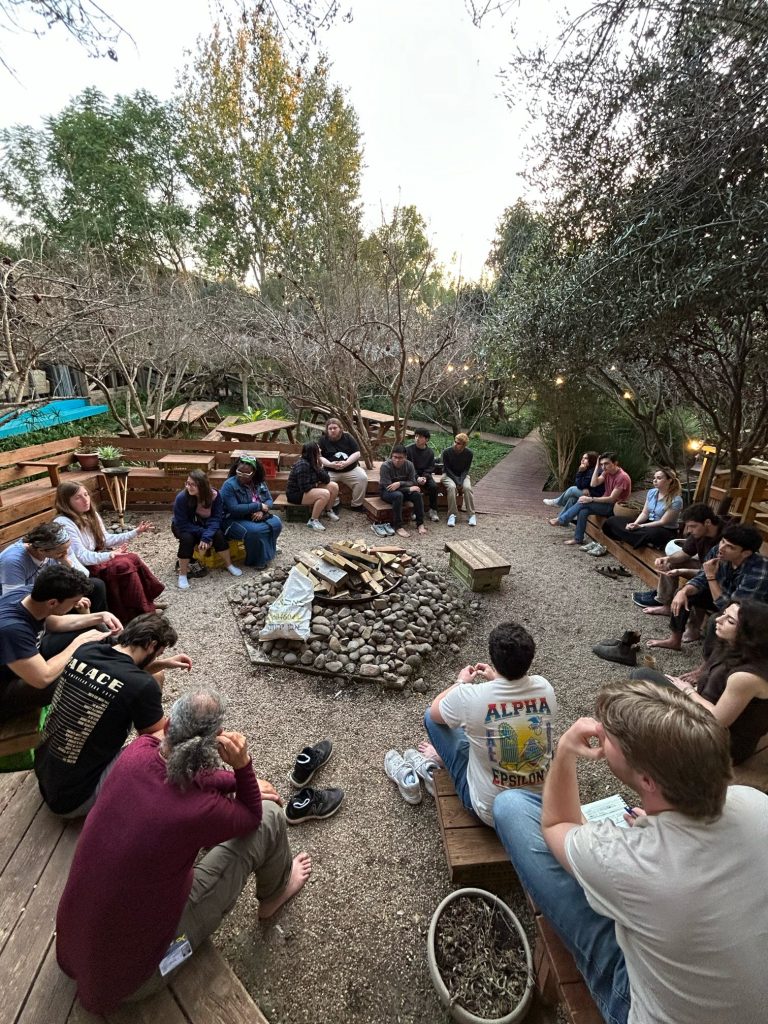
The itinerary included daily site visitations and evening processing sessions where students shared reflections on what they observed, learned, and felt.
Speakers included prominent Israeli Arab news anchor Lucy Aharish and Palestinian-American journalist Rami Nazzal.
UConn Hillel Executive Director Edina Oestreicher organized the trip using a greater than $100,000 grant from Maccabee Task Force – an organization with the mission to combat antisemitism across university campuses. The first trip happened in January 2023, and this is the second time UConn Hillel has been able to bring students to Israel.
The group was comprised of five Jewish students and fifteen non-Jewish students. Speaking about the trip’s importance, Oestreicher says it’s to have firsthand experience learning about the geopolitical situation in the Middle East and to build relationships between Jewish and non-Jewish student leaders.
“It’s not about changing people’s minds; it’s about giving them more information,” she says.
Oestreicher emphasized that the trip aligns with Hillel’s priority to bring diverse groups of students together for thoughtful and respectful conversation; regardless of faith, identity, background, or perspective.
“The trip’s goal is to provide students with an opportunity to explore the region’s complex history, grapple with nuanced political and religious realities, and explore the conflict from various perspectives,” she says. Oestreicher said it’s important for Hillel to organize this trip to connect some of the university’s most influential student leaders to each other, to engage in meaningful conversation. Participants then partake in outreach to share their experience with the campus community, spreading awareness and diverse perspectives from the trip.
Eva Dannison ’27 (CLAS), a junior political science and human rights double major, says she was craving an immersive experience. “We don’t have the spaces to be having these open conversations. [The Israeli-Palestinian conflict] is very polarized.”
She says an apprehension she had prior to the trip was that there would be bias toward one side but said that was quickly disproven.
She says she came into the trip with an open mind and said her experience “dissolved the two-sided nature that western media portrays this conflict as.”
Nathaniel Putnam ’26 (CAHNR), learned about the trip from the Daily Digest. “I realized I was carrying a lot of baggage from horrifying news stories in my subconscious,” he says. “This trip was going to provide some context and place me amongst the people affected.”
The group visited the sites of the Nova music festival massacre and Hamas’ attack on Kibbutz Kfar Aza, which occurred on Oct. 7, 2023. Students spoke with a survivor from each site and were able to witness firsthand the memorial that was in place at the music festival location and throughout the destroyed houses in the living community.
Putnam says this trip equipped him with the context he was seeking. “We’re so removed from the conflict, you only know if you go. I wouldn’t dare have an opinion if I hadn’t been there and spoken to Israelis and Palestinians.”
From saying prayers at the Wailing (Western) Wall, to walking in the footsteps of Jesus Christ, students also visited the Old City of Jerusalem to learn about and experience the holy sites for Jews, Christians, and Muslims.
Putnam’s favorite moments were praying at the Western Wall and walking the Via Dolorosa – the Stations of the Cross.
“Praying at the Wailing Wall was the closest I have ever felt to other people’s consciousnesses. I could feel other people’s prayers smacking me in the face, reflecting off the wall. My desire to have some spiritual connection to the Holy Land on this trip was certainly fulfilled,” Putnam says.
Lance Mendoza, a sophomore economics and allied health sciences major, also learned about this opportunity through the Daily Digest and was intrigued.
“I thought it was a good opportunity to learn about the conflict and how it’s affecting the people living there,” he says.
He says his favorite speaker was Yadin Gellman, an actor and combat soldier in the Israel Defense Forces who was gravely injured on Oct. 7, 2023. He says Gellman was the speaker that resonated with him the most because of “his love for the arts, which showed how everyone living there has been affected by this conflict. It was eye-opening how he pursues his passion even though the conflict persists.”
Sacha Lyons ’28 (CLAS), a political science and economics double major, attended the trip to “educate and show people who don’t know much about the conflict what’s going on in the region.”
He was one of the five Jewish students in attendance, and says this trip was for students to see different perspectives and share what they learned with the greater student body.
He says he wanted to see a combination of recent and more historic memorial sites, such as the location of the Nova music festival and Yad Vashem, the World Holocaust Remembrance Center, because of the settings’ intense and effective ability to have stories of those affected by massacre and genocide heard.
Emerson Zecena ’28 (CLAS), says he wanted to learn firsthand from both pro-Israel and Pro-Palestinian individuals.
“I wanted to develop a new perspective for myself,” Zecena says. He says he returned home from the trip and was able to formulate his own opinion on the conflict without letting the media and his personal relationships sway his perception.
“How much do we really know what’s going on?” Ruy Fernandez ’26 (CAHNR), asks. He wanted to visit the country and see the daily life of those living in Israel.
During the trip, students were also introduced to the Druze community and the Ethiopian Jews that call Israel home.
Fernandez says it was eye-opening to see the Druze community members, Israeli Arabs, and Jews coexist.
Yet he says the most impactful experience was visiting the site of the Nova music festival. Fernandez scanned a QR code on one of the victim’s memorials and saw videos of an unraveling of events, from the victim dancing, to hearing gunfire, to her shot and dragged to a bomb shelter, to finally her making it into an ambulance that was shortly hit by a rocket-propelled grenade.
Fernandez says he came into this trip with a certain perception and left with the conclusion that the conflict is “complicated.”
Samuel Alvarez ’28 (CLAS), a political science and human rights major, wanted to participate in this experience to educate himself and his peers.
“I lacked so much knowledge about Middle Eastern conflict,” Alvarez says.
He says he did not know what occurred on Oct. 7, 2023, and shares two of his most meaningful experiences. Visiting the sites where the Nova music festival and Kfar Aza massacres happened was emotional and informative. The second meaningful experience was with Palestinian speakers such as activist Mahmood El Motaseb, where he shared his friend’s experience of being taken into custody within the West Bank for no stated reason by the Israel Defense Forces. Alvarez also highlights a lesson from Palestinian journalist Rami Nazzal.
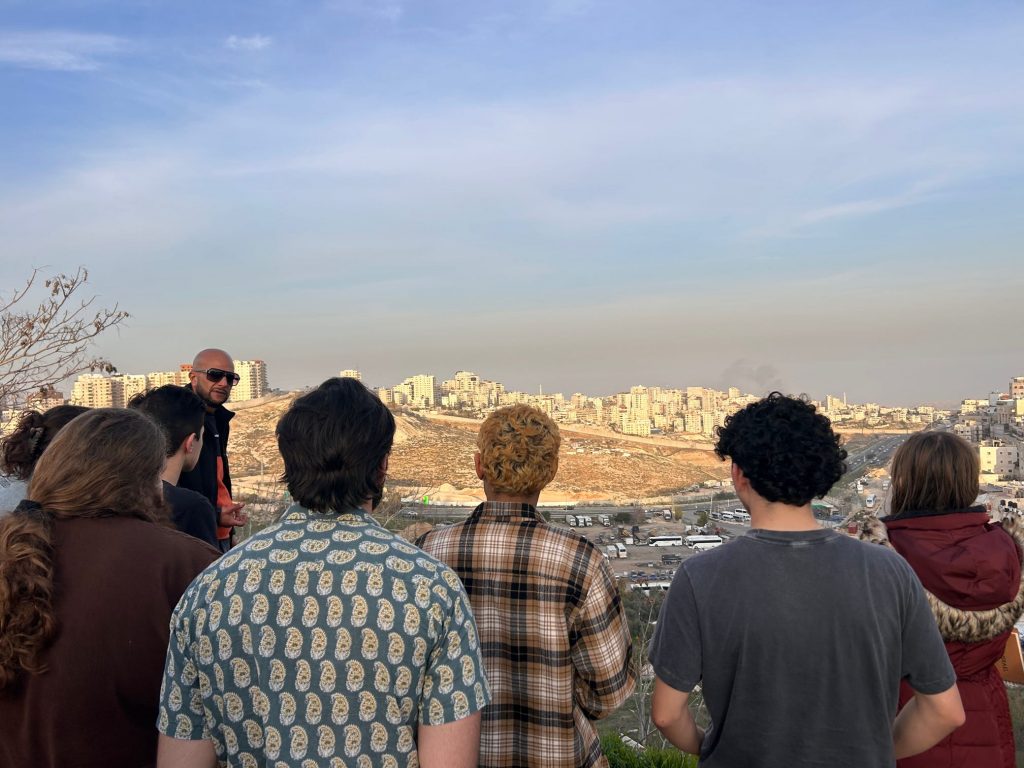
Students saw the wall that divided the West Bank and Israel. Nazzal discussed how the wall causes more fear for both Palestinians and Israelis and shared how deep relationships exist between the two groups.
“We shouldn’t be generalizing the Israeli people and the Palestinian people,” Alvarez says, emphasizing a distinction between governing bodies and civilians.
To students who are skeptical of attending a future trip, Alvarez advises: “Stay skeptical, but be open-minded enough to hear things that will make you uncomfortable, because conflict shouldn’t be comfortable. It is gruesome, it is vulgar, and it is atrocious. By seeing that and feeling that, we come to a better understanding of the world around us.”