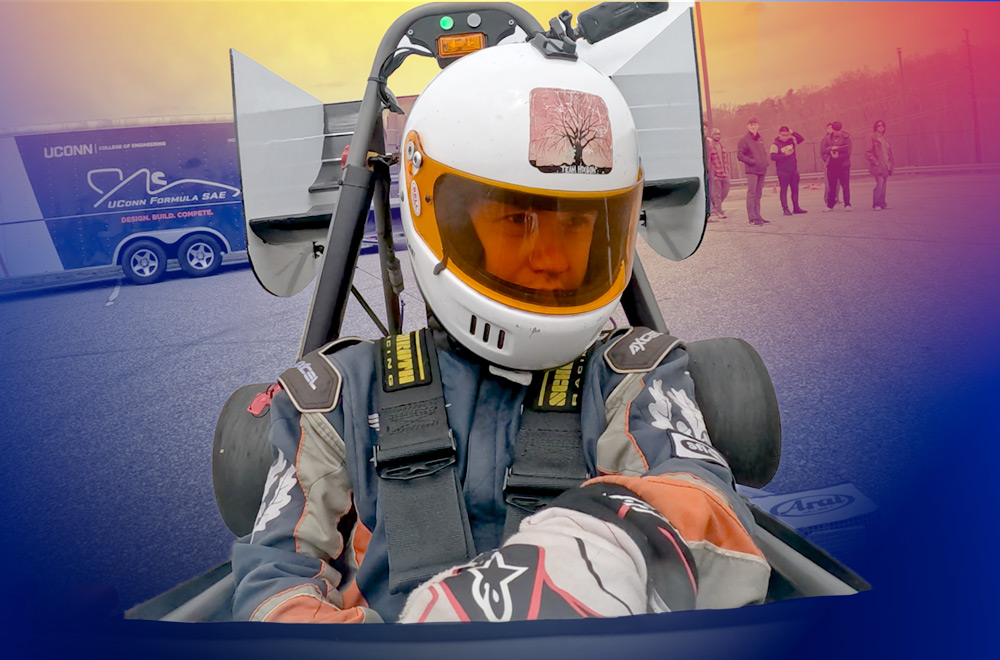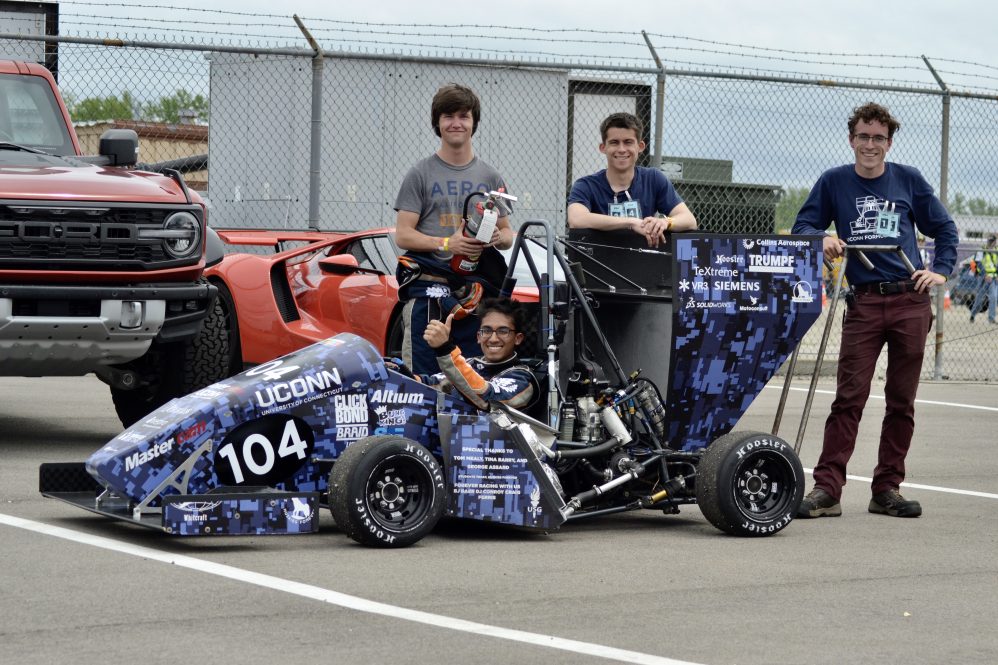
When Abhiemanyu Sukumaran ’24 (ENG) attended his first virtual meeting for UConn Formula SAE, he had no idea it would redefine his future. What began as curiosity during the COVID era quickly became a passion—and ultimately a launchpad into the pinnacle of motorsport.
Today, Sukumaran is a Performance Analysis Engineer at the McLaren F1 Team, helping prepare championship-contending cars and drivers for races around the world.
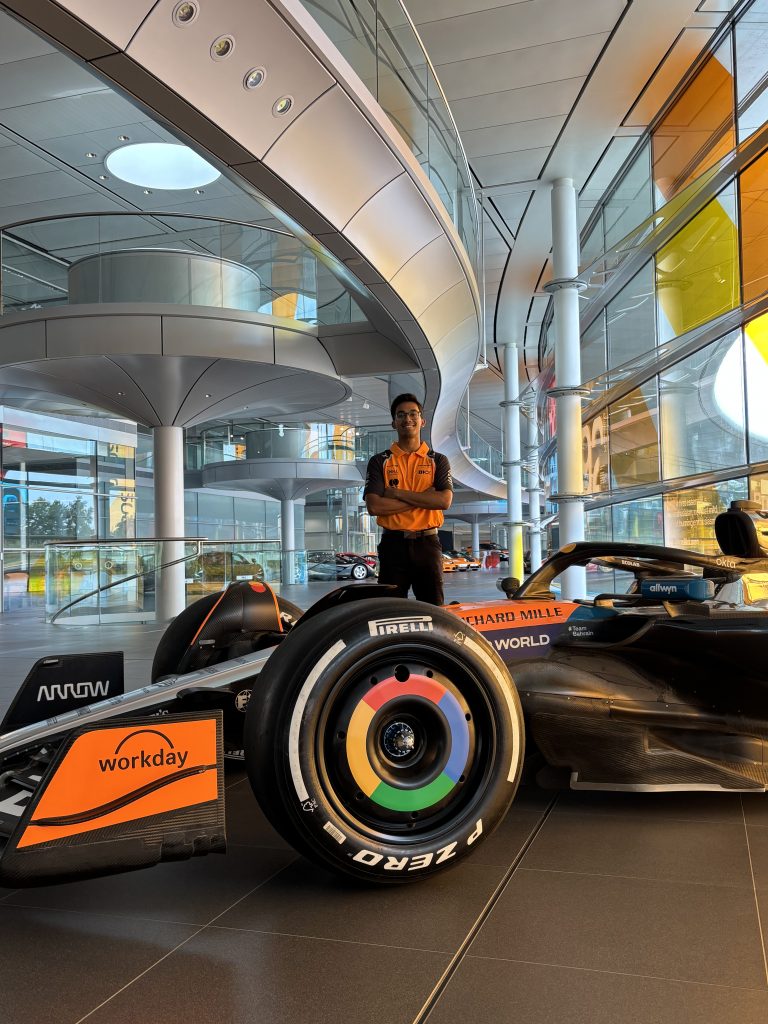
In his role at McLaren Racing, Sukumaran works at the crossroads of car performance, driver performance, and future vehicle development. As he puts it, performance analysis engineers are effectively “the race engineers at the factory.”
His responsibilities include car setup development, where he develops the optimal baseline car setups for each race across the season; driver performance preparation, in which Sukumaran works closely with Lando Norris and Oscar Piastri, McLaren F1 drivers, preparing them ahead of race events; upgrade validation and exploitation, where he tests and validates planned car upgrades to confirm they will deliver real lap time gain on the track; and future concept development, in which he conducts simulator studies on future car concepts to help define key vehicle characteristics that will be locked in under upcoming regulations.
Much of this work takes place in McLaren’s state-of-the-art, driver-in-the-loop simulator, designed to replicate a real Formula 1 car with extraordinary accuracy—from aerodynamics and suspension behavior to curbs, wind, and track conditions. This level of fidelity allows the team to arrive at race weekends with cars already “99 percent dialed in,” maximizing limited on-track practice time.
Sukumaran’s path to Formula 1 began at UConn, where Formula SAE transformed a long-time Formula 1 fan into a professional motorsport engineer.
Before joining the team, he hadn’t considered motorsport as a realistic career option. That quickly changed.
Formula SAE exposed him to far more than mechanical design—it introduced him to electrical systems, aerodynamics, materials, data analysis, business strategy, and stakeholder value. Just as importantly, it showed him how deeply collaborative and multidisciplinary motorsport truly is.
His experience with UConn Formula SAE opened doors beyond campus as well. In 2023, a conversation at Lime Rock Park led to a volunteer role with The Heart of Racing, marking his first step into professional motorsport. That opportunity, he says, existed because Formula SAE had already trained him to operate in high-pressure, performance-driven environments.
“If it weren’t for my time with UConn Formula SAE, and the people on that team, I genuinely would not be where I am today,” says Sukumaran.
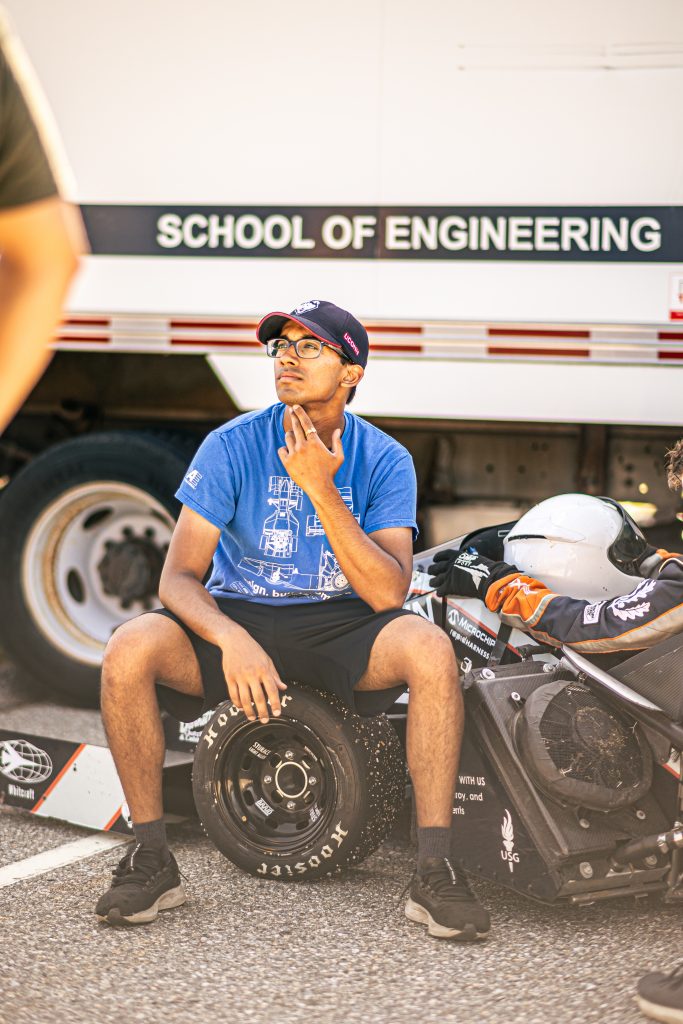
During his final two years at UConn as a mechanical engineering major, Sukumaran served as president of UConn Formula SAE, leading a 100-member team through one of its most ambitious periods—including the development of the team’s first electric vehicle while also building its fastest internal combustion car to date.
While the technical achievements were significant, Sukumaran says the most meaningful lessons came from leadership. Formula SAE taught him that performance follows people—that strong team culture, support, and trust ultimately drive results.
That philosophy now shapes his long-term goals. While he aspires to become a trackside performance engineer in Formula 1, his broader ambition is to move into leadership roles, potentially as a group leader or even a Formula 1 team principal. His vision centers on building environments where engineers and drivers alike can grow, learn, and thrive.
“Leadership isn’t about authority or outcomes alone,” Sukumaran says. “It’s about supporting the people who rely on you and creating a culture where individuals feel valued and empowered.”
Reflecting on his journey, Sukumaran credits the UConn College of Engineering and Formula SAE with shaping both his technical skillset and his values.
“UConn Engineering and UConn Formula SAE fundamentally shaped who I am as an engineer and as a person,” says Sukumaran. “They taught me that the performance comes from supporting the people around you and building a positive team culture, while always maintaining the curiosity and humility of a student. Those lessons were instrumental in helping me earn my role at the McLaren F1 Team.”
Beyond the team, Abhiemanyu credits his family as a constant source of encouragement, supporting him through the long hours, travel, and uncertainty of motorsport. Their support gave him the confidence to take risks and fully commit to his dreams.