A picture may be worth a thousand words — and for immigrants navigating life in a new country, it can reveal what words alone cannot.
With financial support from the UConn Office of Global Affairs, UConn School of Social Work Professor Rebecca Thomas is leading an international research project that uses photography to explore the lived experiences of recent Russian and Indian immigrants in Armenia.

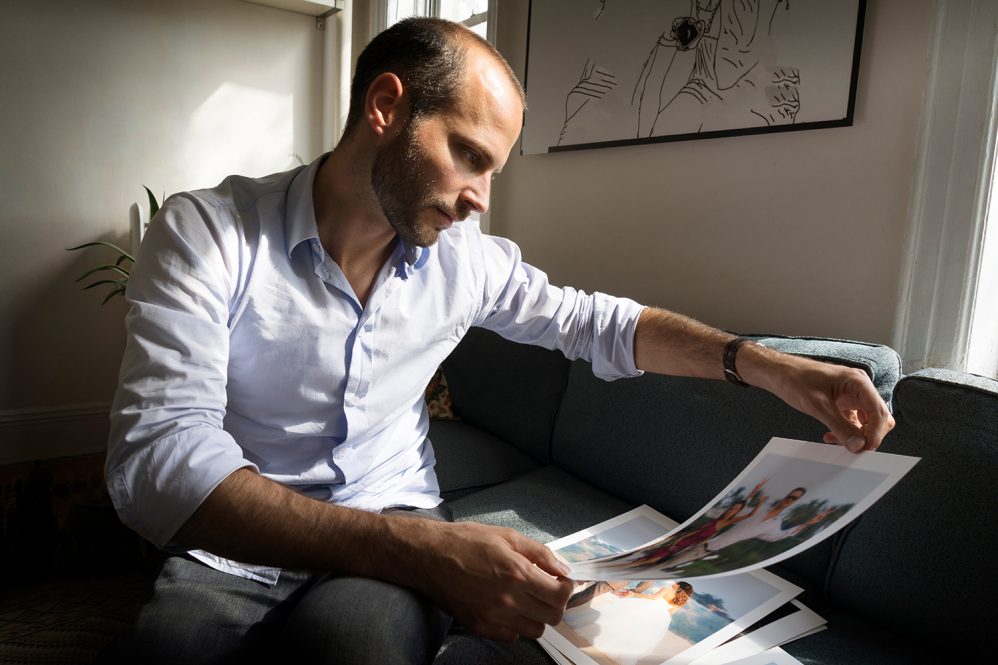
By using Photo Elicitation Interviewing (PEI), a qualitative research method, Thomas invites participants to document aspects of their lives through photographs and then reflect on those images in interviews. Unlike traditional interviews that rely solely on verbal responses, PEI allows participants to communicate visually, often revealing emotional depth and everyday realities that may be difficult to articulate in words.
“What makes PEI so powerful is that it gives participants another language,” says Jennifer Manuel, professor and associate dean for research at the UConn School of Social Work. “Images can capture emotion, identity, and lived experience in ways that are difficult to express verbally.”
The method is especially valuable in cross-cultural research, where language differences and power dynamics can shape how stories are told, Thomas explains. “By requesting participants to use their phone cameras, this approach centers their perspectives and gives them greater control over how their experiences are represented.”
Critical Timing
The timing for this study is crucial. Historically a country of emigration, Armenia has experienced a sharp rise in immigration since 2022, particularly from Russia and India. Following the outbreak of the Russia-Ukraine war, tens of thousands of Russians relocated to Armenia, many contributing to the country’s expanding IT sector. Migration from India has also surged, with many immigrants working in construction, agriculture, transportation, and service industries.
“Much of what we know about these migration trends comes from economic data and media narratives,” Thomas says. “This project centers the voices of the migrants themselves and explores how they experience settlement, work, and belonging.”
Thomas, who’s also director of the Center for International Social Work, is a board member of the Council on Social Work Education Katherine A. Kendall Institute for International Social Work and coordinates a joint academic program exchange between UConn and Yerevan State University (YSU) in Armenia. Her research and scholarship focuses on issues related to international developmental, poverty, and climate induced migration.
For this project, she’ll receive research assistance from UConn doctoral student Fizza Saghir and two YSU collaborators: Associate Professor Yuliana Melkumyan and Assistant Professor of Sociology Marine Yarmaloyan. YSU is the largest university in Armenia.
Initially, the researchers will recruit up to 40 young immigrants—20 from the Russian community and 20 from the Indian community—between the ages of 18 and 35 who have migrated to Armenia since 2022 and are currently participating in the workforce.
Thomas and her team will record the interviews and will analyze both the visual images and interview transcripts to identify themes related to economic opportunity, cultural adaptation, integration, barriers, and future goals.
Findings from the study will inform policy recommendations and guidance for social workers, service providers, and institutions supporting immigrant communities in Armenia. The team anticipates conference presentations, peer-reviewed publications, and policy briefs emerging from the research, which will run through Dec. 31, 2026.
Maintaining a 40-Year Partnership with Armenia
The effort to bring Armenian Studies to UConn began in 1984 when a small group of volunteers started a fund raising campaign. With $70,000 raised, the inaugural program began Oct. 24, 1987 with an art exhibit, banquet, and lecture by George Bournoutian, who later became a visiting professor of Armenian Studies. In 1991, Nancy A. Humphries, founder of the Institute for Political Social Work at the Conn School of Social Work, worked to establish social work education at YSU.
In spring 2000, two Armenian-American, second year MSW students from UConn traveled to Armenia as a part of their field placement. A year later, two second year MSW students, not of Armenian ethnicity, went to Yerevan to help establish the Yerevan Women’s Center to help women there face the many problems associated with the dramatic transition in government following the breakup of the Soviet Union.
In 2004, UConn received a bequest from the estate of Alice K. Norian, to be used to educate students and the general public about Armenian culture and history. UConn’s Norian Armenian Programs now educate the UConn community and the broader public about Armenian culture and history by providing forums for Armenians and Armenian-Americans to share knowledge and traditions.
By 2012, Thomas began her own work in Armenia by hosting Armenian students at UConn and interviewing Syrian refugees of Armenian descent.
Today, the partnership between UConn and YSU includes a range of initiatives designed to strengthen curriculum and international expertise at both institutions.
“By placing cameras in the hands of immigrants and inviting them to tell their own stories, the research aims to make visible the everyday realities behind global migration trends — not as statistics, but as lived human experiences,” Thomas says. “Those insights, she says, have the potential to shape more responsive policies and more compassionate systems of support.”