A critical challenge is emerging in manufacturing: how to repair and restore high-value components when current systems can’t handle deviation. Factories are full of automation systems that perform well when processes are repetitive. The moment geometry shifts, the process changes, or defects evolve, they struggle.
NSF CAREER Award recipient Farhad Imani, an assistant professor in mechanical engineering at the University of Connecticut, is tackling this challenge head-on through the development of a new class of intelligent robotic manufacturing systems that can inspect parts, interpret multimodal sensor data, and reason through uncertainty.
Imani’s CAREER project, “Integrated Digital Thread for Self-Evolving Cooperative Robotics Remanufacturing,” uses remanufacturing as the proving ground, but the ambition is far greater. The real target is the next generation of robotic manufacturing systems that can handle variability and make informed decisions.
“The next generation of manufacturing systems must do more than execute instructions,” says Imani. “They need to sense, reason, and adapt when the real world stops matching the plan.”
In remanufacturing, no two components are the same. There are differences in damage, wear, and geometry, meaning a strategy that works for one part may fail on the next. This is where traditional automation begins to fall apart.
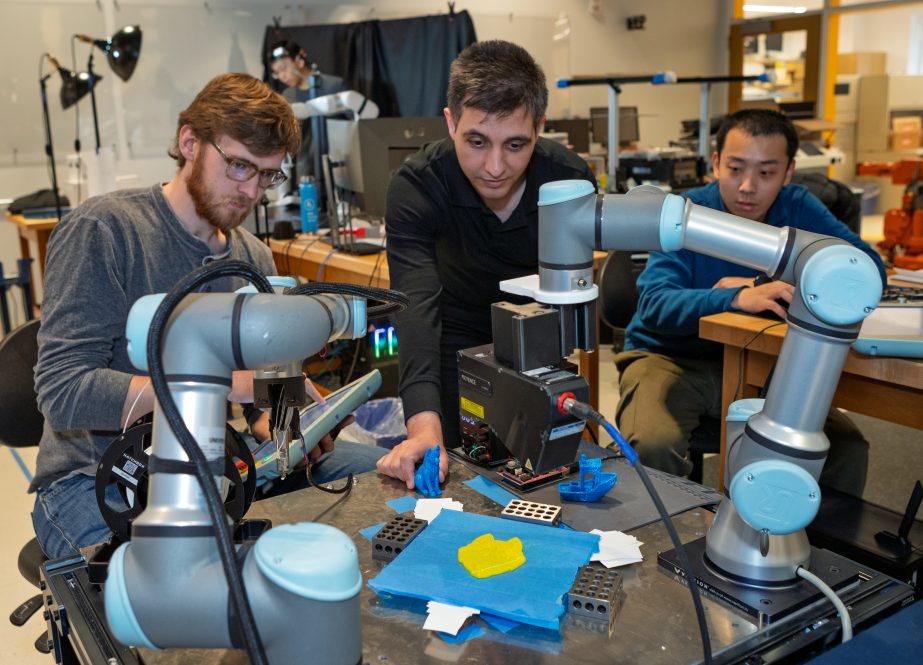
Imani’s lab is building cooperative robotic systems capable of inspecting damage in real time, diagnosing what has changed, determining a feasible repair or manufacturing strategy, and adapting as conditions change.
The goal is to shift from programmed automation to cognitive automation, where machines can reason through changing scenarios rather than relying solely on predefined instructions.
While artificial intelligence has made significant strides in manufacturing, many current approaches still depend on static models, larger training demands, and black-box behavior that becomes fragile when conditions shift.
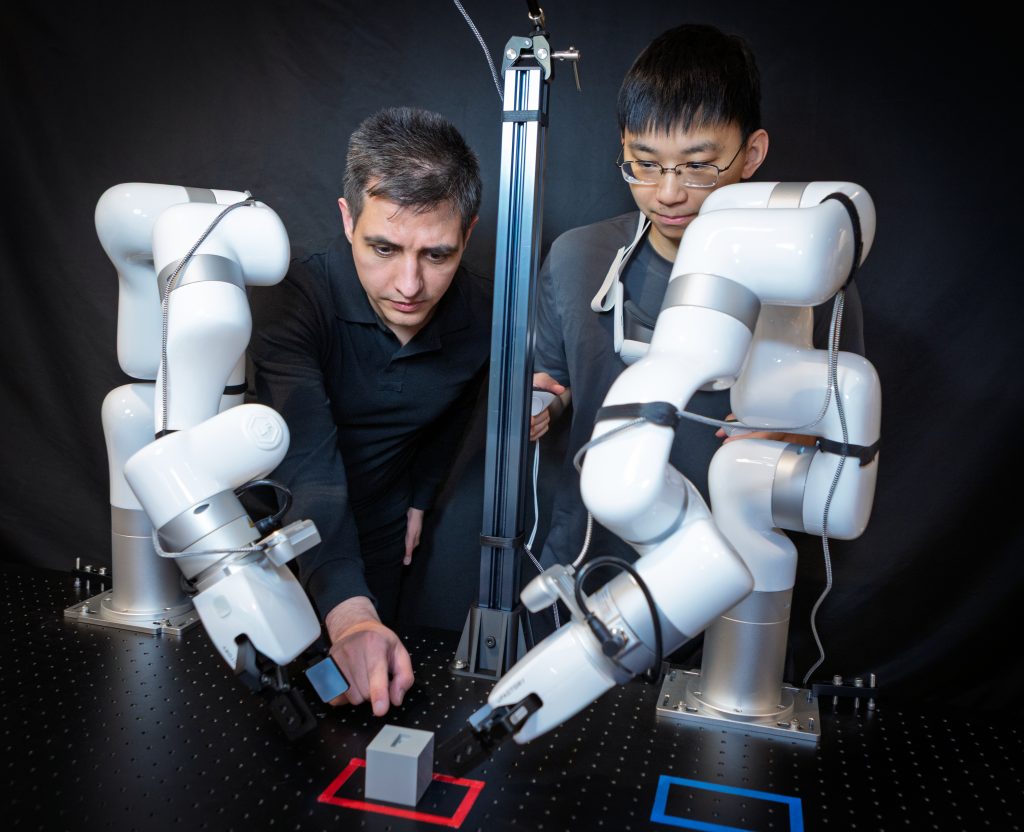
Imani’s approach takes a different route. At the center of his project is hyperdimensional computing, a brain-inspired framework that combines multimodal sensing, engineering knowledge, physical constraints, and simulation into an interpretable decision loop.
This intelligence is paired with an adaptive digital twin that runs rapid “what if” scenarios as the process unfolds. This helps the system evaluate options, refine decisions, and close the loop between prediction and robotic action. The result is a manufacturing system built to adapt, not just automate.
Across industries like aerospace, energy, transportation, and defense, manufacturers are under pressure to do more than just produce parts at scale. They need reliable systems that can restore damaged assets, modify components to new specifications, intelligently respond to variation, and reduce downtime, scrape, and costly rework.
A robotic system that succeeds in remanufacturing can improve how AI and robotics are deployed across inspection, process planning, and high-stakes manufacturing more broadly.
“Factories shouldn’t just make components,” Imani explains. “They should be able to intelligently restore, upgrade, and extend the life of the systems we depend on.”
For Imani, the CAREER Award is more than getting recognition for his past work, it is a platform to drive research on a larger scale.
“This award is not the finish line,” Imani says. “It’s the moment a bold research direction gets the runway to become real.”
Over the next five years, Imani’s lab will work to develop a unified manufacturing framework by integrating cognitive intelligence, embodied robotics, multimodal sensing, and digital twin technology.
The award also strengthens UConn Engineering’s momentum in advanced manufacturing, intelligent systems, and robotics, positioning the university at the forefront of next generation industrial innovation.
A core component of the CAREER Award is education and outreach. Imani’s project will give UConn students hands-on experience with robotic platforms, AI-driven decision-making, sensing systems, and digital twins.
Planned initiatives include new curriculum modules, research opportunities, and partnerships with local schools, community colleges, and industry.
“I’m not interested in training students for yesterday’s factory,” Imani says. “We’re building engineers who can design, think, and invent the manufacturing systems of tomorrow.”