The human body changes with age. Shifts in fat distribution, and muscle composition and structure can reduce strength, erode function, and increase the risk of injury or frailty in older adults.
These age-related changes may lead to sarcopenia, which is a loss of muscle function due to declines in muscle mass or quality. This process often speeds up after age 60 and can lead to falls or fractures. Sarcopenia-related healthcare costs in the US exceed $40 billion every year.
Jacob Earp, an assistant professor of kinesiology in the College of Agriculture, Health and Natural Resources (CAHNR), is a sports scientist and strength and conditioning coach who is applying his research on optimizing muscle capacity in athletes to older adults to address age-related changes in muscle that contribute to injury and loss of independence.
Earp has worked with collegiate, professional, and Olympic athletes across the globe to improve their speed, power, agility, reaction time, and resilience to injury by boosting muscle quality, or how well muscle performs relative to its size, without adding unnecessary mass.
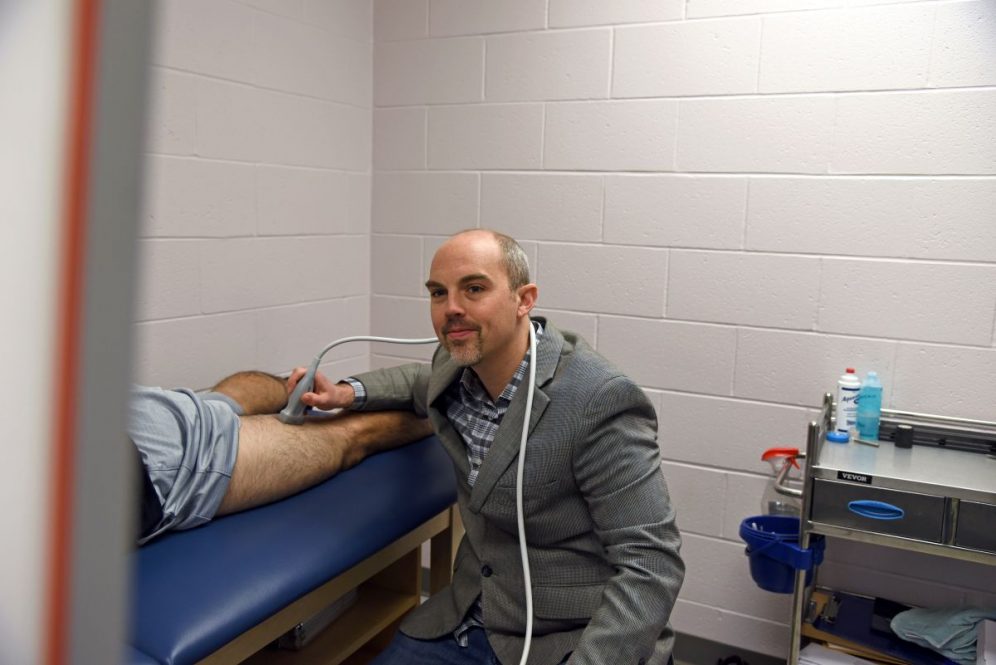
He leads the Muscle Quality lab group within the Department of Kinesiology. Earp is also an affiliate at the Human Performance Lab, Sports Optimization & Rehabilitation (SOAR) Lab, UConn Institute of Sports Medicine, UConn Center of Aging, the UConn Older Adults Independence Center (UConn Pepper Center), and UConn Institute for Collaboration on Health, Intervention, and Policy (InCHIP).
“Many people think strength and conditioning coaches are helping athletes put on muscle mass, but rarely does a professional athlete actually want to add mass. Their goal is to improve their performance in their sport and excessive mass can actually reduce performance,” says Earp.
Instead of encouraging athletes to bulk up, he uses specific exercises, supplementation, and therapeutic interventions to target in order to improve the output and resiliency of their existing muscle to enhance athletic performance.
This approach, as it turns out, can be applied to aging populations, which experience a loss of muscle function and quality as fat starts to become stored in place of muscle and the nervous system is less effective at activating the muscle that is present.
“Regardless of age, what makes muscle function better or worse depends on its composition and organization and an individual’s ability to activate the muscle through neurological drive without experiencing fatigue,” he says. “With healthy athletes, we focus on optimizing these and with injured athletes, we focus on recovering these. Much of what we see with injured athletes naturally occurs with aging, we just don’t fully understand why.”
Uncovering the drivers of age-related losses
His research attempts to pinpoint the cause of these age-related losses.
Earp is currently working on a National Institute on Aging-funded project that examines how aging affects muscle quality and the brain’s ability to fully activate muscle, focusing on differences between men and women.
“As a field, we understand muscle atrophy (wasting) and hypertrophy (increasing in size) really well. Dietary protein and resistance training are the keys to preserving or increasing muscle mass. However, loss of muscle quality is a different story all together since we need to better understand the primary drivers of loss of muscle quality,” says Earp. “It’s my hope that by better understanding what drives the loss of muscle quality with aging that we can develop more effective interventions that prevent it and help people retain function longer through life.”
Earp is working with Dr. George Kuchel, professor and Travelers Chair in Geriatrics and Gerontology at UConn Health and Director of the UConn Center on Aging, and Fumiko Hoeft, professor of psychological sciences and dean of UConn Waterbury.
This award is helping Earp fully transition his research on muscle quality in athletes into older adults and enable him to become an independent aging researcher.
He first entered this space in 2019 when investigators in an aging research group at the University of Rhode Island contacted him about applying his muscle quality work in athletes to older populations.
At the time, the field was undergoing a paradigm shift. The European Working Group on Sarcopenia had recently redefined sarcopenia to acknowledge the role of muscle quality, along with muscle mass, in the decline of muscle function.
He says what started out as a simple collaboration took on more meaning after his grandfather’s passing later the following year.
“It’s my hope that by better understanding what drives the loss of muscle quality with aging that we can develop more effective interventions that prevent it and help people retain function longer through life,” says Jacob Earp
Earp’s grandfather’s health abruptly deteriorated after his best friend and exercise partner died of a heart attack. Earp’s grandfather became depressed, sedentary and later, frail. His health worsened and he died after being hospitalized for what should have been a routine doctor’s appointment.
“My grandfather was my biggest inspiration, and I struggled to cope as I watched his rapid decline. My grandfather highly valued education and had encouraged me to use it to earn the life I wanted,” says Earp.
The Beginning of a Long Career
As an adolescent growing up in rural Pennsylvania, Earp was focused on becoming a strength and conditioning coach.
At 15 years old, he joined the National Strength and Conditioning Association and began working with a certified strength coach in his neighborhood to hold open gym sessions for his peers. This experience led him to go to college to become a strength and condition coach.
A first-generation college student, Earp studied exercise science at Slippery Rock University, where he founded its Strength and Conditioning Club. After graduating, he continued coaching, notably working at IMG Academy, the National Strength and Conditioning Association World Headquarters and the U.S. Olympic Training Center in Colorado Springs, Colorado.
During this time, Earp met William Kraemer, formerly a UConn kinesiology professor whose work he’d read since his teen years. With Kraemer’s encouragement, Earp pursued a master’s degree from UConn’s kinesiology program.
“This was a great opportunity to see the deep integration at the time between the kinesiology program and UConn athletics. At the time, my position was half funded by kinesiology and half by UConn athletics. Furthermore, working with Kraemer, I came to enjoy the science side of sport even more than coaching,” says Earp.
Earp then earned a doctorate in sports science at Edith Cowan University in Western Australia, where his research was funded by the Australian government, and where he worked with world-renowned muscle quality researchers Anthony Blazevich and Robert Newton.
He went on to work at Westfield State University and then URI. He continued his muscle quality research and partnering with external athletic organizations.
Research with an Impact
Having struggled to cope with his grandfather’s passing, his daughter, who was 5 years old at the time, reminded him that his job as a scientist is to help people with innovative new ideas. It was during this period that Earp chose to shift his research focus to older adults.
In 2020, Earp returned to UConn as a faculty member, motivated in part by the nationally recognized UConn Center on Aging, which is also home of the Claude D. Pepper Older Americans Independence Center at UConn.
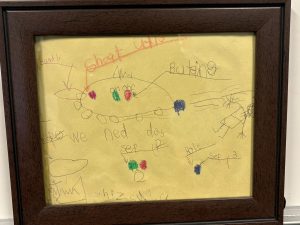
While his work is a little different than the “anti-dying machine” his daughter had in mind, the outcome of helping people live longer, healthier, more independent lives is the same.
Earp continues to collaborate with his URI colleagues and is studying why some older adults with overweight or obesity have lower mortality rates than their peers without those conditions. The project evaluates flaws in using body mass index (BMI) to define obesity in older adults and what a healthy rate of weight loss looks like for this group.
He has not stopped working with athletes either.
Earp is recruiting for a study on non-invasive was to monitor muscle pressure in athletes with or recovering from chronic exertional compartment syndrome, an exercise-induced condition that causes swelling or pain in the legs or arms. In another project, he is investigating how infrared light might be used to detect issues in runners’ recovery processes so that they can receive preventative care before an injury happens.