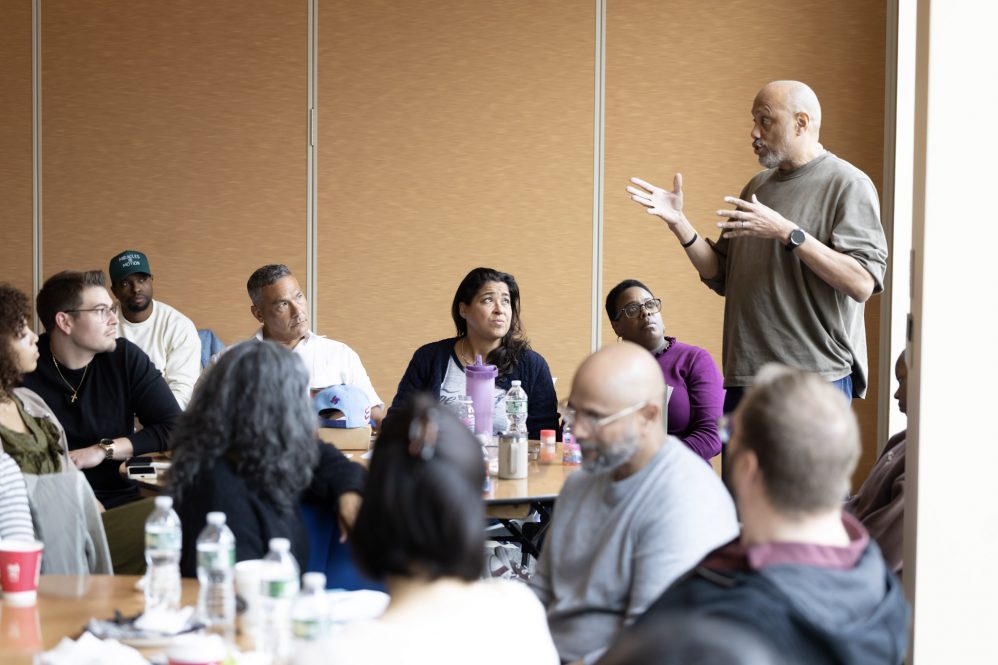
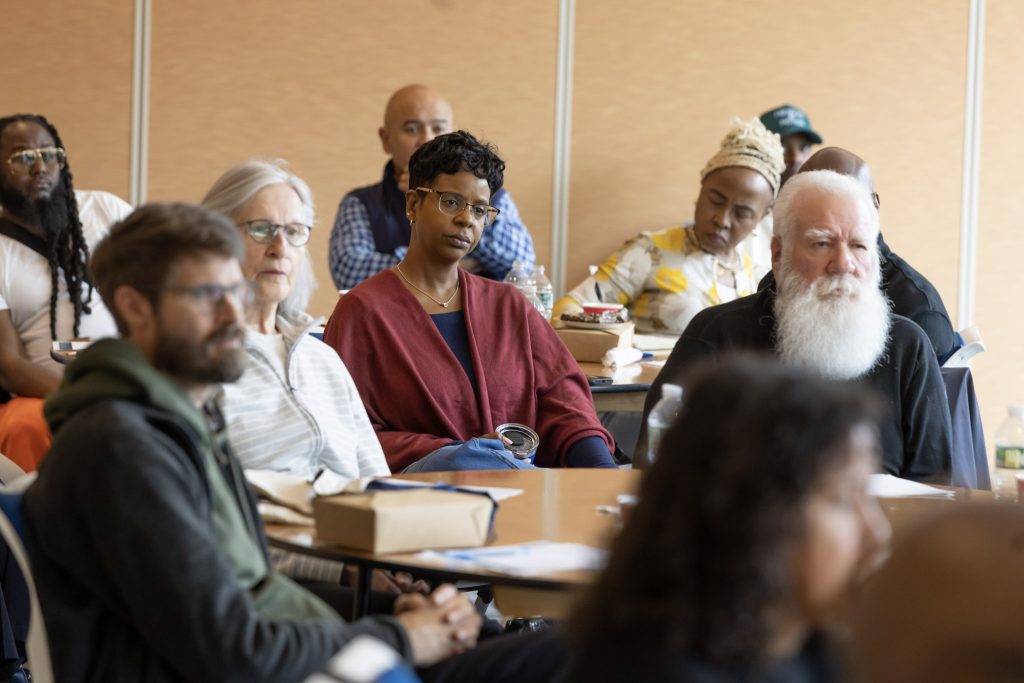
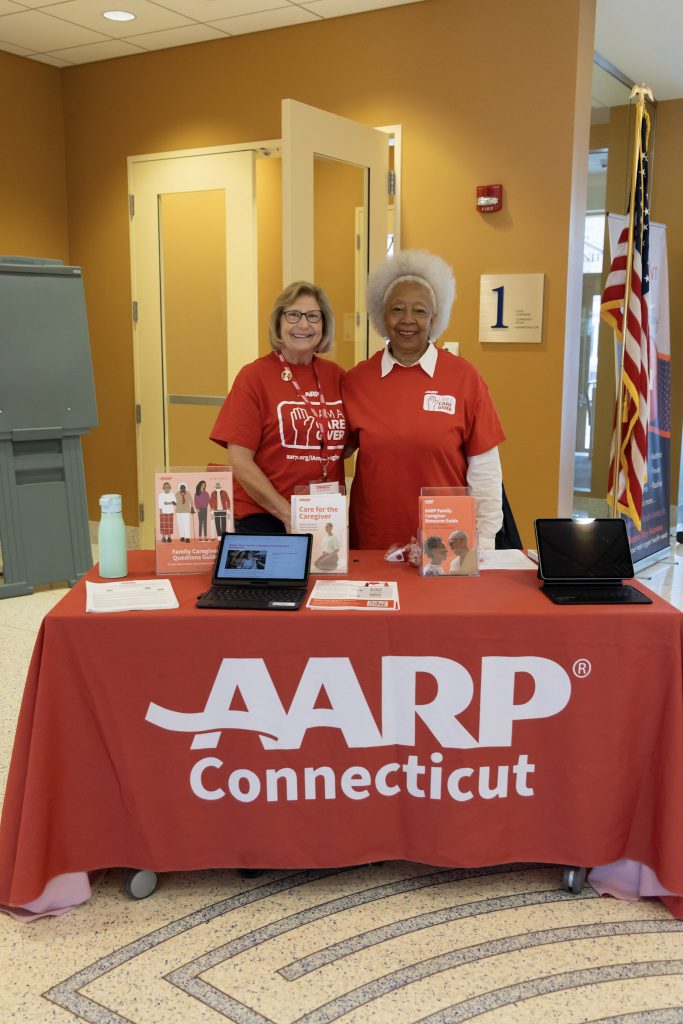
More than 60 community members gathered at the Community Health Center in Middletown on May 30 for Men of Pause: A Conversation with Men on Menopause, a community event hosted by the UConn Health Disparities Institute (HDI) and sponsored by AARP Connecticut.
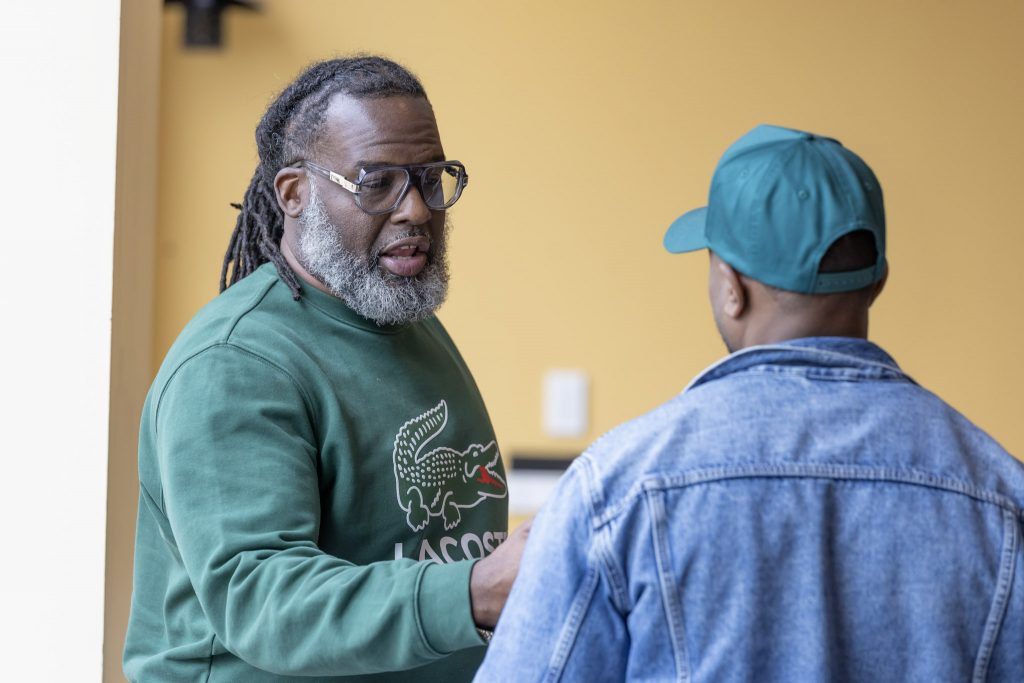
The free program invited men into often overlooked conversations about menopause, andropause, relationships, and the midlife health changes that affect individuals, partners, families, and communities.
The planning of Men of Pause was co-led by Sana Latrease Cotten, founder of Unashamed, Inc., and Armando Jimenez, founder and chief engagement officer of The Tailored Compass, who also served as the event facilitator, reflecting HDI’s commitment to community-led planning and programming.
The event is part of HDI’s Menopause Equity Initiative, a statewide effort to expand awareness, improve access to care, and promote informed conversations about menopause and midlife health. Through community partnerships and public programming, the initiative aims to make menopause a topic of shared understanding rather than private struggle.
“Men of Pause was designed to meet men where they are,” said Jimenez. “Men want to support the people they love, but many have never been invited into conversations about menopause. This was about opening that door with compassion, clarity, and community.”
Creating a community-centered space for learning and connection
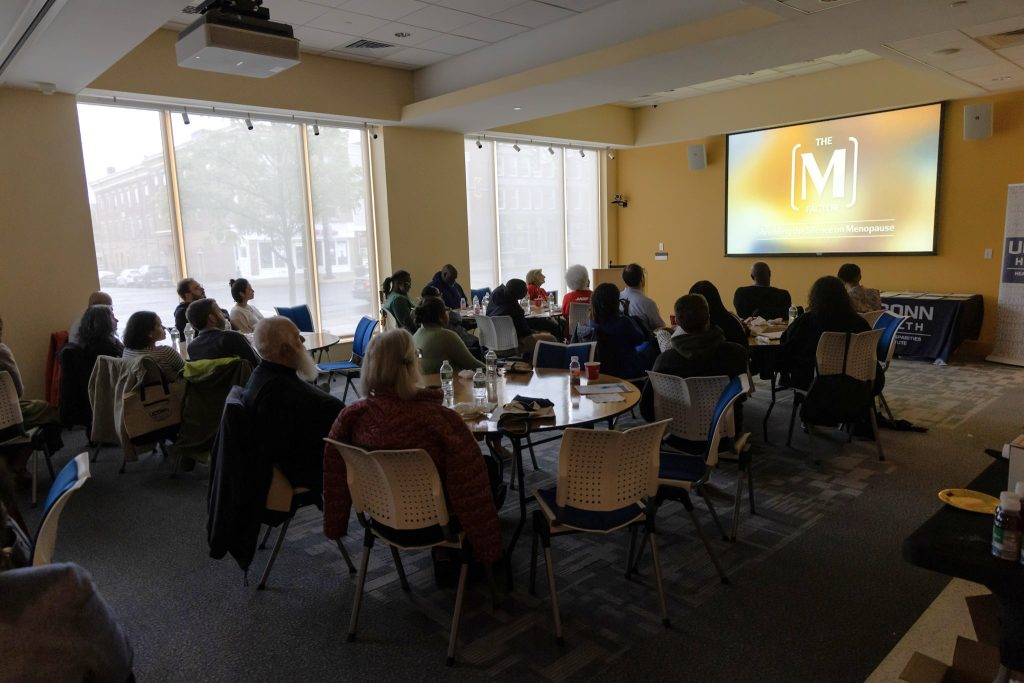
The half-day gathering included a screening of The (M) Factor documentary, a moderated group conversation, expert insights from clinicians, catered lunch by Chef Var, and opportunities for fellowship. Men attended alone and with partners, family members, and supporters, creating an intergenerational space for honest dialogue.
Jimenez opened the event by inviting participants to approach the conversation with “A.I. – Authentic Intentionality.” That framing set the tone for a gathering grounded in honesty, curiosity, and shared learning.
For many, the event offered a rare opportunity to talk openly about topics that are often private or misunderstood, including changes in mood, sleep, energy, intimacy, caregiving, and aging.
“We wanted to create a safe space for men to ask questions and feel supported in their curiosity whether they talked a lot or a little,” said Trisha Pitter, HDI’s director of community learning and engagement and instructional design specialist. “We saw men leaning in, taking notes, listening deeply, hugging their partners, and recognizing how important these conversations are, not only for themselves and their partners, but for generations before and after them.”
Expert insights: What’s happening in our bodies?
Following the documentary, attendees heard from expert panelists:
- Carla Gunn-Samson, MD, OB‑GYN and UConn School of Medicine alumna (UConn SOM ’06)
- Brendan Dillon, MD, endocrinologist, UConn Health
- Safiya Ruddock, LCSW, UConn School of Social Work alumna (UConn SSW ’13)
Gunn-Samson and Dillon explained menopause and andropause in clear, accessible language, noting that while women often experience a more abrupt hormonal shift, men may experience a gradual decline in testosterone that can contribute to symptoms in their 40s and 50s.
Gunn‑Samson emphasized that many symptoms’ men may observe in their partners, including changes in mood, sleep, energy, and intimacy, are often misunderstood or dismissed. She noted that menopause is a major hormonal transition and that greater understanding can help partners respond with empathy. “When men understand what’s happening physiologically, they can respond with empathy instead of confusion or frustration,” she said.
She also encouraged partners to consider attending medical appointments together when appropriate so both people can better understand what is happening and navigate midlife changes as a team.
Dillon discussed andropause and men’s midlife hormonal changes, including fatigue, hot flashes, irritability, decreased libido, and changes in strength or sleep. He encouraged participants to speak openly with healthcare providers about changes they are experiencing.
“Men experience shifts too,” Dillon said. “These are real, and they’re treatable. Men deserve to understand their own bodies just as much as they want to understand their partners’.”
One participant echoed that message, emphasizing the importance of paying attention to changes in one’s own body: “If you have something going on that feels a little different, get it checked out. It can be the difference between life and death.”
What Men Shared in the Room: “Why Aren’t We Giving Women What They Need?”
After the documentary, Jimenez invited the audience to share their thoughts and reflections. One attendee immediately responded, “That’s my wife!” as murmurs of agreement and applause rippled through the room, underscoring how closely the stories on screen mirrored many families’ experiences.
Participants expressed powerful emotions, including frustration at the lack of support available to women navigating menopause. One audience member asked, “Why aren’t we giving women what they need? Some women travel abroad for care. Why can’t we care for women here?”
His comment reflected a broader concern raised throughout the discussion: that menopause and midlife health have too often been under‑addressed in health care, research, and everyday conversation.
Another participant said men in his community had quietly discussed changes they were seeing in their wives and had turned to their pastor for guidance. He suggested that faith leaders, community leaders, and trusted messengers should be part of future conversations about menopause and midlife health. “If this is a major part of people’s lives, we also need to start talking to pastors about this topic, especially when it comes to couples or marriage counseling,” he said. “There is a social aspect in human behavior, and we need religious leaders as part of the conversation.”
Participants also pointed to structural barriers that make midlife health harder to navigate, including limited time with providers, insurance challenges, and difficulty finding reliable information. Several participants noted that education about menopause, andropause, and aging should be available in everyday community settings, not only in clinical appointments.
Building stronger relationships through understanding
During the panel discussion, clinicians and mental health experts explored how midlife changes can affect relationships, communication, intimacy, and family dynamics.
Ruddock reminded attendees that support does not always mean solving a problem immediately. “Men often feel pressure to fix things,” Ruddock said. “But support doesn’t always mean solving. Sometimes it means listening, validating, and showing up consistently. I’ve seen embarrassment get in the way. In relationships, we normally talk about finances, family expectations, and life aspirations. We also need to normalize talking about our health, our bodies, and our well-being long before midlife.”
She also emphasized that conversations about health, bodies, intimacy, and well-being should begin early in relationships rather than only when challenges arise.
Participants asked how to start conversations at home, how to better support partners, and how to understand their own midlife changes. Many said they appreciated having a space where men could talk openly, ask questions without judgment, and learn alongside others.
“This was the first time I’ve heard men talk about menopause together,” said Malia Hunt, MSW, HDI’s health policy fellow. “It was powerful to see men learning not just for themselves, but for the women they love. Events like this help normalize the conversation. As Jimenez reminded us, there were 60 people in the room, but the information shared can multiply when people bring what they learned back to their families and communities.”
Participants noted that physicians often do not have time to talk through what patients are experiencing, and that insurance limitations can prevent people from accessing care. “We need to create environments where this information is part of everyday life, not something you only learn if you can get an appointment or afford the right insurance,” one participant said.
A step toward menopause equity
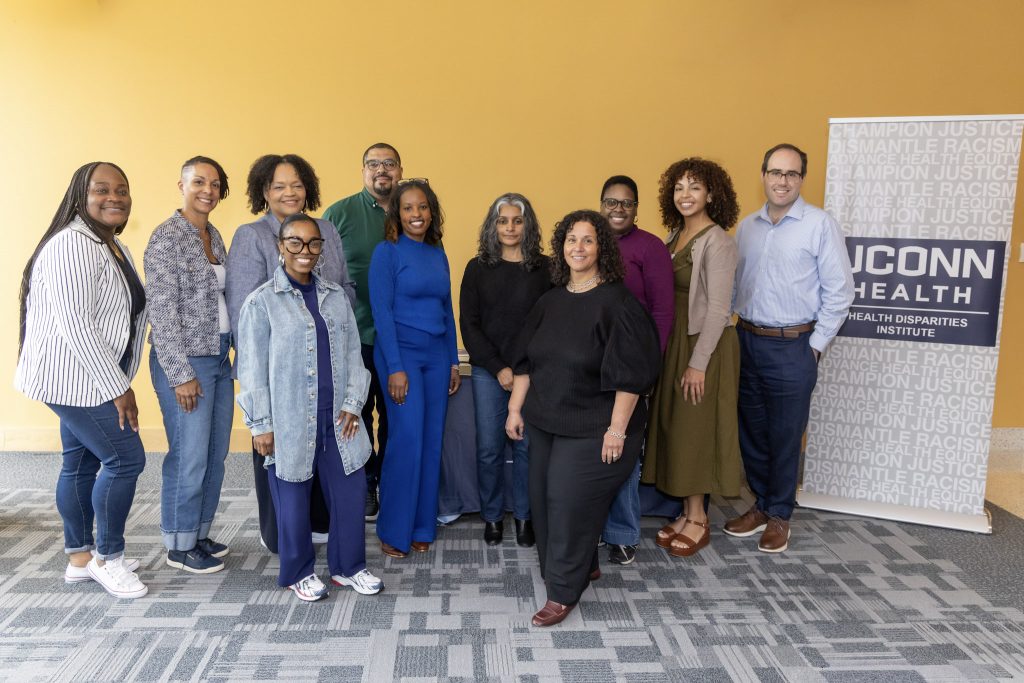
For HDI, Men of Pause reflects the broader vision of the Menopause Equity Initiative: creating spaces where communities, clinicians, researchers, and partners can share accurate information, elevate lived experience, and strengthen support for people navigating midlife transitions.
The event also showed that menopause equity is more than clinical care. It is about relationships, families, community education, health systems, and the social conditions that shape whether people have the knowledge and resources they need. The event closed with resources, next steps, and continued conversation among attendees.
“Men of Pause shows what is possible when we challenge the structures that have kept menopause and midlife health in the shadows,” said Linda Sprague Martinez, Ph.D., director of HDI. “By creating space for shared learning and collective leadership, we strengthen the foundation for more equitable health systems.”
As HDI continues its Menopause Equity Initiative, events like Men of Pause underscore the value of inclusive, community-driven approaches to midlife health and the importance of ensuring that no one has to navigate these transitions alone.
The UConn Health Disparities Institute (HDI) works to enhance research and health care for minoritized and medically underserved populations in Connecticut. HDI aims to eliminate health disparities and advance health equity through research, policy, community engagement, and workforce development. The institute partners with communities across Connecticut to address the structural and social factors that shape health, with a focus on ensuring that those most affected by inequities are centered in defining problems and leading solutions.
HDI’s Menopause Equity Initiative is part of this broader commitment. The initiative seeks to transform how menopause and midlife health are understood, discussed, and supported by expanding access to accurate information, improving care pathways, and elevating the lived experiences of women and gender-diverse people navigating midlife transitions. Through community-driven programming, partnerships, and public education, HDI is working to ensure that menopause is recognized as a critical health equity issue rather than a private struggle.
More information about HDI and the Menopause Equity Initiative is available at www.health.uconn.edu/health-disparities/menopauseequity.