
Connecticut parent Vanessa Hawke recalls the week she was offered a new job on a late Thursday afternoon and was asked to start on Monday. While elated for the new opportunity, she realized she had one business day to arrange affordable childcare for her 3-year-old son.
Hawke filled out forms, emergency contacts, and other paperwork, hoping to get a “mystery childcare spot that was hopefully available.”
“Needless to say, my son came to work with me that Monday,” she says. “In the end, the best that I could do to cobble this childcare I needed was 30 hours a week across two different programs, one of which was in a neighboring town in the opposite direction that I had to go to in. For my son, this meant a lot of dysregulation … trying to adjust to two sets of classroom expectations and to different routines every day.”
Since 30 hours of childcare wasn’t enough to cover a full time job, she made up for the time by working late into the night, early in the mornings, and occasional weekends, and still struggled to pay for the care that cost more than her mortgage.
“And that was just during the school year. When my (8-year-old) daughter was no longer in her elementary school program, she would need care as well,” Hawke says.
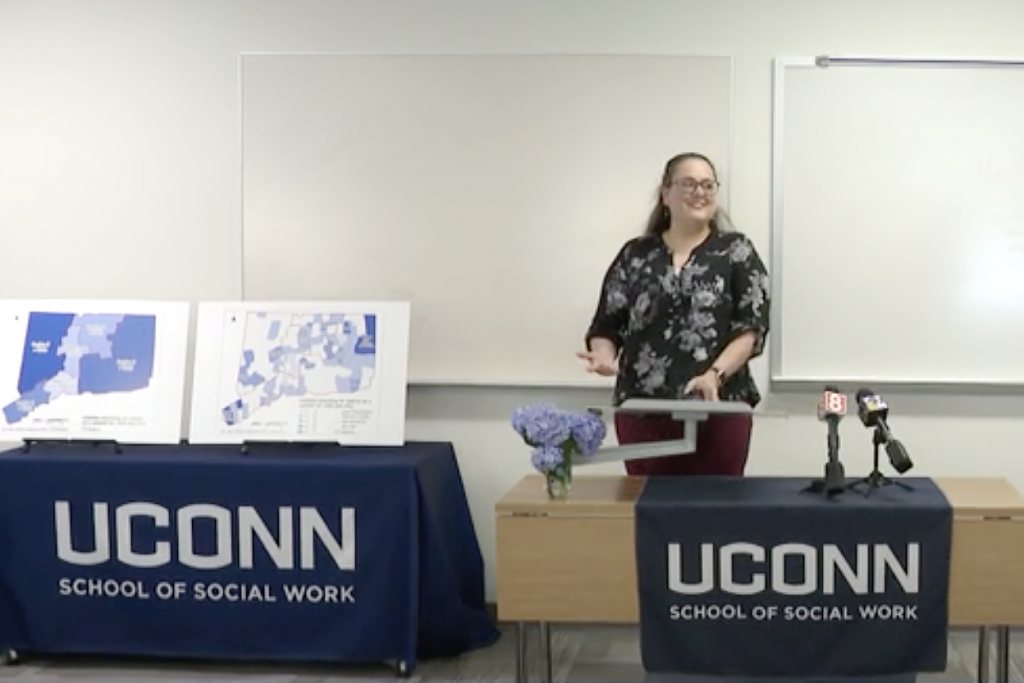
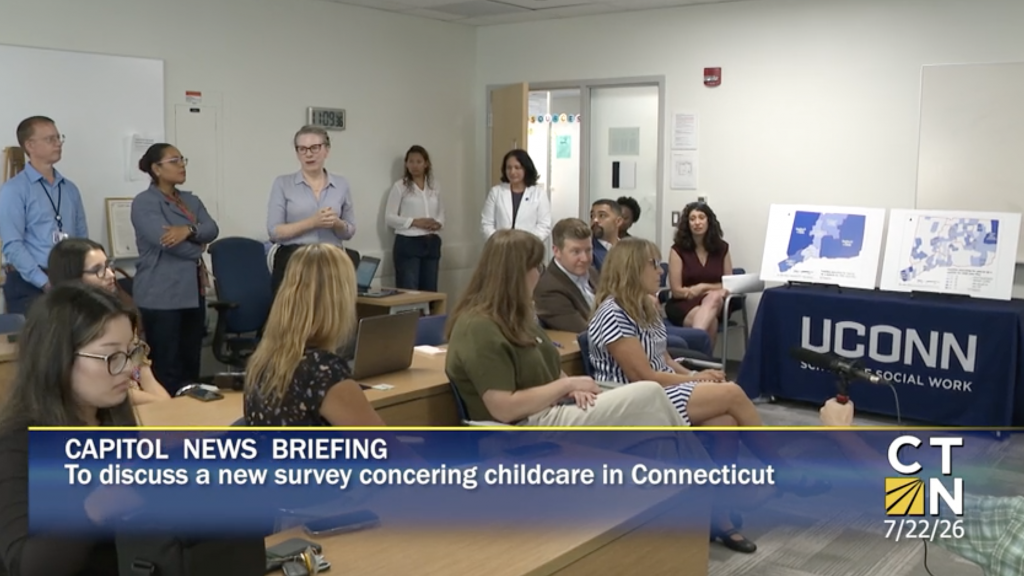
Hawke, who now works as a deputy director of the Connecticut Early Childhood Alliance, shared her personal story during a press conference held July 22 at the UConn School of Social Work in Hartford. There, media and members of the community gathered to hear the results of the new statewide survey conducted by researchers at the University of Connecticut School of Social Work in partnership with the Connecticut Office of Early Childhood (OEC).

“Finding affordable, reliable childcare remains one of the biggest challenges facing Connecticut families,” said Samantha Lawrence, assistant research professor at the UConn School of Social Work and principal investigator of the 2025 Connecticut Parent/Caregiver Survey study. “Parents and caregivers are the experts on what it takes to make childcare work in their daily lives. This survey brings thousands of those experiences into view, helping us see both the challenges families face statewide and the important differences from town to town and family to family.”
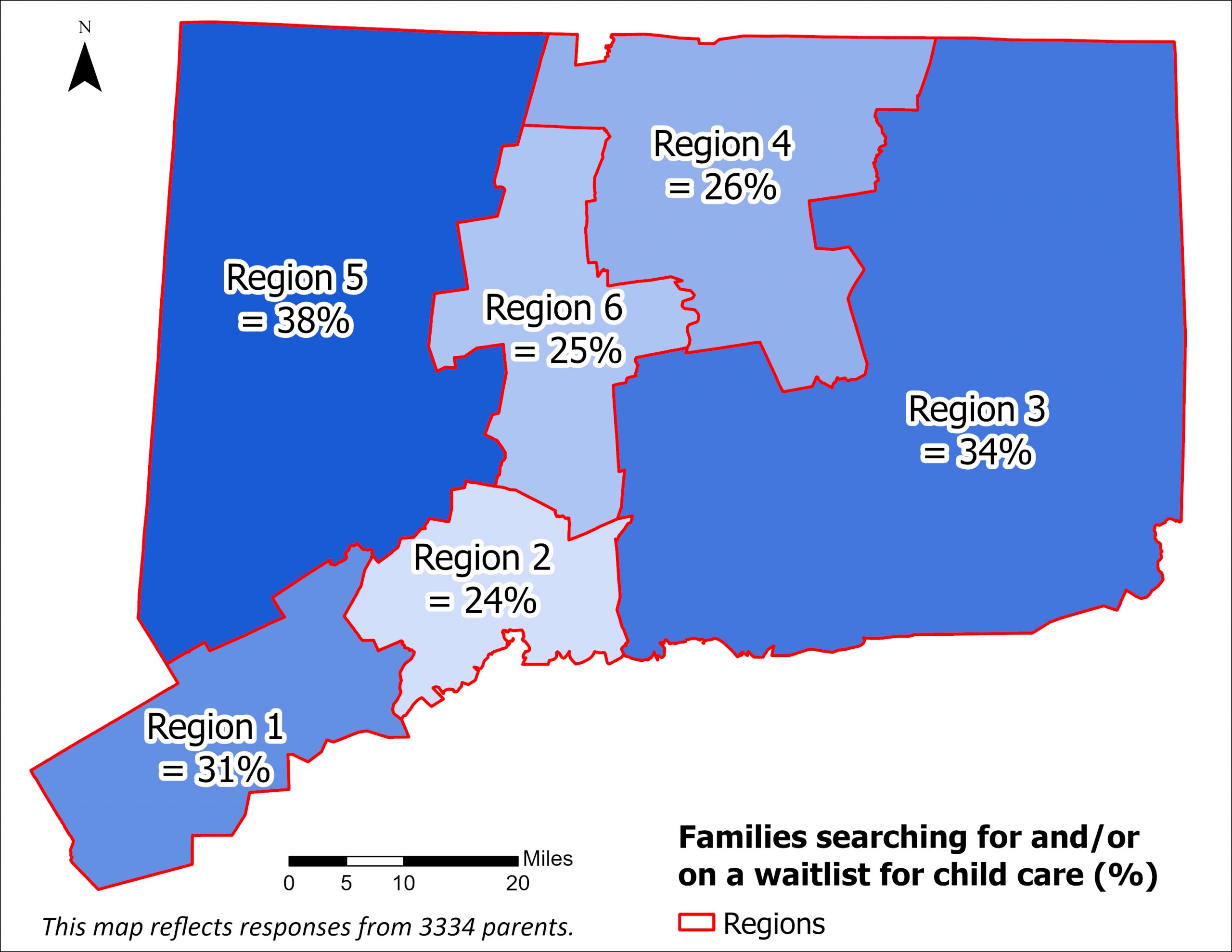
The survey offers one of the most comprehensive snapshots of Connecticut families’ childcare experiences and establishes a baseline for measuring the impact of future state investments. Based on responses from 3,719 parents and caregivers across the state, the researchers found that 53% of respondents believe childcare is too expensive. Nearly one-third (30%) said they were actively searching for childcare, on a waiting list, or both, while more than one-third (35%) reported that their current childcare arrangement does not fully meet their family’s needs.
Additionally, across nearly every community, Lawrence reported, that parents and caregivers sought childcare “where children would feel safe, where children could learn and develop, where they would feel comfortable leaving their child, and where care was affordable,” she said. “Taken together, these findings provide a richer understanding of how families experience childcare, helping us better understand the challenges families share and how those experiences differ across Connecticut.”
Families Continue to Face Significant Barriers
Lawrence and her 10-person team discovered the survey revealed substantial differences in childcare access across Connecticut communities.
Families with toddlers reported some of the greatest difficulties, with nearly half actively searching for care or waiting for an opening. Lower-income families were also more likely to report unmet childcare needs and challenges accessing financial assistance.
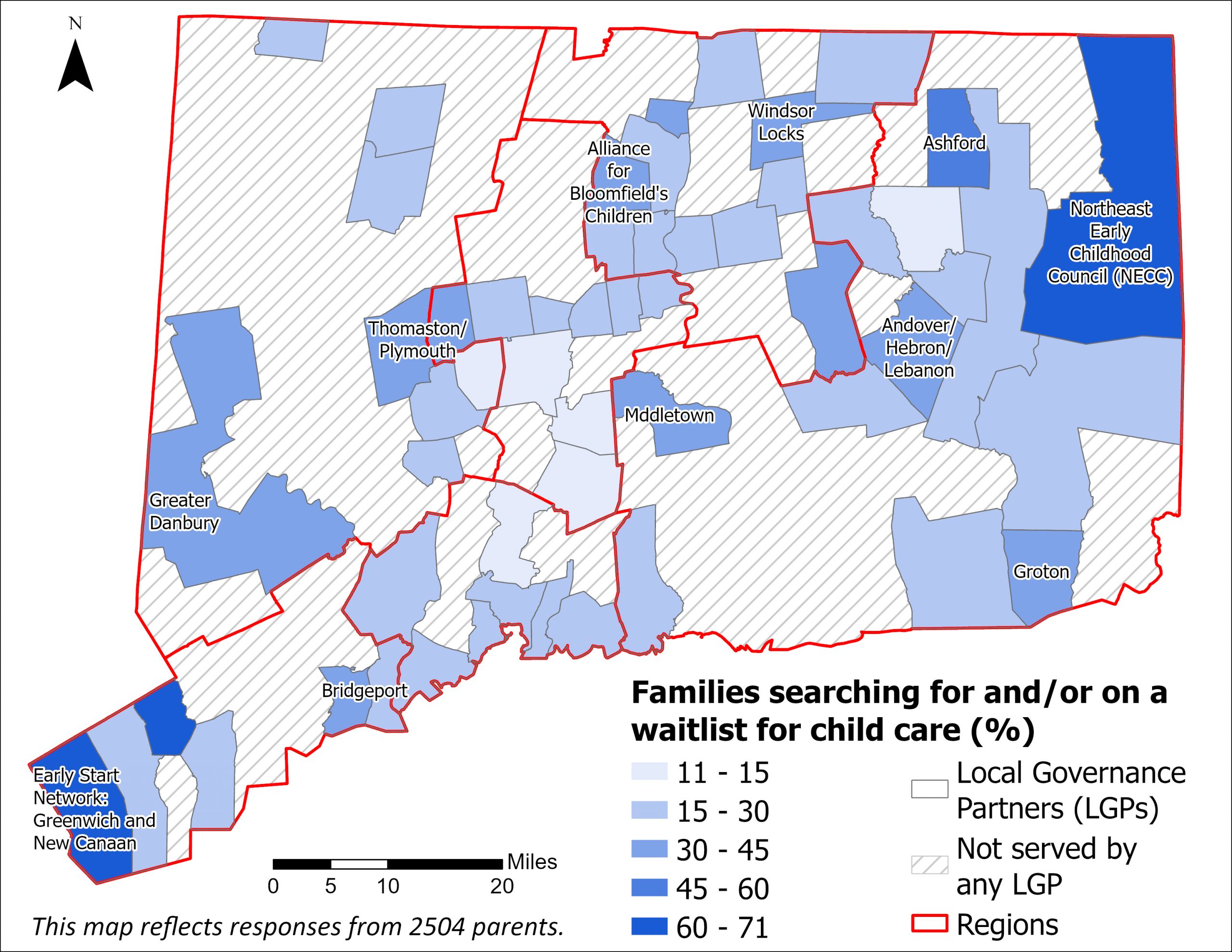
Regional disparities were equally striking. In one seven-town area of northeastern Connecticut, 71% of families reported searching for childcare, being on a waiting list, or both—the highest rate among the 48 local areas included in the survey.
The survey, which was funded by the Connecticut Office of Early Childhood through the federal Child Care and Development Fund, also incorporated parent leadership throughout the research process, with a Parent Committee helping shape survey questions and outreach efforts.
“The survey findings validate what I heard over and over from parents while we were out in the community,” said Adriana Warkoski, a member of the survey’s Parent Committee and a Parent Ambassador with OEC’s Parents Connecting Parents program. “From city to city and town to town, the message was the same: childcare costs too much, the process is too complicated, and families wait too long for an opening. If Connecticut wants a childcare system that really works, it has to be built around what Connecticut families really need.”
View all of the survey’s key findings.
Research That Informs Policy

Initial investments from the endowment have supported up to 1,000 new Early Start CT childcare spaces and an 8% increase in provider payment rates. By repeating the survey every two years, researchers and policymakers will be able to measure whether those investments improve families’ experiences over time.
“Parents are at the center of our work to support young children,” said OEC Commissioner Elena Trueworthy. “Parent voice and leadership are critical because they inform our agency about family needs and their priorities for safe, quality childcare. This Parent/Caregiver Survey provides data to guide our decisions as we build a sustainable early childhood education system that works for families across the state.”
Connecticut State Comptroller Sean Scanlon said the findings underscore why continued investment is needed.
“As the parents of two young children, my wife and I know firsthand what this survey confirms: childcare is unaffordable for most working families,” Scanlon says. “The goal of the new Connecticut Early Childhood Education Endowment is to make it affordable, and this continuing survey will help track our progress when it comes to the important mission of lowering childcare costs for families in our state.”
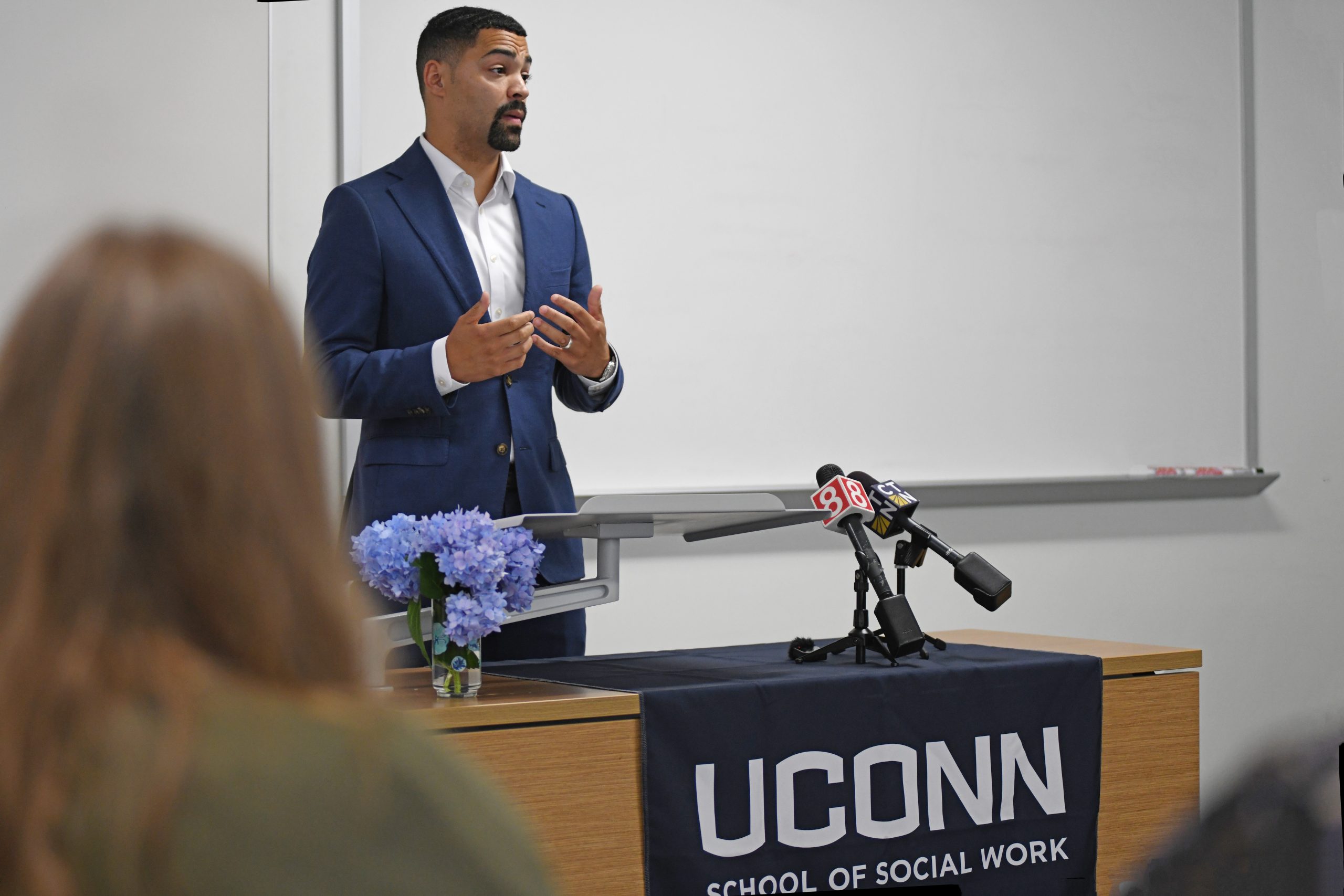
State Treasurer Erick Russell, who is charged with administering, investing, and distributing funds in the Early Childhood Education Endowment, stressed the importance of investing in early childcare. The reality, he said, is parents aren’t reentering the workforce because they’re going to spend more on childcare than they’d earn at the job. “And [there are] folks who have been sitting on wait lists for some time, trying to get access to care. The reality is unfortunate,” he said.
“For a long time, we’ve talked about childcare as simply an expense. And the reality is that if we continue to make these investments in this system, in people, in being able to provide more affordable care, it has a net return for the state,” Russell said. “This is all beneficial when you look at this from a long term perspective. As we know, as we get more people back to work, as we provide more quality affordable options for families, that this is all going to be something that is lifting up our state that’s going to help fill these 80,000 jobs that we have available in the state.”
Next Steps
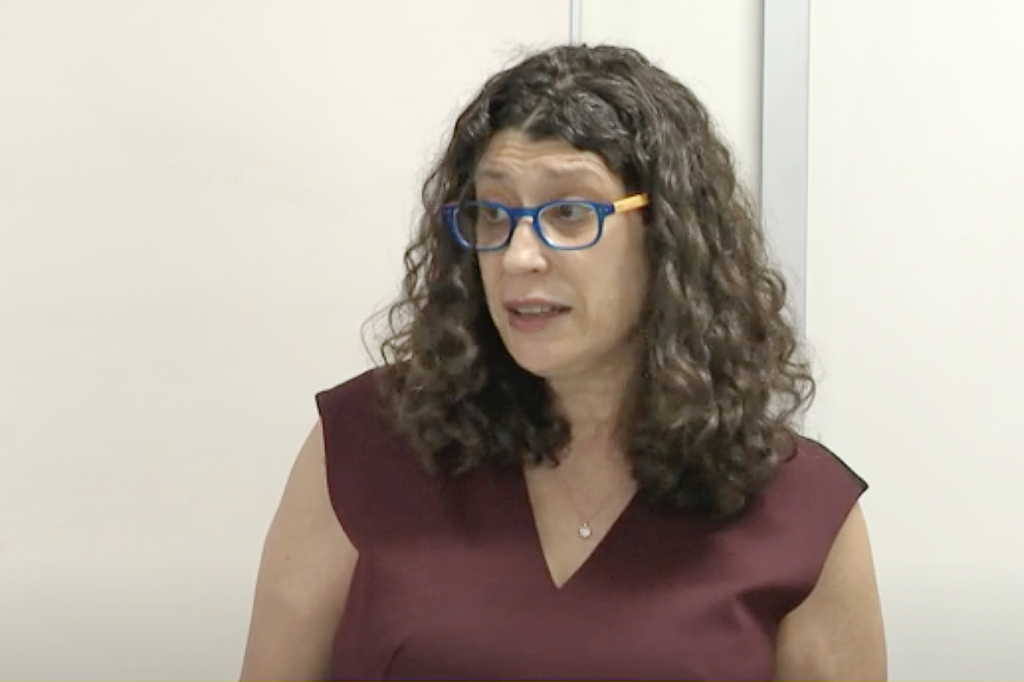
“Childcare is essential infrastructure,” said School of Social Work Dean Laura Curran. “It supports children’s development, makes work possible for parents and caregivers, strengthens family economic security, and helps communities thrive. Decisions about childcare policy and public investment should therefore be grounded in a clear understanding of what families experience in their daily lives.”
That commitment, she said, is “at the heart of” the OEC–UConn School of Social Work Partnership and the Connecticut Parent/Caregiver Survey. “These findings bring thousands of families’ experiences into the public conversation and connect what parents and caregivers reported with the leaders who shape state policy and investment.”
Lawrence’s team conducted the survey during fall 2025 both online and in person, offering it in four languages with assistance from approximately 140 community partners across Connecticut. The collaborative approach helped ensure participation from families representing a wide range of communities and experiences.
In the upcoming weeks, Lawrence and her team plan to distribute the survey findings to community partners and families through a one-page fact sheet and an e-mailed animated video, available in English, Spanish, Portuguese, and Polish.
These findings are especially timely as Connecticut continues making major investments in its early childhood system,” Lawrence said. “Because this survey is designed to be repeated every two years, [our] findings establish an updated benchmark that will allow us to measure change over time, not only whether policies and programs evolve, but whether families themselves experience meaningful improvements in access, affordability, and the ability to find childcare that meets their needs.”
Watch the entire press conference on Connecticut Network (CT-N) and view more survey results and photos of the press conference below and in this online photo gallery. (Graphics by Sabina Bandhari, ’26 Ph.D.)
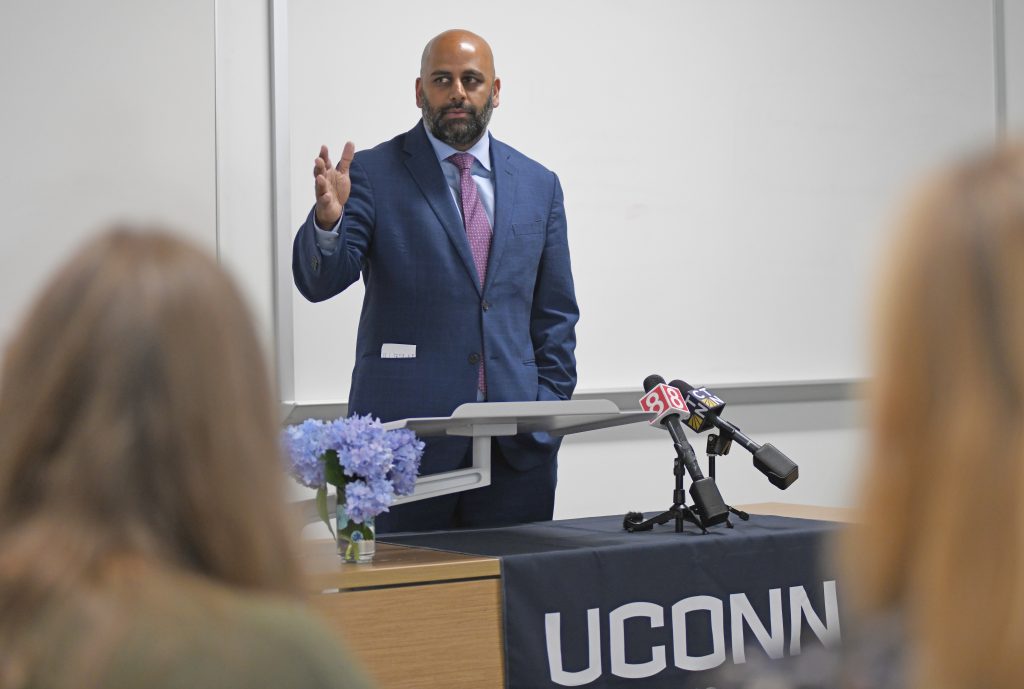
For more information about the survey, contact Samantha Lawrence.