UConn’s Doctor of Physical Therapy (DPT) Program is celebrating 75 years at UConn this year.
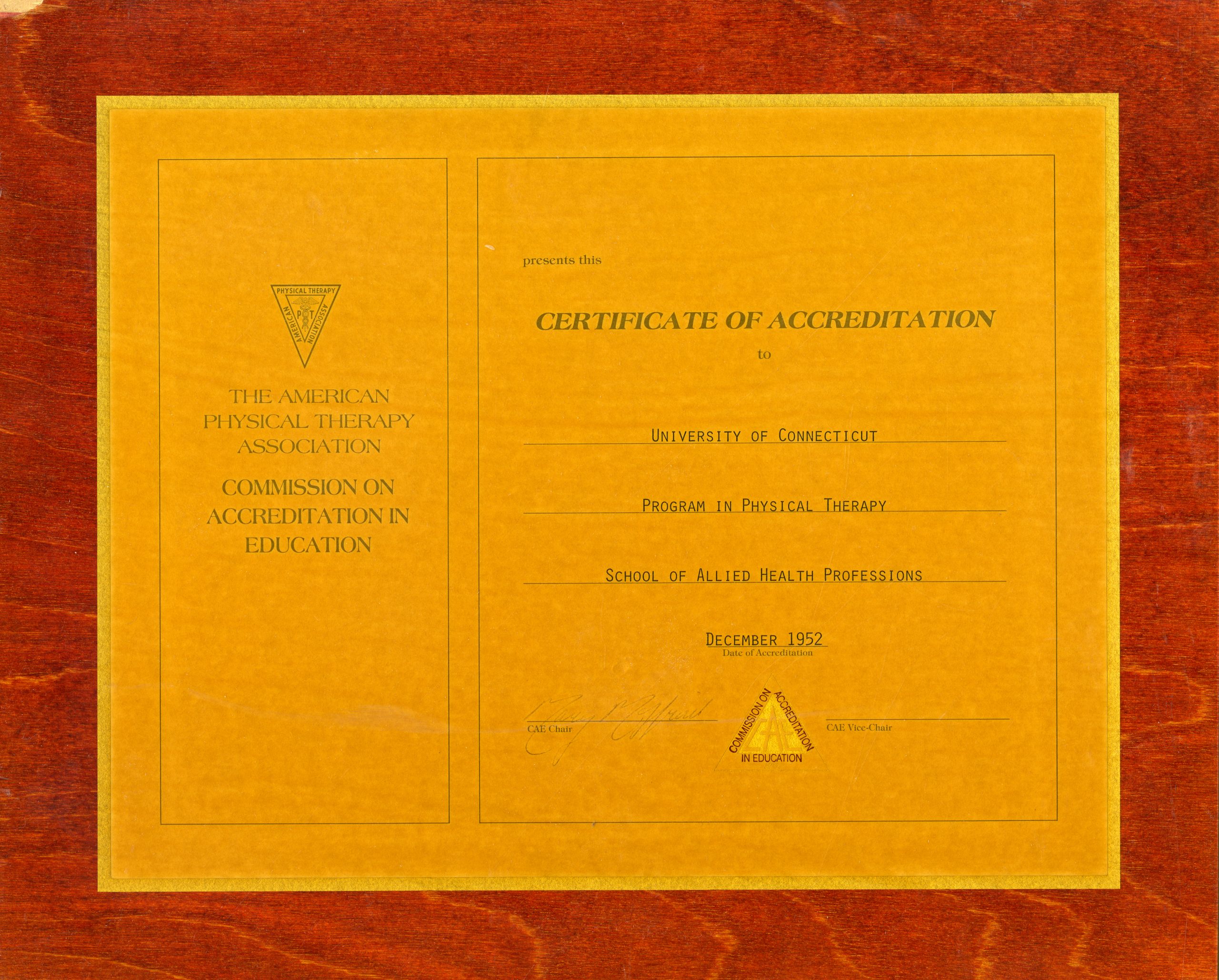
Now located within the Department of Kinesiology in the College of Agriculture, Health and Natural Resources (CAHNR), the DPT Program was first established as the New Haven School of Physical Therapy in 1919, making it one of the oldest physical therapy programs in the country. In 1951, the program moved to Storrs, where it has been ever since.
At the time, physical therapy was a new field, having risen to professional prominence in response to the needs of World War I veterans recovering from injuries, and the 1916 polio outbreak.
Initially, physical therapy training was folded into existing physical education programs. In 1939, the New Haven School of Physical Therapy began conferring separate associate’s degrees in physical therapy. When the program came to UConn, it offered bachelor’s degrees.
Under the leadership of its inaugural director, the late Frances Tappan, UConn’s physical therapy program became the first physical therapy education program housed in a public land-grant university.
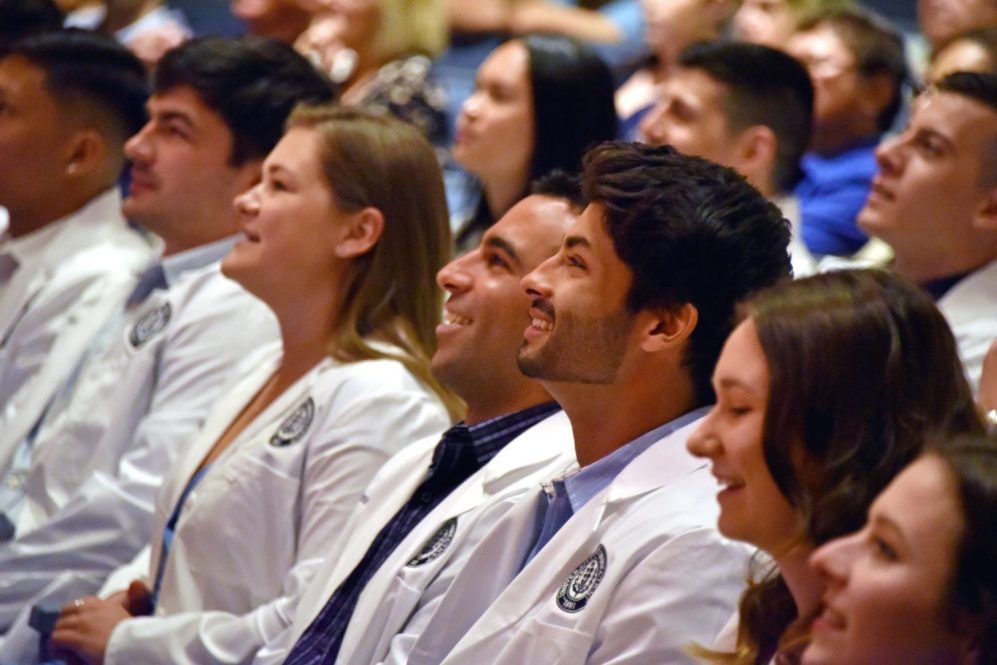
The first class had only six students. Today, UConn’s program still boasts small class sizes even as it has grown substantially, averaging 30 students per class compared to the national average of 46.
“Thet really makes us pretty unique,” says associate professor-in-residence and director of physical therapy Maryclaire Capetta. “Our students know each other and our faculty really, really well. Even beyond their time as students they continue to stay connected to the program and the faculty who are here.”
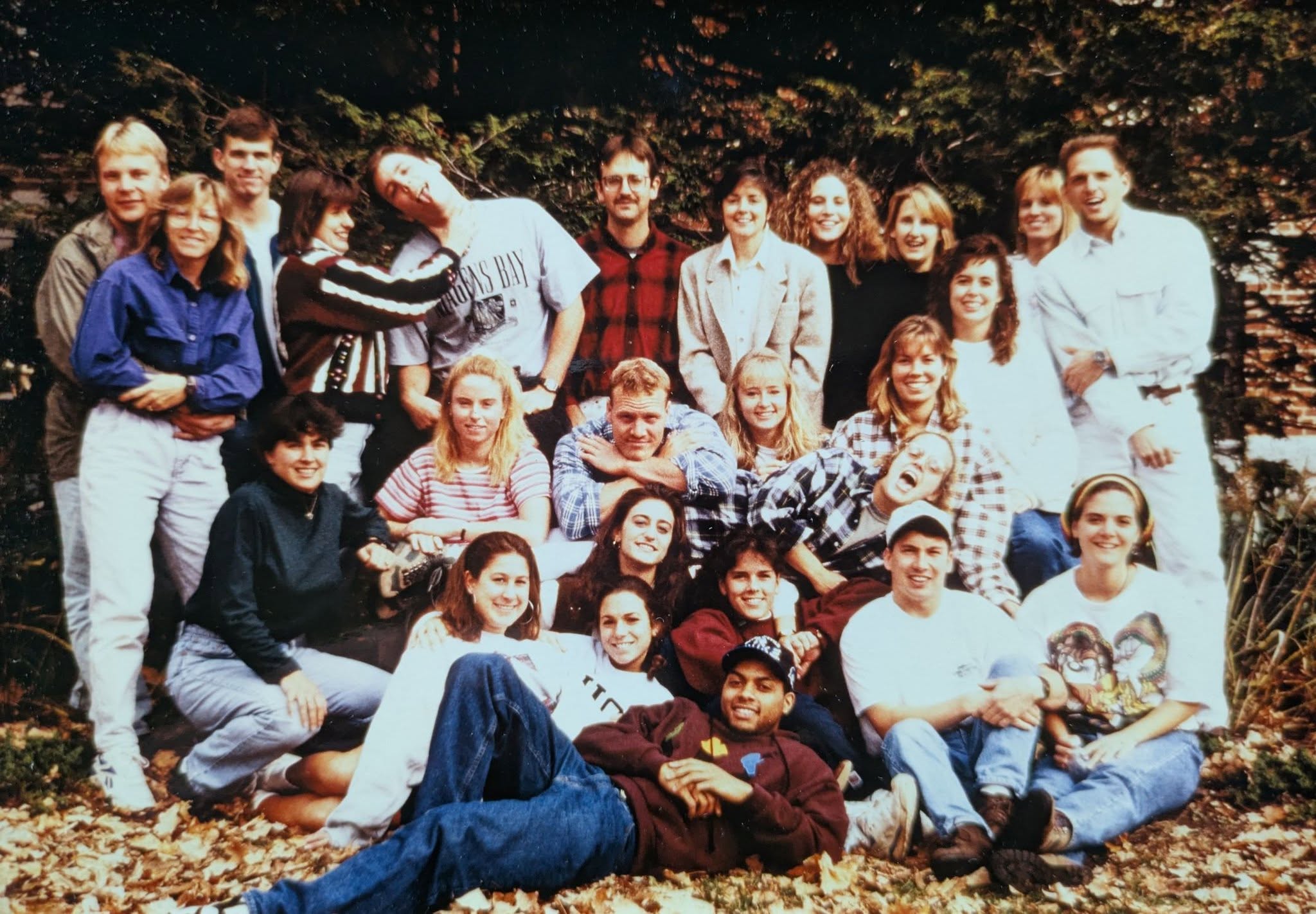
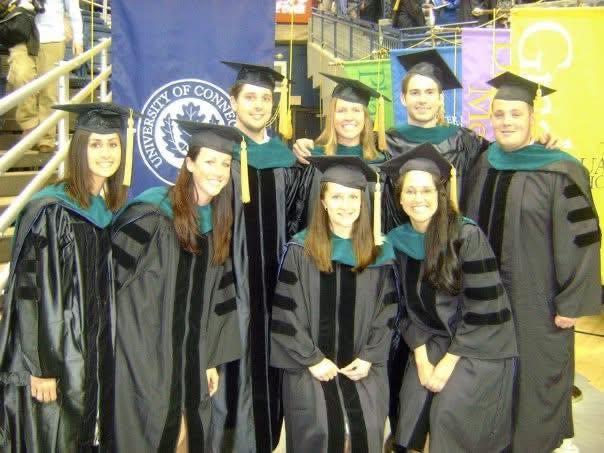
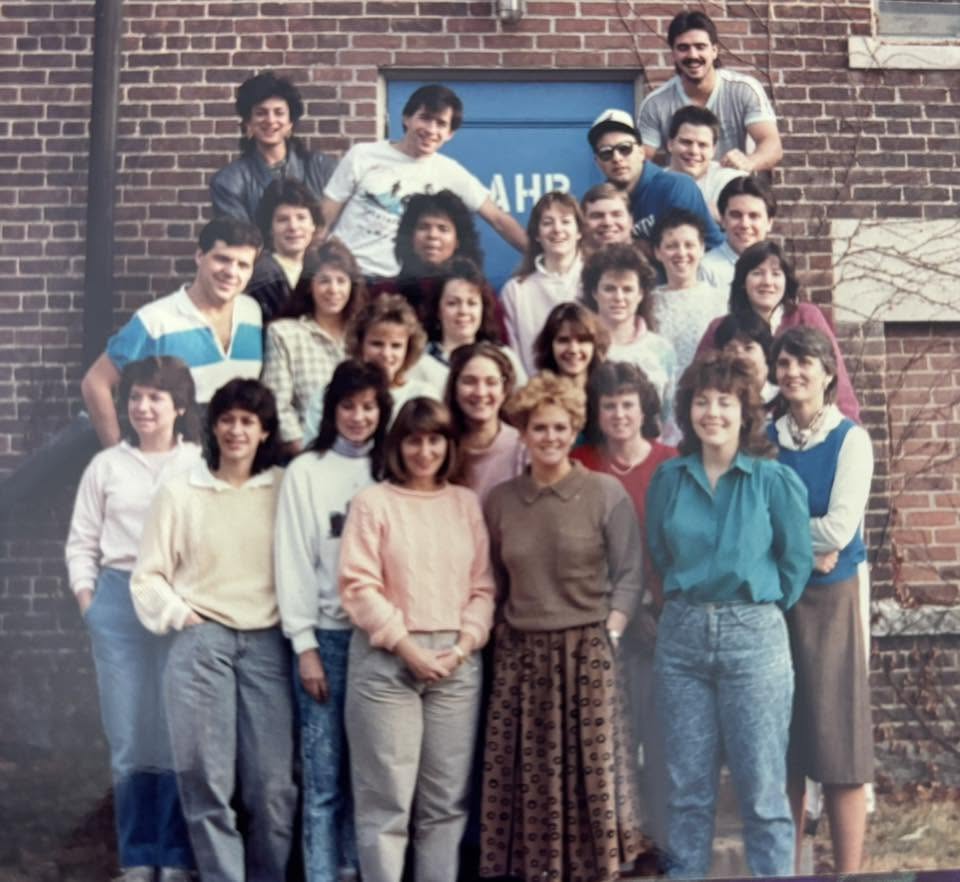
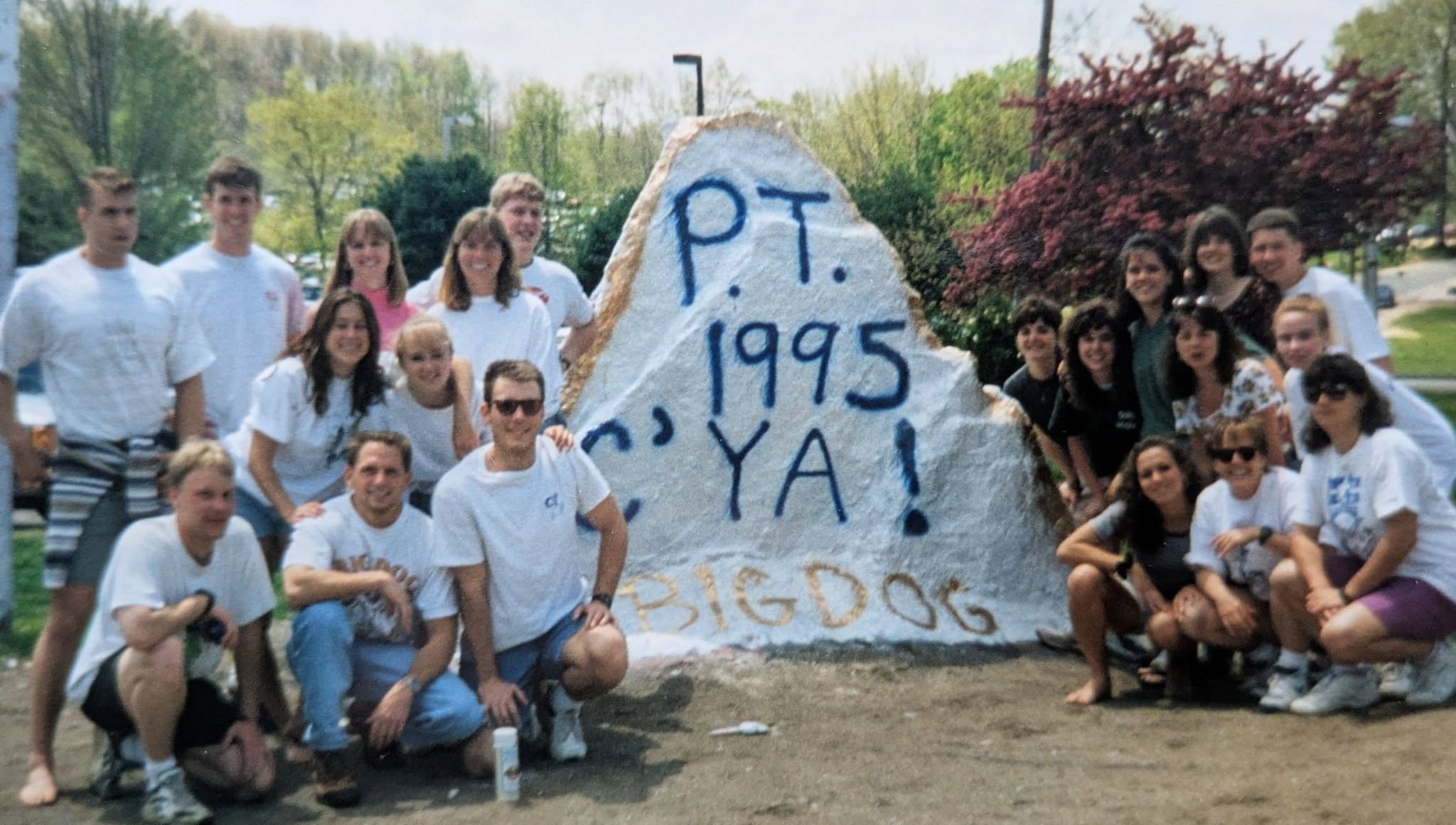

Pamela Roberts ’70 ’77 (CAHNR) is an emeritus associate professor and graduate from UConn’s physical therapy bachelor’s and master’s programs. From that time, the program has moved to several buildings on campus including Koons Hall, before finding its current home in the Kinesiology building.
“At that time, we were in a little white cottage,” Roberts says. “It made me feel like I was part of the old timers because we knew it was slated to come down, and we knew that we would be moving soon.”
During her years as a student, Roberts worked closely with the late Patricia Gillespie.
“There was only one faculty member who was married, and a woman, and she became my mentor and the reason why I decided to teach at UConn,” Roberts says.
Roberts spent decades teaching in the program. She also served as the program director from 1990 to 1996. This was a transitional period as UConn stopped offering the bachelor’s degree in physical therapy to focus on the master’s program. In 1979, the American Physical Therapy Association (APTA) determined a master’s would be the degree required for the profession.
Since 2020, all physical therapy programs in the U.S. have had to offer doctoral degrees in order to be accredited by the Commission on Accreditation in Physical Therapy Education (CAPTE). UConn has offered a doctorate in physical therapy since 2007.
“I am still so proud of everybody that leaves the University of Connecticut with that advanced degree in physical therapy,” Roberts, who helped write UConn’s doctorate program, says.
The work of those who learn and teach in UConn’s physical therapy program extends far beyond the College. Even in retirement from the University, Roberts continued working, revising guidelines for providing physical therapy to children with individualized education plans (IEPs) in collaboration with Mansfield Public Schools.
“[I was determining] whether the guidelines that we wrote in 1976 and rewrote in 1990 were still feasible,” Roberts says. “[Saying] let’s figure out the role of PT and collaborating in schools, which was also the subject of my dissertation.”
This isn’t the only connection between UConn and the community when it comes to physical therapy. The UConn DPT Program runs a free community physical therapy clinic. At the UConn PT C.A.R.E.S. (Community Access to Rehabilitation and Education Services) Clinic, students provide care for members of the community who have limited access to physical therapy services, and provide wellness and prevention services such as fall-risk assessments at community and senior centers.
“Under the supervision of faculty, students are able to learn how to evaluate and manage members of our community with various health conditions,” Capetta says.
Colin Sauter ’20 (CAHNR), an alum of the DPT Program and current Ph.D. student, was involved in founding the PT C.A.R.E.S. clinic during his time in the DPT Program.
“We created that clinic through our management and PT class and created a policies and procedures manual and a business plan for the clinic, which is now up and running and sees a bunch of patients, which is so lovely,” Sauter says.
Sauter has returned to UConn to earn his PhD, focusing on neurologic physical therapy for conditions like Parkinson’s disease.
“What’s really nice about the UConn PT program is that it feels very intimate and homey, especially given where our building is in Horsebarn Hill,” Sauter says. “You develop this cohort that you become really close with, all learn and experience the program together, and you’re in the same building with your professors all day, every day. It’s this little family that hopes to teach the future PTs and set them on their path.”
Faculty expertise in the physical therapy program spans diverse areas including Parkinson’s disease, children with disabilities, people who are hospitalized for extended periods of time, neurophysiological mechanisms of motor control, and sports medicine.
“The future of the program is really bright,” Capetta says. “Being a state institution, we are an affordable option for students to get their doctoral degree. We have tremendous young faculty who are really on the cutting edge of physical therapy research. I think the program is poised to make a bigger name for itself in physical therapy research and in the physical therapy community.”
This work relates to CAHNR’s Strategic Vision area focused on Enhancing Health and Well-Being Locally, Nationally, and Globally.
Follow UConn CAHNR on social media