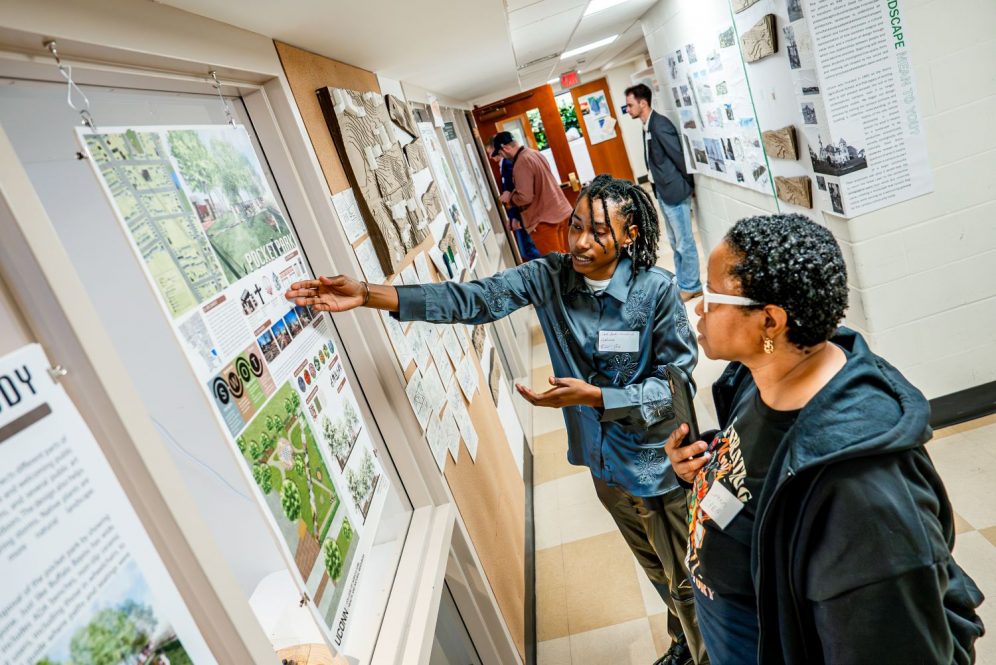
UConn’s landscape architecture program collaborated with the Community Placemaking Engagement Network (CPEN) to develop designs for reinvigorating the Farmington Canal Heritage Trail.
“We wanted those spaces to not only be aesthetically pleasing, but also biodiverse to attract pollinators and be areas that the community can actually be proud of,” says Sohyun Park, associate professor of landscape architecture.
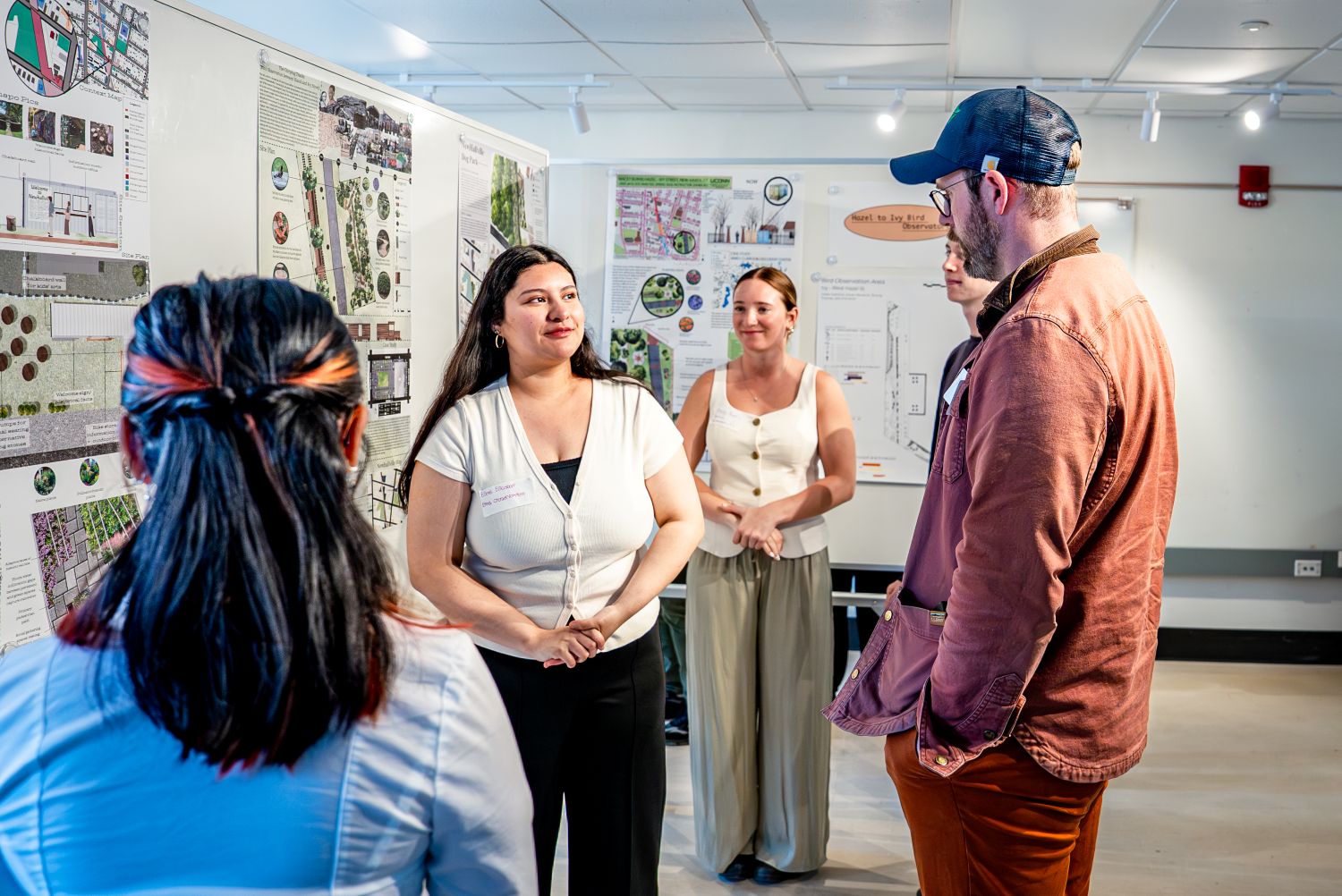
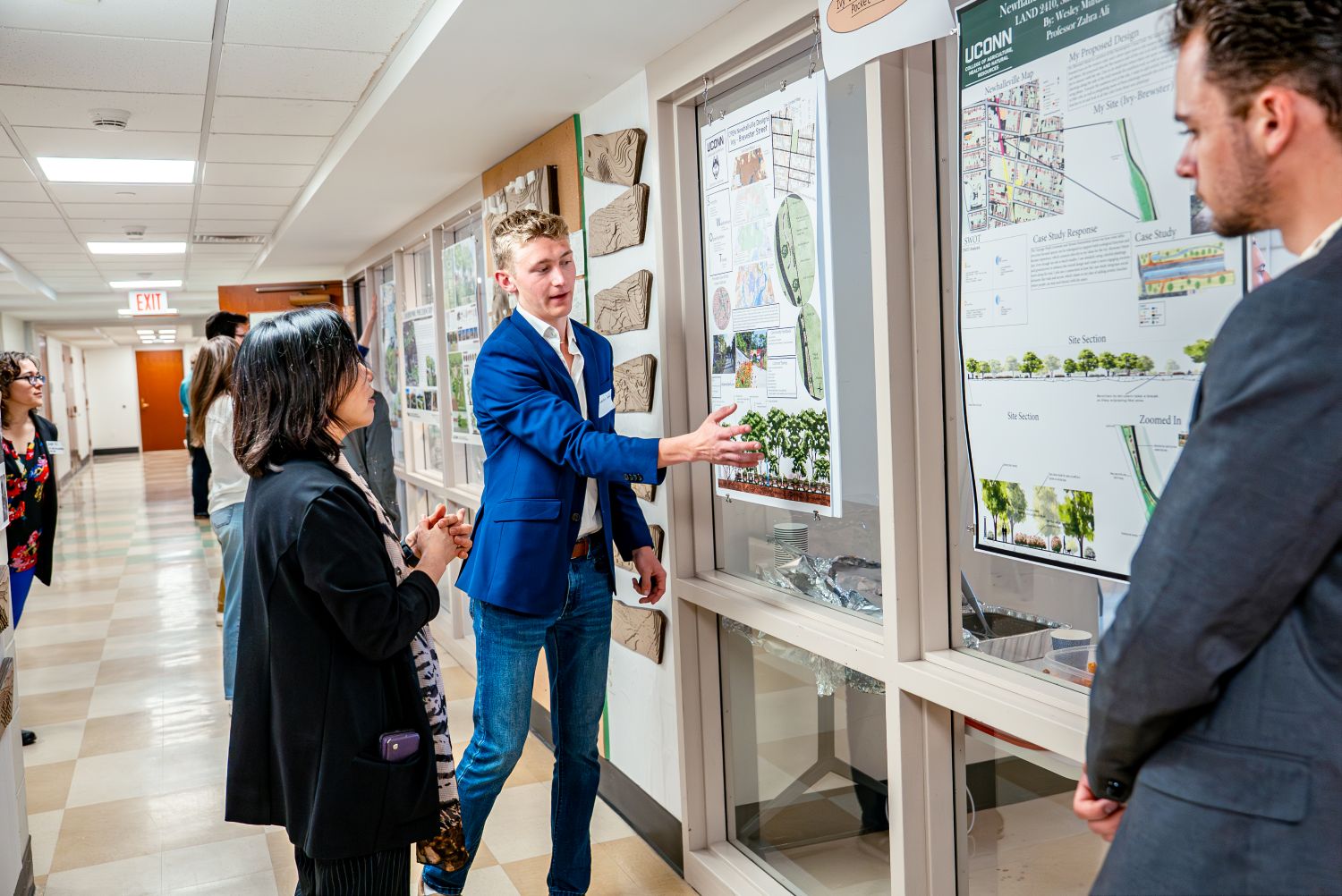
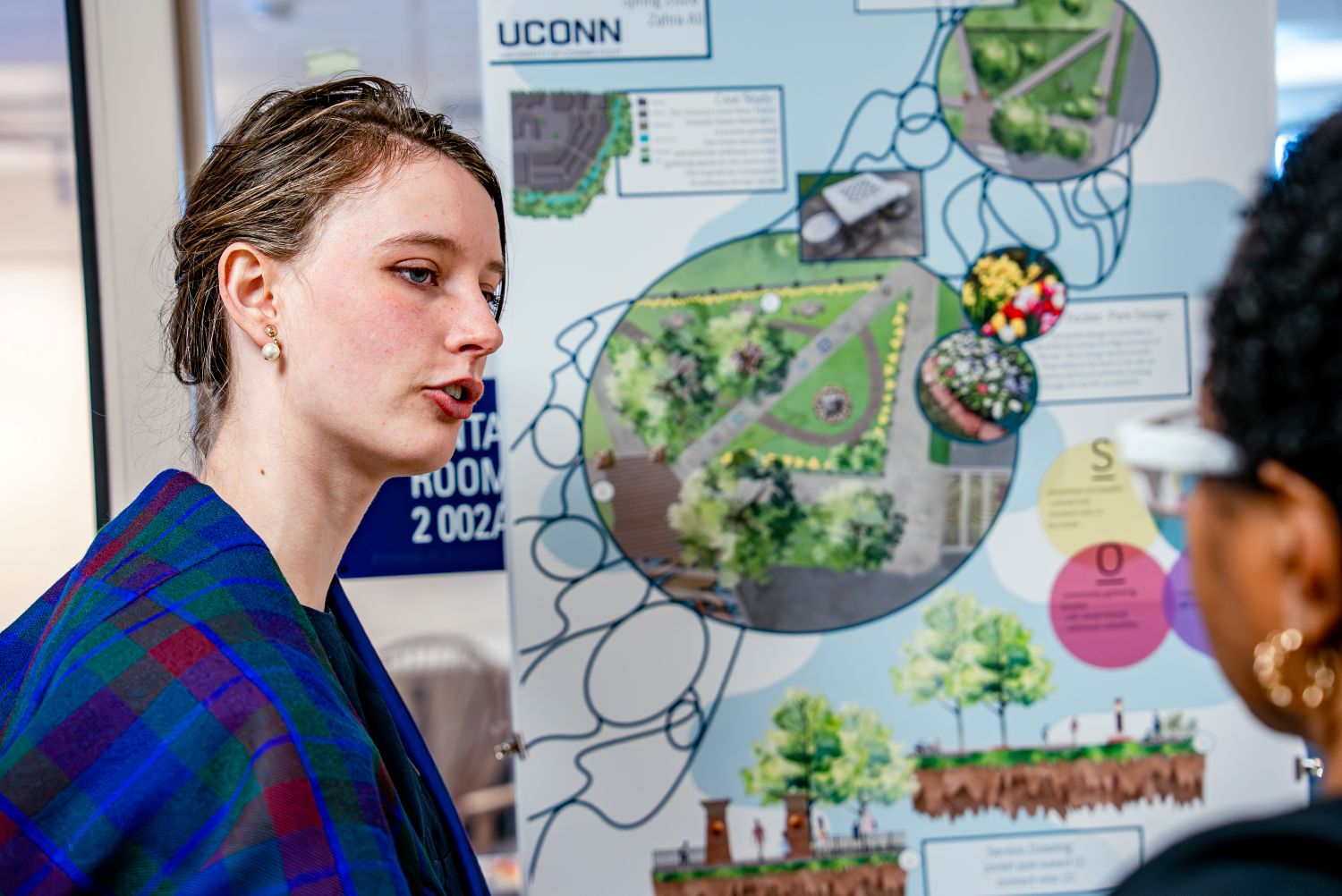
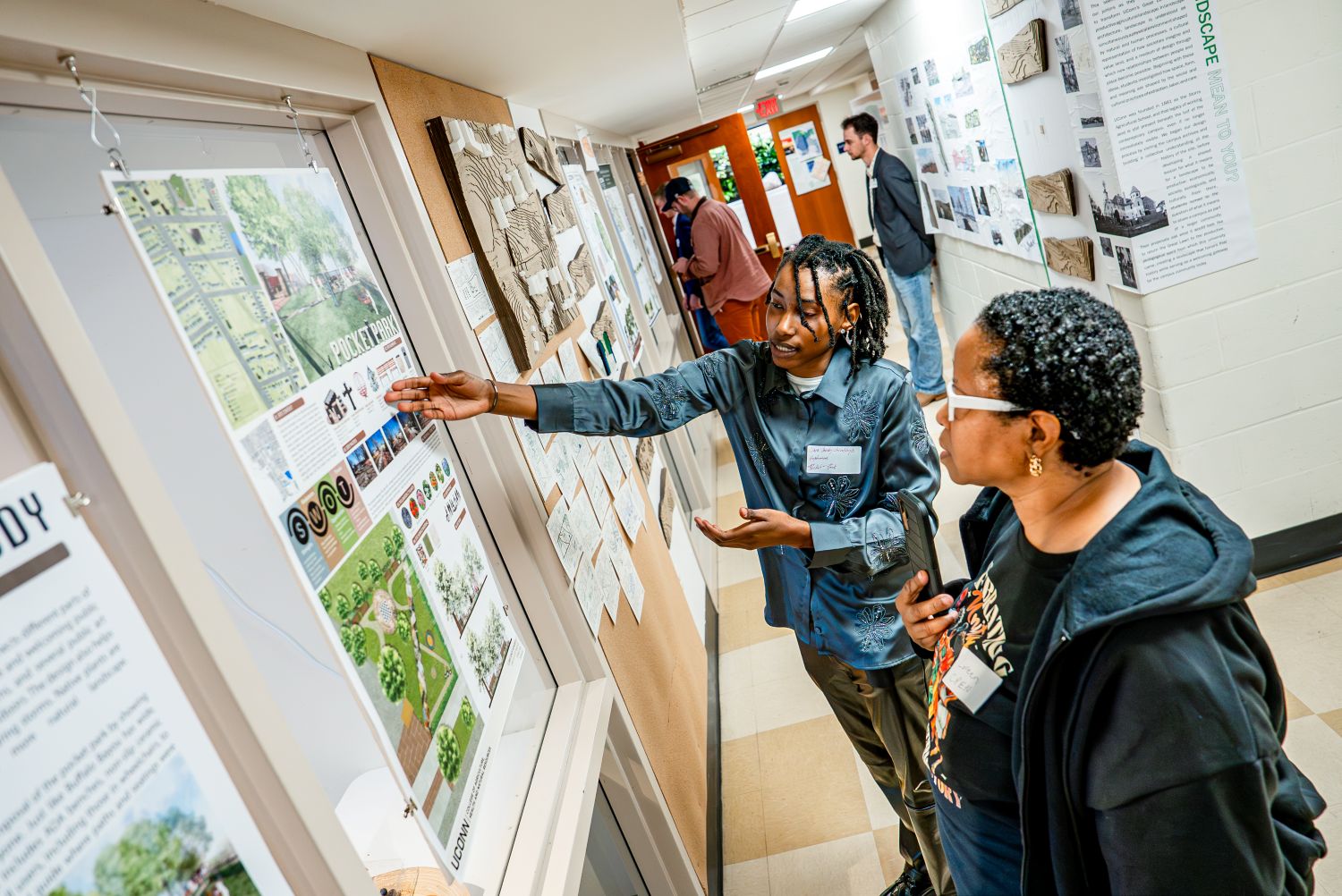
Landscape architecture students worked on a section of the 56-mile trail that runs through the Newhallville neighborhood of New Haven. The students’ plans focused on multiple sites spanning six blocks between Thompson Street and Bassett Street, including a nursery, pocket park, bird observation station, and adjacent green spaces.
The landscape architecture program, in the College of Agriculture, Health and Natural Resources (CAHNR), employs a “vertical studio” model. This means sophomores and juniors work side-by-side on the site analysis, program development, and planting design.
“We wanted to integrate community co-design and engagement opportunities,” Zahra Ali, a Ph.D. candidate in landscape architecture and instructor for the site analysis course says. “It also gave them multiple opportunities to engage the site throughout different seasons.”
Students worked closely with CPEN to understand what the community wanted from the site.
“It was really valuable for us as a grassroots organization to collaborate with these young people with design skills, computer skills, and knowledge about the site’s needs. Then we see their renderings reflect our suggestions – it was really valuable in terms of showing others what this could look like,” Doreen Abubakar, CPEN’s founder, says.
The Farmington Canal Heritage Trail runs from New Haven all the way up to Suffield on the Massachusetts border. The trail follows the route of the historic Farmington Canal, which was built in the early 19th century and later became a railroad. Now the trail is accessible to hikers and cyclists.
This history became a central feature of many design plans, at community members’ suggestions.
Kathleen Cropley ’27 (CAHNR) worked on the site between Brewster Street and Ivy Street along the trail. Cropley’s plan converted old train cars into planting beds.
“They can’t really dig into the soil, and it’s not really good for growing plants,” Cropley says. “So, we thought adding some planting boxes would be important and incorporating the history could be a really good idea.”
Cropley’s design also included trail-side chess tables to encourage community engagement.
Community members also emphasized their desire to have more colorful plants along the trail as well as the need for them to be easily maintained by CPEN’s volunteers. Both considerations were figured prominently in the students’ designs.
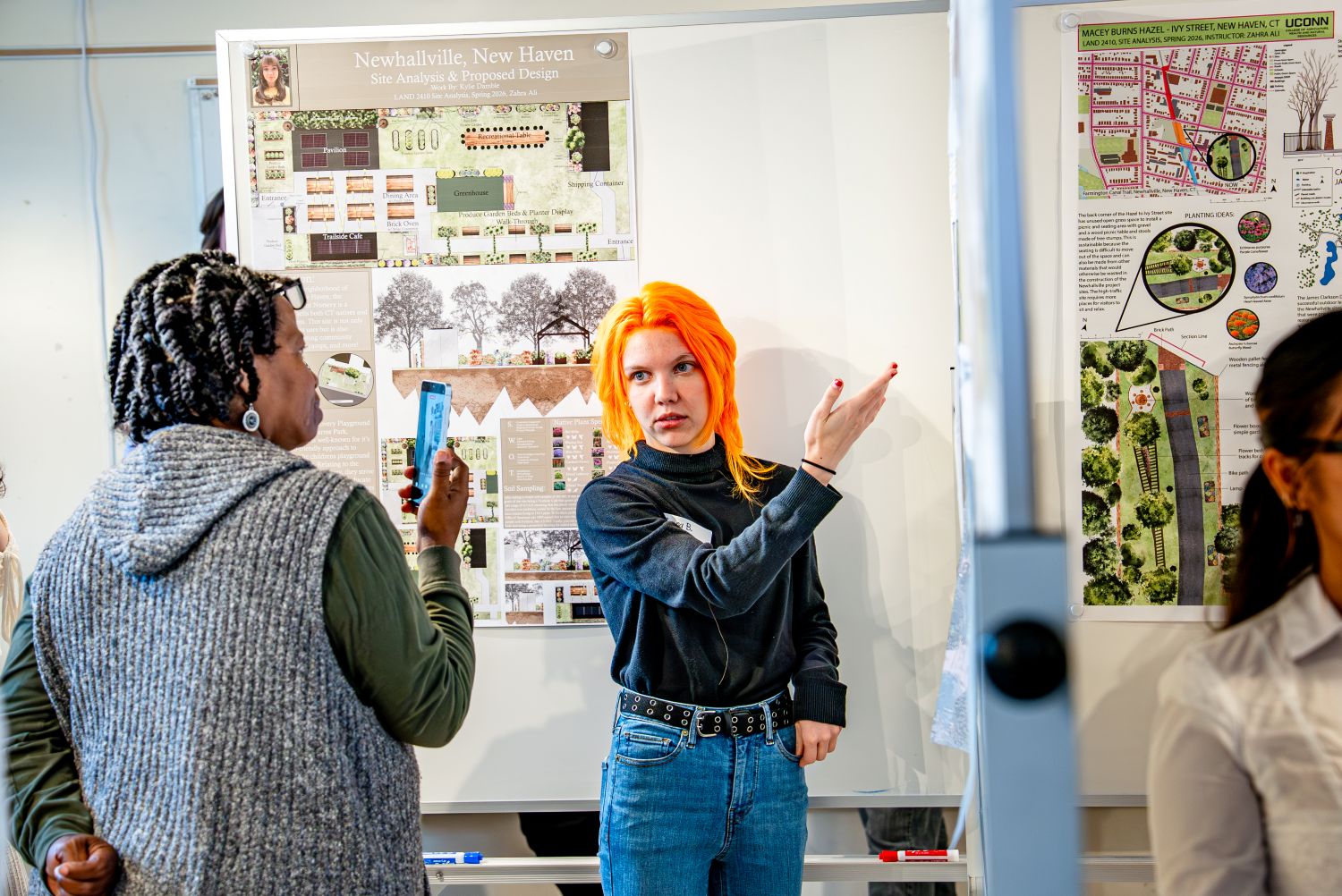
Kylie Damble ’28 (CAHNR) developed a plan for the nursery site where community members can buy ornamental plants and produce. The site includes a greenhouse, planting beds, recreational spaces, and beehives for honey production. Damble’s plan includes a repurposed shipping container as a trailside cafe.
“I really loved this experience because we got to have on-site visits with the community, so we were able to get a lot of feedback,” Damble says.
Damble says she worked to incorporate community concerns about making the area family friendly into her design through features such as a recreational table and making sure the beehives were placed far from where children would be playing and learning.
This project marks the beginning of a collaboration between the landscape architecture program and CPEN, which has opportunities to develop designs for other areas throughout the town.
“We really appreciate the collaboration with local communities,” Park says. “We just wanted to continue building the partnership with long-lasting care and trust.”
CPEN members came to the Storrs campus in April for an exhibition of all the projects.
“We were blown out of this world when we came up for the exhibit,” Abubakar says.
CPEN and three partner organizations received a grant from the Public Land Trust to enact the design plans for the bird observation area.
“This was the start of a grassroots program, and working directly with the students and faculty gave us access to technology and knowledge to create things we can actually use. It’s really exciting,” Abubakar says.
This work was supported through a three-year USDA Capacity Hatch Grant administered by the Storrs Agricultural Experiment Station. The grant began in 2024. Through the grant, UConn’s program has worked with communities in New Haven, Hartford, Waterbury, and New London.
Cropley says she values the hands-on, community-oriented approach the landscape architecture program takes.
“We can be told ‘this is how you design things’ — but actually taking people’s ideas and making them your own and bringing their ideas to life is something that you can’t learn in a classroom,” Cropley says. “Going to these sites and actually talking to real community members provides something that you wouldn’t be able to do just sitting in a classroom with your professor.”
This work relates to CAHNR’s Strategic Vision area focused on Fostering Sustainable Landscapes at the Urban-Rural Interface.
Follow UConn CAHNR on social media