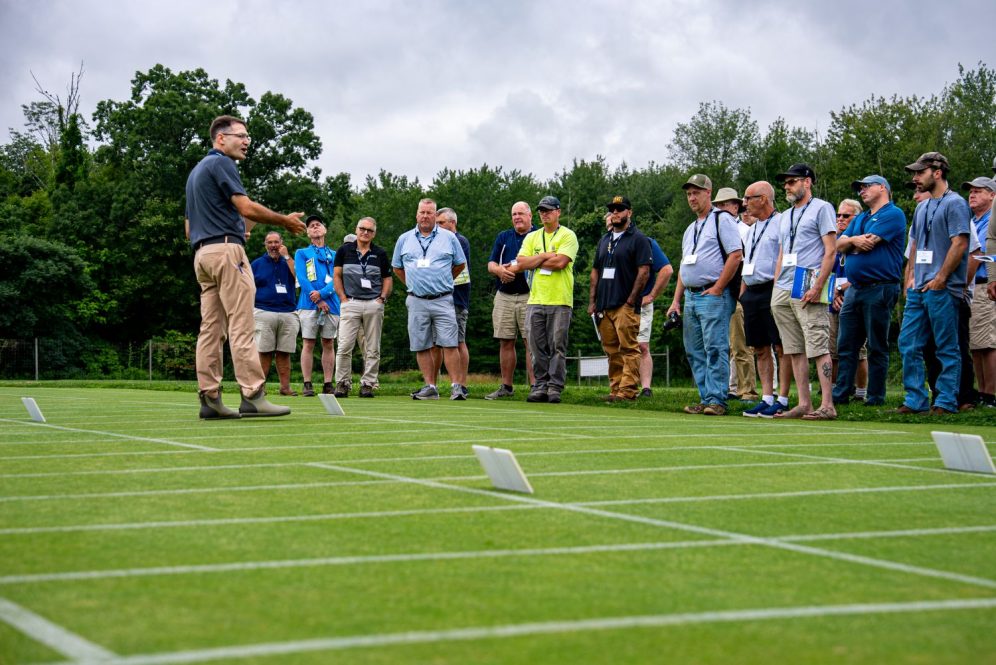
The 2026 Turfgrass Field Day, hosted by the Department of Plant Science and Landscape Architecture and UConn Extension in the College of Agriculture, Health and Natural Resources (CAHNR), welcomed hundreds of members of the turfgrass business community to learn about the latest research at UConn and technologies on the market.
The event has been held at UConn every other year since 2008. This year, over 240 attendees joined the event. Attendees include golf course superintendents, lawn care and landscape professionals, R&D collaborators, sports field managers, municipal grounds managers, and commercial industry distributors.
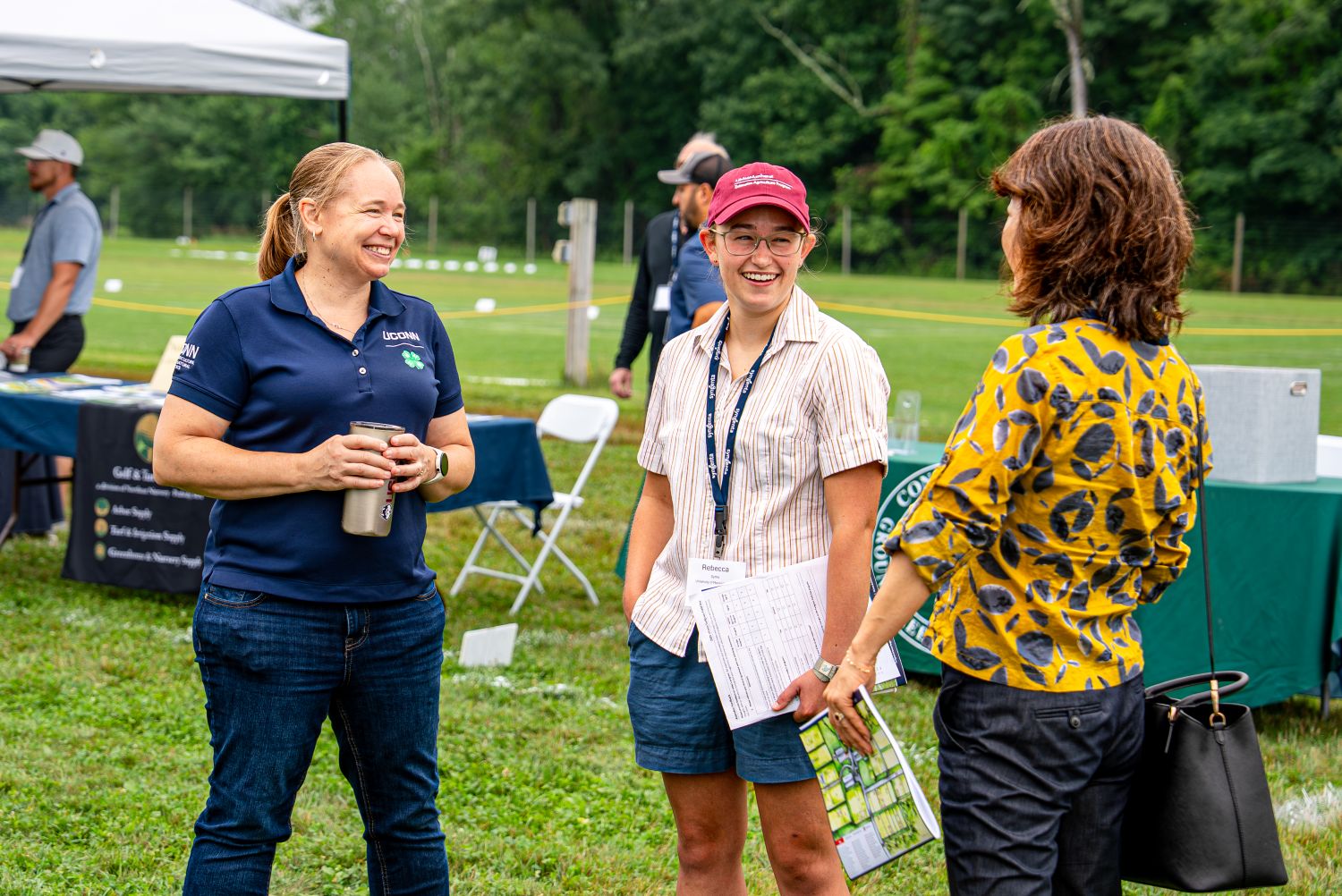
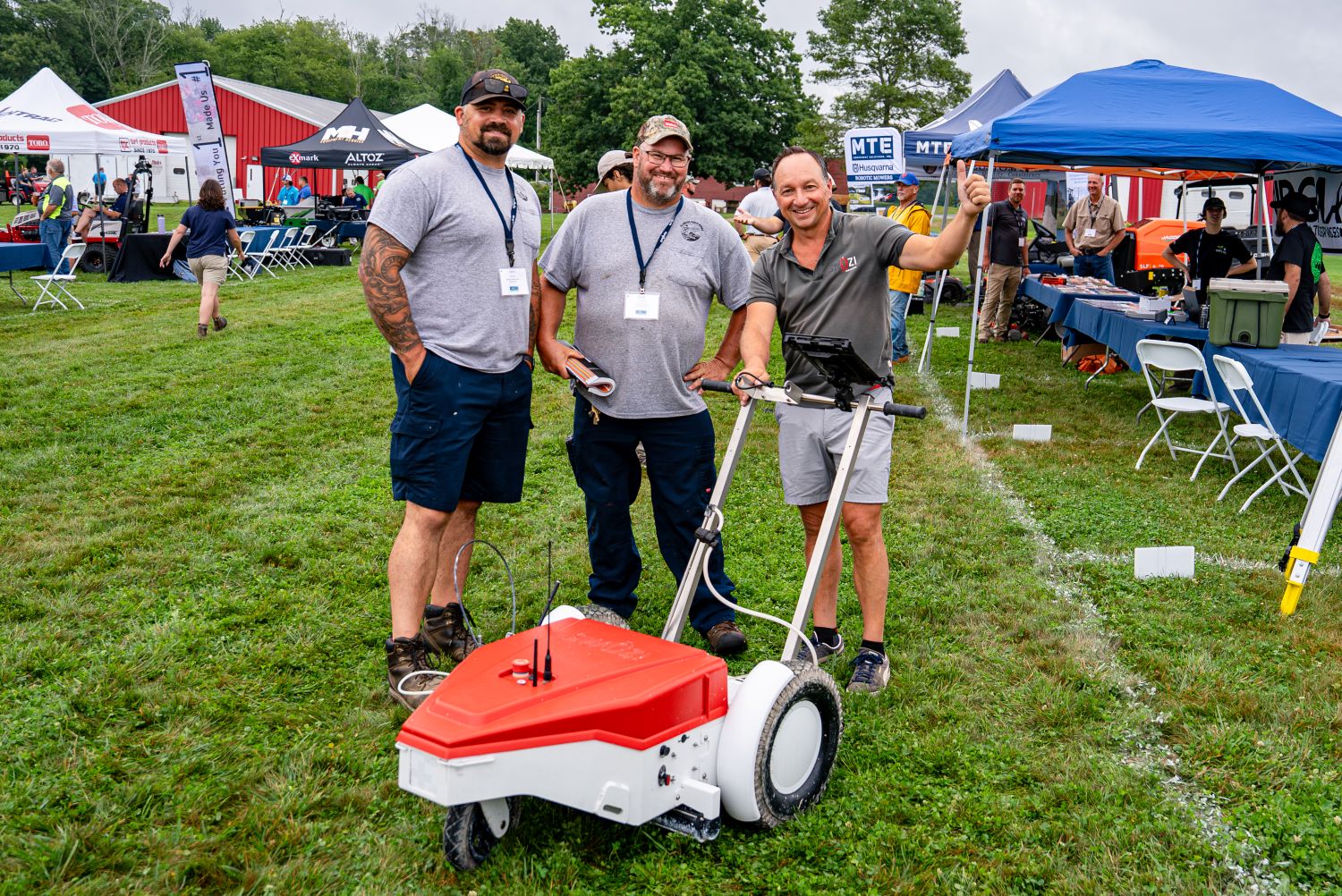
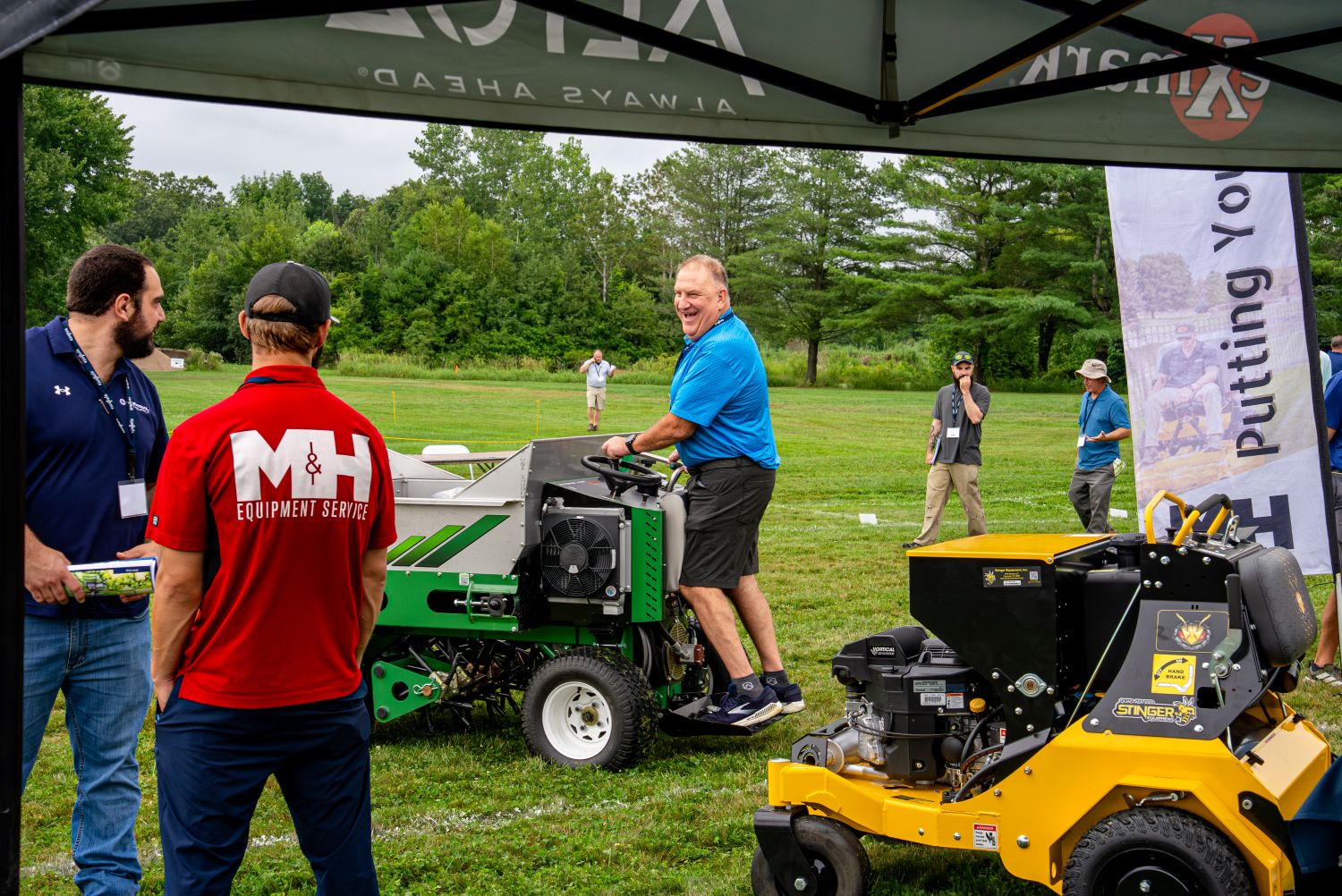
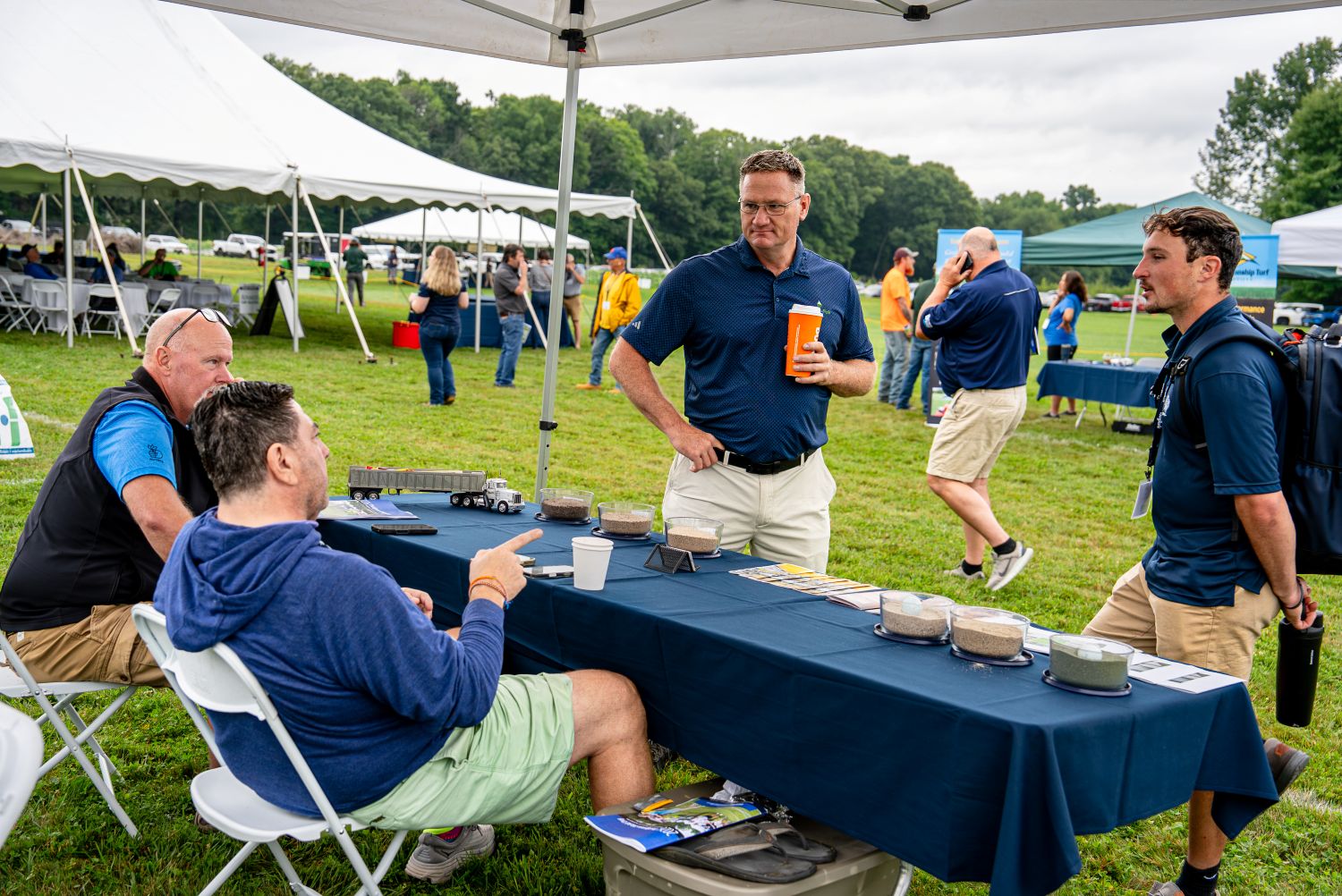
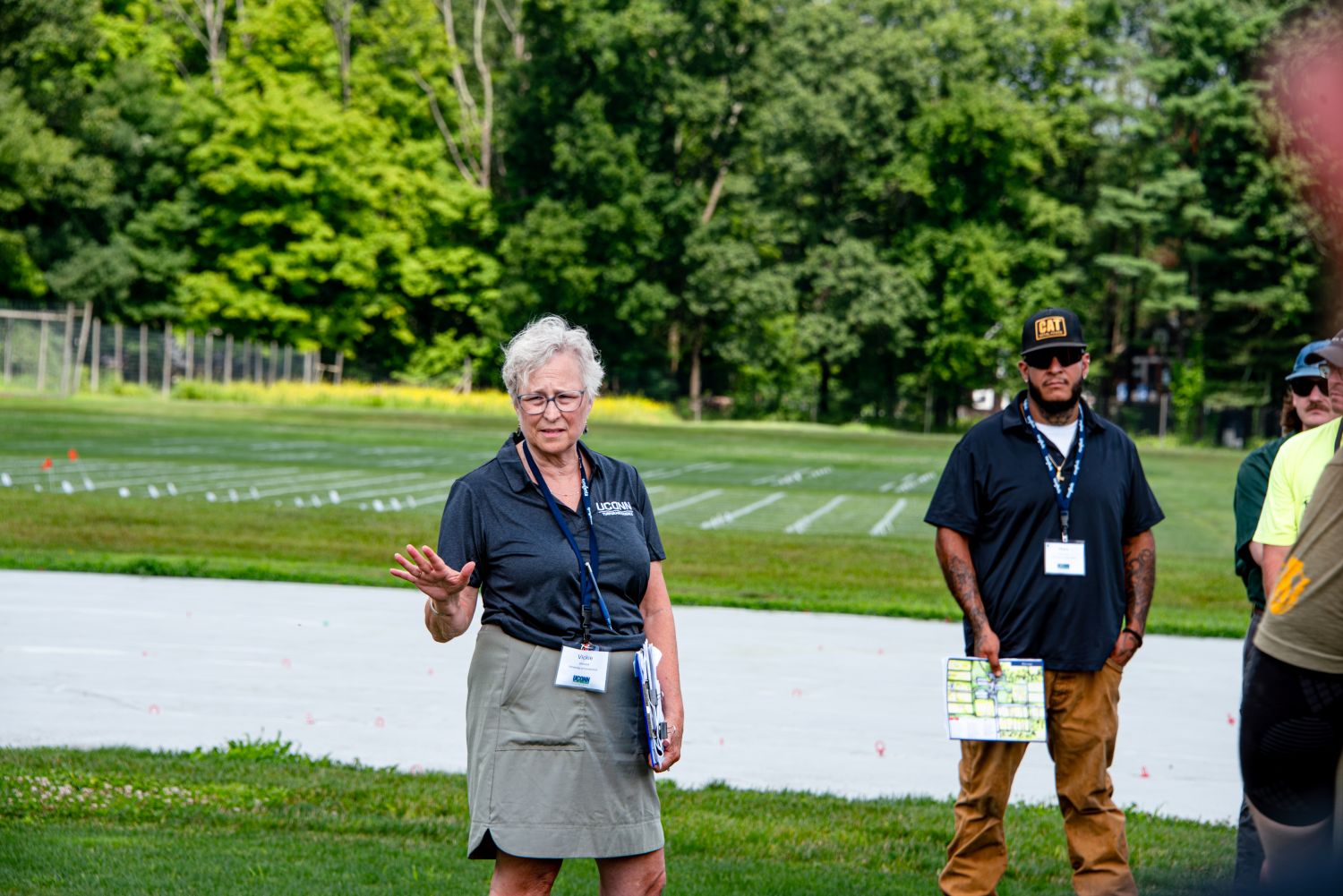
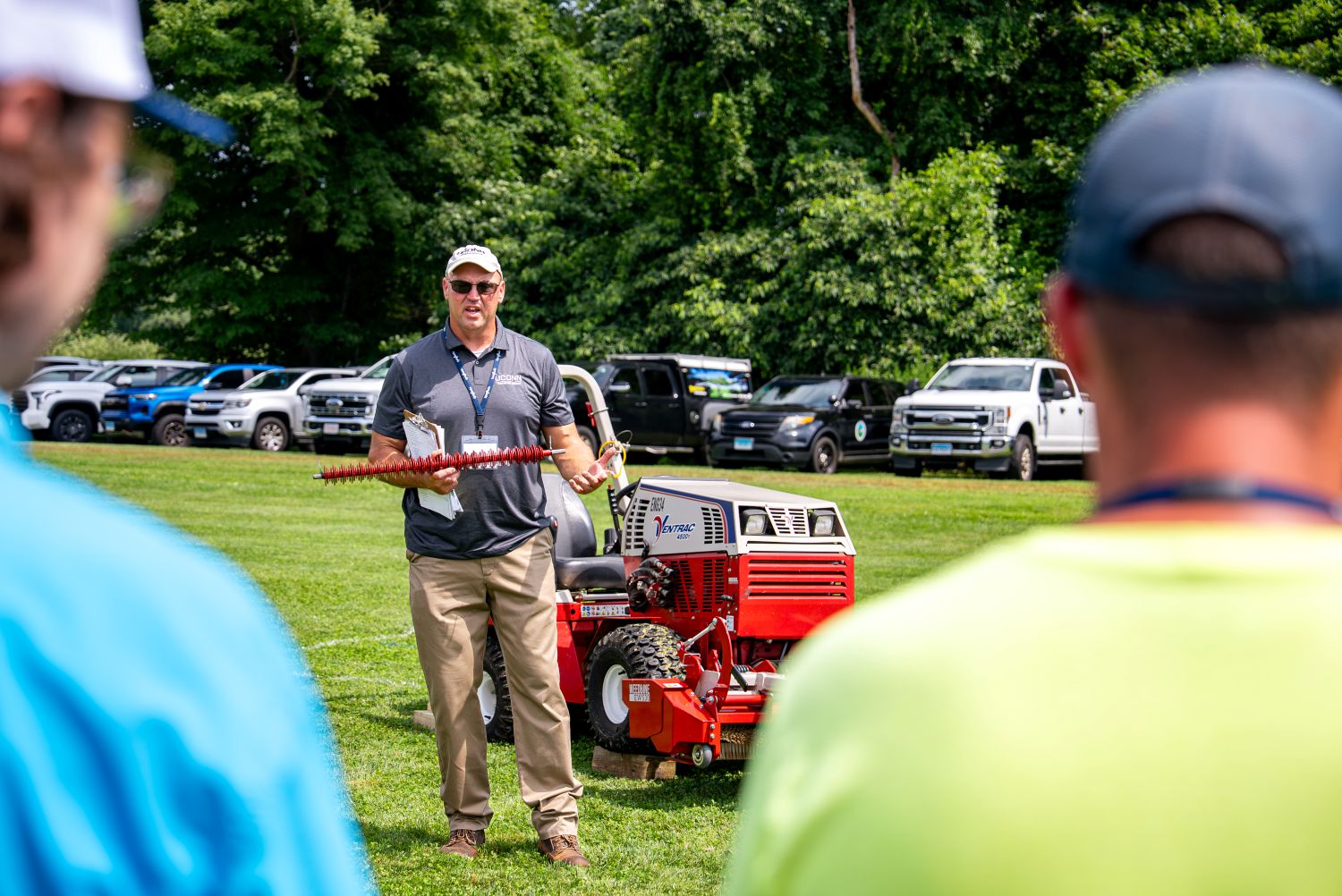
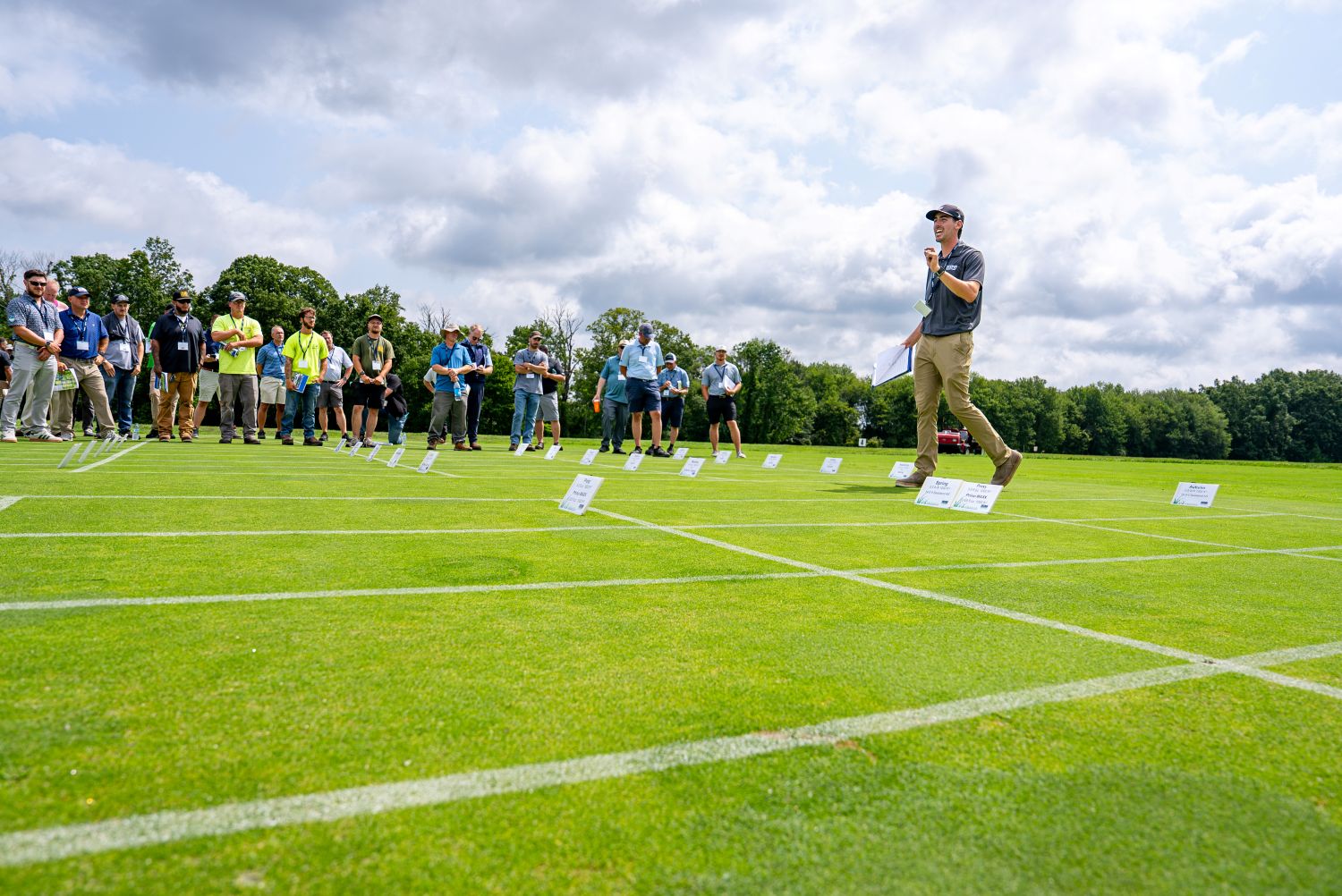
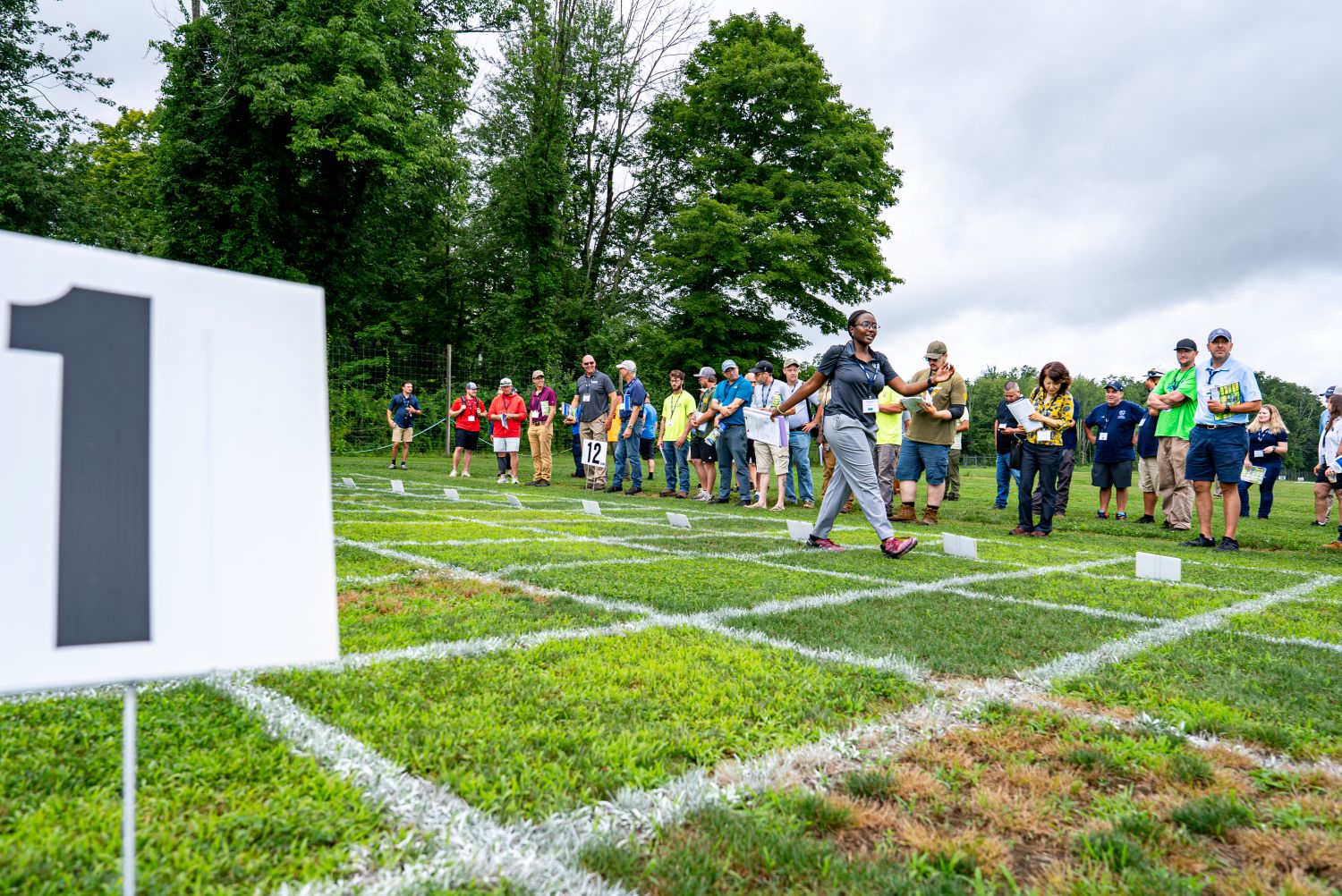
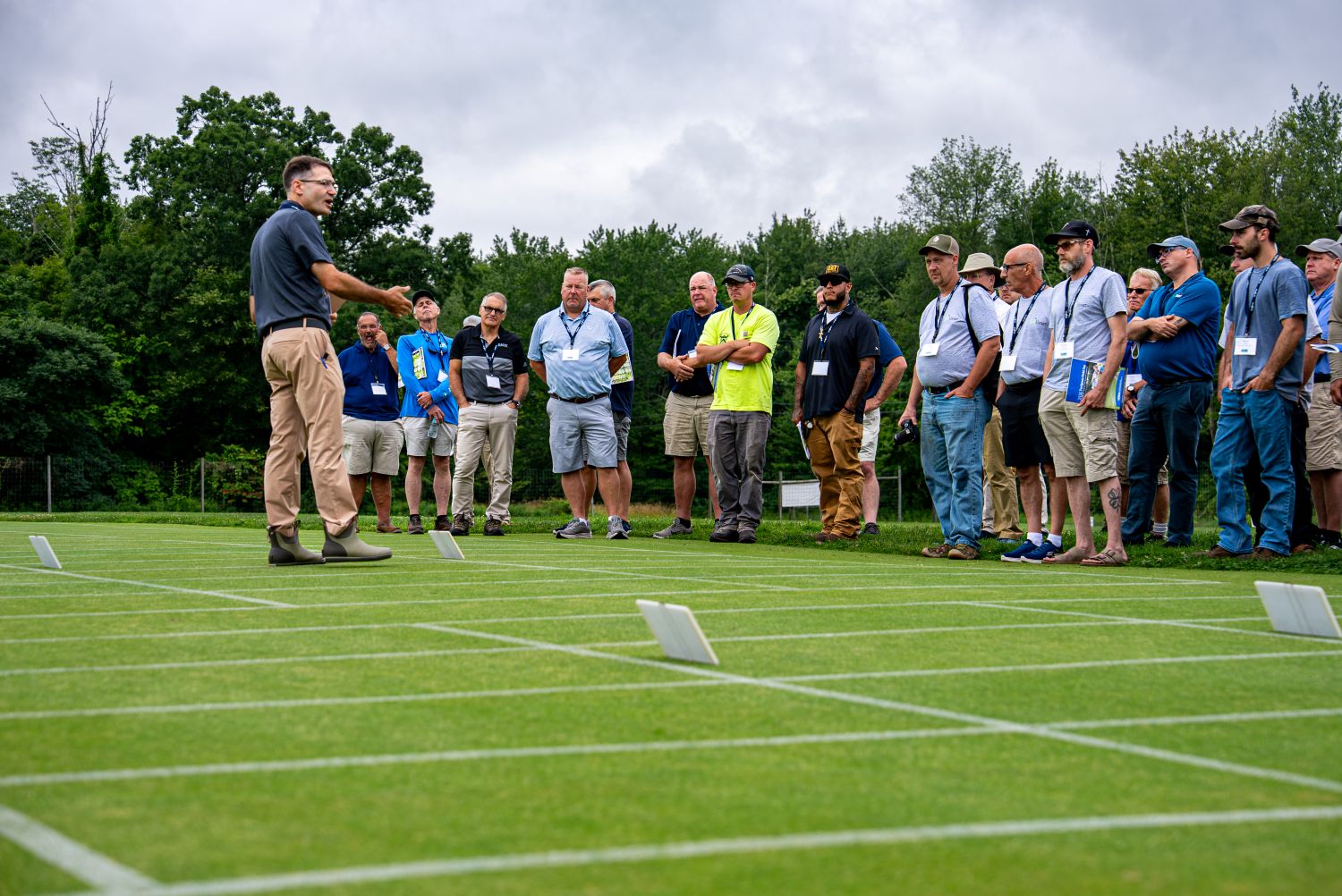
“Being in person, it’s an opportunity to engage differently than email or phone calls,” Victoria Wallace, sustainable turf and landscapes senior extension educator, says.
The UConn Turfgrass Field Day consists of a series of tour stops that participants visit in the morning to learn about the individual research projects UConn faculty are conducting, with more formal presentations in the afternoon. Exhibitors from commercial vendors and professionals in the turfgrass industry also participate in the event.
“One of the really exciting things about the day is that we get to share the science our faculty and students are working on, but that we’re also partnering on with many of our industry stakeholders,” says John Inguagiato, associate professor of turfgrass pathology. “Both our sponsors and exhibitors are present and have an opportunity to share what’s important to them and new products that they have with the attendees.”
The research conducted at UConn is responsive to industry needs and is designed with real-world applications in mind. Topics of the research projects this year included autonomous mowing, disease control, weed management, and the National Testing of all Major Turfgrass Species (NTEPS).
Maureen Kahiu, assistant extension educator of turfgrass and weed ecology, is conducting research related to how to use commercially available herbicides in the most effective way to remove common weeds like crabgrass alongside using cultural practices. At this Field Day, Kahiu presented on weeds developing herbicide resistance, something she has seen in the southern United States and threatens to creep northwards.
“Up here, I want the industry to be prepared, to know that resistance is a thing, that it’s real,” Kahiu says. “It can get really bad to a point where you cannot use any herbicide that is available on the market to manage the particular weed that you’re facing in your landscapes.”
Jason Henderson, professor of turfgrass and soil sciences, shared his work on autonomous mowing strategies to optimize plant and soil health and the efficacy of a newly developed mechanical weed control device called a Weedbine. He developed this new technology to manage weeds without using herbicides in response to increasing pesticide restrictions. Released commercially in March 2025, this research-based system is most effective for managing turfgrass pesticide-free and integrated pest management, while also showing promise for controlling creeping bentgrass in other cool-season grasses. Henderson was able to share promising results about how autonomous mowing can help turfgrass managers grow healthier grasses with lower costs and fertilizer inputs.
“These are pretty exciting results because they indicate that you likely need less nitrogen if you’re mowing autonomously and have equal, if not better quality, than when you mow conventionally – not to mention the reductions in fuel requirements and labor,” Henderson says.
Inguagiato is researching a new fungal disease afflicting putting greens in the northeast called Yellow Ring Patch. Graduate student Matt Antunes shared research results on how nitrogen fertility can be used to reduce severity of the disease, and discussed the impact of plant growth regulator programs, and identified fungicide options that can best be used for control of yellow ring patch.
“Biotic and abiotic stresses present challenges for maintaining functional turfgrass systems,” Inguagiato says. “There are many commercially available tools marketed to help mitigate these stresses. In my role with UConn Extension, I evaluate many of these products and provide turfgrass managers science-based recommendations using product performance in trials conducted here in Connecticut.”
Sharing emerging science conducted at UConn with industry professionals is having immediate impact, Inguagiato says.
“Being able to share that information with turfgrass managers is important to ensuring that we’re effectively controlling diseases, that we’re not applying fungicides that are ineffective, which can be costly, and potentially impact the environment without having the desired disease control.”
This work relates to CAHNR’s Strategic Vision area focused on Fostering Sustainable Landscapes at the Urban-Rural Interface.
Follow UConn CAHNR on social media