Food safety touches every stage of the agricultural system, from how food is grown and processed to how it reaches consumers’ tables. At UConn Extension, this work is led by faculty who bridge science and practice, ensuring farmers, processors, and communities have access to the latest, research-based information. Among them is Dr. Indu Upadhyaya ’15 Ph.D., associate Extension professor of poultry and food safety, whose career reflects both the depth and reach of Extension’s mission.

She joined UConn Extension as the federal government was implementing new food safety requirements for agricultural producers and helped create a stronger food safety culture among Connecticut farmers. While all farmers want healthy customers, complying with food safety regulations is challenging. Upadhyaya enjoys meeting people and making connections and believes it’s important to learn about their challenges before helping to find solutions.
A Career of Science and Service
Upadhyaya’s path to Extension began with a strong scientific foundation. Trained as a veterinarian in India, she initially worked in both livestock and research settings, including a formative experience on a poultry farm. While her early master’s work focused on studying mastitis at the molecular level in dairy cattle, she found herself drawn to research as a way to solve complex problems.
“I always believed you could find solutions in a better way through research than just treating animals,” she explains. That perspective shaped her doctoral work at UConn, where she focused on reducing Salmonella enterica in poultry systems, an issue with direct implications for food safety and public health.
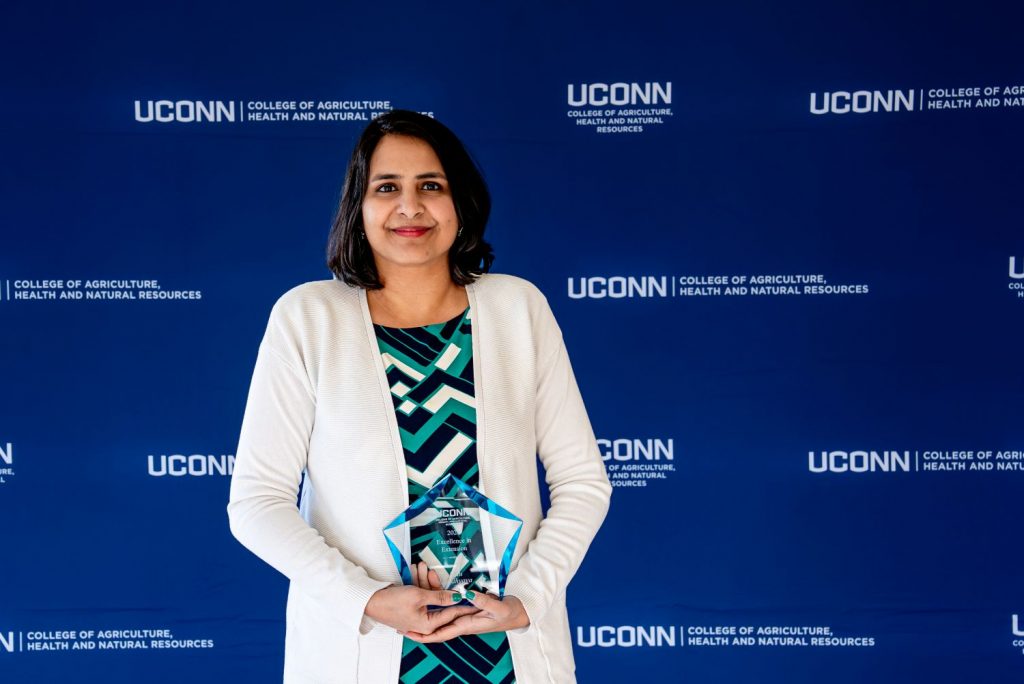
It was during her doctorate, working with Extension faculty, that she discovered a passion for outreach.
“That’s where my Extension gene got activated,” she says.
During that doctoral work in a food safety lab, Upadhyaya also worked with fresh food, and helped develop research-based solutions. The work blends internationally-recognized expertise in food safety and microbiology.
Following her doctorate, she expanded her expertise through postdoctoral work at both UConn and the University of Arkansas, often described as “poultry country,” where she further explored poultry nutrition, food safety, and innovative feed sources. She later joined Tennessee Tech University as an assistant professor for poultry science, balancing research, teaching, and Extension, before coming full circle back to UConn Extension in 2019.
Building a Comprehensive Food Safety Program
Since joining UConn Extension in 2019, Upadhyaya has helped grow a robust, multifaceted food safety program that supports producers across Connecticut and the Northeast. Her work spans fresh produce, poultry, meat processing, and emerging areas like seafood and seaweed safety, demonstrating how interconnected today’s food systems have become.
At the core of the program is education and compliance support. Upadhyaya delivers Produce Safety Alliance Grower Trainings, Meat and Poultry HACCP (Hazard Analysis and Critical Control Points) workshops, and On-Farm Readiness Reviews to help farmers and processors meet federal regulations under the Food Safety Modernization Act (FSMA) and USDA regulations for meat slaughtering and processing.
These programs are designed not only to meet regulatory requirements, but to build long-term capacity. This includes training farmers on produce safety and agricultural water standards, supporting small and mid-sized processors with HACCP certification, developing educational materials and on-farm tools, and engaging youth through 4-H and workforce development programs.
Through USDA and FDA-funded projects, Upadhyaya has also led and contributed to major regional and national initiatives, including the Connecticut Produce Safety Program and multi-state collaborations focused on sustainable poultry health, organic production, and microbial safety.
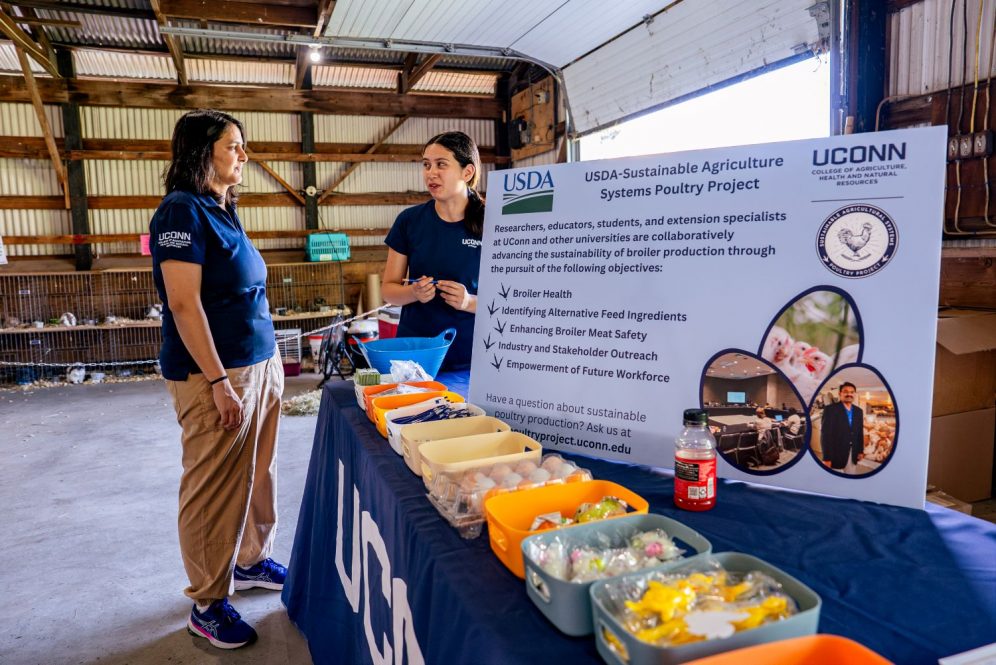
Her leadership extends beyond the state. As a representative to the Northeast Center to Advance Food Safety (NECAFS) and a contributor to national Extension efforts, she helps ensure that research findings are translated into practical tools for producers across the country. In addition, Upadhyaya serves in a leadership role for a nationwide, multistate poultry project, focused on advancing poultry production, health, food safety, and sustainability.
Bridging Poultry and Produce Safety
While Upadhyaya’s background is deeply rooted in poultry science, her work has expanded to meet the evolving needs of agriculture. Today, her portfolio includes both poultry and fresh produce safety, along with seaweed production, reflecting the range of agriculture in the region.
Her research and Extension programs frequently intersect. She has led and collaborated on multi-million-dollar USDA-funded projects that explore sustainability, organic poultry health and safety, natural antimicrobial strategies to reduce pathogens, produce safety from seed to plate, and agricultural water quality and pathogen detection.
These projects bring together regional, national and international partners, reinforcing Extension’s role as a connector between research institutions, industry, and communities.
As food systems continue evolving, the need for integrated, science-based food safety programs will only grow. Through her work at UConn Extension, Indu Upadhyaya exemplifies how Extension professionals meet that need, combining research, education, and service to support farmers, safeguard public health, and strengthen communities.