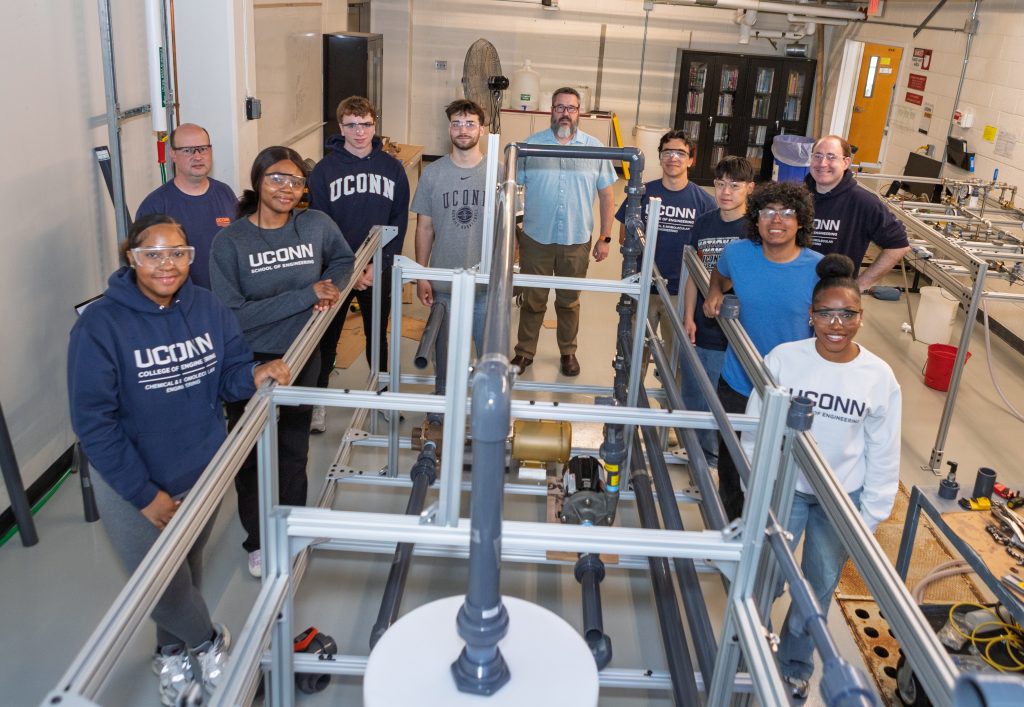
A student-led instructional laboratory build course offers hands-on experience for students looking to leave a legacy behind for future classmates.
The CHEG Educational Laboratory: Modular Pipe Rack Design, Build, Test course is now entering its third year, and is an elective for students within the Department of Chemical and Biomolecular Engineering (CBE).
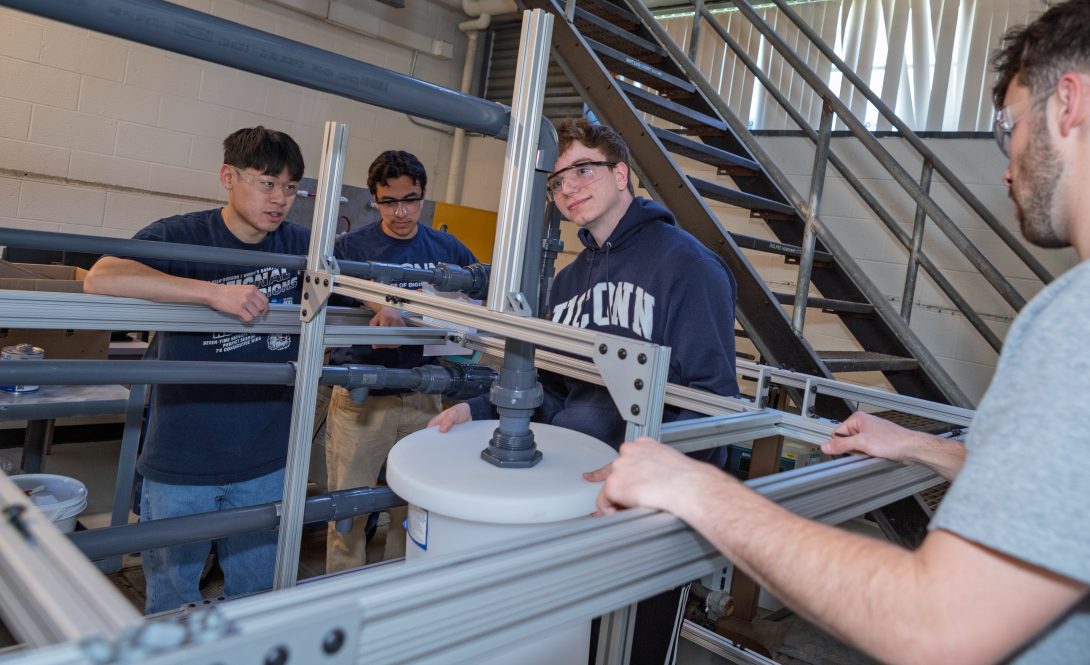
This past spring, students built a pipes and pumps experiment to be used in the 2026-27 academic year’s senior laboratory course, a required course for all students in CBE.
“This is a key application for experiential learning,” professor in residence and associate department head Jennifer Pascal says. “Students are given opportunities to work together as a build squad, working on project management skills that will undoubtedly go far when they start their careers.”
Pascal, a CBE faculty member, says the course offers students the opportunity to develop educational content for future semesters, gaining perspective outside of a lecture hall by learning how to troubleshoot equipment.
Pascal is joined by Landon Bassett, a CBE laboratory coordinator and a Ph.D. student in the engineering education program. Pascal says Bassett led the day-to-day experience for students, ordering parts and organizing the build to help the class have the best experience possible.
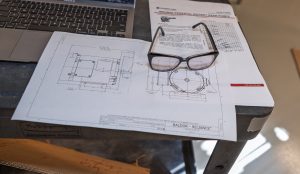
According to Pascal, the students in the spring term were particularly self-led, carefully following diagrams and guides to ensure they were building the pipes and pumps system to spec.
This experiment will teach fluid flow principles to future students, some of which might include the students that participated in the Educational Laboratory course. The system features dual pumps with variable frequency drives, varying pipe diameters, and an automated data acquisition system.
Bassett gives credit to the UConn Engineering Innovation Shop, which was involved with sizing and assembling the pipes and pump layout.
“I have nothing but high praise for the engineering staff within the iShop,” Bassett says. “They were instrumental in cutting the pipes to size, and properly connecting the pump hook-ups.”
Bassett says engineering technical services director Peter Menard also helped the students troubleshoot problems during the build, and taught them how to use various tools like pipe wrenches.
Students were versed in machine shop safety as part of the course’s curriculum. The Innovation Shop even trained the students, giving them the opportunity to cut their own pipes using a band saw. This gave the students great hands-on experience with tools they will see in their future careers.
The experiment built in the spring 2026 semester was based on a chemical engineering unit operations laboratory pumping experiment by Andrew Maxson from the Ohio State University.
Last year, students developed another Maxson experiment, a heat exchanger to test the impact of different flow configurations and entrance temperatures on heat exchanger effectiveness. This was successfully incorporated into the new lab curriculum, and students were able to run the experiment.
Finally, Pascal and Bassett give credit to their student team of Jennea Campbell, Kinee Christian, Draedyn Furrow, Carl Ponce, Thomas Purcell, Aydan Reilly, Barry Ren, Praise Udom, and Christian Villanueva.
“Without their planning, know-how, and excitement to tackle this challenge, the experiment would not have been as successful as it is now,” Bassett says.