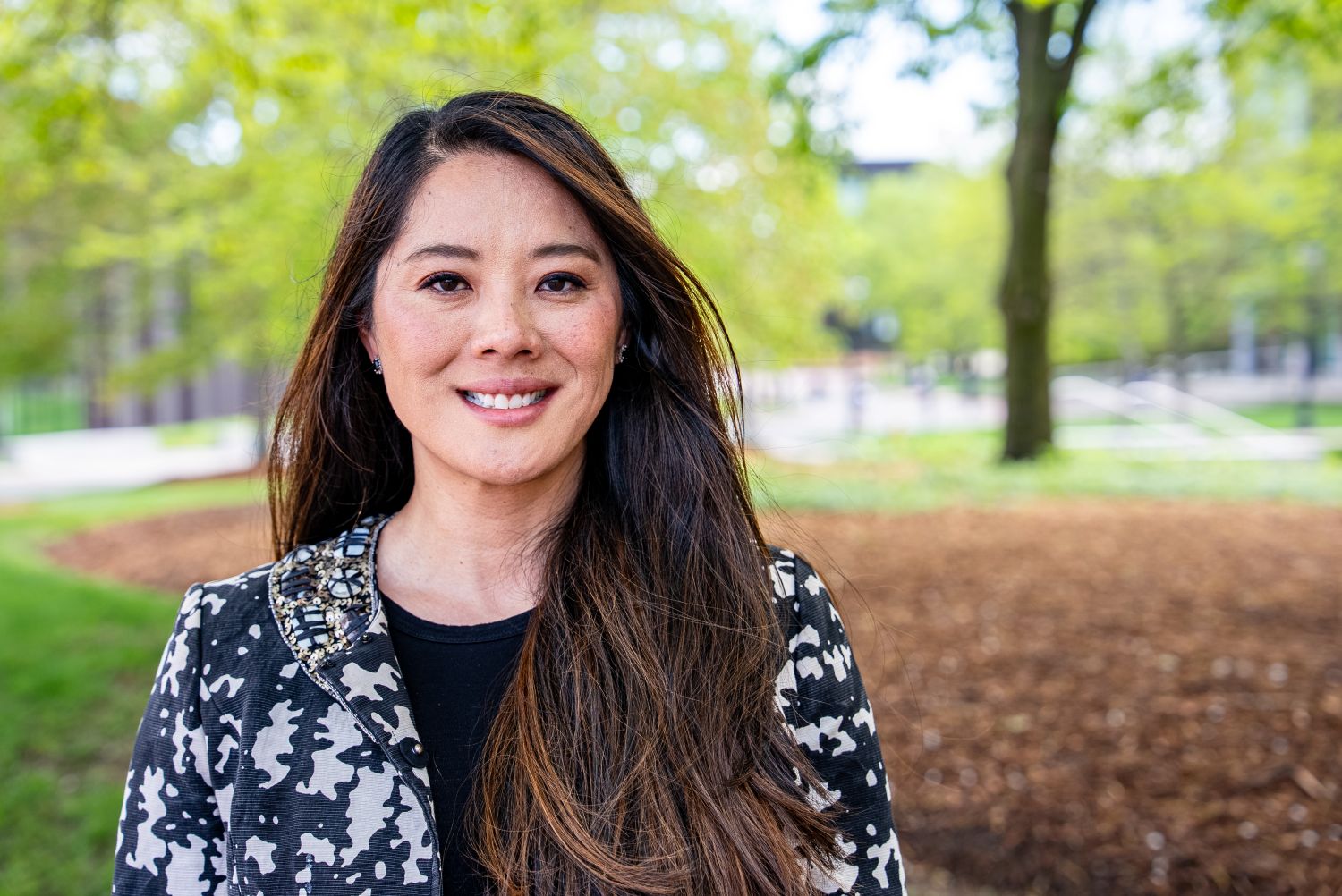
After the birth of her first son, Becky Nathanson remembers the helplessness she felt grappling with the aftereffects of her pregnancy and delivery. Her quest to figure out “what was wrong with” her led Nathanson to read “Traumatic Childbirth,” a book co-authored by Cheryl Tatano Beck, a distinguished professor at the UConn’s Elisabeth DeLuca School of Nursing.
The book did more than provide Nathanson with answers: it sparked a new career. The former opera singer and mother of two is a first-year student in UConn’s Master of Social Work (MSW) program, specializing in mental health challenges unique to new mothers.
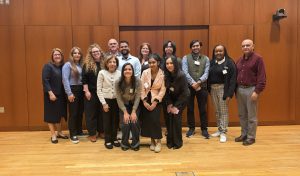
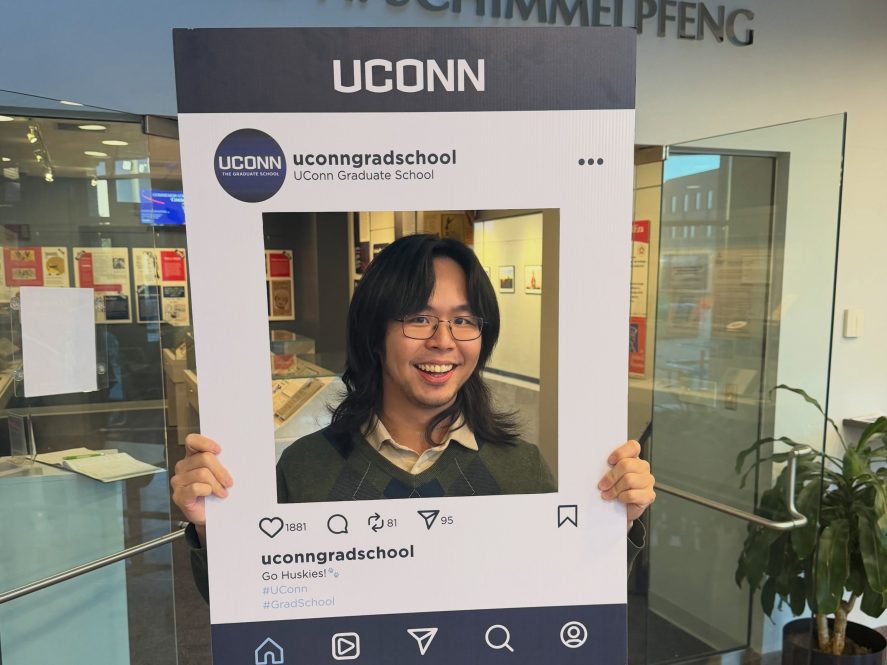
Earlier this month, Nathanson was one of 29 master’s and Ph.D. students participating as finalists in the Three-Minute Thesis (3MT®) and Graduate Student Showcase, a competition organized by The Graduate School at UConn. Students at the Oct. 7 event competed against each other in three categories.
Nathanson’s presentation – “Just Being There: How One Visit Changes Two Lives” – melded her personal experiences and clinical studies in the obstetrics department at UConn Health (UCH), where she is working with obstetricians and psychiatrists as part of the Perinatal Mental Health Collaborative at UCH.
A cross between a Ted Talk and elevator pitch, with a dash of poetry slam mixed in, the event challenges students to distill their thesis and dissertation topics into tightly scripted three-minute segments easily understood by non-expert audiences.
In lively back-to-back performances, using a single Power Point slide to illustrate their work, students take to the stage, employing a mix of humor, emotion, and creativity to convey the complexities of their research. Nathanson was not the only presenter mining personal experience to explain their work.
The presentations were diverse in topic and approach. Constance Holden, a graduate student in the Department of History, wove her youth in Argentina into her presentation, “Who Am I & How Did I Get Here: Research Lore and Life as a Historian.” Anita Oppong, a graduate student at the school of nursing, said her mother’s recovery from cancer informed her presentation, “The Work of Being a Cancer Survivor.”
Paticia Hare, a student in the DMD/Ph.D. program at UConn School of Dental Medicine, took a spooky tact with her presentation, “One Small Cell, One Big Challenge: The Persistent Problem of Pseudomonas.” In it, she compared antibiotic-resistant bacteria to a vampire sacrificing daughter cells to survive.
Caroline Vieira Da Silva, a Ph.D. student in the Department of Molecular and Cell Biology, gave faces and matching black jackets to the bacteria illustrated in her presentation, “The Bacterial Jacket: Identification, Characterization, and Biological Significance of the Surface Layer Protein AvsA in Aeromonas veronii”.
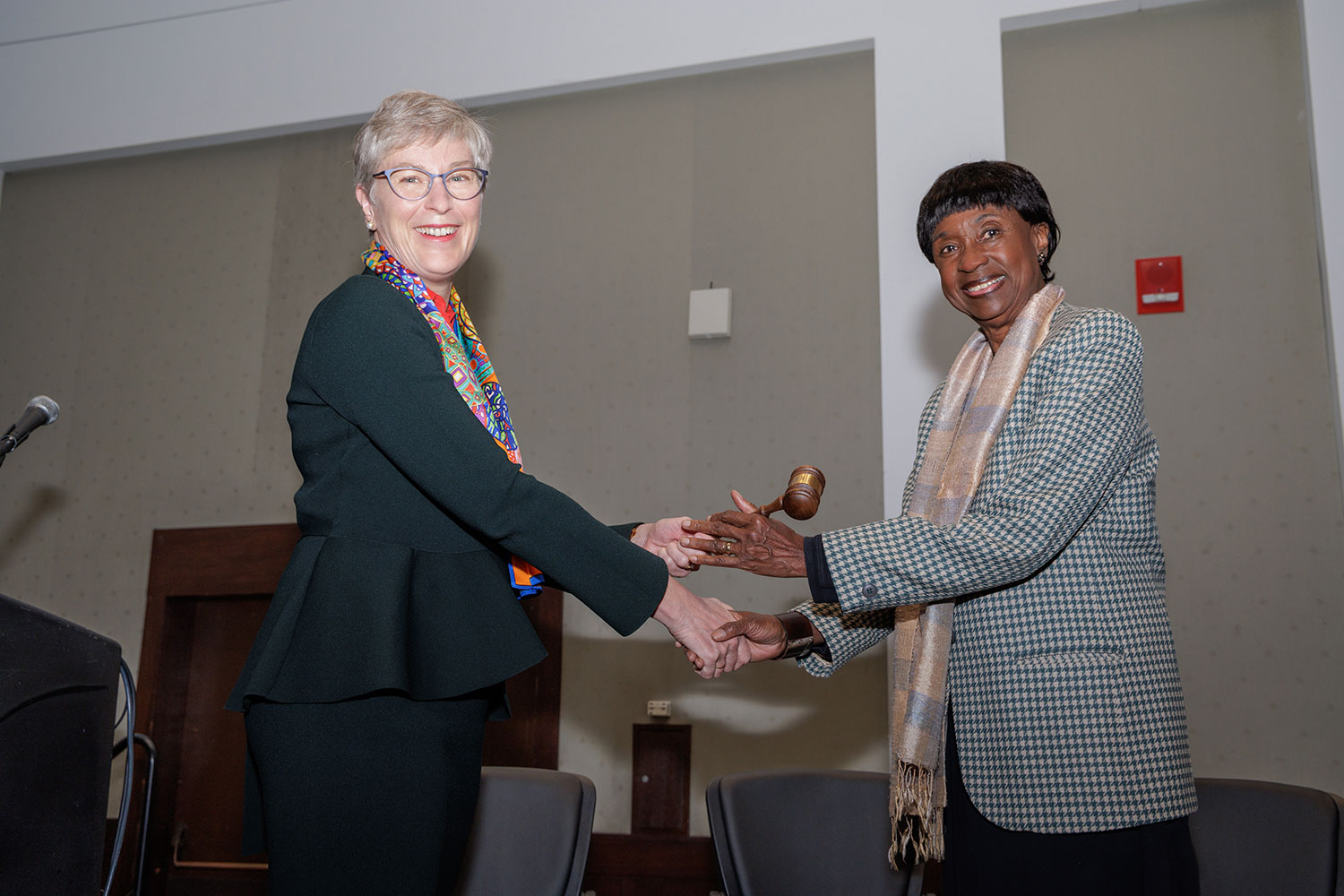
“I want to congratulate all the presenters, who worked so hard on their presentations,” Melanie Sinche, UConn’s Director of Graduate Student and Postdoctoral Success, said at the conclusion of the talks.
A panel of interdisciplinary judges evaluated the presentations, giving a top award and runner-up in each category and an overall grand prize. Those winning the most votes from the audience earned People’s Choice awards.
Nathanson took first place in Category 1, made up of all master’s degree students and those pursuing professional and clinical doctoral degrees. Wesley Leong, a fifth-year Ph.D. candidate in the Department of Psychological Sciences, Language and Cognition Program, took home the Grand Prize for his presentation, “A Neural Signal for Representing and Remembering Objects Across Vision and Language”.
Topics covered a wide swath of disciplines, schools, departments and programs within UConn. The two other categories in the competition featured presentations by arts, humanities, and social science doctoral degree students, and doctoral students working in STEM.
A total of 103 students submitted proposals for the competition, says Sinche. The 29 finalists were selected in a preliminary round of judging in September. Presentations were rated on a range of criteria that included clarity, accessibility, how well they established a connection with the audience, and the broader impact of their graduate work. All finalists and winners received cash prizes, with the largest one going to the grand prize winner, who is also eligible to represent UConn in national and international 3MT® competitions.
Ananda Griffin, who is currently enrolled in the Ph.D. program in philosophy, said she was ready to take a nap following her presentation. She estimated putting at least 12 hours of practice into her presentation, “What We Learn from Tears and Laughter: Emotions as a Resource for Knowledge.” She and others at the event marveled at the array of impactful work taking place at UConn and being pursued by presenters.
“I’ve seen so many practice-improving, life-improving, policy-improving projects that it heartens me for the future,” noted Joy Elwell, a clinical professor at UConn’s Elisabeth DeLuca School of Nursing and director of its Doctor of Nursing Practice Program.