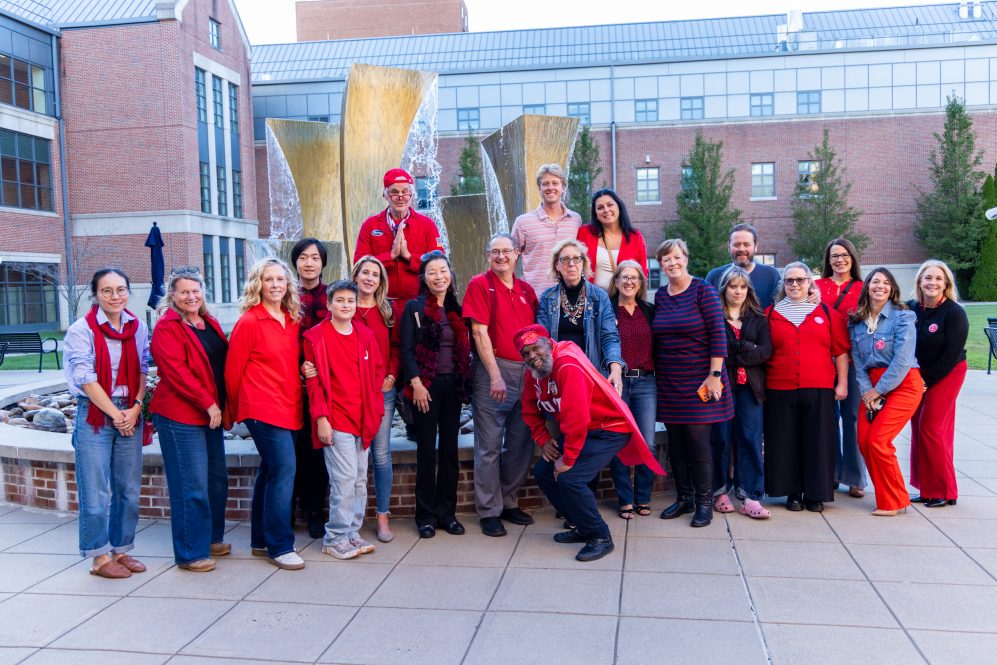
UConn Waterbury, Waterbury City Hall, and the Chase Building were lit in red on Monday, Oct. 5 to mark Dyslexia Awareness Month. The “Light It Red” initiative brought together the campus, the City of Waterbury, and Decoding Dyslexia-CT to highlight the importance of early identification, evidence-based instruction, and support for people with dyslexia.
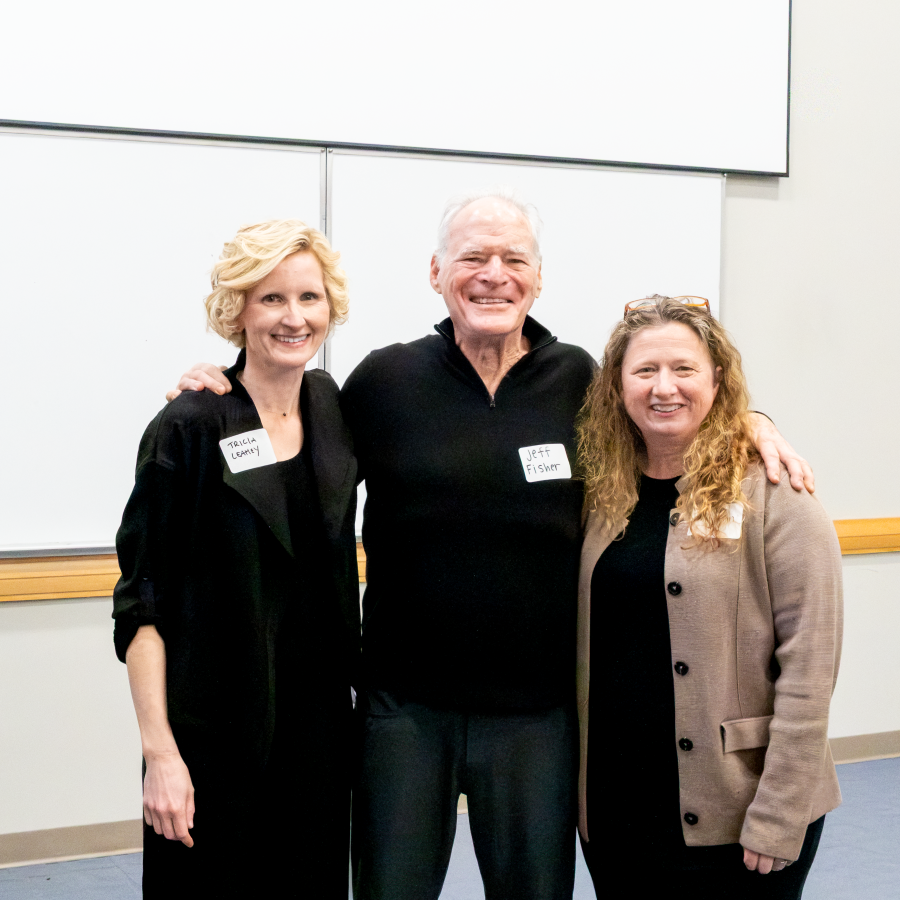
Participants included state Sen. Cathy Osten, state Rep. Mitch Bolinsky, Waterbury Mayor Paul K. Pernerewski Jr., and representatives from the Connecticut State Department of Education’s Office of Dyslexia and Reading Disabilities, alongside educators, researchers, families, and advocates.

“By illuminating familiar landmarks in red, the campaign helped spark conversations, increase public understanding, and show support for individuals with dyslexia,” said Allison Quirion, founder of Decoding Dyslexia-CT and a specialist in UConn’s brainLENS Lab whose work connects research with educational practice and community needs.
“Connecticut has made important progress in recognizing dyslexia and strengthening support for students with reading disabilities, but there is still more work to be done,” said Osten.
For UConn Waterbury staff member Jacob Hunt, who helped organize this event and who was diagnosed with dyslexia at age six, the event carried personal meaning.
“I hope bringing more awareness to dyslexia also shows kids who may be struggling that they aren’t alone and that dyslexia doesn’t have to stop them from accomplishing their goals,” Hunt said.
At UConn Waterbury, that message connects to a broader effort to bring the science of learning into everyday campus life.
The campus’s Neurovariability Initiative recognizes differences in how people think and learn and seeks to build educational environments that support their strengths. Fumiko Hoeft, the campus dean and CAO, co-founder of the initiative, a professor of psychological sciences, a neuroscientist, and director of brainLENS Lab studying reading and dyslexia, brings both research expertise and lived experience to this work.

Launched with faculty and staff training during spring break in 2025, the initiative integrates scientific evidence, Universal Design for Learning (UDL), and responsible use of artificial intelligence. The work also includes a campus-wide audit with CAST to guide the integration of UDL throughout the campus, from instruction and professional development to physical and digital infrastructure to create accessible learning environments for all learners.
Waterbury is also expanding its role in reading and dyslexia research. Home to the Haskins Global Literacy Hub, which connects UConn and Yale researchers with educational partners, the campus brings research and community engagement into close proximity. Growing involvement from researchers at UConn Storrs and Yale is bringing additional National Institutes of Health and Department of Education-funded research on reading and dyslexia to Waterbury. New and developing educational and research facilities “Brain Imaging Research Center – Waterbury Education Science and Translation (BIRC-WEST)” will support this work and create more opportunities for local students and families to participate.
“Awareness is a starting point,” said Hoeft. “At UConn Waterbury, we are connecting research with how we teach, support students, and design our campus. Our goal is to make what we learn about differences in thinking and learning meaningful in students’ everyday experiences and opportunities.”