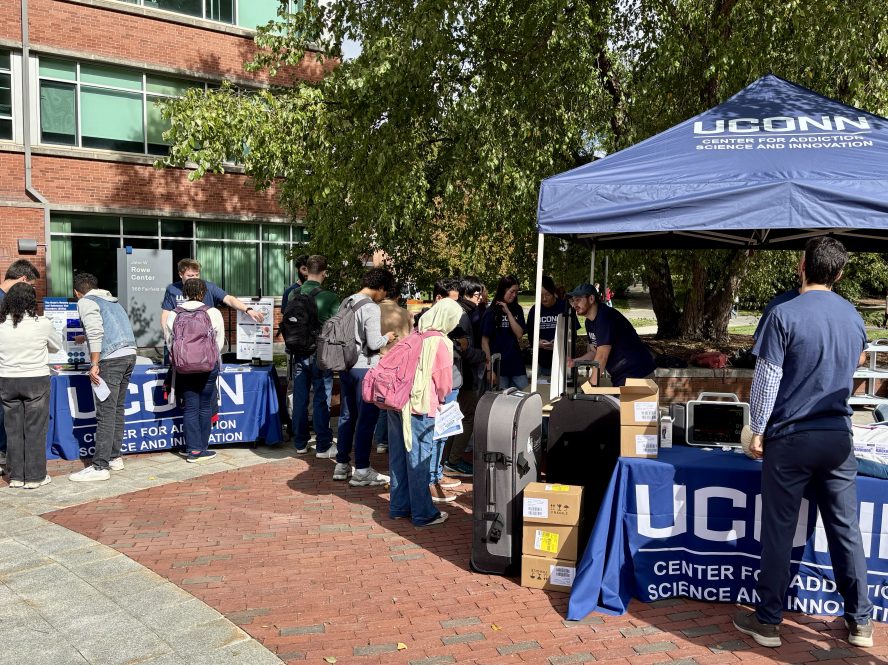
The Center for Addiction Science and Innovation (CASI) held its first outreach event on Tuesday, September 29, bringing together the UConn community to learn about addiction science and the public health challenges associated with substance use.
The event gathered faculty and students from various disciplines across UConn to discuss topics including the brain’s reward system, gas station drugs such as kratom and tianeptine, psychedelics, alcohol, cannabis, vaping, and prescription drug misuse. In addition to educational posters, CASI provided Narcan training in response to the ongoing opioid crisis in Connecticut.
The central goal of this event was to translate scientific research into knowledge that can help people better understand substance use and its effects. The Narcan training addressed the ongoing need for effective responses to opioid overdose, as Narcan can rapidly reverse an opioid overdose.
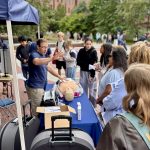
Professor C. Michael White led this hands-on emergency response training using a medical manikin. He walked participants through the steps to take when encountering an unresponsive person, which includes calling 911, checking for a pulse and breathing, locating an automated external defibrillator (AED), and administering Narcan.
The event also addressed kratom and other emerging “gas station drugs.” These substances have recently attracted public attention due to their availability in convenience stores and their potential health risks. Substances such as Kratom, 7-OH, and tianeptine may be marketed as safe, but can carry serious risks of dependence, overdose, and other health complications.
Another topic covered at this event was psychedelics, which have gained scientific interest as potential treatments for psychiatric disorders. Although early research shows promising findings for some psychedelic-assisted treatments, more studies are needed to understand their safety, effectiveness across different populations and long-term side effects.
The first outreach event brought together faculty and students from multiple departments schools, and organizations, including the School of Pharmacy and Pharmaceutical Sciences, School of Nursing, psychology, and the UConn Substance Use Risk Reduction Peer Educator group.
With CASI not yet a year old, CASI director, Professor Gregory Sartor, hopes to continue holding events like this to promote the center’s research and educate students on the science of addiction.
“Educating the public about how the brain changes following drug use can make them realize addiction is a disease just like heart disease or liver disease,” Sartor said. “It’s not simply a choice.”

Sartor says there is a lack of effective treatments for substance use disorders, and CASI aims to help address that gap by developing nonaddictive therapeutics for people struggling with addiction.
In addition to the first outreach event, CASI hosted a research symposium in April where Sartor provided an overview of the Center’s goals and students gave updates on their research projects and were awarded travel award certificates.
Looking ahead, Professor Sartor hopes the center’s research will attract more researchers and encourage further work that contributes to the development of new therapeutics.
“I’m hoping by establishing this center and showing our productivity and abilities to develop new therapeutics, we can attract more researchers who can also contribute to addiction research and developing therapeutics for addiction,” Sartor said.