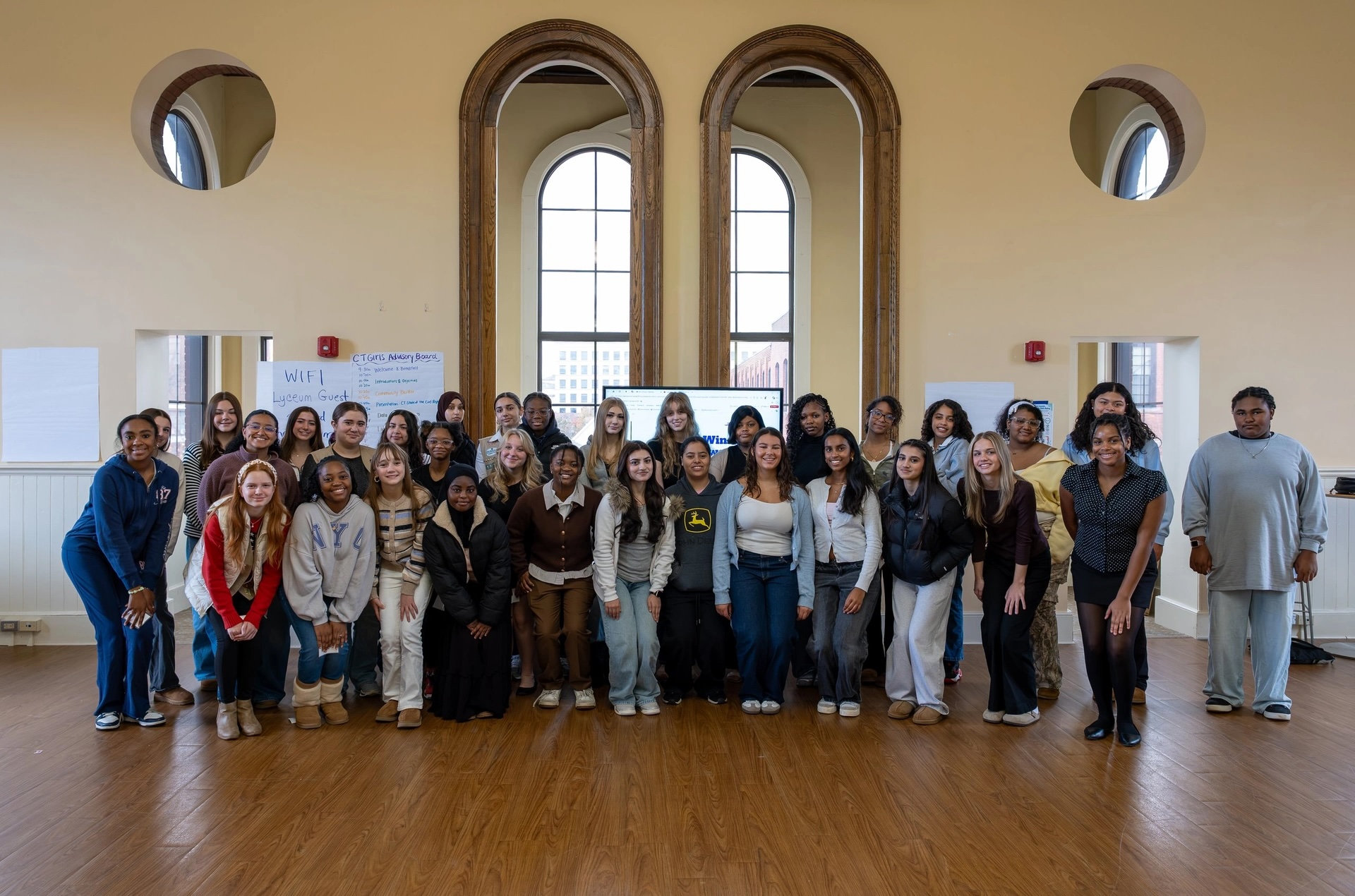
Thirty-five girls from across Connecticut gathered in Hartford on Saturday November 14th to help shape the recommendations that will inform the forthcoming March 2027 Connecticut Girls Report, a first-of-its-kind effort to better understand the experiences, opportunities, and challenges facing girls across the state.
Women and girl-serving organizations across the state partnered to commission the report, to explore how girls from kindergarten to senior year in high school are faring in Connecticut. Partners include: the Aurora Women and Girls Foundation, The Girl Scouts of Connecticut, with the support of the Doris Duke Foundation, Community Foundation for Greater New Haven’s Fund for Women and Girls, Fund for Women and Girls of Fairfield County’s Community Foundation, Northwest CT Community Foundation, Women and Girls Funds of the Community Foundation of Eastern Connecticut, Women & Girls Fund of Mainstreet Community Foundation, and Connecticut Community Foundation.
The youth planning summit was convened by the Aurora Women and Girls Foundation, the Girl Scouts of Connecticut, the Health Disparities Institute (HDI) at UConn Health and DataHaven. The event centered the voices of girls as experts in their own lives. Rather than simply responding to findings, participants analyzed Connecticut-specific data, identified root causes behind the trends they saw, and developed recommendations for policymakers, educators, community leaders, and philanthropic organizations. The recommendations generated during the event will directly inform the final Connecticut Girls Report.
“The State of Girls initiative reflects our belief that girls should not only be the subjects of research but active partners in helping us understand what the data mean and what solutions are needed,” said Jennifer Steadman, Ph.D., Executive Director of the Aurora Women and Girls Foundation.
The day opened with remarks from Elicia Pegues Spearman, Esq., Chief Executive Officer of the Girl Scouts of Connecticut, who emphasized the importance of investing in girls’ leadership and ensuring their voices are reflected in decisions that affect their lives.
“It is critical to understand the challenges and opportunities facing our girls. Oftentimes, girl data is compiled and aggregated with data on women. However, this report offers an in-depth close look at what girls from Kindergarten to 12th grade are experiencing throughout our state. This will allow all to see what investments we can make to ensure the trajectory of our girls.” said Pegues Spearman.
The event was intentionally designed around principles of meaningful youth engagement and shared power. Dr. Linda Sprague Martinez, Director of the UConn Health Disparities Institute, introduced participants to Hart’s Ladder of Youth Participation and discussed the importance of moving beyond tokenism to authentic youth leadership. Throughout the day, facilitators emphasized that adults were present to support the process, while the girls would drive the interpretation of findings and development of recommendations.
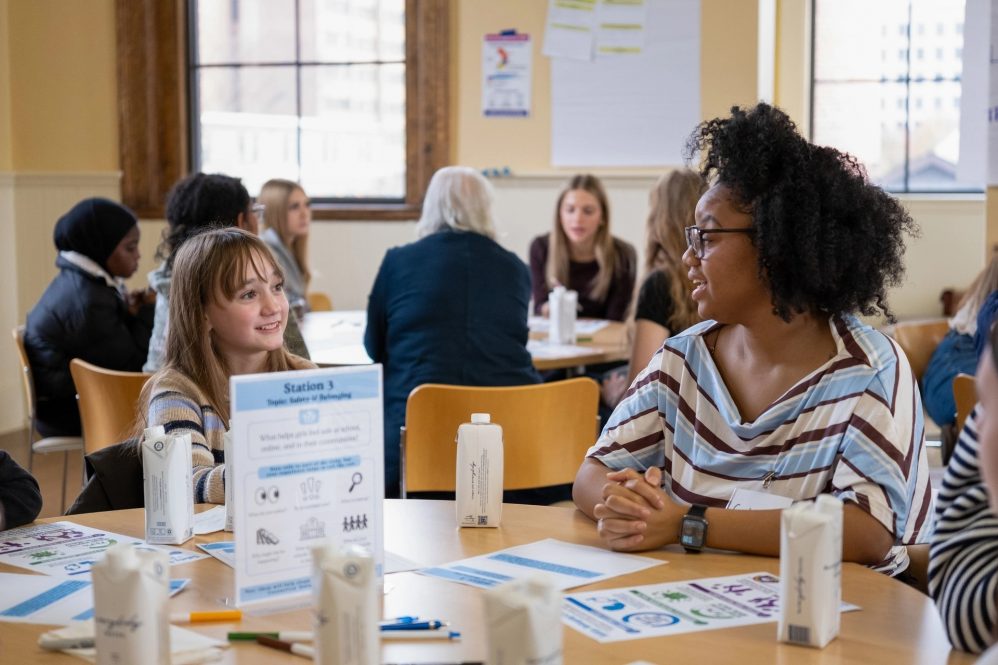
After the entire group of girls participated in introductions and leadership-building activities, DataHaven’s High School Fellows, Ananya Lingamallu of Glastonbury and Kathryn Suarez of Cheshire, shared an overview of the Connecticut Girls Report and its preliminary findings. All participants then rotated through six data stations examining issues affecting girls across the state. Using a critical analysis framework, participants explored what they observed in the data, how the findings connected to their own communities, why disparities might exist, and what should be done to address them.
For many participants, the experience highlighted the importance of connecting data with lived experience.
“Too often, data tell us what is happening but not why,” said Carter Shannon, MPH, of DataHaven, who is leading the project’s analysis and report development. “This process allows us to pair rigorous data analysis with the expertise of girls themselves. Their interpretations help us understand context, identify root causes, and ensure that the final recommendations are grounded in real experiences.”
During a gallery walk and facilitated discussion, participants reviewed ideas generated across all six stations, identified common themes, and worked together to prioritize recommendations. The process culminated in a consolidated set of youth-generated recommendations that will be incorporated into the final report.
“Girls brought tremendous insight, honesty, and thoughtfulness to the conversation,” said Anisah Colón, Program Manager at the Aurora Women and Girls Foundation.
“Creating space for girls from different communities to learn from one another and build recommendations together was incredibly powerful,” said Thalia Cruz Perez, Administrative and Development Associate at the Aurora Women and Girls Foundation.
The summit reflected a growing commitment among Connecticut organizations to elevate youth voice in decision-making and ensure that policies and programs affecting girls are informed by those with direct lived experience. Organizers noted that the recommendations generated during the convening will complement statewide data and community engagement efforts already underway as part of the report.
Beyond informing the report, the summit also created an opportunity for girls to connect across communities, learn from one another, and reflect on their role in shaping change. Participants left with a deeper understanding of both the challenges girls face and the collective strength they share.
“I learned that women still face a lot of challenges and aren’t always given the same opportunities or respect as men. The event helped me understand how important it is for women to support one another, speak up for themselves, and not let others make them feel like they’re less capable. I also took away that women have come a long way, but there’s still a lot of progress that needs to be made. It reminded me that our voices matter and that we shouldn’t have to work harder just to be treated equally.” Hadije M (16)
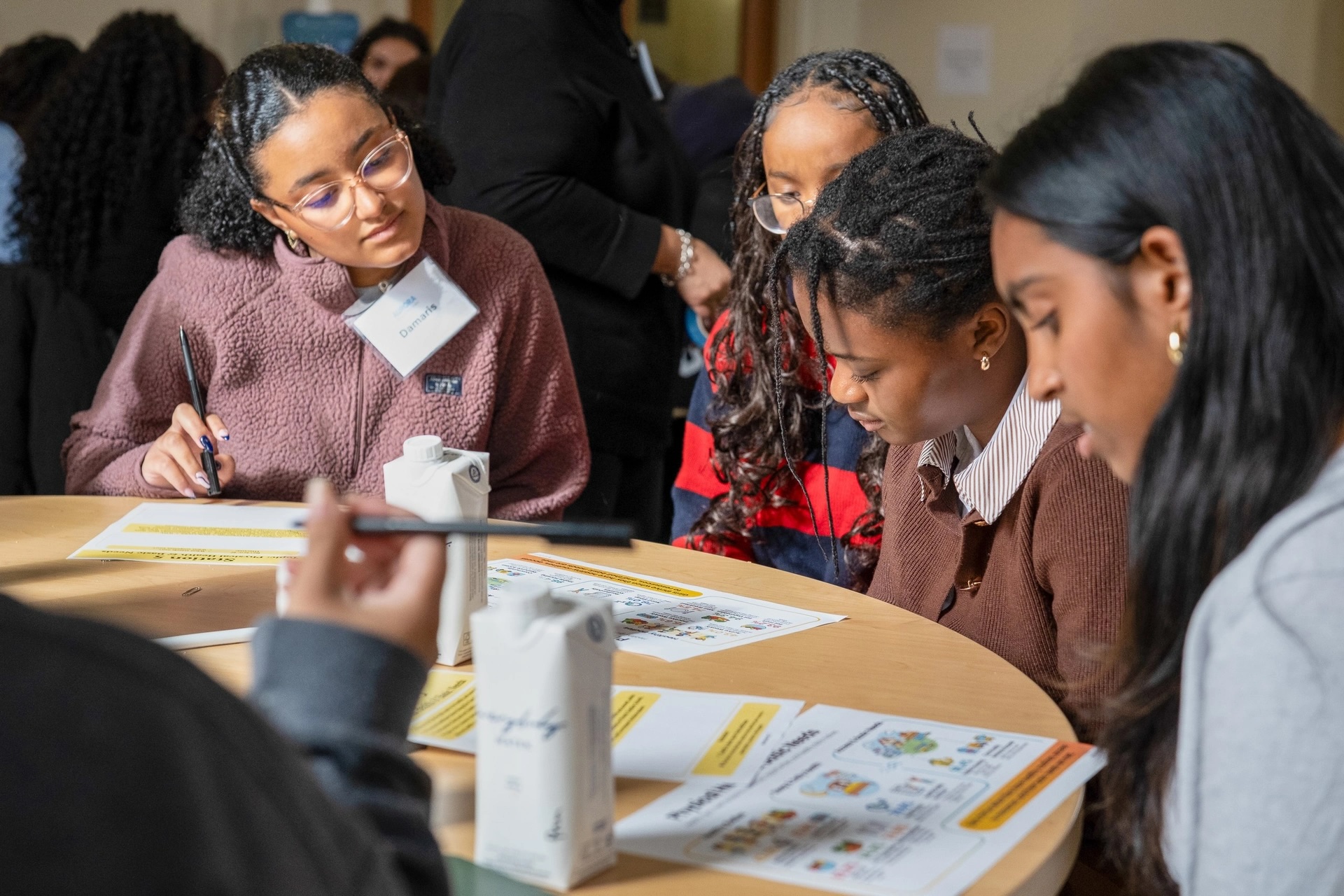
“What I learned from the meeting is that many girls from different parts of Connecticut suffer the same problems as many other girls who live in a whole different city or school. What really surprised me was that many girls all over Connecticut don’t sleep the eight hours people say you should be getting at our age, but the percentage surprised me a lot. What I also liked was how we got to meet girls from all over Connecticut and not just one area. It really opened my eyes to how different our lives can be but still have so much in common.” Aylin S (15)
“I learned that we, as girls, come from different places and backgrounds and that we are special in our own way. It also opened my eyes to the fact that we have a lot in common, but we have differences that make us unique in our own way. We all go through different struggles, but it’s important to have that support.” Imani U (17)
“I learned that so many girls around Connecticut are going through major problems that no one talks about or that are just so normalized. This event helped me realize just what women have to go through, especially in Connecticut. After seeing this data, it inspired me to become better and try to make that change and hopefully inspire others too. It taught me to network and build connections with others. I also got out of my comfort zone to speak to others. The CT Girls Advisory Board made me more aware, and what I took from that is to spread a good change, something to help our percentages become positive.” Emily N (15)
Across these reflections, a common theme emerged: girls recognized that many of the challenges they face are shared by their peers across Connecticut, regardless of geography or background. Examining the data alongside fellow participants fostered a stronger sense of connection, awareness, and agency. Participants described feeling inspired to support one another, speak up about issues that are often overlooked, build meaningful relationships, and contribute to positive change in their communities.
“Too often, adults make decisions about young people without creating meaningful opportunities for them to shape the conversation,” said Sprague Martinez, who planned and facilitated the event. “What we saw throughout the day was the power of combining data with lived experience. These young leaders challenged assumptions, identified root causes that statistics alone cannot reveal, and offered thoughtful, actionable recommendations for change. Their voices are essential to building a Connecticut where all girls have the opportunity to thrive.”
About the Health Disparities Institute (HDI)
The Health Disparities Institute at UConn Health works to advance equity and improve health outcomes by addressing the root causes of health disparities. Through research, data, workforce development, and strong partnerships with communities disproportionately impacted by inequities, HDI leads efforts to create systemic change. HDI’s vision is equitable health, education, and economic opportunity for all in Connecticut.
About the Aurora Women and Girls Foundation
The Aurora Women and Girls Foundation is dedicated to advancing gender equity through grantmaking, advocacy, research, and community partnerships. The foundation invests in initiatives that strengthen educational, economic, and leadership opportunities for women and girls in Greater Hartford and across the state.
About DataHaven
DataHaven is a nonprofit organization dedicated to collecting, analyzing, and sharing public data to support equitable decision-making. Through research, community partnerships, and statewide reporting, DataHaven helps organizations and policymakers better understand the issues affecting Connecticut residents and communities.
About Girl Scouts of Connecticut
Girl Scouts of Connecticut is a statewide nonprofit organizations whose mission is to build girls of courage, confidence, and character who make the world a better place. Through leadership development, outdoor experiences, STEM education, and civic engagement opportunities, Girl Scouts helps prepare young people to lead and create positive change in their communities.