In July 2026, the federal government is expected to eliminate Grad PLUS loans and cap federal borrowing for graduate students at $20,500 per year. According to the Council on Social Work Education, the change could affect approximately 370,000 graduate students nationwide and reduce access to an estimated $8 billion in federal loan funding.
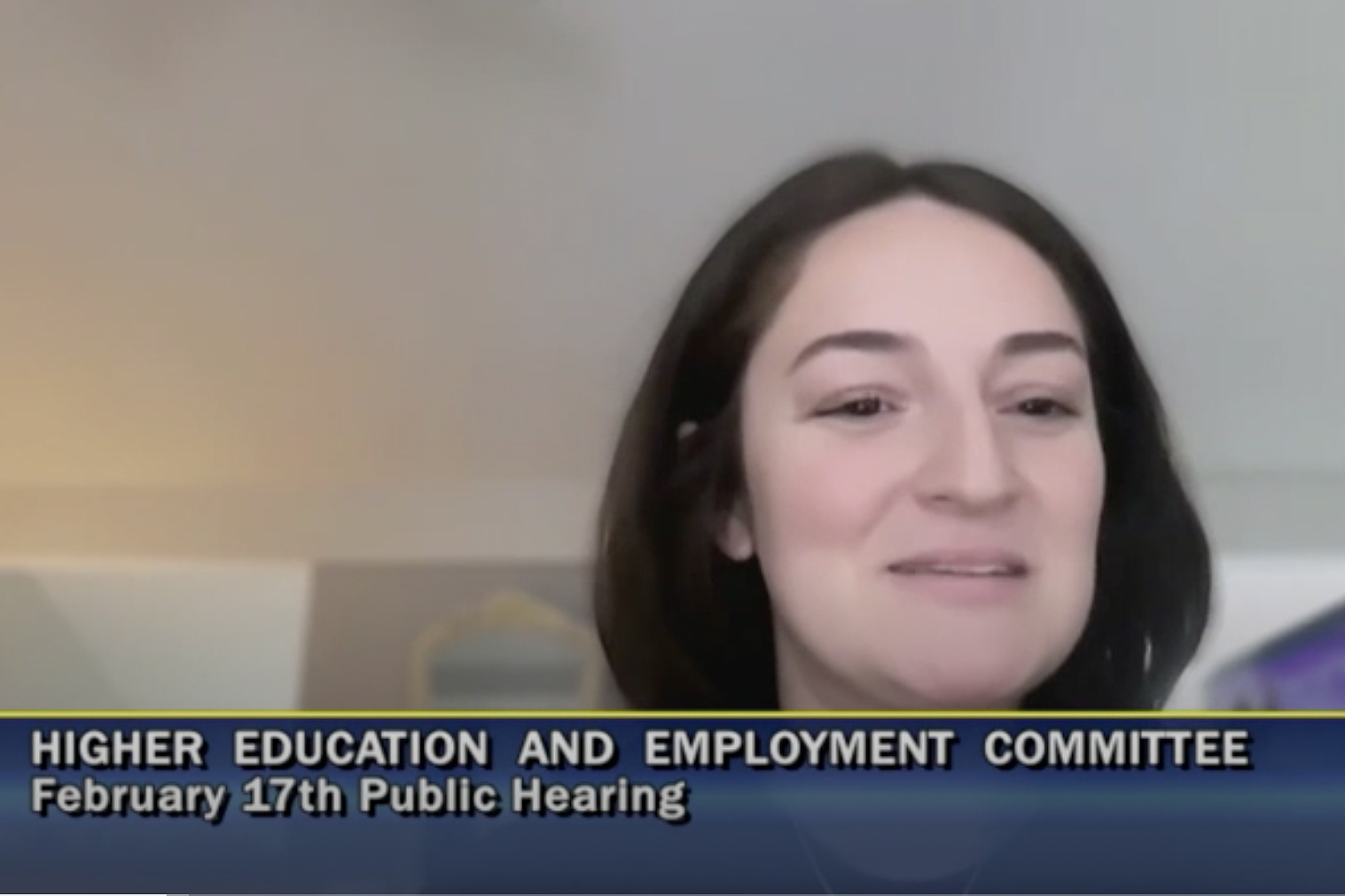
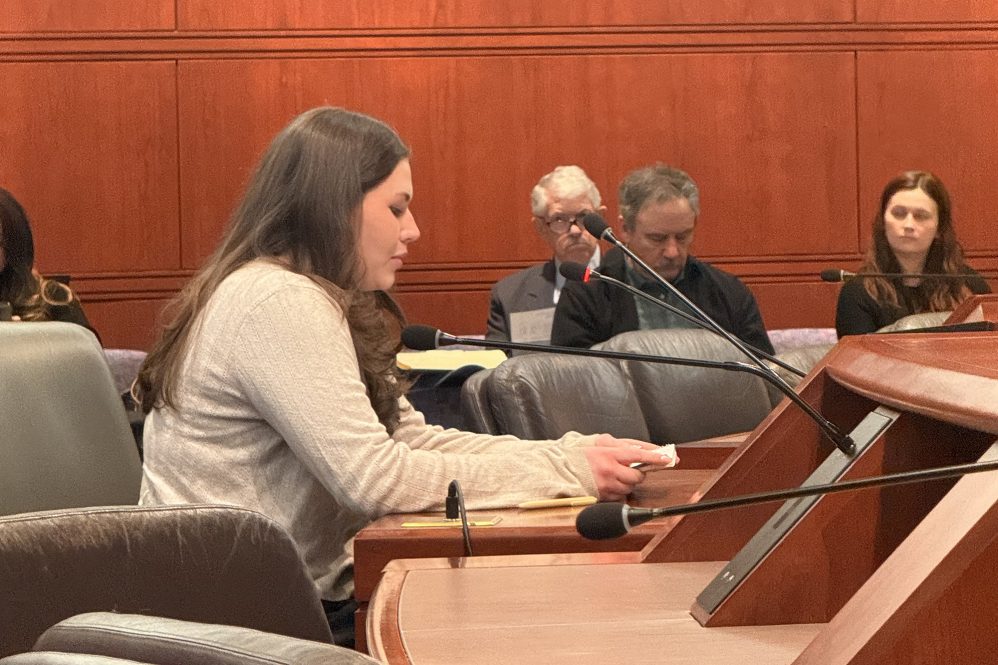
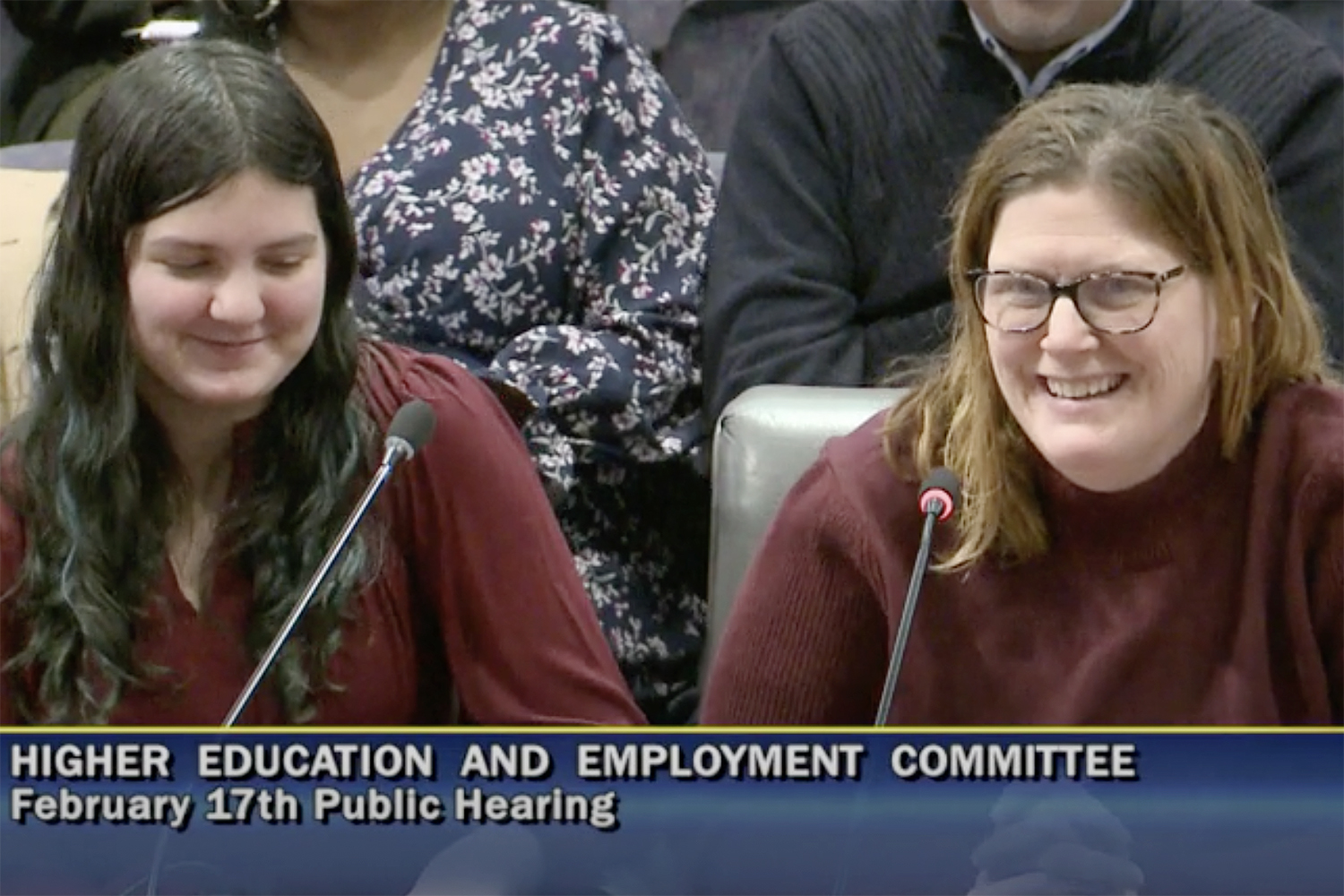
Concerned about the impact on students and the social work workforce, four representatives from the UConn School of Social Work and other members of the UConn community testified during a public hearing of the Connecticut General Assembly on Feb. 17 at the State Capitol in Hartford. The joint Committee on Higher Education and Employment Advancement heard testimony on Senate Bill 8 (SB 8), which proposes creating a state-level graduate student loan program to help offset anticipated federal reductions.
“Without a state-level solution, graduate students will be pushed toward private loans with higher interest rates and fewer protections, or forced to forgo graduate education entirely,” said Jocelyn Medina, a second-year MSW student focusing on policy practice. “I am a first-generation college student who grew up in a single-parent household in Waterbury. Federal loans made higher education possible for me. Without them, I would not be preparing to graduate this May.”
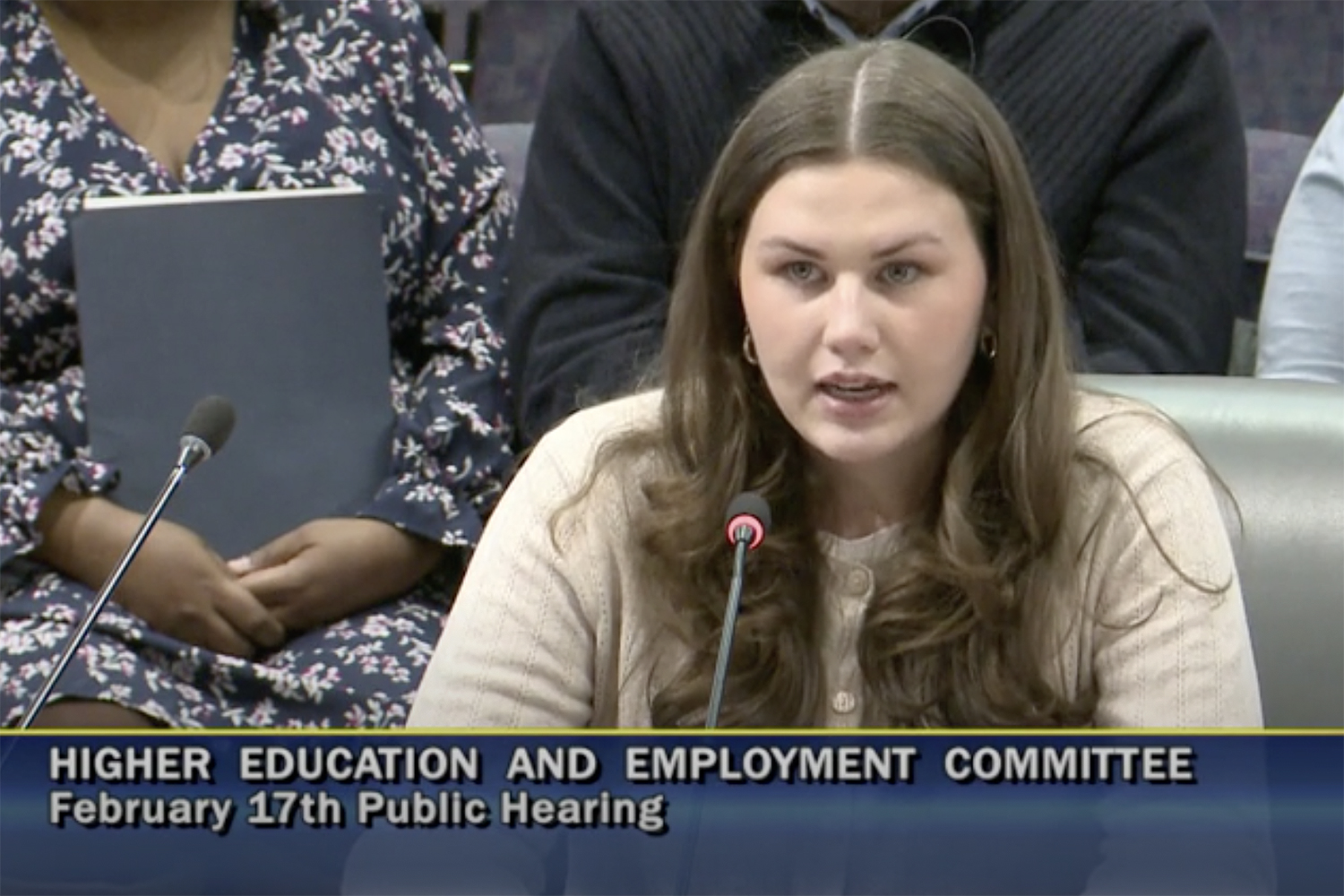
Medina told legislators that social workers do not choose the profession for its earning potential, but to serve their communities. When borrowing is capped below the actual cost of professional programs, she said, “it is not passion or commitment that determines who becomes a social worker — it is wealth. When fewer students can afford to enter the profession, it isn’t just the students who lose. It’s the families waiting for mental health services, the children in foster care, the individuals struggling with addiction — it’s communities like the one I grew up in. Limiting graduate education today means fewer professionals to meet Connecticut’s urgent workforce needs tomorrow.”
Although the borrowing limits will not affect her directly, Medina said she felt compelled to testify because of the broader impact on future students and the profession. Currently serving as a graduate intern with the U.S. Department of Housing and Urban Development’s Community Planning and Development office, she said she was “excited to be able to voice [her] opinion” in support of SB 8.
(Medina is also quoted in this Hartford Courant article.)
Second-year MSW policy practice student Sarah Burnett and Shannon Lane, Ph.D., LMSW, director of the Nancy A. Humphreys Institute for Political Social Work and professor-in-residence at the School of Social Work, also spoke in support of the legislation.
Burnett, a West Hartford resident on the policy practice concentration track, shared that she’s relied on student loans for her entire higher education.
“In a time where there’s such a need for social workers, increasing access to loans by filling funding gaps, would support the growth of our workforce and the many other areas of study impacted by the federal changes,” she said.
Lane underscored the broader equity concerns raised by the proposed federal changes.
“I’m proud to see our students and alumni leading advocacy for accessible graduate education,” Lane said. “Capping federal loans without a viable alternative will disproportionately impact students pursuing careers like social work, nursing, and education, which support the well-being of Connecticut’s communities and families. If we limit who can afford to earn a graduate degree, we risk exacerbating the workforce shortage we are already facing. This shortage harms vulnerable communities in Connecticut that social workers are committed to serve.”

Additional testimonies came from Mona Lucas, assistant vice president for enrollment at UConn; Maryclaire Capetta BS ’03, MA ’04 associate professor-in-residence and director of UConn’s Physical Therapy program; and Joy Elwell, clinical professor in the Elizabeth DeLuca School of Nursing and UConn School of Medicine, and director of the Doctor of Nursing Practice (DNP) program.
For physical therapists, a doctoral degree is required for licensure, Capetta explained during her testimony. Approximately 50% of the current PT cohort of 90 students has taken Grad PLUS loans.
“I can tell you firsthand, students are already reacting. Many have expressed hesitation and fear and uncertainty about whether they’re going to be able to find the way to afford to pursue this physical therapy degree,” she said. “A state supported loan program would give students a viable, stable alternative to private lending … and send a powerful message that Connecticut values and invests in its healthcare workforce.”
Lucas reported that last year, 167 first-time UConn students used Federal Grad PLUS loans, borrowing $4.2 million, or, on average about $25,100 per student.
“So if we look at these 167 borrowers as future physicians, dentists, lawyers, researchers, educators, it’s clear that we are in support of Senate Bill 8,” Lucas said during her testimony. “By stepping in where federal government is stepping back with Senate Bill 8, we think we can avert a decline in graduate student enrollment. We believe SB-8 strikes an effective balance: It’s fiscally responsible, should be fairly simple to implement, and it’s squarely focused on closing a critical affordability gap.”