Seven students in the landscape architecture program in the College of Agriculture, Health and Natural Resources (CAHNR) received awards from the Connecticut Chapter of the American Society of Landscape Architects (CTASLA).
Matthew Enright ’26 (CAHNR) received the Honor Award in the Site Design category; Monika Mihok ’26 (CAHNR, BUS) and Xiaoyu (Simba) Zhang ’26 (CAHNR) received Merit Awards in the category. Taghreed Hussein ’26 (CAHNR) received the Honor Award for Planning & Analysis; Paola A. Luna Castro ’26 (CAHNR), Daniel Hand ’26 (CAHNR), and LillyBelle Doyle ’26 (CAHNR) received Merit Awards in the category.
“It’s a testament to our faculty and the development of the curriculum that the students are able to complete such meaningful work, are proud of it, and want to submit it,” says Jill Desimini, director and associate professor of landscape architecture. “We’re really proud of the students. We know how great their projects are, but it’s exciting to see them recognized by others.”
Entries are judged by other ASLA chapters. This year the judges were from the Pennsylvania/Delaware chapter. Two other UConn students, Charlotte Simari ’26 (CAHNR), president of the student CTASLA chapter, and Agatha Michalska ’27 (CAHNR) presented the awards.
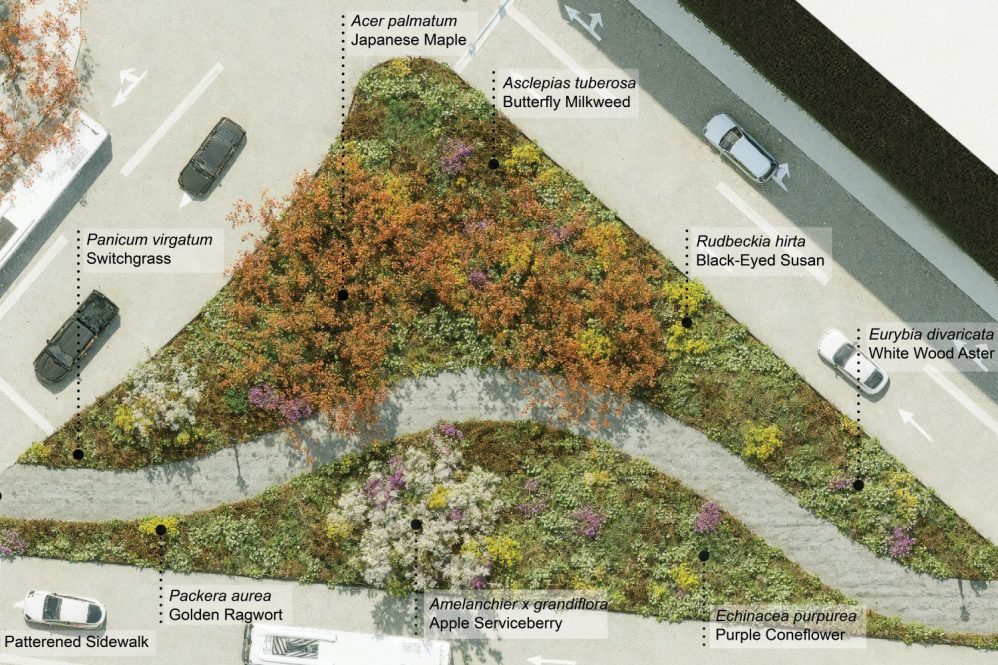
Enright’s project developed a plan for the Brooklyn neighborhood of Waterbury including native trees and other plants for shade and beautification, a grocery center, community access to the riverfront, erosion control, and bio-retention ponds and swales.
Mihok developed a plan for the area surrounding the Brookside Farm Museum in East Lyme. Mihok’s plan adds native plant life that can be eaten or used for other purposes, like dyeing, to draw people who walk past the site in, to interact with it and the museum more substantially.
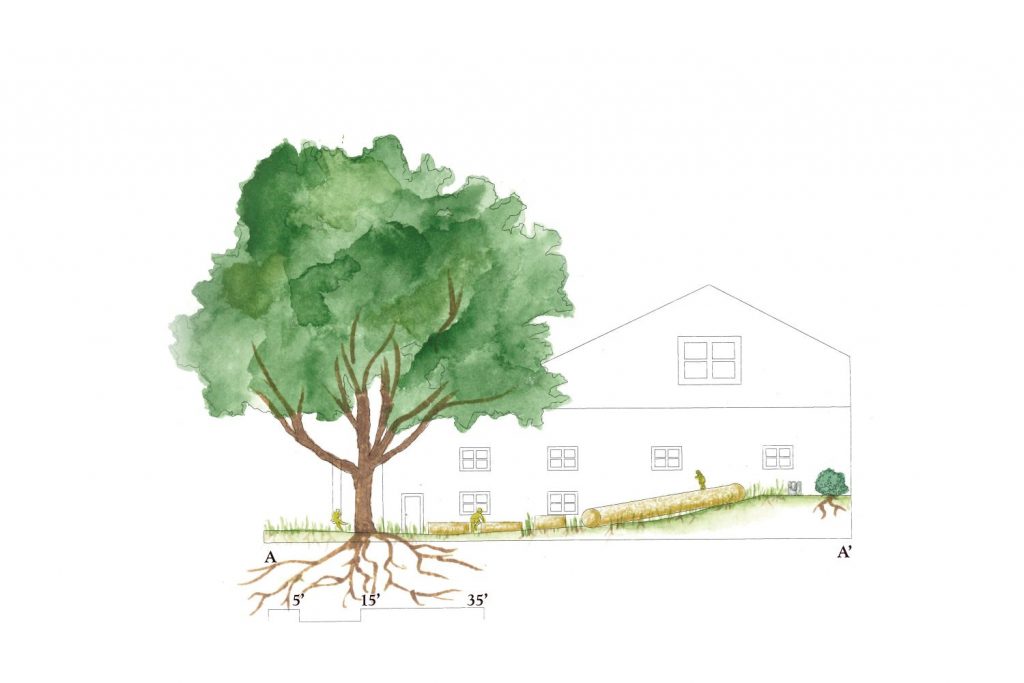
“[The idea was] to invite not only humans, but also pollinators into the site and having everyone welcome to interact with the elements,” Mihok says. “I really wanted to emphasize the importance of human-nature connection.”
Zhang’s project introduced a waterfront deck, overflow parking lot, small forest path, and playground to the same museum site. These features aim to encourage more community engagement including events such as weddings.
“I received a lot of inspiration from my professors and classmates [who encouraged me to submit the project for the award],” Zhang says. “It felt incredible. I was very honored to receive this award.”
Hussein’s project focused on revitalizing the riverfront area in Brooklyn to support community activities and address longstanding pollution issues from industrial waste, fertilizer, sewage, agricultural runoff, and littering.
Castro’s plan transforms abandoned areas in Brooklyn into pocket gardens with native plants that support native pollinators.
“I really wanted to see what else I could learn from the project because when you submit it, the jurors give you feedback,” Castro says. “It was really interesting to see what other professionals thought about the idea that I had…It was really rewarding to see that something I did was recognized by someone else.”
Hand’s project also crafted a plan for Brooklyn that converts the aging highway that separates the neighborhood from the rest of Waterbury into a quieter boulevard with local businesses alongside, as well as increased public transportation without displacing current residents.
“The idea was really big,” Hand says. “So having the acting body of your profession recognize a project as legitimate and award it is pretty rewarding because it shows that it could be possible.”
Doyle’s plan includes transforming abandoned buildings and vacant lots into public green spaces and community buildings, and additional public transit connections between the neighborhood and nearby towns. The plan also includes rezoning industrial areas for other uses to encourage economic growth.
The projects were completed as part of the students’ junior and senior year studio projects, advised by Mariana Fragomeni and Sohyun Park. Two students won awards last year.
This work relates to CAHNR’s Strategic Vision area focused on Fostering Sustainable Landscapes at the Urban-Rural Interface.
Follow UConn CAHNR on social media