Michael Samulevich started his college career at the University of Scranton, where he graduated with a Bachelor of Science in Biochemistry, Cell and Molecular Biology while also majoring in Philosophy.
After Samulevich graduated, he applied to the University of Connecticut. His now-advisor and Professor of Pharmacology and Toxicology, Brian Aneskievich, reached out to Samulevich with the opportunity to study a protein called TNIP1 for its potential druggability.
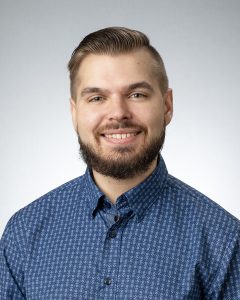
Samulevich is currently a fifth-year Ph.D. candidate at the University of Connecticut School of Pharmacy and Pharmaceutical Sciences in the Pharmacology and Toxicology track.
During Samulevich’s fourth year, the Pfizer Drug Safety Research and Development / University of Connecticut Graduate Student Research Fellowship was established. Once he heard about it, Samulevich decided to apply.
“It was kind of a no-brainer for me because I wanted to do an internship, but I was nervous about what a classic internship would do to my research productivity,” Samulevich said.
When applying for the Pfizer fellowship, Samulevich said that there were very few issues that arose during the application process.
“One challenge was aligning my research with Pfizer’s interest areas,” Samulevich said. “I had a definite plan of research for my thesis before the fellowship and since there was [so much] opportunity to get more done with their expertise and equipment, I had the chance to expand [my research].”
Pfizer requires applicants to put their research plans into a formal proposal, and Samulevich had so many ideas he had to cut some out of the write-up.
“After you get all these ambitious ideas, you have to boil them down into a couple of pages,” Samulevich said. “And so that becomes a different challenge […] I’ve got two pages to spell it [all] out.”
Eventually, Samulevich wrote down all the research ideas he came up with for the fellowship. His research focuses on the protein TNIP1 which regulates inflammatory responses, specifically within the skin. Using a skin cell model engineered in his lab to lack this protein, he investigates its role in disease while also searching for small molecules that can bind to the protein’s surface to influence its function.
“The project I proposed to Pfizer was that we were going to produce, in-house, a line of skin cells with the TNIP1 protein removed,” Samulevich said. “We wanted to characterize this cell line to then use it as a model for screening the specificity of ligands that I have to probe the TNIP1 surface.”
The experience with the Pfizer fellowship has helped Samulevich in some unexpected ways as well. Samulevich ended up developing an additional goal for his research that wouldn’t have been possible without the fellowship’s resources and support.
Samulevich noted that additional opportunities came from the fellowship.
“The Investigative Toxicology team that I was working with at Pfizer was especially fantastic about connecting me with professional opportunities like certain conferences that I wouldn’t have otherwise considered,” Samulevich said. “There were a couple of on-site courses that they encouraged me to attend that were beneficial for my academic development.”
Aneskievich noted the breadth of expertise at Pfizer makes Pfizer an ideal partner for Samulevich’s project. From the outset, the Pfizer team’s collaborative approach contributed to many outcomes beyond conducting the research, including Mike’s upcoming presentation at a conference in Washington, D.C., and his preparation of a manuscript for publication.
Mike’s scientific exchanges with the Pfizer team, along with these outcomes, underscore the value of this fellowship. It provides a transformative training opportunity for graduate students in our Pharmacology-Toxicology Ph.D. program via collaboration with an innovative biopharmaceutical leader.
Aneskievich particularly wanted to acknowledge Raja Mangipudy, Senior Vice President, Head of Global Drug Safety and Development, and Vishal Vaidya, Vice President and Head of Science and Technology at Pfizer along with José Manautou here at UConn SoPPS, whose leadership and commitment were instrumental in establishing this fellowship.
Gregory Riley III is a third-year Ph.D. student in the Pharmacology and Toxicology track in the Department of Pharmaceutical Sciences. He received a bachelor’s degree in biology from College of the Holy Cross and became interested in pharmaceutical sciences after taking a toxicology course, which motivated him to pursue a career in the pharmaceutical industry. He then spent five years at a biotechnology company working on CAR T cell therapies before matriculating into the Ph.D. program at UConn.
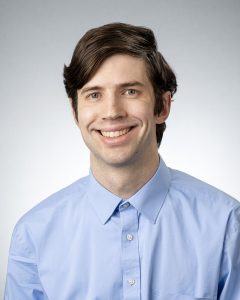
Riley’s research with Pfizer focuses on investigating the role of estrogen and estrogen receptor alpha in inflammatory activation and function of alveolar macrophages. These resident immune cells perform critical regulatory roles and defend the lung against inhaled pathogens, dust, and debris. He has proposed to study these mechanisms using a novel ex vivo primary alveolar macrophage culture method.
The Pfizer fellowship has helped Riley in numerous ways. “[The Pfizer fellowship] has greatly expanded the scope of my research by providing access to diverse and cutting-edge technologies that allow me to pursue exciting new questions that were not possible to explore in my PI’s laboratory,” Riley said. “The fellowship will also enhance my professional development through networking opportunities with career toxicologists and hone my scientific communication skills by presenting at project meetings and during the company-wide research presentation symposium.
Riley gave a lot of praise to his advisors.
“Dr. Smith was incredibly helpful at refining the written proposal and my elevator pitch,” Riley said.
Riley has some goals for his Pfizer fellowship as well, “In addition to expanding my own research, I am hoping to benefit Pfizer scientists by incorporating our novel alveolar macrophage cell culture model into their preclinical studies.” This work is ongoing and is expected to conclude at the end of 2026.