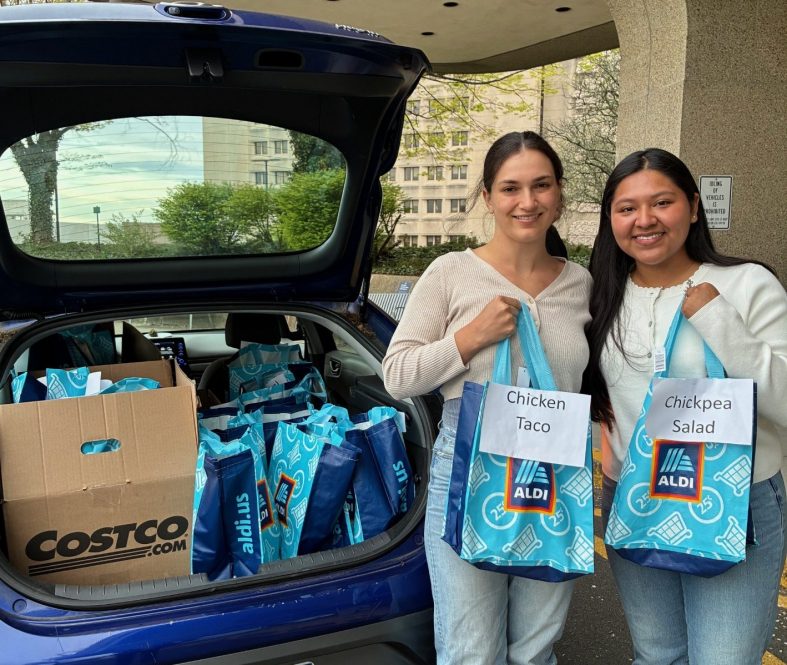
Harm reduction is typically associated with strategies to reduce the negative consequences of drug use and was the topic of the 6th Annual Urban Service Track / AHEC Scholars Program (UST/AS) Interest Group Summit on April 11 that attracted more than 150 attendees.
“Yet Urban Health/AHEC Scholar members of the Summit’s Women’s Health Interest Group (IG) thought about other issues and populations who might benefit from harm reduction efforts and decided to focus their Summit presentation on food insecurity, a topic frequently witnessed and addressed in UST/AS training and outreach,” says Cecil Tengatenga, associate director of the Connecticut Area Health Education Center (CT AHEC), the organization based at UConn Health that oversees UST/AS.
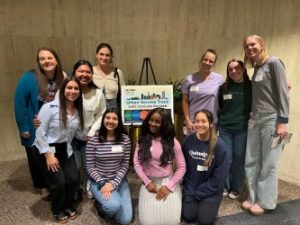
Back row: Maggie Manning, Ellen Fuller, Daisha Drake, Josilin Gove, Anneliese Troidle. Middle row: Karen Martinez, Azucena Zecua Herrera. Front row: Nazanin Zaer, Faith Kollie, Ashley Szeto. Members not pictured: Saidra Charles, Desiree Pickard, Irina Tavaratsyan, Ty’laisha Huff.
“Our Women’s Health IG first met in the fall when SNAP benefits were in jeopardy of being cut. When we learned that 240,000 women in Connecticut utilized SNAP benefits versus 120,000 men we unanimously decided to work on how we could alleviate the harm women might experience related to those SNAP benefit being taken away,” said Azucena Zecua Herrera, AHEC Scholar in the UConn Elisabeth DeLuca School of Nursing and co-lead of the IG. The Supplemental Nutrition Assistance Program (SNAP) is a federal program administered through the state that provides food benefits to low-income families.
The 13-member IG, which is one of seven learning communities, consisted of UST/AS students from the UConn Schools of Pharmacy, Medicine, Nursing, Dental Medicine, Social Work and Quinnipiac University’s PA program. “The goal of our project was to create healthy, easy recipes that could be cooked using food one might receive at a food pantry or buy at a dollar store. Many women and families in Hartford live in food deserts, where there is no easily accessible full-service grocery store,” said Ellen Fuller, AHEC Scholar and 2nd year medical student in the UConn School of Medicine, co-lead of the IG. The students in the group researched women-centric non-profits in the Hartford area, reading about their work and mission, and determined My Sisters’ Place would be the ideal partner for their outreach.
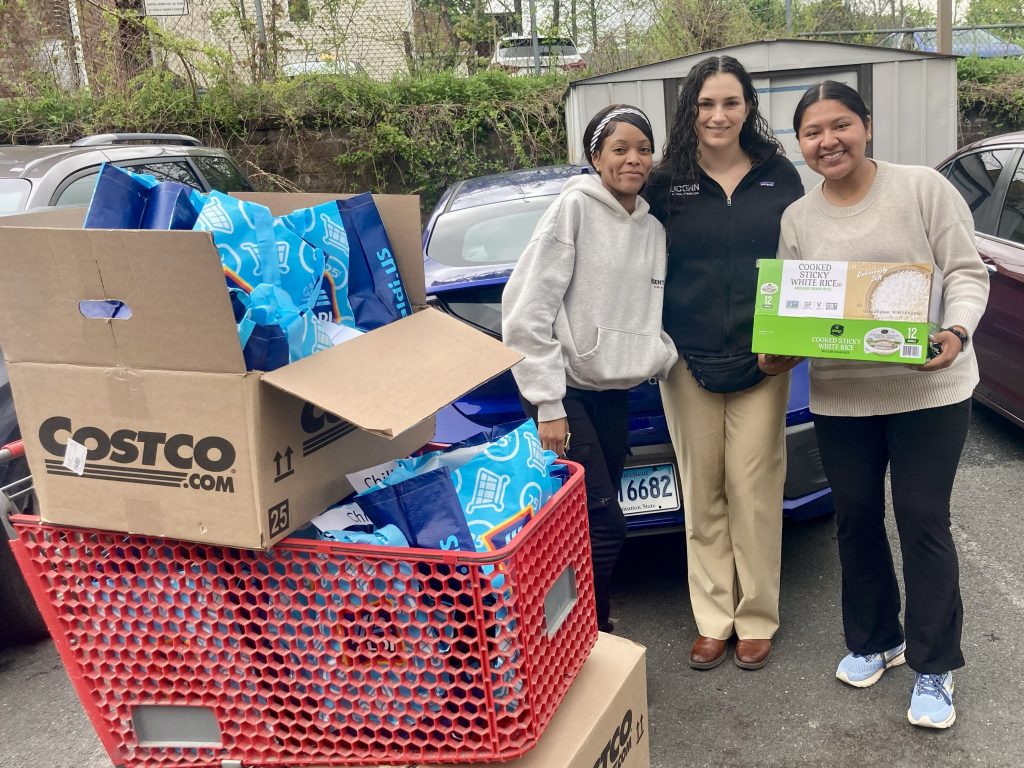
My Sisters’ Place is a non-profit organization in Hartford that provides emergency housing, affordable housing, and supportive services to single women and women with families and individuals in need. “We’re deeply grateful to UConn’s Urban Service Track students for selecting My Sisters’ Place as the recipient of their food donations,” commented CEO Kara Capone of My Sisters’ Place. “While our formerly homeless residents now have safe, stable housing and access to support services, these contributions play a vital role in helping them stretch their limited resources and focus on building a more secure and independent future.”
Ty’laisha Huff, an AHEC Scholar nursing student in the IG said she was passionate about this project because she grew up in Hartford and had personally witnessed the barriers people face related to access to healthy foods. She was responsible for writing the grant for the supplies. “This was the first time I had ever done anything like that and I was thrilled when the grant was approved. Through this experience I have learned that great things come with time and patience,” said Huff.
The group considered the lifestyle and habits of the population they wanted to reach and, with the help of a registered dietician, decided to create non-perishable food baskets that included four healthy recipes and food “tips/tricks” that would be appropriate for women with limited funds who shopped at dollar stores and markets where access to fresh foods can be limited by cost and cultural preference. They also considered whether basket recipients would have access to spices, condiments, kitchen utensils, a refrigerator and stove when planning the recipes. The handouts were written in English and Spanish.
One thing that surprised Fuller was that it was nearly impossible to keep the recipes below the recommended 2300 mg of sodium per day while eating non-perishable foods. “When I tell a patient with high blood pressure to reduce their sodium, I will always remember the barriers that stand in their way of that goal,” said Fuller.
Catalina Quesada, the registered dietician advisor to the group and CT AHEC’s community education specialist, was impressed by how the students showed a genuine interest in creating materials that would be appropriate for the population they were serving. “This project is important because they are creating resources, in this case, recipes, for an underserved group, ensuring the information is relevant, accessible, and appropriate,” said Quesada.
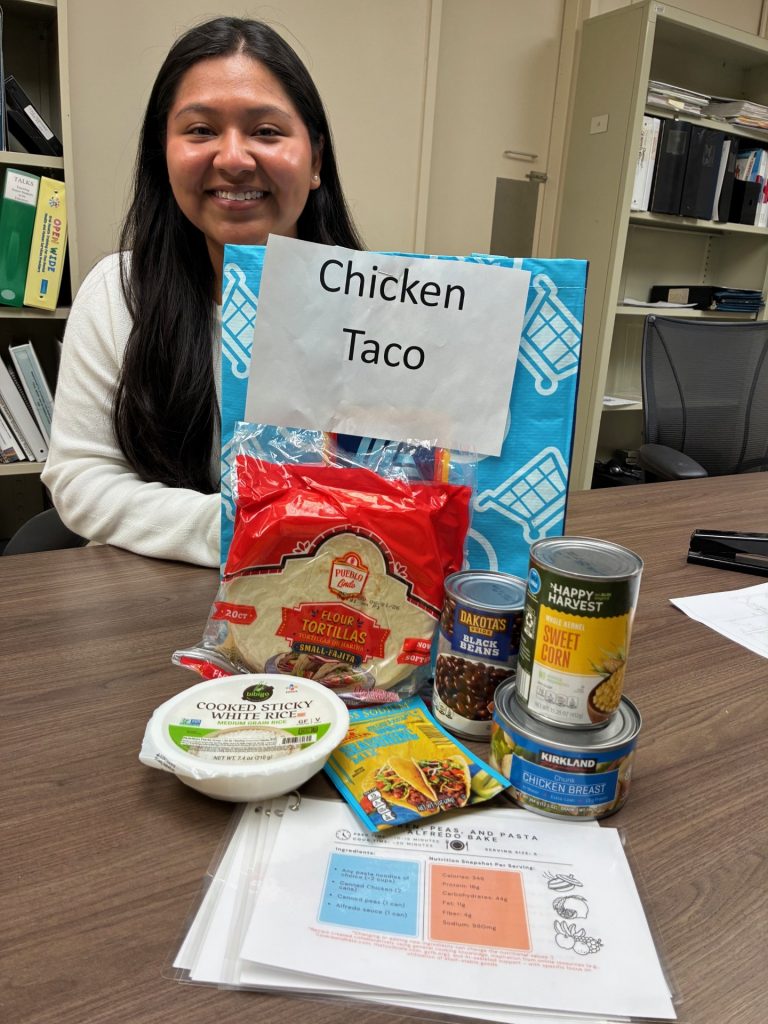
“One of the most important things I learned was how financial and nutritional education play a huge role in food insecurity. It was a challenge for our group of health profession students to stay within recommended dietary constraints and under budget. I can’t imagine how frustrating and exhausting it is for someone living in this situation to balance these factors for every single meal,” said Fuller.
Recipients of the baskets weren’t the only ones who benefitted from this project. “As a co-lead, this was a journey of communication, commitment and teamwork,” says Zecua-Herrera. “I learned a lot about myself and how to be a leader and this will help me in my career as a nurse.” Her co-lead, Fuller, agreed. “Everyone in the interest group stepped up when we decided on our goal, and I learned so much from watching them succeed. It is amazing to be able to step back as a leader and fully trust your team,” said Fuller.
“The group identified different ways to support under-resourced individuals, targeting the intersection of women’s health/nutrition and food insecurity. It was inspiring to see them work to apply this year’s focus on harm reduction to current events in a way that could meaningfully impact their community,” Maggie Manning, PsyD, faculty advisor for the group.
For more information visit the Urban Service Track/AHEC Scholars Program website.
Student interest groups show potential as an effective, low-cost approach for engaging students, teaching the value of serving populations with greatest need and teaching Interprofessional Education Collaborative (IPEC) competency. To learn more, we refer you to an article in The Clinical Teacher: “A Novel Approach to Interprofessional Training: Lessons Learned from a Pilot Study of Virtual Student-Centered, Student-Led Interest Groups in the Urban Service Track/Area Health Education Center Program. https://doi.org/10.1111/tct.70279