Leonard I. Krimerman, a distinguished philosophy professor emeritus at UConn, passed away on December 31, 2025. His legacy lives on through the Krimerman Community Service Grants, established to advance students’ civic engagement.
On April 30, the inaugural cohort of grant recipients were recognized and celebrated.
The following four students were awarded a grant of up to $500 to support projects that address pressing social issues:
Bryce Turner ’26 (CLAS) examined the impact of Windham Hospital’s closure of its Labor & Delivery unit on maternal healthcare access and community trust in Willimantic.
Charli Hughes ’28 (ENGR & CLAS) worked with Covenant Soup Kitchen to address transportation insecurity among unhoused and housing-insecure residents of the greater Willimantic area.
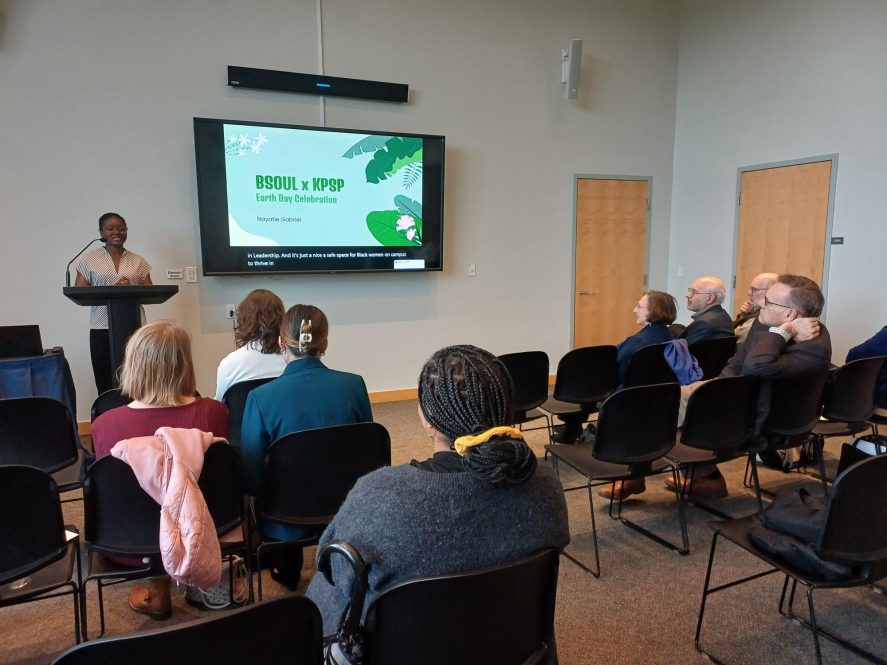
Nayatie Gabriel ’28 addressed environmental racism by establishing and maintaining green spaces.
Sam Arevalo-Hoefer ’26 (CLAS) examined how changing statewide and federal policies shape the lives of Latin American immigrants in Connecticut.
Beginning in 1969, Krimerman, alongside students from his course on social and political philosophy, established an alternative learning initiative known as the Inner College.
What began as a one-year experiment later received support from a National Endowment for the Humanities grant, sustaining the program through 1973 before it evolved into the Center for Educational Innovation and contributed to the creation of an individualized major option. The Inner College placed primary responsibility for learning in students’ hands, with faculty serving as advisors on projects aligned with students’ interests. Participants engaged in independent studies, field experiences, and integrative workshops, which formed the core of the program’s educational approach.
Alumni of the Inner College, including John Nero ’70 (CLAS) and John Long ’72 (CLAS), later came together to honor Krimerman’s legacy by establishing the grant program.
Long said that countless Inner College alumni carried their commitment to community engagement into careers in public service. This shared dedication inspired them to create a funding opportunity that both honors Krimerman and empowers current students to design and implement projects that make a meaningful difference.
“[Professor Krimerman] believed deeply in community-engaged learning, and students taking an active role in their education,” Long said. “He wanted students to get out there in the community and learn by doing, to create positive social change.”
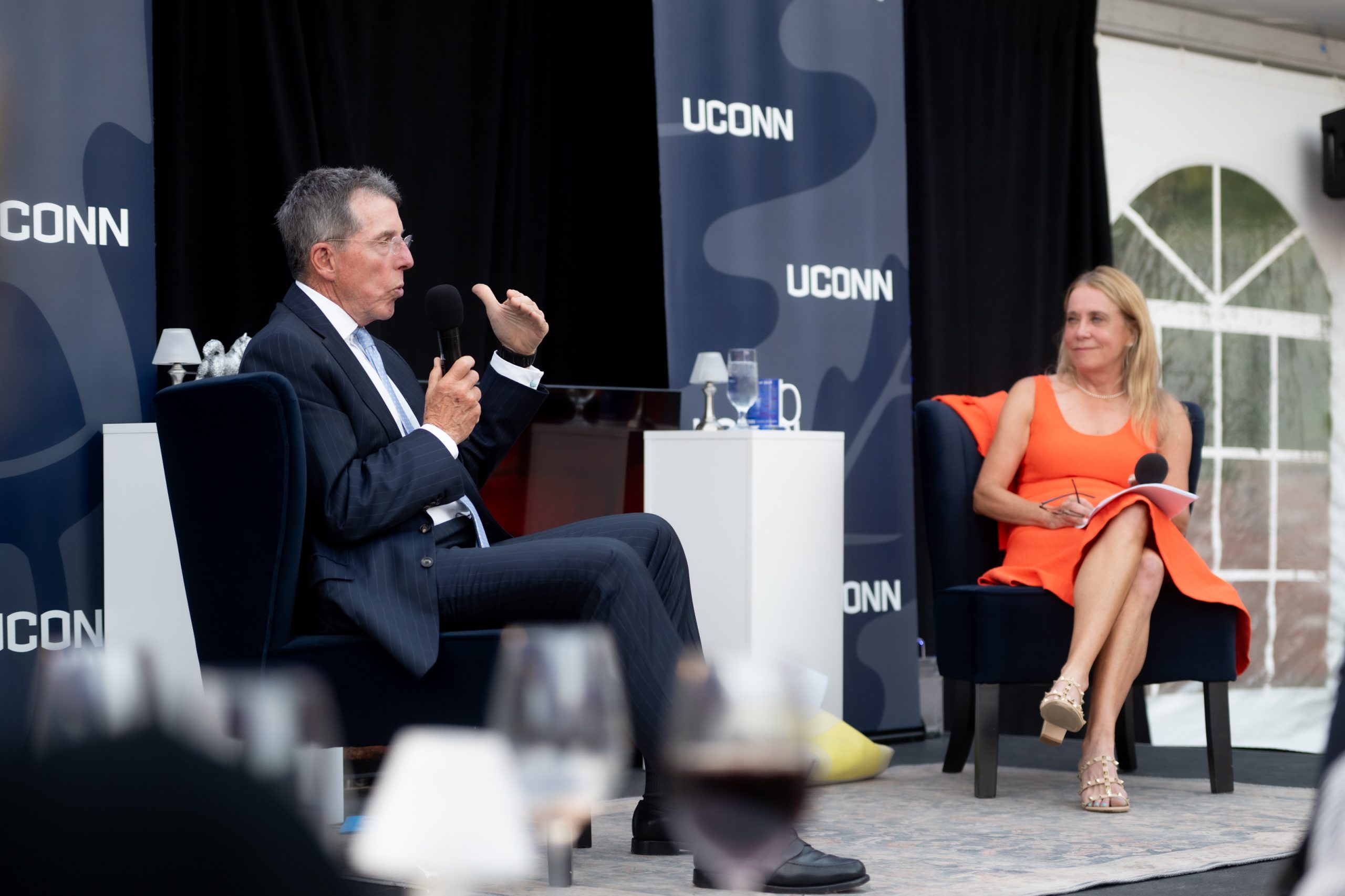
Reflecting on the significance of the April 30 celebration, Long added, “I think it helps ensure that Len won’t be forgotten, and he’s able to make a change even when he is no longer with us.”
Christopher Ciarcia, associate director of the Office of Outreach and Engagement, supports faculty, staff, and students in their community engagement efforts. During the event, he introduced each grant awardee as they presented their work and shared findings with attendees.
Ciarcia also emphasized the importance of sustaining and expanding the program.
“We’re at a moment right now where we do need to get more donations. We’re hoping that people will see the great work that these students did through this grant, and that we’re able to increase the number of students who are recipients of the grant next year as well.”
He highlighted the mutual benefits of the program, adding, “It’s a win-win. It’s a win for our students and a win for the community partners who work with them to make a direct impact by addressing community-identified needs and desires.”
Donations to support the Krimerman Community Service Grants can be made through the UConn Foundation.
One of the grant recipients, Bryce Turner, focused on women’s healthcare access and the impact on local residents amid reduced services.
“Maternity care is essential healthcare. There’s no situation in which this is not going to be a pressing issue,” said Turner.
The grant enabled Turner to recruit research assistants and deepen his analysis, identifying key themes across seven interviews conducted with community activists and medical professionals.
He noted that one of his goals with his research is to raise awareness for the maternity care crisis.
“I’m hopeful that my project and the other projects that have been highlighted by this grant program will kick off that body of knowledge and help future scholars be able to conduct effective research,” Turner said. “I’m hopeful that by that, future cohorts will be able to look back on our work and build on what we did to continue Dr. Krimerman’s legacy.”
The Krimerman Community Engagement Grants were established by UConn alumni from the Inner College, in partnership with the Office of Outreach and Engagement, to carry forward Professor Krimerman’s deep dedication to experiential learning and civic involvement.