Mechanical engineering assistant professor Chang Liu has received a prestigious Faculty Early Career Development (CAREER) Award from the National Science Foundation (NSF), the agency’s highest honor supporting early-career faculty who demonstrate exceptional potential as both researchers and educators.
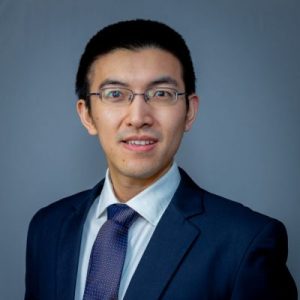
The award recognizes Liu’s innovative work at the intersection of fluid dynamics, nonlinear systems, and control theory while supporting a research and education program that could improve the performance and efficiency of technologies ranging from aircraft to data centers.
Liu’s project, “CAREER: Nonlinear Stability, Input-Output Analysis, and Control of Time-Varying Wall-Bounded Shear Flows,” will develop new mathematical frameworks to better understand fluid flows that change over time, a longstanding challenge in engineering that affects everything from transportation and energy systems to electronics cooling.
“Many engineering systems operate under conditions where fluid flows change over time, such as the accelerating and decelerating stages of transport vehicles, active flow control for drag reduction, and thermal management of electronic devices,” Liu explains. “In these applications, time-dependent flow behavior can significantly influence drag, heat transfer, and system reliability, while existing analysis frameworks are mostly limited to steady or slowly time-varying flows.”
By developing new nonlinear analysis tools, Liu aims to give engineers the ability to more accurately predict and control these complex, time-dependent flows.
Fluid flow plays a critical role in countless engineering systems, yet many existing models assume conditions remain relatively constant over time. Liu’s research challenges that assumption by focusing on time-varying shear flows, fluid motions that evolve dynamically and are common in real-world applications.
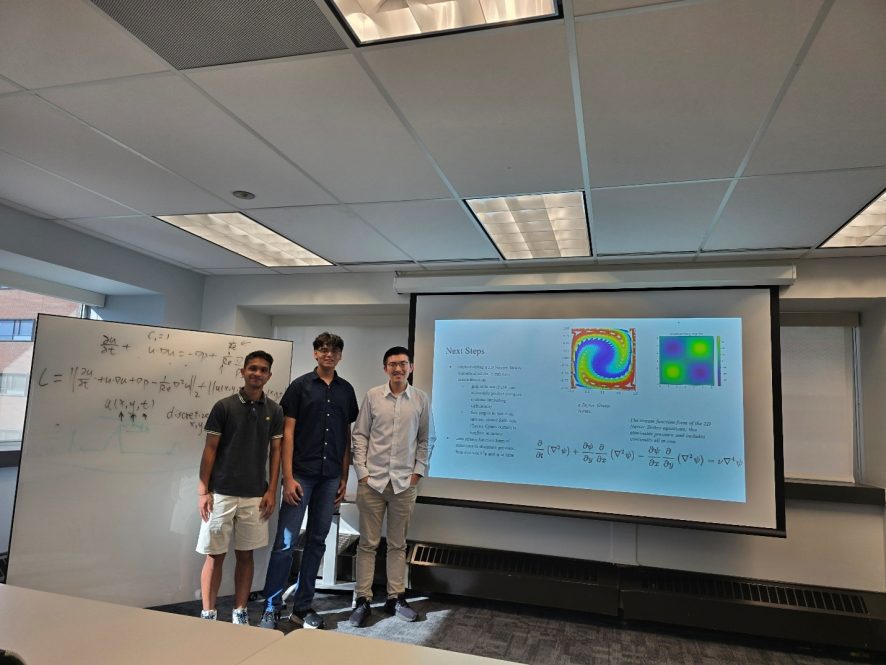
His work builds on years of research spanning his doctoral studies at Johns Hopkins University, postdoctoral work at the University of California, Berkeley, and his research program at UConn. Supported by the UConn Research Excellence Program and collaborations with undergraduate researchers, Liu’s team has already produced several promising results that laid the foundation for the NSF CAREER proposal.
“The proposed research is novel in that it will develop new nonlinear analysis tools specifically tailored to time-varying shear flows for which existing methods based on linearization or steady-flow assumptions fail to capture essential transient and nonlinear effects,” Liu says. “These tools will, for the first time, enable rigorous characterization of nonlinear stability and input-output properties in time-varying shear flows.”
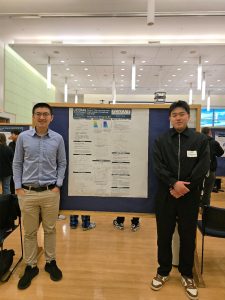
The research could have far-reaching impacts across multiple industries. Better understanding and control of fluid behavior may lead to safer aircraft operations during takeoff and landing, more fuel-efficient transportation systems, improved cooling technologies for high-performance electronics, and lower energy consumption in data centers. The analytical tools developed through the project could also be applied to cardiovascular blood flow, tidal currents, and advanced manufacturing processes.
For Liu, receiving the CAREER Award represents more than recognition of his research accomplishments, it marks a defining moment in his academic career.
“This NSF CAREER Award is a very important milestone and turning point in my early career stage, and it is also my first federal grant,” Liu says. “This award will provide me with stable support to develop my career as an outstanding researcher and educator, demonstrating commitment to teaching, learning, and the dissemination of knowledge.”
He adds that the award reinforces his commitment to integrating research and education while helping advance the mission of both the School of Mechanical, Aerospace, and Manufacturing Engineering and the University.
Four UConn College of Engineering professors earned the NSF CAREER Award in 2026, three being from the School of Mechanical, Aerospace, and Manufacturing.
A hallmark of every NSF CAREER Award is the integration of research with education, and Liu’s proposal places students at the center of that mission.
His project is closely tied to the Fluid Learning, Outreach, And Transition (FLOAT) education program, which introduces students at every stage, from elementary school through graduate school, to engineering and fluid dynamics.
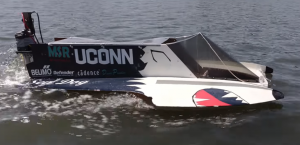
Through UConn Boat Camp, Liu introduces fifth- and sixth-grade students to concepts such as drag and buoyancy while guiding them through the process of building electric boats. He also mentors high school students through the Avon High School Achieve Internship Program, providing hands-on research experiences that expose them to engineering at an early stage.
At UConn, Liu also advises the UConn Electric Boat Club as students design and build an electric boat for the Promoting Electric Propulsion (PEP) competition. In the classroom, he plans to incorporate discoveries from the CAREER project into undergraduate and graduate coursework, giving students direct exposure to cutting-edge research while preparing them to solve the next generation of engineering challenges.