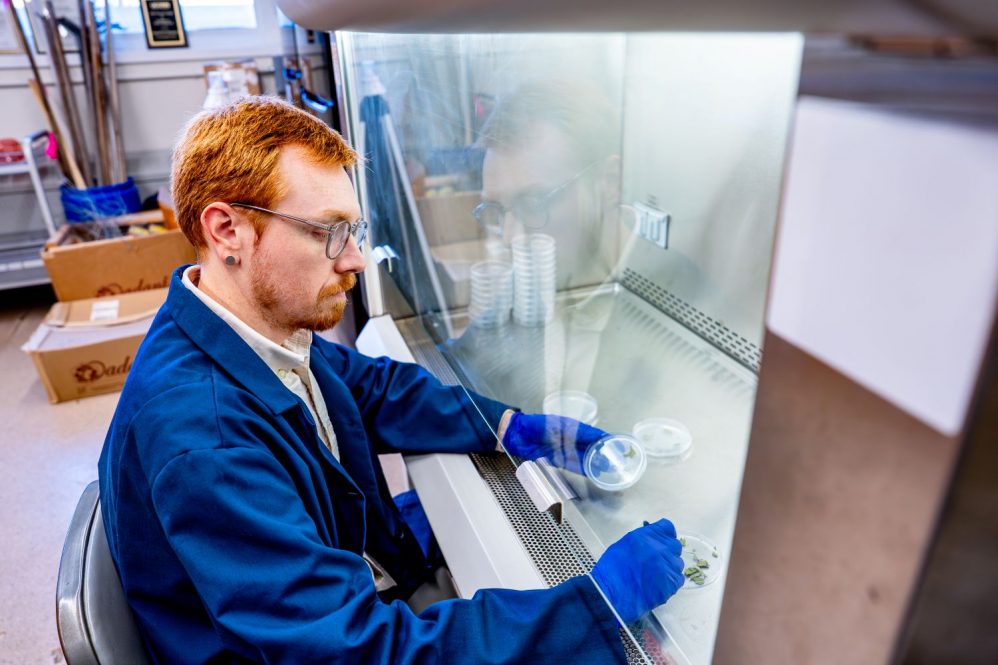
The UConn Plant Diagnostic Laboratory offers disease identification services and management recommendations for professional growers and home gardeners alike.
The lab is part of the George Leigh Minor Plant and Soil Health Center in the College of Agriculture, Health and Natural Resources (CAHNR). George Leigh Minor ’56 (CAHNR) passed away at the age of 90 in January 2025, leaving a generous donation, which funded the renovations necessary to open the Center on UConn’s campus, right near the UConn Dairy Bar.
People can send tissue samples of an ailing plant to the lab for a diagnosis and management recommendations.
“It’s for everyone,” says Nick Goltz, the director of the Plant Diagnostic Laboratory and assistant extension educator. “Everyone that has a plant in their life in some way or another, we are here for you. If plants are your livelihood, or you just have a plant in your office that’s not looking so hot, we’re here to help you, and we’re really excited to do it.”
This service costs $20 for members of the public and is free for professionals. Photos and inquiries about plant problems can also be send to homegarden@uconn.edu for initial consultation free of charge.
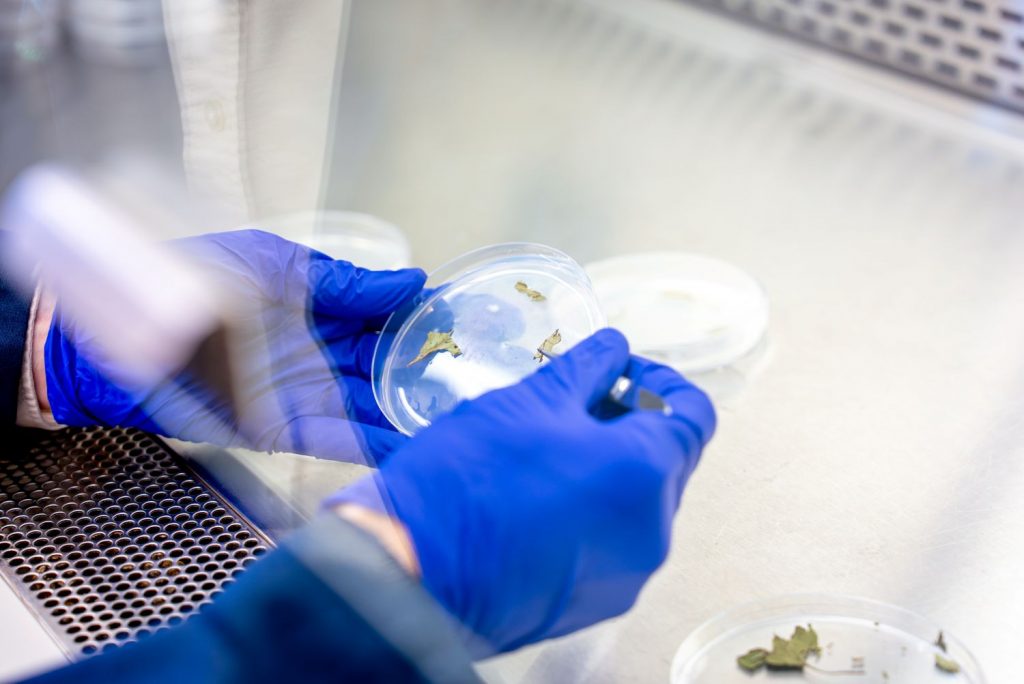
Most samples come from Connecticut and the rest of New England, but the Plant Diagnostic Lab does sometimes process samples sent from farther away as well.
The lab, which is a member of the National Plant Diagnostic Network, also provides hot water seed treatment for certain seeds. This helps kill off pathogens that may be on the outside of the seeds but don’t manifest until the plant starts to grow.
“I clean them off, send them back, and then they have improved outcomes in terms of lower disease incidence,” Goltz says. “It’s especially useful for folks that keep their own seeds from year to year or are organic growers.”
Since the opening of the Minor Center in May, the lab is expanding its services to include PCR testing. This will allow them to confidently identify certain common viral and bacterial pathogens, like Rose rosette disease, a virus that afflicts roses. Before, they had to send samples with this suspected pathogen, and certain others, to labs in other states for confirmation.
The lab will also be able to isolate nematodes, some of which are parasitic and damage roots, from soil.
“With our new, upgraded space, we’ll have improved accuracy for isolating and identifying those organisms,” Goltz says.
The new facility brings together several existing plant and soil-related services in CAHNR’s Department of Plant Science and Landscape Architecture into a more specialized facility. These services include the Plant Diagnostic Laboratory, the Soil Nutrient Analysis Laboratory, the Turfgrass Disease Diagnostic Laboratory, and the Home Garden Education Office.
“It’s really exciting to be in this new space because we’re going to have really elevated collaboration opportunities between our different labs and also with the Department of Plant Science and Landscape Architecture, Extension, industry, and the community,” Goltz says.
This work relates to CAHNR’s Strategic Vision area focused on Ensuring a Vibrant and Sustainable Agricultural Industry and Food Supply.
Follow UConn CAHNR on social media