When Feel Your Best Self (FYBS) launched in 2022, the vision was relatively simple: give elementary-aged kids and their teachers an opportunity to explore big feelings with fun, easy-to-use emotion-coping strategies.
As the years have passed, FYBS continues to grow into something more — something not just for kids to use, but also something the adults in their lives could experience alongside them. Work in elementary schools extended into community events for the whole family, and adaptations brought new materials to resonate across developmental ages and caregiving settings. With each new request to create new tools, the team wrestled with the seemingly simple question: What could an expanded Feel Your Best Self world look like?
“When we first launched FYBS, we had a clear picture of the people we were creating it for — elementary-aged kids and their caregivers,” says Emily Wicks, co-founder of FYBS. “What we didn’t anticipate was how many different ways people would want to use these tools. That’s pushed us to think beyond the original tool kit and imagine how FYBS can grow to meet people where they are, at different ages and in different settings.”
Adapting for Early Childhood
The first path for expansion came through requests from early childhood educators. The team worked to adapt the original puppet videos into a series of animated shorts.
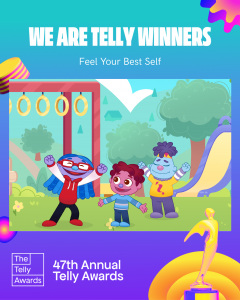
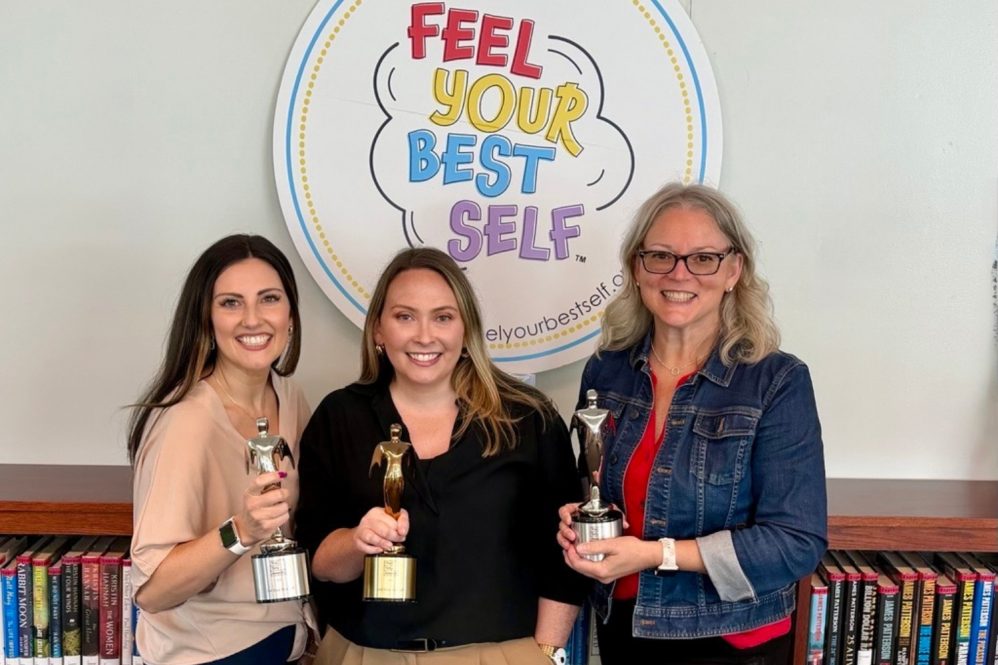
The work on creating the FYBS animated shorts was recognized this year through the 47th Annual Telly Awards, which honor excellence in video and television across all screens. They won three Telly Awards: Silver Telly Awards in Animated Film & Shorts – Kids & Family and in Online – Education & Discovery, and a Bronze Telly Award in Online – Education & Discovery.
At the same time, FYBS songs and new activities were added to build foundations of emotion vocabulary and recognition. The collection of resources for young learners and their caregivers continues to grow. For example, the team is currently working to curate and expand FYBS early childhood materials. With funding provided through a UConn Institute for Collaboration on Health, Intervention, and Policy (InCHIP) Poverty and Health Seed Grant, Jessica Koslouski, assistant research professor in educational psychology, is leading a team (along with FYBS co-founder Sandra Chafouleas and Kim Gans, professor in human development and family sciences) to test usability in family childcare homes.
The need for tools to navigate big feelings doesn’t disappear as children grow. — Sandra Chafouleas, co-founder of Feel Your Best Self and Board of Trustees Distinguished Professor
Expanding to Adolescents
Although Feel Your Best Self was initially developed for an audience of kindergarten through second grade, the team has increasingly seen its strategies resonate with adolescent populations. The team has collaborated with Connecticut school counselors to deliver workshops to middle and high school students. Students may receive an introduction to FYBS strategies as part of wellness initiatives, where they take ownership of those tools, building and creating skits to show strategy use in their own lives or developing lessons they can later share with younger students in their school district.
As one example, Wicks and implementation coordinator Molly Ferreira presented to a group of high school students at The NAN Project’s annual Empowering Youth Voices Summit. Students had the opportunity to explore FYBS strategies, discuss ways to adapt them into their own settings, and get creative with some fun, hands-on puppet-making.
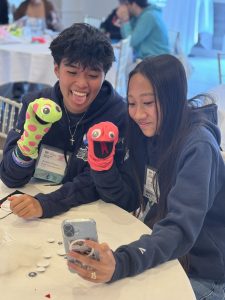
For the FYBS team, working with high school students has been exciting, but a little nerve-racking.
“Initially, we thought we’d be laughed off the stage,” Ferreira says. “We were nervous that these students would take one look at these strategies and immediately tune out. Instead, what we got were thoughtful conversations about where and how they could use these strategies in their own lives — even ways they could use the strategies quietly in the middle of class, without anyone else knowing.”
The experience offered an important reminder: “Although the way a strategy is introduced may look different across ages, the need for tools to navigate big feelings doesn’t disappear as children grow,” Chafouleas says.
And middle and high school students aren’t the only new audience finding their way to FYBS; so are the adults raising and teaching them. As FYBS reached more caregivers across different settings, the team saw that adults wanted something built just for them.
From Puppets to Podcasts for Grown-Ups
As the audience for FYBS has rapidly expanded around the globe, the need to scale dissemination became evident. Additional resources to help caregivers across school, family, and community settings have been added to make it easy to understand the what, the why, and the how of FYBS. The team also saw an opportunity to create something specifically for adults as caregivers tasked with supporting children through big feelings.
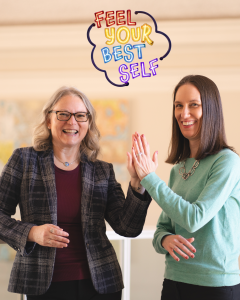
The result? The FYBS Playbook: Big Feelings, Real Caregiving—Toddlers to Teens, a podcast created and hosted by psychologist Chafouleas and special educator Koslouski.
Both moms, Chafouleas and Koslouski bring decades of real-life caregiving experience to the podcast. It brings together the research that has shaped their careers with the realities of everyday caregiving, offering science-backed tools, honest conversations, and practical support for navigating big feelings across developmental stages.
“The FYBS Playbook podcast gives us space to connect directly with adults, not just about supporting the kids they’re caring for,” Chafouleas says. “We have clearly seen how FYBS resonates with caregivers on its own terms, so we are leaning into that.”
Season 1 of The FYBS Playbook is available through the Feel Your Best Self Facilitator YouTube channel and on Spotify, Apple Podcasts, Amazon Music, and on other podcast-playing platforms.
From puppets and animated shorts to songs, community events, and a podcast for caregivers, FYBS continues to find new ways to meet people where they are.
“What began as a toolkit for helping elementary-aged children navigate big feelings has grown into a collection of resources that adapt across ages, settings, and stages of life,” Chafouleas says. “And this is just the beginning.”
Feel Your Best Self is currently made possible through the generous support of the Neag Foundation, with previous support provided by Principal Foundation and others. To learn more about Feel Your Best Self, visit feelyourbestself.org.