New England’s landscape offers many advantages for pasture-based livestock production, from rolling hills to nutrient-rich cool-season grasses. Connecticut alone is home to more than 5,000 farms, many of which include livestock enterprises. Behind every successful livestock operation is a network of professionals providing research-based guidance and technical support. For the past 15 years, UConn Extension has helped strengthen that network through the Tri-State SARE Livestock Project, a collaborative effort among UConn, the University of Massachusetts, and the University of Rhode Island.
Funded through the Northeast Sustainable Agriculture Research and Education (SARE) program, a USDA initiative, the project focuses on professional development for agricultural service providers with the goal of building a stronger support system for livestock producers. The Tri-State SARE program follows a train-the-trainer model, helping Extension educators, Natural Resources Conservation Service (NRCS) staff, Farm Service Agency personnel, veterinarians, nutritionists, and other agricultural professionals develop the knowledge and skills needed to effectively assist livestock producers. While farmers are always welcome to participate, the primary audience is the professionals who work with them every day. The program also collaborates with organizations such as American Farmland Trust.
Livestock producers in southern New England face many challenges, including weather resilience, sustainable pasture management, balancing production goals with environmental stewardship, and maintaining profitability while implementing best management practices. The Tri-State SARE program addresses these challenges by helping producers and service providers better understand soil health, pasture management, nutrient management, and other practices that improve both environmental outcomes and production efficiency.
“We’ve created a strong group of service providers who find value in attending Tri-State SARE programming. The project gives them a place to gain education and confidence in working with farmers, while also connecting with colleagues across state lines,” says Rachel Bespuda, project director with UConn Extension.
Addressing the Need
Access to knowledgeable service providers remains one of the most important factors in helping livestock operations succeed. Many agricultural and natural resource professionals enter their roles with expertise in areas such as forestry, conservation, or environmental science but may have limited experience with livestock production systems. The Tri-State SARE program helps bridge this gap by providing targeted livestock training, ensuring producers have access to informed guidance when making critical management decisions.
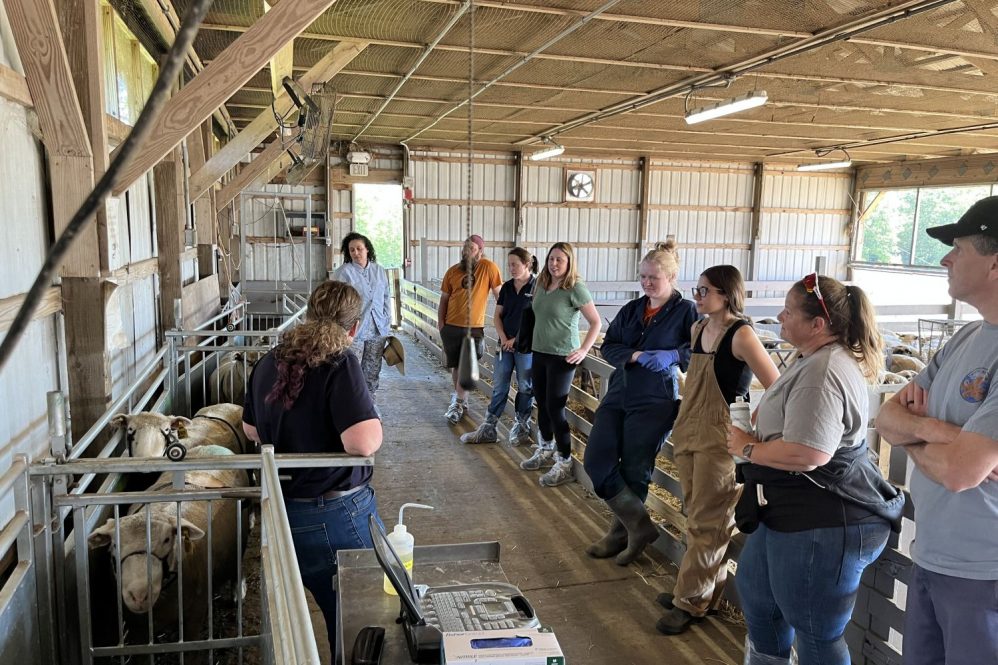
The program’s educational approach combines webinars, on-farm training sessions, interactive breakout discussions, and ongoing communication throughout the year. This hybrid model allows participants to learn new information, discuss challenges with peers, and see how research-based recommendations apply in real-world farming situations.
The project has continually adapted to changes in agriculture and emerging topics within the livestock industry. Twenty years ago, pasture-based livestock production received relatively little attention compared to today.
More recently, the program has begun addressing topics such as silvopasture, reflecting both producer interest and the growing need for research, education, and practical guidance on innovative management practices.
“The industry has moved beyond simply turning animals out to pasture. Today we’re focused on balancing production goals with environmental responsibility,” Bespuda says.
The Tri-State Partnership
Every three years, representatives from the three universities assess training needs and work together to develop the next educational cycle. Northeast SARE recognized the partnership as a model for successful interstate collaboration.
One of the program’s greatest accomplishments has been the creation of a strong regional network of service providers who regularly participate in trainings and learn from one another. Professionals from the three states share experiences, discuss challenges, and exchange ideas that ultimately benefit farmers throughout the region. The program also provides a supportive environment where participants can ask questions and build confidence in their ability to assist producers. While new participants join regularly, many longtime attendees continue to engage year after year because of the program’s ongoing relevance and value.
The collaborative nature of the project extends beyond the classroom. Recognizing that successful approaches often differ from one farm to another, the program revisits participating farms throughout the year, allowing service providers to observe seasonal changes and gain a deeper understanding of how management decisions are influenced by weather, farm goals, and changing conditions.
“Not every farm is a cookie-cutter situation. What works for one operation may not work for another, and that’s an important lesson for service providers to understand,” Bespuda says.
Both service providers and producers consistently report gaining valuable knowledge through the program. Participants frequently cite increased confidence in their decision-making and a stronger understanding of livestock management. Many also report a greater appreciation for how management decisions affect both farm productivity and environmental outcomes, and how the various components of a livestock operation interact as part of a larger system.
Building on the Foundation
Today, more than 250 service providers and farmers actively participate in the Tri-State SARE project. Looking ahead, Bespuda hopes the livestock industry continues its positive trajectory despite the significant challenges involved in entering and remaining in agriculture. She emphasizes the importance of educational programs that provide producers and service providers with practical resources, research-based information, and tools to address evolving challenges.
The program is also focused on the financial realities of farming in New England. One educational series addressed farm finances and business management, prompting participants to think differently about long-term planning and decision-making.
As one farmer explained, the program “[really] kept in mind the difference between economics and finances. This has helped me break down my different goals to short and long term, not solely based on financials as I have done in the past.”