
For 10 years, Davina Ferrero King, RN ’89 (NUR), ’93 MBA, of Mansfield, was an active member of UConn 4-H. Today, she is national account director for CVS Health/Aetna, following a career that began in nursing leadership at UConn Health and evolved through multiple roles at Johnson & Johnson. As part of National 4-H Week, we spoke with King about how her 4-H experiences influenced her success.
Tell us about your involvement in UConn 4-H.
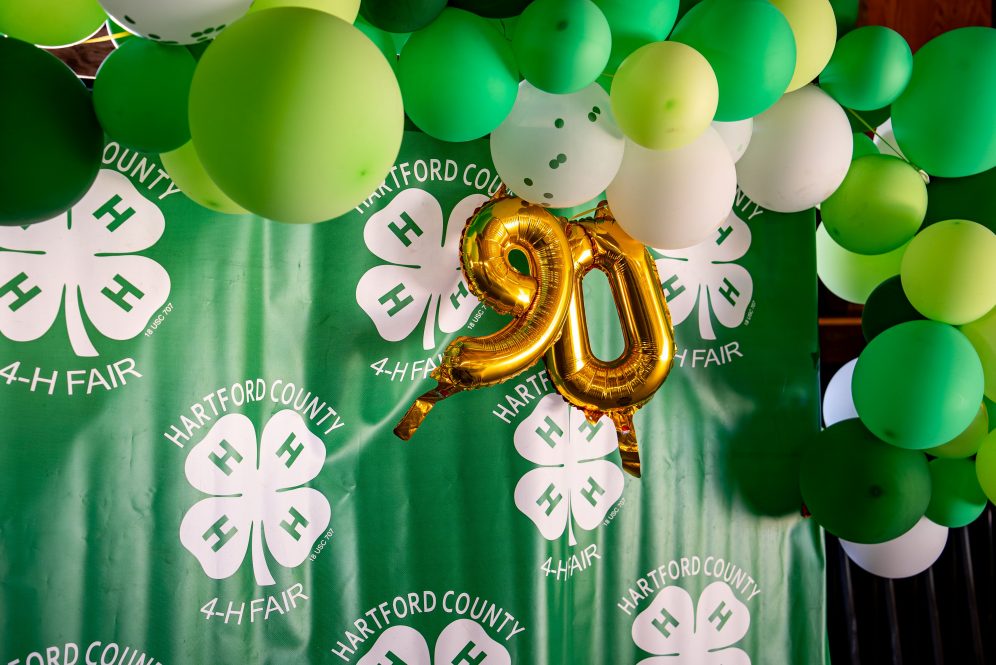
My involvement in UConn 4-H was an important part of my childhood and helped shape many of the interests, skills, and values that I carried into adulthood. I participated in a local 4-H club, where I had opportunities to care for animals, including a dairy cow, work with other young people, and take part in the 4-H fair. I also explored projects that were not limited to agriculture. Sewing and fashion were especially meaningful to me, and I had the opportunity to compete nationally in Chicago. That experience was exciting because it pushed me beyond my local community, introduced me to competition at a higher level, and showed me what was possible when I applied myself. These projects taught me that success comes not only from learning a skill, but also from being organized, following through, documenting your work, and taking pride in the details. Looking back, the combination of hands-on projects, competition, animal care, teamwork, and community involvement had the greatest impact on me. 4-H gave me a place to try new things, build confidence, and learn that I could take on responsibilities that mattered.
How did 4-H shape your perception of UConn?
4-H was my first connection to UConn. As a child, I knew UConn through the 4-H program and the opportunities it provided in my local community. That early connection made the university feel accessible and familiar long before I became a college student. Through 4-H, I came to see UConn as much more than a university campus. It was connected to people, programs, learning, leadership, and community. It offered young people the chance to grow through practical experiences while also connecting them to broader resources, educators, and opportunities. That positive early impression stayed with me and influenced my decision to attend UConn for both my undergraduate and graduate education. My 4-H experience helped establish UConn in my mind as a place where I could continue growing academically, professionally, and personally.
How did 4-H prepare you for your responsibilities and challenges?
4-H gave me early practice with many of the responsibilities that are important in leadership roles today. It taught me how to be accountable for my work, how to organize projects, and how to step forward rather than wait for someone else to take the lead. Competition was also valuable. It taught me to prepare carefully, work toward a goal, accept feedback, and continue improving. In professional settings, not everything goes perfectly, and being able to learn from feedback or setbacks is essential. 4-H also helped me become a self-starter. Whether I was preparing for a fair, completing record keeping, caring for an animal, or working on a sewing project, I learned that progress required initiative and consistent effort. Those lessons have been very helpful in a leadership position within a global organization.
What aspects of UConn 4-H were valuable?
One of the most important lessons I still rely on is that leadership is rooted in responsibility and organization. 4-H taught me that people depend on you to prepare, follow through, contribute to the group, and take ownership of your commitments. That lesson applies in both professional and personal life. In a leadership role, being organized and dependable helps build trust. It also makes it easier to guide a team through challenges and keep projects moving forward. Personally, those same habits support community involvement, family responsibilities, and lifelong learning.
The science and STEM-related elements of 4-H also helped prepare me for nursing school and a career in healthcare. Learning through projects made science feel practical and relevant. It encouraged curiosity, observation, problem-solving, and the confidence to ask questions. 4-H also strengthened workforce skills that are useful in any field: communicating clearly, meeting deadlines, handling feedback, presenting your work, collaborating with others, and becoming comfortable in situations that require leadership.
Tell us about your current role.
Today, I am a director at Johnson & Johnson, a global healthcare company. My professional path combines the clinical perspective I gained through nursing with the business, leadership, and organizational skills I developed through graduate education and professional experience. Working in a large global healthcare organization requires strong communication, organization, strategic thinking, and the ability to lead through complexity. I often draw on the same core strengths that began developing during my childhood 4-H experience: being prepared, taking initiative, working well with others, and following a project through to completion. My nursing background gave me a strong understanding of healthcare and the importance of serving people well. My MBA helped me build business and leadership skills. But 4-H helped lay the groundwork much earlier by giving me practical opportunities to develop confidence, responsibility, and a willingness to take on new challenges.
What accomplishments since your time in 4-H are you most proud of?
I am proud of the personal and professional growth that has taken place since my years in 4-H. As a nurse and healthcare leader, I have had the opportunity to build a meaningful career in a field that affects people’s lives. I am also proud of how much I have grown in confidence. As a young person, I was fairly shy and reserved. Through the experiences and opportunities I had in my local 4-H club, I gradually became more comfortable speaking up, participating, competing, leading, and engaging with others. That growth did not happen overnight. It came from being encouraged to try new things, being given responsibilities, and learning through experience. 4-H helped me recognize that confidence is often built by taking the next opportunity, even when it feels unfamiliar.
What do you want people to know about 4-H?
4-H is about much more than agriculture. I did not grow up on a large farm, and at first, I assumed 4-H was primarily for people who planned to work in agriculture. What I discovered was that 4-H is really about community, leadership, learning new skills, networking, and expanding your horizons. It gives young people opportunities to explore many interests, from animal care and food projects to fashion, science, public speaking, service, technology, and leadership. 4-H meets young people where they are and helps them discover what they are capable of becoming. It provides practical learning experiences, but it also creates relationships and a sense of belonging that can stay with someone for a lifetime.
How do you see your 4-H experience continuing to influence you?
My 4-H experience continues to influence me through my commitment to community engagement. Being part of a local 4-H club as a child taught me that communities become stronger when people contribute their time, knowledge, and encouragement to one another. Professionally, I still draw on the leadership, organization, confidence, and accountability that began developing through 4-H. Personally, I value connection, mentorship, and giving back because I experienced firsthand how meaningful those things can be for a young person. 4-H helped me understand that growth happens through participation. When people show up, take responsibility, support others, and stay open to learning, they can make a lasting difference in their communities and in their own lives.
UConn 4-H helped open a door for me by giving me the confidence, skills, and early leadership experience to become a more engaged professional, community member, and leader.
Visit 4-H.uconn.edu to learn more about volunteering or enrolling a child in the program. To donate to the program during national 4-H week, visit the UConn Foundation website.
UConn Extension is part of the College of Agriculture, Health and Natural Resources and fulfills the land-grant mission of translating the university’s research for the public. UConn Extension’s statewide locations and programs help serve all 169 Connecticut municipalities. Programs include health and wellbeing, agriculture, horticulture, natural resources, and positive youth development. UConn Extension provides answers you can trust on issues ranging from health and wellness to agriculture, horticulture, natural resources, and positive youth development.
Follow UConn CAHNR on social media