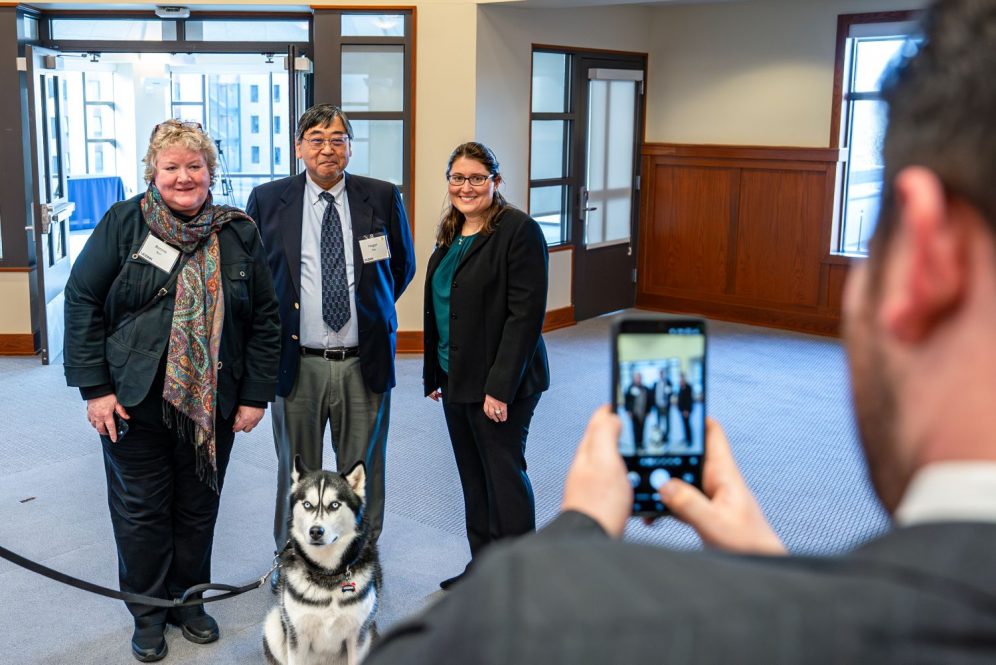
Hogan Eng of Woodbury, Connecticut is a professional engineer, but his passion for robotics began long before his career. As a young person, he experimented with robotics, developing an interest that would eventually shape both his profession and his volunteer service. After answering a call for volunteers with a local robotics program, he began dedicating much of his free time to mentoring youth. Today, as a UConn 4-H volunteer and recipient of the 2026 Leadership Award, Eng is helping young people develop the leadership, communication, and teamwork skills that prepare them for success in both their careers and personal lives.
“A lot of students take a programming course, and they learn it, but it’s not useful without applying it to something, so the interest and depth of involvement isn’t there,” he says. “If we have them get together and build a robot, they pay a little more attention to if it’s correct because the rest of the team is relying on you as opposed to an isolated exercise. Youth are learning the skills of working together with others, teamwork, and communication. We are teaching youth how to think, communicate, and cooperate in the fun of building a robot.”
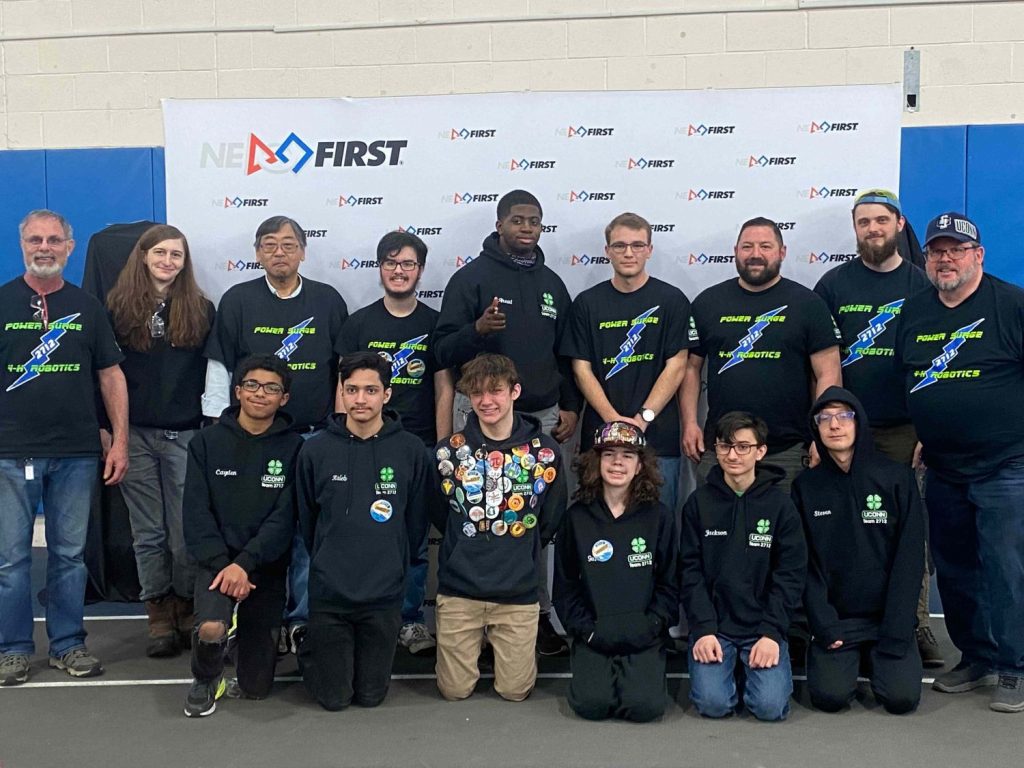
Since 2018, Eng has led Power Surge 4-H Robotics, a UConn 4-H club that he helped transition from Regional School District 14. Alongside a dedicated team of volunteers, he has built a youth robotics program that incorporates 4-H’s core values with STEM education. Students gain hands-on experience in engineering and technology while also developing leadership, teamwork, communication, and problem-solving skills.
At the center of Eng’s mentoring philosophy is a concept he calls “empowerment through responsibility.” Rather than directing every aspect of the program, he challenges youth to take ownership of their learning and the success of the team.
In Power Surge 4-H Robotics, youth lead team operations including mechanical and software design, safety procedures, fundraising, business planning, and outreach. The program begins each fall with a training period during which new members become familiar with robotics and team culture. Students brainstorm ideas, develop technical skills, and participate in fundraising activities. In January, the team enters an intensive eight-week build season before moving into competition season. Throughout the process, youth take the lead in robot design, CAD modeling, pneumatics, programming, and project management.
“Hogan Eng fosters a culture of innovation, encouraging youth to take ownership of all stages of robot development and competition strategy,” says Emily Picard, assistant extension educator with the UConn 4-H program. “His iterative teaching method promotes experimentation and peer-led problem-solving, a hallmark of his unique mentoring style.”
The program itself has evolved over the years. In fall 2025, Power Surge 4-H Robotics relocated to the Naugatuck YMCA after the school that had been hosting the club began major renovations. The partnership has provided the team with a large space to meet and build robots while also creating new opportunities for recruitment and outreach within the community.
While the technical skills youth gain are impressive, Eng says the most rewarding part of the program is watching young people grow in confidence and discover their potential. One homeschooled youth joined the club as a very quiet teenager who struggled to introduce himself during his first meeting. Communication didn’t come easily during his first year, but over time he became more comfortable interacting with teammates. Volunteers encouraged him to serve as the team’s safety captain, a role that required him to remind students, parents, and mentors to follow safety procedures.
The responsibility helped him find his voice. As his confidence grew, so did his leadership skills. He became more involved in mechanical design, excelled in technical work, and eventually served as team president during his senior year. Eng recalls him as an effective and highly responsible leader, a transformation that reflects the impact the program can have on young people.
Stories like this are common in Power Surge 4-H Robotics. Youth join the team to build robots and leave with a much broader set of skills. A key component of that growth comes from the structure of 4-H itself. More so than many robotics programs, UConn 4-H places a strong emphasis on communication, organization, and public speaking alongside technical learning. Team members are responsible for fundraising, outreach, presentations, and many other aspects of running the organization.
As a result, when it comes time for college interviews, internships, or careers, students are comfortable speaking with people from a wide range of backgrounds and presenting confidently before an audience. The engineering skills are important too.
“It’s great when you see youth learn a higher level of engineering than they would normally learn in school, and they put it into applied engineering, making that connection and understanding how to use it at an earlier point in life,” Eng says. “They get to enjoy the peer and scientific side of engineering too, and have a better chance of getting into the field and an opportunity to apply their skills to something that society can use.”
Community service and outreach are also central to the Power Surge 4-H Robotics culture. Members regularly attend public events, demonstrate their robots, and work with younger youth interested in science and engineering. When a local Girl Scouts troop sought help earning a robotics badge, the team stepped in, creating hands-on activities and introducing participants to engineering concepts through interactive learning experiences. These outreach efforts help spark interest in STEM fields among younger audiences while giving team members the opportunity to teach and mentor others.
“I had the pleasure of witnessing first-hand the autonomy of the club at the Big E,” Emily Picard says. “Every year, Hogan arranges for the robotics team to present two demonstrations in the New England Building and that’s where his responsibilities stop. Once at the site, youth are 100% responsible for introducing their project, demonstrating how the robot performs, and what work they are doing behind the scenes. They answer audience questions and even incorporate volunteers into their demonstration.”
She adds, “Under Hogan’s guidance, students don’t just learn STEM, they teach it. This commitment to service broadens their perspective and deepens their connection to the community.”
The long-term impact of the program can be seen in the accomplishments of its alumni. Former members of the robotics team have gone on to careers at Amazon, Apple, General Motors, Microsoft, and SpaceX, among other organizations. Their experience in 4-H robotics provided both a technical foundation and the communication, leadership, and critical-thinking skills that helped them stand out in competitive fields.
Others have pursued careers adjacent to technology. One former team president who struggled with a stutter became interested in speech therapy and the technologies used to help others communicate more effectively. For Eng, those success stories represent the true value of the program.
“The whole process where you see students come in as a timid freshman and, over the course of the program, watching them break out of their shell and communicate effectively and think clearly is very rewarding,” he says. “Then they graduate and are hired by those top-tier companies and seeing them be very successful in their careers is rewarding too.”
For more than twenty-nine years, the last eight in Power Surge, Eng has helped young people build robots. More importantly, he has helped them build confidence, leadership skills, and a vision for their future. Through the combination of STEM education, mentorship, and the positive youth development model of 4-H, he is preparing the next generation not only to succeed in technical careers, but to become thoughtful leaders in their communities and professions.
Visit 4-H.uconn.edu to learn more about volunteering or enrolling a child in the program.
UConn Extension is part of the College of Agriculture, Health and Natural Resources and fulfills the land-grant mission of translating the university’s research for the public. UConn Extension’s statewide locations and programs help serve all 169 Connecticut municipalities. Programs include health and wellbeing, agriculture, horticulture, natural resources, and positive youth development. UConn Extension provides answers you can trust on issues ranging from health and wellness to agriculture, horticulture, natural resources, and positive youth development.
Follow UConn CAHNR on social media