David Wagner, Ph.D.
Professor of Ecology and Evolutionary Behavior
- Storrs CT UNITED STATES
- Ecology & Evolutionary Biology
Professor Wagner is an expert in caterpillars, butterflies, moths, insect conservation, global insect decline
Contact More Open optionsSpotlight
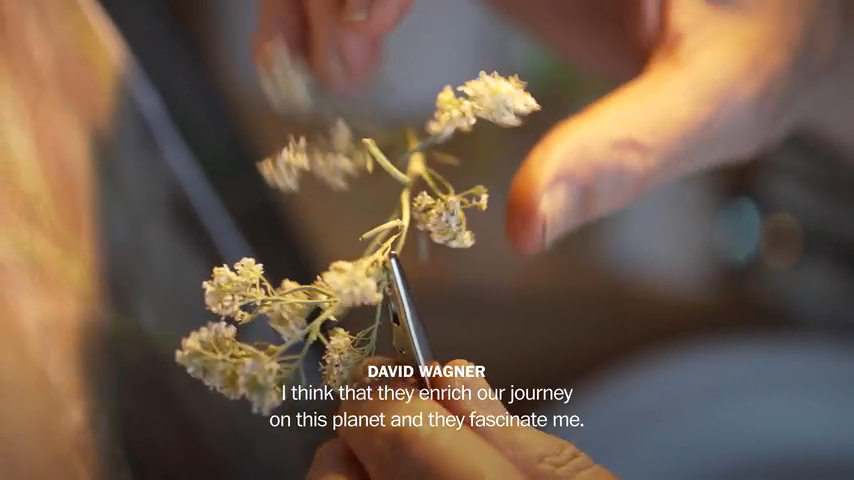
November 04, 2024
3 min

September 22, 2022
2 min

Biography
Professor Wagner’s research focuses on entomology — insect anatomy, behavior, biology, development, diversity, ecology, evolution, and physiology. He has studied ghost moths (Hepialidae), several families of leafminers, and Noctuidae. Over the past decade Wagner has taken a special interest in the immature stages and life histories on caterpillars. Wagner has a deep interest in matters relating to insect conservation. He completed work on a butterfly atlas for the State of Connecticut and a review article on threats posed to rare or endangered insects by non-native species.
Areas of Expertise
Education
Univeristy of California – Berkeley
Ph.D.
Entomology
Colorado State University
B.S.
Plant Pathology and Botany
Links
Social
Media


Media Appearances
‘Half the tree of life’: ecologists’ horror as nature reserves are emptied of insects
The Guardian online
2025-06-03
When David Wagner stepped out into the US’s southern wilderness this spring, he found landscapes emptied of life. The entomologist has devoted much of his career to documenting the vast diversity of US insect life, particularly rare caterpillars. He traverses the country to find specimens, often on long road trips searching for caterpillars by day and moths by night. Now, he finds himself coming home empty-handed. “I just got back from Texas, and it was the most unsuccessful trip I’ve ever taken,” he says. “There just wasn’t any insect life to speak of.”
Butterflies in the U.S. are disappearing at a ‘catastrophic’ rate
The Washington Post print
2025-03-06
David Wagner, a University of Connecticut entomologist not involved in the study, said butterflies act as a “yardstick for measuring what is happening” among insects broadly. He called the new findings “catastrophic and saddening.” “The study is a much-needed, Herculean assessment,” he wrote in an email. “The tree of life is being denuded at unprecedented rates. I find it deeply disheartening. We can and must do better.”
Why you just might fall in love with moths
The Washington Post online
2024-10-29
Moths have inhabited our planet for at least 200 million years. But the conservation status of about 99 percent of moth species remains unknown. Some, like sphinx moths, remain abundant. Many others are probably being pushed to the brink by development, land-use changes, pesticides and pollution, and rising temperatures. “It’s not this unseen force,” says David Wagner, an entomologist at the University of Connecticut. “It’s humans.”
At night, pollution keeps pollinating insects from smelling the flowers
Science online
2024-02-08
“For every bee and butterfly we see by day visiting flowers, [we] know that many more may be visiting after nightfall,” says David Wagner, an entomologist at the University of Connecticut. Nocturnal insects including moths such as hawk moths (Hyles lineata) and tobacco hornworms (Manduca sexta) depend on the pleasant scents of gardenias, honeysuckles, lilacs, jasmine, and most night bloomers to guide them long distances to nectar sources.
Go Native
Santa Barbara Independent online
2024-02-06
“Insects are the food that make all the birds and make all the fish,” said entomologist David Wagner, who works at the University of Connecticut. “They’re the fabric tethering together every freshwater and terrestrial ecosystem across the planet.” But insects are in real trouble, and that doesn’t bode well for the rest of the food chain. “Nature is just eroding away very slowly,” Wagner said. As insects disappear, “we’re losing the limbs and the twigs of the tree of life. We’re tearing it apart. And we’re leaving behind a very simplified and ugly tree.”
How do we stop rapid insect decline?
BBC – The Real Story online
2023-10-06
As human activities rapidly transform the planet, the global insect population is declining at an unprecedented rate. In the UK, a recent survey suggested the number of flying insects have fallen by almost 60% in less than 20 years. Some are calling it an impending 'insect apocalypse'. Their disappearance matters because insects are the most diverse group of organisms on the planet and the foundation of every freshwater and land based ecosystem. They provide food for birds, bats and small mammals; they pollinate around 75% of the crops in the world; they replenish soils and keep pest numbers in check. You may not always like insects in your personal space but you certainly need them to survive.
How These 5 Tiny Caterpillars Protect Themselves With Deadly Venom
Discover Magazine online
2023-10-02
While some caterpillars don't show spikes at all, they advertise their toxicity with their stripes and shades. A prime example is the Monarch caterpillar, which sports stripes interchanging between yellow, white, and black. "They're advertising that they're Clint Eastwood. That they're badasses, and they know it. Obviously, they want to be seen and they want you to know that they're there because they're chemically protected," says David Wagner, an entomologist at the University of Connecticut.
CT experts say 'No Mow May' is a tiny step in right direction
Hearst Connecticut print
2023-05-29
Lawns are biodiversity deserts and their expansion leads to declining native vegetation and insect populations. David Wagner, an entomologist and a biology professor at the University of Connecticut, supports the "No Mow May" movement because it helps raise awareness and signifies a changing attitude among homeowners. "It is a step in getting people to realize that yards have very low ecosystem value to wildlife, and that in the midst of a biodiversity crisis, we need to be more circumspect about land use, our chemical inputs, and the struggles befalling the other 8 million species that share our planet,” he said. "Just by having a little less grass, rewilding, planting more native plants, or mowing less, all of us could lend a (much needed) helping hand to Mother Nature."
Nurturing Nature in Your Yard
New York Times online
2023-04-21
So are trees, which have been called meadows of the sky, offering flowers to pollinators and leaves to caterpillars. “An enormous fraction of North America’s butterfly and moth caterpillars — many thousands of species — are known to feed on just a couple dozen kinds of woody plants,” said David Wagner, an entomologist at the University of Connecticut who specializes in caterpillars.
The Little-Known World of Caterpillars
The New Yorker print
2023-03-13
The Devils River, in southwestern Texas, runs, mirage-like, along the edge of the Chihuahuan Desert, through some of the most barren countryside in the United States. Access to the river is limited; unless you’re in a kayak, the only way to travel upstream is along a skein of rutted dirt roads. It was on one of these roads that, a few years ago, David Wagner noticed a shrub that seemed to him peculiarly filled with promise.
The Collapse of Insects
Reuters online
2022-12-06
As a boy in the 1960s, David Wagner would run around his family’s Missouri farm with a glass jar clutched in his hand, scooping flickering fireflies out of the sky. “We could fill it up and put it by our bedside at night,” says Wagner, now an entomologist. That’s all gone, the family farm now paved over with new homes and manicured lawns. And Wagner’s beloved fireflies – like so many insects worldwide – have largely vanished in what scientists are calling the global Insect Apocalypse.
The World’s Oldest Winged Insect Is in Trouble. How Frightened Should We Be?
The Washington Post print
2022-09-19
I reached out to David Wagner, a biologist and lepidopterist at the University of Connecticut, for context, thinking that perhaps the problems were isolated or overblown. He has studied insects for decades and reviewed numerous scientific studies about them from around the globe. He did not provide much comfort. There’s a growing body of research suggesting that the world is in the midst of its sixth mass extinction, he said. The losses of all kinds of creatures appear to be driven by climate change, habitat degradation, pollution and other ecological stressors.
Jeff Mitton: Natural Selections: Achemon sphinx moths’ range is shrinking
Daily Camera online
2022-08-02
Sphinx moths have been declining for the last 50 years in New England. Biologists have been documenting this ongoing ominous trend, and trying to determine which factors are driving it. Habitat destruction, coastal development, overgrazing by deer and other factors have been discussed, but David L. Wagner, at the University of Connecticut, has built a convincing case that sphinx declines are attributable to Compsilura concinnata, a parasitic, tachinid fly introduced from Europe to New England in 1906 to control two introduced pests, gypsy moths and brownttail tussock moths.
Are the outdoors quieter? A host of threats are impacting Connecticut’s insect population
Hartford Courant print
2022-07-11
The world has lost more than one-quarter of its land-dwelling insects in the past 30 years, according to the journal Science. Pollinators such as bees and butterflies, insects that are crucial to the world’s food supply, are disappearing at an estimated rate of just under 1% per year with lots of variation from place to place. “That number may not seem like a lot but that’s 30% over a 30-year span,” said Dr. David Wagner, entomologist and professor at the University of Connecticut. “It’s obvious to most people just looking out their back window that there’s less wildlife today than there was just 20 years ago.”
Insects Around The World Are Disappearing. What Can We Do About It?
WNPR – Where We Live radio
2021-03-05
Insects are the most abundant group of animals on the planet. There are an estimated 10 quintillion of them on Earth. But in recent years, scientists have found disturbing evidence that insect populations are on the decline around the world. The environmental threats to insects are numerous: deforestation, pesticides, and climate change all seem to play a part in declining populations, a phenomenon UConn ecologist David Wagner and colleagues described as a “death by a thousand cuts” in a January 2021 special issue of PNAS dedicated to the issue of insect decline.
Butterflies are vanishing out West. Scientists say climate change is to blame.
Washington Post print
2021-03-04
David Wagner, an ecologist at the University of Connecticut who was not involved with the latest research, said the new findings are startling because “this is one of the first global cases of declines occurring in wildlands, away from densely populated human-dominated landscapes, and the rate of 1.6 percent is calamitous.”
Scientists warn the world's insects are undergoing "death by a thousand cuts"
CBS News online
2021-01-12
The world's vital insect kingdom is undergoing "death by a thousand cuts," the world's top bug experts said. Climate change, insecticides, herbicides, light pollution, invasive species and changes in agriculture and land use are causing Earth to lose probably 1% to 2% of its insects each year, said University of Connecticut entomologist David Wagner, lead author in the special package of 12 studies in Monday's Proceedings of the National Academies of Sciences written by 56 scientists from around the globe.
Bugged: Earth’s insect population shrinks 27% in 30 years
Associated Press online
2020-04-23
The study detailed quite different losses from place to place and from decade to decade. That tells scientists that “we’re not looking for a single stressor or we’re not looking a global phenomenon that is stressing insects in the same way,” said University of Connecticut insect expert David Wagner, who wasn’t part of the study. What’s happening, he said, is “absolutely intolerable.”
These ‘super soft and cuddly’ caterpillars can poison you. Here's what you should know
USA Today print
2019-10-16
Generally, stinging caterpillars – mainly the puss caterpillar, also known as the Southern flannel moth or the asp – are rare north of the Mason-Dixon Line, says David Wagner, an entomologist at the University of Connecticut. Even in the South, where they're most frequently spotted, they're uncommon, he says. When these caterpillars sting, the symptoms can range from mild discomfort to severe pain that can last hours.
Why a Border Wall Could Mean Trouble for Wildlife
The New York Times online
2019-01-24
f the Trump administration extends the wall at the southern border, it could degrade important habitats for animals and plants, even birds and …
‘Dear Science Friday, Can You Study The Asp Caterpillar?’
Science Friday online
2018-12-14
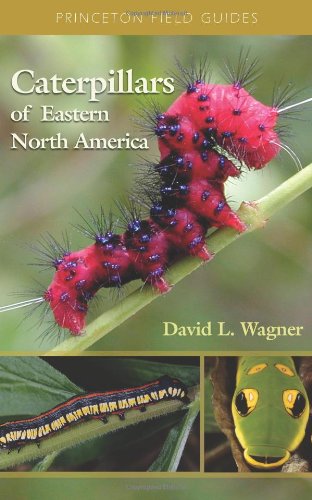
We invited Nina on the show with biologist David Wagner, author of Caterpillars of Eastern North America: A Guide to Identification and Natural History, to talk about the stinging asp caterpillar, the woolly bear, and all things caterpillar.
‘Hyperalarming’ Study Shows Massive Insect Loss
The Washington Post online
2018-10-16
‘Hyperalarming’ Study Shows Massive Insect Loss
Bye bye bugs? Scientists fear non-pest insects are declining
AP News online
2018-09-20
“It’s clearly not a German thing,” said University of Connecticut entomologist David Wagner, who has chronicled declines in moth populations in the northeastern United States. “We just need to find out how widespread the phenomenon is.”
Insects Around The World Are Disappearing. What Can We Do About It?
WNPR – Where We Live radio
2021-04-27
Insects are the most abundant group of animals on the planet. There are an estimated 10 quintillion of them on Earth. But in recent years, scientists have found disturbing evidence that insect populations are on the decline around the world. The environmental threats to insects are numerous: deforestation, pesticides, and climate change all seem to play a part in declining populations, a phenomenon UConn ecologist David Wagner and colleagues described as a “death by a thousand cuts” in a January 2021 special issue of PNAS dedicated to the issue of insect decline.
Articles
The global distribution of diet breadth in insect herbivores
Proceedings of the National Academy of Sciences2015 Understanding variation in resource specialization is important for progress on issues that include coevolution, community assembly, ecosystem processes, and the latitudinal gradient of species richness. Herbivorous insects are useful models for studying resource specialization, and the interaction between plants and herbivorous insects is one of the most common and consequential ecological associations on the planet.
Climate change impacts on bumblebees converge across continents
Science2015 For many species, geographical ranges are expanding toward the poles in response to climate change, while remaining stable along range edges nearest the equator. Using long-term observations across Europe and North America over 110 years, we tested for climate change–related range shifts in bumblebee species across the full extents of their latitudinal and thermal limits and movements along elevation gradients.
Historical changes in northeastern US bee pollinators related to shared ecological traits
Proceedings of the National Academy of Sciences2013 Pollinators such as bees are essential to the functioning of terrestrial ecosystems. However, despite concerns about a global pollinator crisis, long-term data on the status of bee species are limited. We present a long-term study of relative rates of change for an entire regional bee fauna in the northeastern United States, based on >30,000 museum records representing 438 species.
Climate-associated phenological advances in bee pollinators and bee-pollinated plants
Proceedings of the National Academy of Sciences2011 The phenology of many ecological processes is modulated by temperature, making them potentially sensitive to climate change. Mutualistic interactions may be especially vulnerable because of the potential for phenological mismatching if the species involved do not respond similarly to changes in temperature. Here we present an analysis of climate-associated shifts in the phenology of wild bees, the most important pollinators worldwide, and compare these shifts to published studies of bee-pollinated plants over the same time period.
Host specificity of Lepidoptera in tropical and temperate forests
Nature2007 For numerous taxa, species richness is much higher in tropical than in temperate zone habitats 1. A major challenge in community ecology and evolutionary biogeography is to reveal the mechanisms underlying these differences. For herbivorous insects, one such mechanism leading to an increased number of species in a given locale could be increased ecological specialization, resulting in a greater proportion of insect species occupying narrow niches within a community.