How to Feel Your Best Self
Can we ease the mental health crisis — with puppets?
How to Feel Your Best Self
Can we ease the mental health crisis — with puppets?
The kids — too many of them — are not all right.
The statistics are staggering: In the U.S., more than 20% of children ages 3 to 17 had been diagnosed at some point with a mental, emotional, or behavioral health condition, according to 2021 Centers for Disease Control and Prevention data.
In 2021, the American Academy of Pediatrics, American Academy of Child and Adolescent Psychiatry, and the Children’s Hospital Association together declared a national emergency in child and adolescent mental health, citing steady increases in mental health concerns and suicide between 2010 and 2020. This April, the National Academies of Sciences, Engineering, and Medicine issued a report calling for mental health interventions to improve the worsening rates of mental and behavioral disorders across age groups in the U.S.
Tapping into their decades of expertise, a team of UConn researchers is helping tackle the crisis using science, simplicity, joy — and puppets.
An unlikely collaboration between Sandra Chafouleas, Board of Trustees Distinguished Professor in the Neag School of Education, and Emily Wicks, manager of operations and collections at UConn’s Ballard Institute and Museum of Puppetry, has resulted in a robust toolkit called Feel Your Best Self, which aims to teach kids and their caregivers simple, science-backed emotion-coping strategies.
Emotional expression is at the core of child well-being, according to Chafouleas, an expert in school psychology and social-emotional learning who also founded the UConn Collaboratory on School and Child Health. “We are living in challenging times, and it’s harder to figure out how to wade through emotional navigation and make it easy. That’s what Feel Your Best Self is all about.”
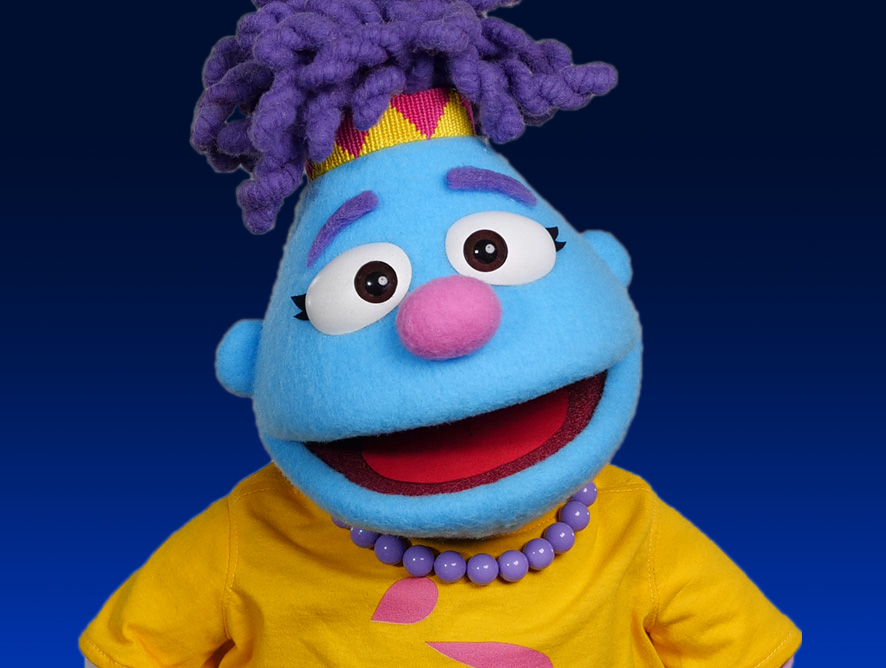
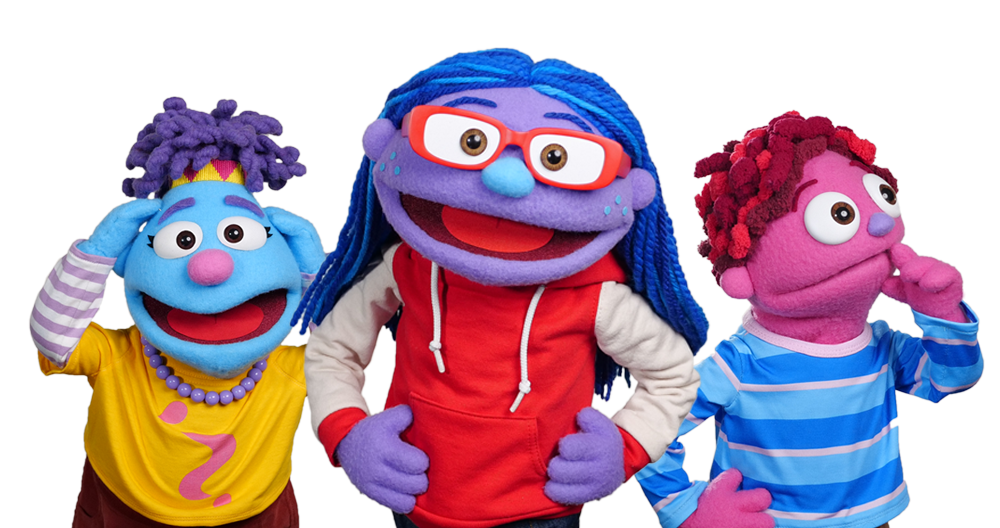
A series of videos featuring adorable, colorful puppet characters named Nico, CJ, and Mena introduce 12 cleverly named strategies that teach children how to identify their feelings and explore ways to cope, like through self-soothing or connecting with support.
“Float Your Boat” involves imagining heavy feelings as rocks making a boat sink, writing the feelings down on paper, and crumpling them up — the rocks — to throw overboard and keep the boat afloat. To “Chillax in My Head,” the user envisions a place where they feel relaxed, thinking about what their senses experience at that place until they feel calm.
The team has broken down evidence-based emotion regulation frameworks into the simplest “kernels,” says Chafouleas, “the smallest, simplest strategy that you could put in place to make a shift” in how you’re experiencing your emotions.
“No emotion is bad. No feeling is bad. It’s about identifying when the feeling isn’t serving you well in that moment,” she says. “We’ve taken the best of the science in the emotion world and in positive psychology interventions, and we’ve picked the 12 that we thought could be most simply taught with simple, easy to remember steps.”
In addition to the website, where users can also find free strategy cards, reflection sheets, facilitator guides, and puppet-making workshop guides, the videos have been distributed via television and web through THIRTEEN PBS in New York City.
The varied delivery methods and materials are designed for maximum accessibility across audiences and circumstances.
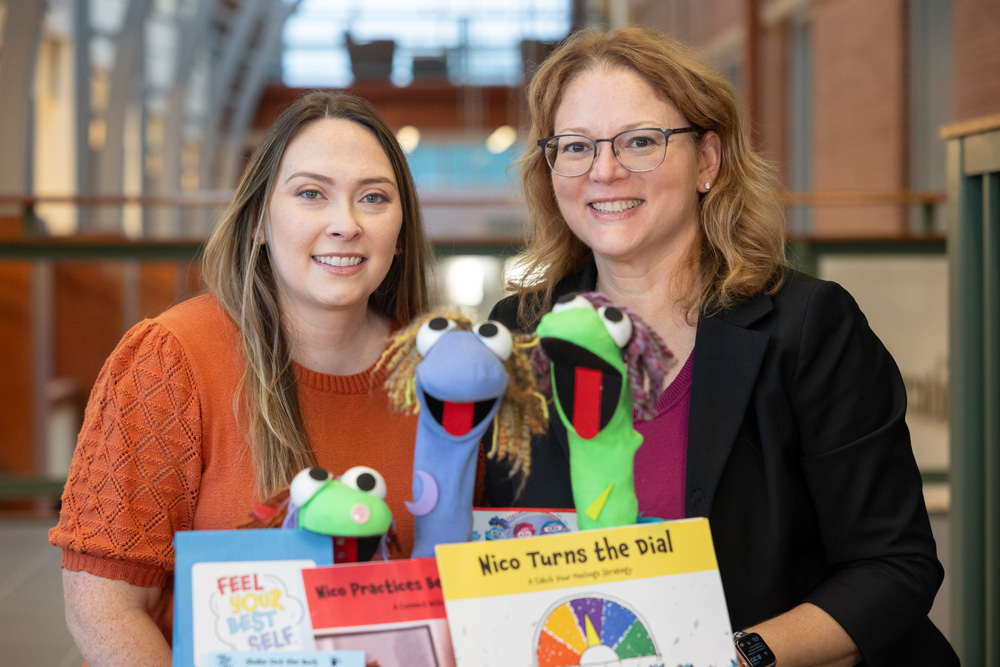
“We call it a toolkit because different tools work for different situations, right? So sometimes you might want to watch a short video to help you learn about an emotion coping strategy,” says Chafouleas. “But other times, that doesn’t work. So sometimes we use puppets to express emotions and to do creative skits and have playful fun. Sometimes it’s a coloring sheet. Sometimes it’s a guide for teachers to help them quickly put a lesson in place.”
Puppets are used not only in the videos but also in hands-on puppet-making events at schools, libraries, and other venues to teach the strategies.
“Puppets have a long history of being used in therapy and education,” says Wicks. “It helps improve communication skills and helps lower the stakes, makes things a bit more relaxed, which is perfect for letting kids have fun and be more willing to participate and practice the strategies.”
Besides the many awards bestowed on Feel Your Best Self, the program has been immensely successful as measured by the sheer number of people using it in various settings the world over, from Connecticut and Alabama to Ireland and New Zealand. They traveled to Nicaragua in 2023 to teach the program to children from around the globe at the American Nicaraguan School.
“It’s been just absolutely amazing for us to see, across the world, the uptake in different settings that we couldn’t have imagined,” says Chafouleas. “Everywhere from community settings and library programs to schools, which was where we had started, and then across ages down to preschool and all the way up to secondary schools. I mean, we never would have dreamed that high schools and even university students would be using Feel Your Best Self.”
Currently, the team is working to continue that expansion to further involve caregivers and adolescents. While teaching these skills to children will prepare them to cope better as adults, it’s never too late to learn and use the strategies.
“I wish I had something like Feel Your Best Self when I was a kid, and I can’ t tell you how many times I’ve heard that from other adults,” says Wicks. “I can’t tell you how often I belly breathe throughout the day.”
Read More About Feel Your Best Self
Big ideas come from out of the blue.
Behind every breakthrough, there’s a story of creativity and commitment. One where individuals come together, fueled by a shared vision and sustained by imagination and persistence.