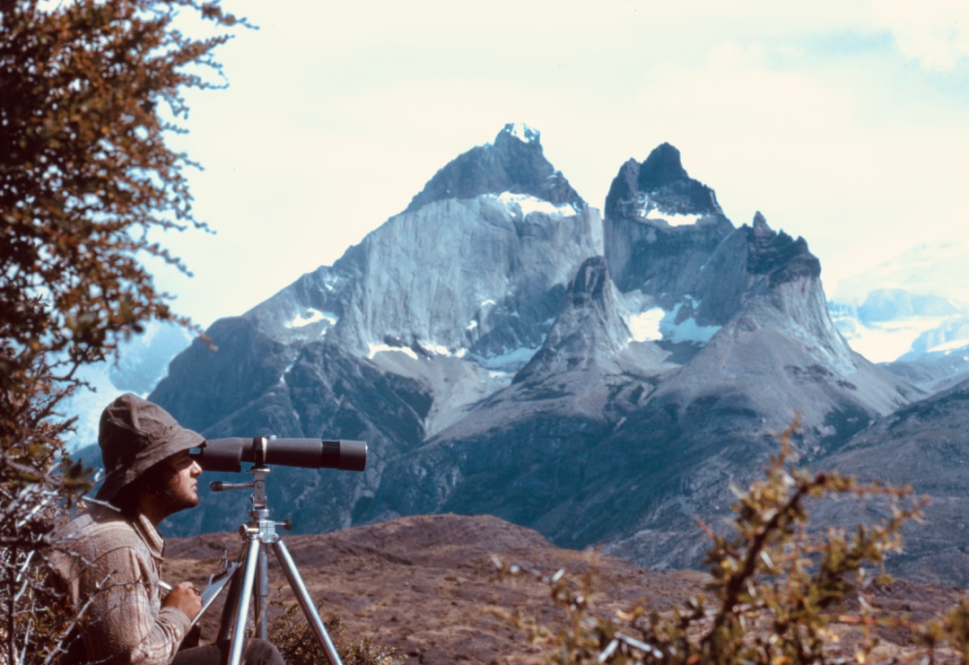
The mountain lion looked at Morty Ortega, and Ortega looked at the mountain lion. The lion wanted the four guanacos that had run up to Ortega in search of protection. But the predator eyed Ortega appreciatively, gauging how much of a fight he would put up if it went for one.
Ortega isn’t a big guy, but he has a quiet confidence that guanacos and college students alike find reassuring, whether they’re in the hills of Patagonia or the classrooms of Storrs.
This was not the first time Ortega had looked a mountain lion in the eye. He raised the tripod he was holding. The lion decided it would find easier pickings elsewhere, and took off.
Ortega spent years studying guanacos — small, wild relatives of the llama — and knows their habits and ecology the way a father knows his children. He has spent a lifetime studying the social behaviors of large mammals. And though the ecologist loves big cats, giraffes, elephants, and other exotic megafauna, the mammals closest to his heart are found all over Storrs.
Ortega began his career focusing on wildlife ecology, but over the years he has found a second avocation focused on students. Call it finding the diamonds in the rough — students who might otherwise be overlooked, even fail out. Ortega picks them out of the crowd and nurtures them until they can face down those mountain lions on their own.
“It’s easy for me to spot them because I see myself in them,” Ortega says. Shy as a youth, he grew up in the high desert town of Sewell, amid the copper mines of Chile where his father worked. He recalls no animals in Sewell, not even domestic cats. Neither of his parents attended high school, but they wanted him to be a doctor or a lawyer. However, a good science teacher and mentor, using a neglected schoolyard garden as an ecology lab, set Ortega on the path to research and mentoring.
When he arrived at Universidad Austral de Chile in Valdivia, Chile, he recalls the professor directing the bachelor of science program telling him,“I don’t see you finishing the semester. You probably will be gone.”