From basic science to clinical care to global health to AI solutions, the Summer Research Program at the UConn School of Medicine is fueling the advancement of science across the health spectrum, along with the education of the next generation of physician-scientists. All at UConn.
The Summer Research Program invites any interested UConn first-year medical student to propose an innovative research project that they will undertake during the summer between their first and second years. The program is optional to all, but thanks to the generous philanthropic donations to the Dean’s Discovery Fellowship fund all interested students have been able to be funded to participate in the ever-growing program year after year. Student participation in the Summer Research Program has increased by more than 55 percent over the last decade.
Before the 8-10 week intensive research program begins, each first-year medical student begins considerable work to identify a topic and a mentor, research the literature and write a competitive, novel research proposal. Their specific aims are targeted at answering innovative and meaningful questions in their respective research fields. Their findings will build on existing knowledge with the long-term goal of contributing to improvements in health. Proposals are evaluated by a team of faculty experts who support students through encouragement to improve proposals and effectively communicating their research plans. Students with accepted proposals then receive a funding stipend to support the student during their summer work.
The Summer Research program for second-year medical students builds upon the medical school curriculum of Scholarship and Discovery Program workshops that support medical students in building their knowledge on research processes and critical thinking skills. Through the curriculum and identification of a project and mentor for Summer Research, they also learn how to network with other students, researchers, and faculty. These learning experiences also help students prepare for their Capstone, which is a culminating research project that students propose during their second year and is a UConn medical school requirement for graduation. The Scholarship and Discovery Program is led by co-directors Immunologist Stefan Brocke, MD, Ph.D. and Psychologist Jeffrey Pella, Ph.D., MSc., and a team of faculty from a variety of disciplines contributes to the mandatory Capstone curriculum and workshops for medical students.
“We want our UConn medical students to always know the latest medical information. We teach them how to ask questions – the right questions. Learning research right here at UConn helps them do that, it’s all part of their medical school education,” says Dr. Bruce T. Liang, dean of UConn School of Medicine for the last decade.
“Our faculty love working with our students. Our students are so enthusiastic, they think outside the box. That’s why we are here. At UConn we train the next generation of doctors, scientists, and surgeons caring for Connecticut,” stresses Liang.
Kristin A. Guertin, MPH, Ph.D., is an epidemiologist in the Department of Public Health Sciences and serves as the director of the Summer Research Program. “I enjoy working with our UConn medical students and supporting them on their journey of critical thinking and thinking about research to answer the pressing questions we need answered today and for tomorrow’s patients in need.”
“Summer is a great time for medical students to explore and discover. The research program inspires our students to think about research critically while participating in a hands-on experience. For many students this is their first ever research project. The research projects of our medical students are wide-ranging and tailored to the students’ interests. Projects can range across disciplines, including but not limited to medical education, fundamental mechanistic studies, clinical care, to public health,” says Guertin.
The Summer Research Program culminates in an exciting, full-day Medical and Dental Student Research Day held in late February where the now second year students present their research abstracts via poster presentation to UConn classmates, faculty, and staff. First-year students are encouraged to attend to learn more about the program and get ideas going for their potential research projects.
“Research Day is a great experience with an energetic atmosphere. Medical students are eager to present and share their findings to their peers, faculty, and mentors,” says Guertin. “The success of this event is largely due to the support of leadership, wonderful staff, and engagement of our faculty with the students. In addition to faculty who mentor students directly on their projects, we rely on the expertise of faculty who serve as poster presentation judges. Awards, which are possible through generous donations, are given to the highest-rated research presentations.”
“Our research mentors are critical to the success of this program and the progress of students. Mentors, who are always so proud of our students work, are largely comprised of UConn Health faculty. Some students look outside the University for mentors, whether that is at one of our affiliated institutions such as Connecticut Children’s or even beyond,” says Guertin.
Guertin is happy to report that the successful program is going strong and keeps growing.
“As the popularity of the Summer Research Program has grown, the program has expanded in size with over 70 students participating last summer,” reports Guertin.
According to Guertin, summer research is a great way to explore a new interest, develop new research skills, or gain experience in a topic that piques a student’s personal interest in the clinic or the classroom.
In addition to gaining new skills and contributing to health and scientific advancements, students can enhance their competitiveness for residency programs by highlighting their research experiences in their applications. In addition to presenting at Research Day, many students present their work at national conferences.
Medical Student Research Enhancing Emergency Department Care

Future doctor and current UConn medical student Niki Meka, of Watertown, Conn. in the Class of 2027, loved her experience in the Summer Research Program. Her medical degree pursuit is building upon her other UConn degrees. She earned her bachelor of science in Physiology & Neurobiology in 2021 and a master of science in Behavioral Neuroscience in 2022 at UConn.
Offering the Summer Research Program to all its medical students is important to UConn given it is designated as Connecticut’s primary ‘R1’ Research University, with the state’s highest designation of research activity.
“As one of CT’s only R1 universities, UConn has countless opportunities to pursue research,” says Meka. “This Summer Research Program experience helped lay the foundation for incorporating research into clinical aspects of medicine that I feel passionate about. It taught me about the various ways physicians can advocate for and improve care for patients at larger scales in addition to the more direct patient-physician relationships.”
“I am thankful UConn allows us the time and ample opportunity to pursue our research interests,” says Meka. “My passion lies within helping improve care for the patients I will help serve so we can enhance outcomes and overall quality of life.”
Meka’s summer research and project focused on the utilization of point-of-care ultrasound (PoCUS) in emergency medicine, especially for identifying gastric distention as this is important for preprocedural aspiration risk stratification.
“I am passionate about the utilization of ultrasound in emergency medicine as it is low-risk, low-cost, and has the potential for positive outcomes for patients.”
Meka is grateful that UConn’s medical school curriculum exposes her and her classmates to a lot of point of care ultrasound. As a result, her passion for PoCUS started early on in medical school.
“I was lucky enough that my mentor — Dr. Meghan Herbst — taught the ultrasound curriculum to my class. Dr. Herbst was absolutely amazing to work with and the ability to have a one-on-one relationship through this research project was fostered by this Summer Research Program,” says Meka.
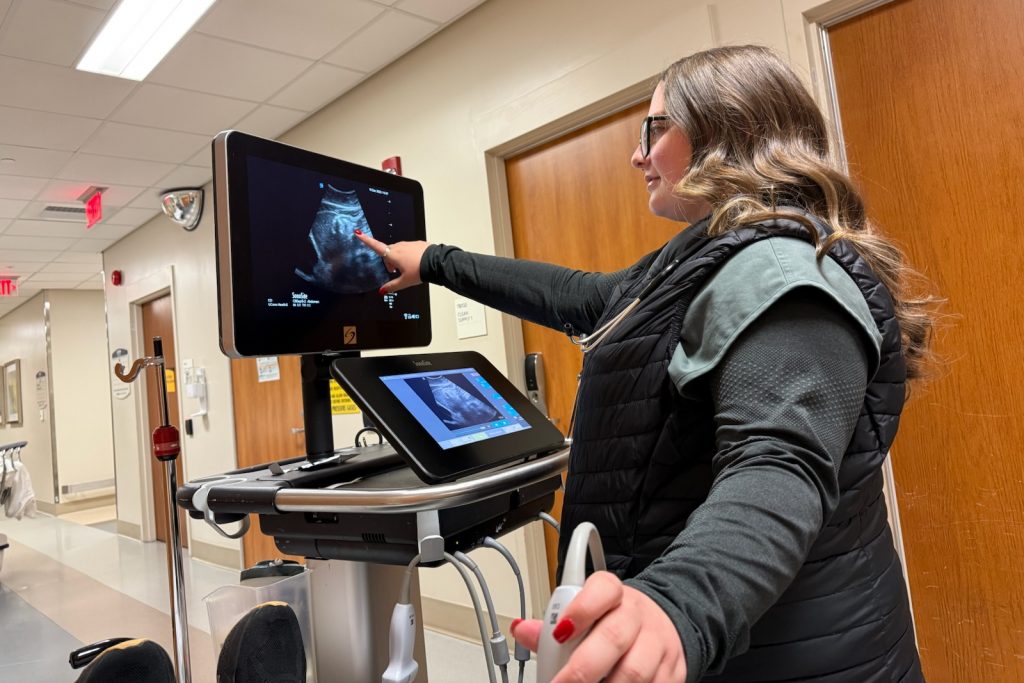
Recognizing gastric distention is important for preprocedural aspiration risk stratification, that’s why for her summer research project in the Emergency Department (ED), Meka used computed tomography (CT) to compare visualization of a fluid-filled stomach on coronal ultrasound (frontal view of body) to the sagittal view (side view of body). Her research found higher detection of gastric distention with coronal ultrasound compared to sagittal views. As a result, her findings could lead to more utilization of this image-acquisition technique in the emergency setting.
Meka was excited to have the opportunity to share her research at the annual 2025 Research Day where she presented her poster findings and was the winner of the Dean’s Award for her presentation on “Gastric Distention on Ultrasound: Coronal versus Sagittal Approach.”
Meka is now even a proud published study author.
“I was able to present this research at the national Society for Academic Emergency Medicine (SAEM) conference and my study was recently published!” she exclaims.
When it comes to recommending the summer research opportunity to other UConn medical students, Meka says: “Do it!!!”
And Meka is thankful for all the generous people who support her and other UConn medical students to have vital contributions to early research exposure.

“I strongly believe one of our responsibilities as physicians is to train and inspire the next generation, and the summer research initiative does exactly that by pairing students with meaningful, collaborative work that strengthens both their education and the research itself,” shared Dr. Meghan Herbst, professor of Emergency Medicine at the UConn School of Medicine and UConn Health. “I’ve been involved as a mentor for the past 7 years at UConn, working with over 40 medical students on PoCUS-related research, many of which have been published, and I’ve seen firsthand how early exposure can spark lasting interest in this incredible technology.”
Passion for Global Health Channeled into Advancing Infectious Disease Research

“I’ve always been passionate about global health and learning from other cultures. I believe we have so much to learn from how other cultures understand and manage illness, and I wanted the chance to truly be a student of another culture for a few months,” says UConn Class of 2027 medical student Caitlin Lawrence, 26, who grew up in Killingworth, Conn. “I would strongly encourage any UConn student to pursue an opportunity like this.”
“I am incredibly grateful to have had this summer research experience. The research experience was absolutely excellent. I learned so much. This experience will have a significant impact on my career,” shares Lawrence, who earned her undergraduate degree abroad at the University of St. Andrews in Scotland.
Lawrence is the recipient of the 2025 Research Day’s John Shanley Memorial Global Health Award for her summer research project “Assessing Dengue Vaccine Acceptance in Pediatric Caregivers in Kandy, Sri Lanka.” Excitedly, she had the amazing opportunity to travel to Sri Lanka to conduct her summer research alongside fellow UConn medical school classmate Meghan Martin, 26, of Glastonbury, Conn. who conducted her own research project on dengue virus too but for “Assessing the Impact of Pediatric Dengue Hospitalization on Caregiver Stress and Functioning.”
Both students were mentored by Dr. Kevin Dieckhaus, chief of the Division of Infectious Diseases at UConn Health, and worked closely in Sri Lanka with faculty and medical students at the University of Peradeniya to advance their research. They also had the opportunity to shadow staff in the hospitals, where they saw how medical care adapts in a lower-resource setting.

Like Lawrence, Martin is also an award-winning researcher as the recipient of 2025 Research Day’s William M. Wadleigh Memorial Award for Cross-Cultural and International Health Research. Martin holds a degree from the University of Rochester in American Sign Language and Biochemistry. “My project focused on how caregivers with children hospitalized due to acquiring dengue were impacted in terms of their stress and functioning. Caregivers that were more stressed regarding their child’s hospitalization had lower levels of functioning compared to caregivers that were less stressed, regardless of the clinical severity of the child’s illness,” says Martin.
Lawrence’s research project focused on parental attitudes toward vaccinating children against dengue virus, which causes dengue fever. She found that parents in Sri Lanka generally had a positive attitude toward dengue vaccination. There were very high levels of trust in physicians, and parents who believed that dengue is a serious illness were more likely to vaccinate their children.
“I would strongly encourage any other student to pursue their interests through the Summer Research Program,” shares Martin along with her gratitude for the global health research opportunity. “The summer research program provided ample opportunity and support to explore my research interest in global health. Not only was I able to explore research that I was interested in, but I was able to make meaningful connections with my Sri Lankan colleagues and learn how to navigate medicine with varied resources in a different health care system. My mentor, Dr. Dieckhaus, was a big part of understanding how to conduct research abroad with keeping ethical and cultural awareness at the forefront of the project.”
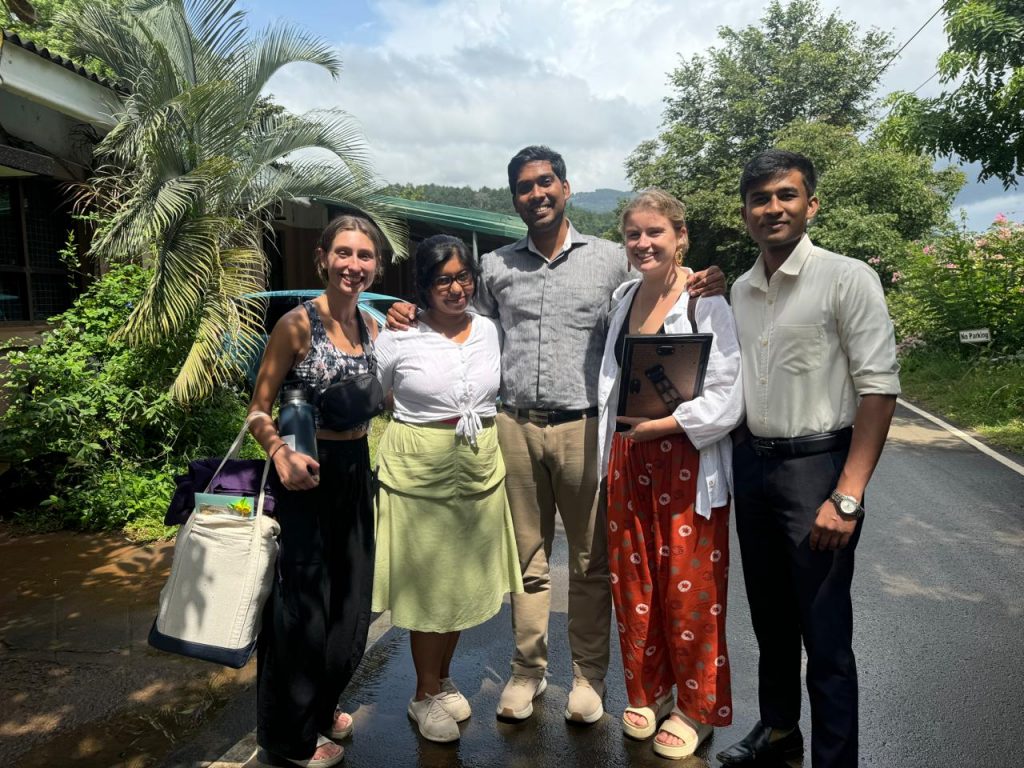
Lawrence adds, “I’ve always had a passion for engaging with other cultures, and global health offers a meaningful way to continue that throughout my medical training and future work. I hope to stay connected to our Sri Lankan colleagues and collaborate with them on future research or clinical experiences.”
The medical students’ UConn faculty mentor Dieckhaus couldn’t be prouder of their global health research success.
“It has been a privilege to work with students who are driven not only to enrich their own education, but to foster understanding among cultures as they seek answers to critical global health issues,” applauds Dieckhaus sharing that Lawrence was also awarded an American Society of Tropical Medicine and Hygiene (ASTMH) Benjamin Kean Travel Fellowship in Tropical Medicine, as well as an Infectious Disease Society (IDSA) of America GERM (Grants for Emerging Researchers/Clinicians Mentorship ) award to pursue her project, and that she recently presented her findings at the national Infectious Disease Week meeting in October.
Advancing Artificial Intelligence Use in Pediatric Care
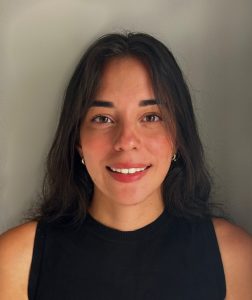
“The summer research experience was an enriching one,” says Veronica Arroyo Rodriguez, 25, in the Class of 2027 who born in San Juan, Puerto Rico and grew up in Orlando. She earned her bachelor’s degree in biomedical sciences from the University of Central Florida (UCF) where she first engaged in research.
“I wanted to continue research while in medical school. The Summer Research Program was a great way to create a structured environment where we can engage in research and have the opportunity to present that research to fellow students and faculty,” says Arroyo Rodriguez.
For her summer research project Arroyo Rodriguez chose to focus on the intersection between Artificial Intelligence and Pediatric Patient Education. She assessed the provider’s outlook on gaps present within their pediatric patient population, with respect to education and the potential of AI to bridge those gaps. She did so through focus groups, and key informant interviews.
“I have always had a personal interest in using technology as a tool in medicine, especially in regard to education. I presented this idea to my Coach at the time, Dr. Mario Perez, and he connected me with Dr. Tom Agresta who became my PI. With Dr. Agresta, and his team’s guidance, especially Christiane Pimentel, we brought this project to life.”
Arroyo Rodriguez undertook a qualitative analysis of both the focus groups and key informant interviews and discovered several key themes: providers emphasized that effective communication is central to patient education, yet major gaps persist due to limited time and communication barriers such as language and health literacy. While reactions to AI were varied, providers recognized its potential to help address some of these gaps. However, concerns emerged regarding implementation including accuracy, bias, cost, and the risk of overreliance. Overall, it seemed providers were amiable towards the integration of AI as a supportive resource tool if accompanied by appropriate patient, provider, and financial support.
“Moving forward we would love to continue the conversation, and use the data collected during this research project to inform the creation of two surveys to explore the impact of technology integration in pediatric healthcare further. The themes identified will be used to formulate evidence-based questions for inclusion in the surveys, ensuring their relevance and validity. This data provides valuable insights into the integration of artificial intelligence for patient education,” reports Arroyo Rodriguez. “Working with Dr. Agresta and Christiane Pimentel added on to the experience overall. They are both truly amazing individuals and helped guide me throughout the whole process. I was able to learn so much from them, and Dr. Agresta’s experience in Artificial Intelligence and Bioinformatics created an avenue of which I could learn from, and allowed me to broaden my perspective on how emerging technologies can advance patient care.”
Arroyo Rodriguez believes the summer research experience brings together different characteristics that are taught during UConn medical school: thinking critically, collaborating with others, communicating scientific ideas and seeking feedback.
“These are skills that I hope have or will translate into clinical reasoning I’ll use throughout my clerkships and beyond,” she says and her message for other UConn medical students considering pursuing joining the Summer Research Program: “Go for it! This is a great opportunity to engage in a research environment and continue learning not only from the work that you are participating in but from your mentor and surrounding research team as well.”
Her faculty mentor Agresta really enjoys working on innovative research projects with UConn students.
“I always love working with all levels of students ranging from undergraduates to medical students to Ph.D. students. They have wonderful research ideas that we can hone into doable projects for the time they have available. They bring incredible energy and creativity to the process and often can present their ideas in regional and national meetings as well as publish their research findings,” says Agresta. “Like Veronica, many students expand their summer research experience into their Capstone projects leading to sustained student-mentor opportunities to further their initial findings.”
Agresta is very grateful for the program. “UConn is very fortunate to have the ongoing support for this program,” he says.
Guertin, also adds “The Summer Research Program stipend allows students to dedicate time to research and to develop their own interests. This incredible opportunity is possible due to the generosity of donors and the valuable contributions and support provided by faculty, staff, and School of Medicine leadership.”
“Thank you to these faculty for their hard work in making student research successful,” also applauds Dr. Christine Thatcher, EdD, associate dean for Medical Education and Assessment at the UConn School of Medicine.