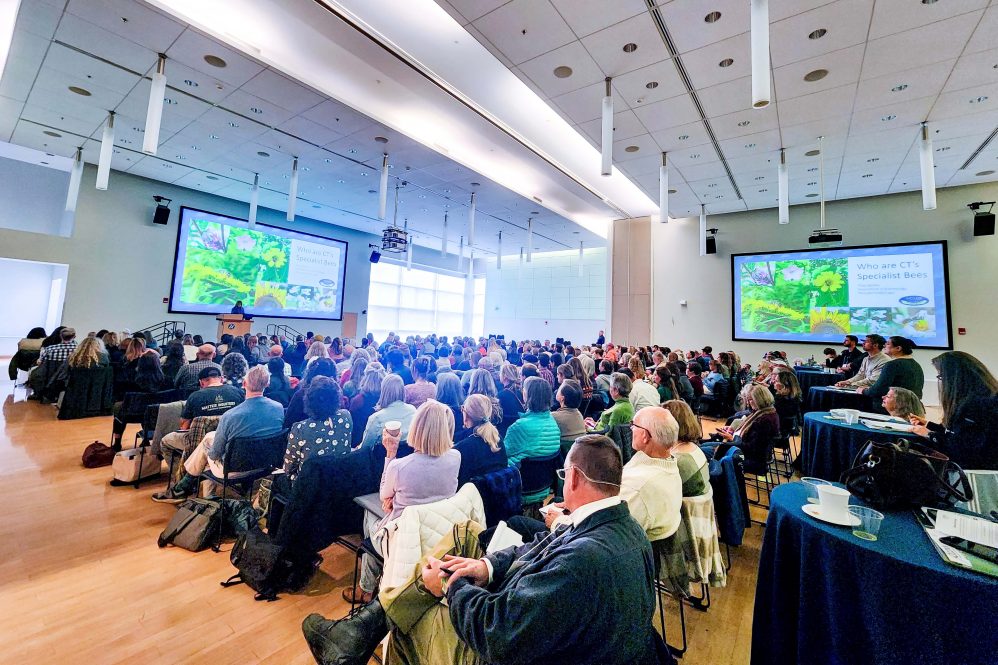
The fifth biannual Native Plants and Pollinators Conference brought together professionals and enthusiasts from across Connecticut on November 13, 2025, at the University of Connecticut in Storrs. Designed to highlight the value of native plants and the pollinators that rely on them, the event offered research-based education spanning landscape design, pollinator biology, and conservation.
“Native plants and supporting pollinators continue to be topics that the industry and the gardening public believe are important,” Jessica Lubell-Brand, event organizer and UConn professor of horticulture who specializes in native plants, as well as plant propagation and breeding and cannabis horticulture.
This year’s presentations explored a range of timely topics, including Connecticut’s specialist bees, soil microbes in managed systems, top-performing native plants from Mt. Cuba Center’s research trials, plant–pollinator interactions in nature, and native shrub cultivars with New England origins.
The conference drew 252 attendees representing landscape professionals, growers, conservationists, municipal land managers, master gardeners, and home gardeners. Of those, 147 completed an evaluation survey. Respondents reported substantial gains in knowledge, including a 61 percent increase in understanding soil microbial interactions with native plants and a 50 percent increase in knowledge of Connecticut’s specialist bees. Knowledge of local native shrub cultivars and plant evaluation trials rose by 40 percent.
“I love this symposium day and will continue to look forward to attending the next one!” explains one conference attendee in the survey responses.
Attendees also reported strong intentions to apply what they learned. Sixty-nine percent said they were extremely likely to purchase native plants discussed during the conference. Seventy-three percent were extremely likely to use the plants featured in the talks, and 65 percent planned to seek out native cultivars with local origins. Overall satisfaction remained high, with 97 percent rating the event excellent or good, and more than half describing it as excellent.
Each year’s program is designed to bring these subjects to life for an audience deeply invested in ecological landscapes. “We continue to share valuable native plant and pollinator resources through UConn Extension’s Integrated Pest Management program,” says Victoria Wallace, Extension educator and co-event organizer.
Follow UConn CAHNR on social media