The UConn School of Medicine is celebrating the recent awarding of several endowed professorships or chairmanships, which are generously supported by philanthropic donations to UConn’s medical school through the UConn Foundation. The Foundation is in the midst of the largest Campaign in the university’s history, Because of UConn, making transformative investments in the future of student success, academic and innovation excellence, health and wellness – all in the name of husky pride.
“Thank you to our generous donors for their transformational support and congratulations to these accomplished faculty members who are nationally and internationally recognized for their contributions to science,” applauded Dean of UConn School of Medicine, Dr. Bruce T. Liang, who he himself also serves as the Ray Neag Distinguished Professor of Cardiovascular Biology and Medicine.
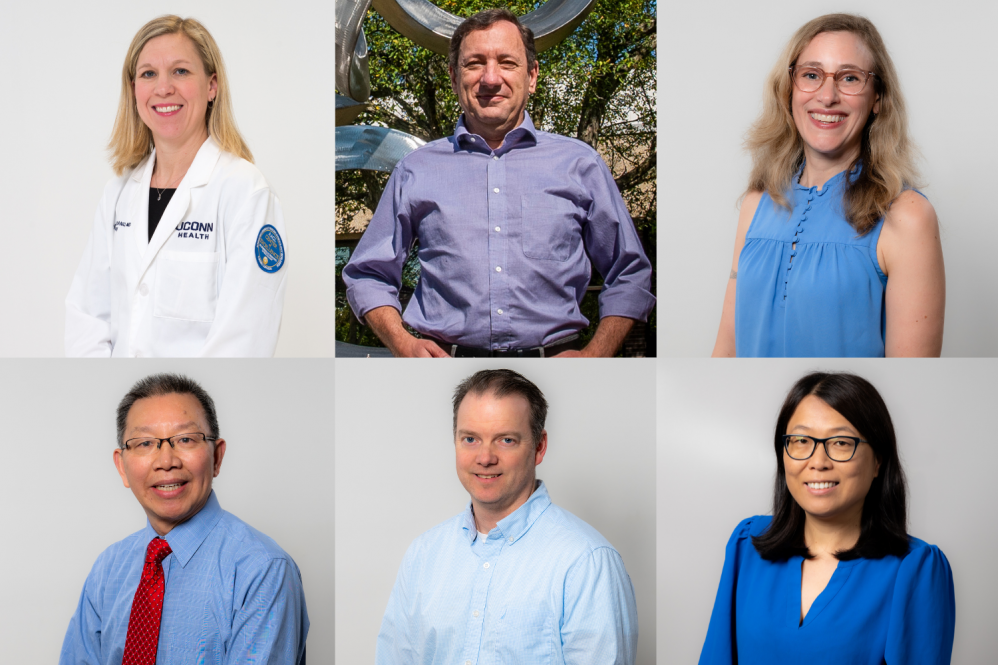
The professors celebrated following approval by The Academic Affairs Subcommittee of UConn Health are:
Danielle E. Luciano, MD has been named the Health Net, Inc. Chair in Maternal-Fetal Medicine. Luciano serves as professor and chair of the Department of Obstetrics and Gynecology at UConn School of Medicine. She is a highly respected physician-researcher whose significant contributions to minimally invasive gynecologic surgery (MIGS) and endometriosis research have earned her national and international recognition. Luciano is committed to continuously advancing research in women’s health. Luciano is also an exemplary mentor to junior faculty and students, and her excellent leadership experience – first as a division chief, next as interim department chair, and now as permanent chair of the Department since October 2025 – position her well to lead significant academic and clinical work in the School of Medicine and UConn Health. She is a visionary leader with a strong academic commitment to women’s health initiatives. One major initiative has been EndoRISE, a state-supported initiative to improve research, patient outcomes, and education for endometriosis. It is co-led by Luciano at UConn Health and Elise Courtois, Ph.D., at The Jackson Laboratory (JAX). The initiative has created the CT Data and Biorepository to promote endometriosis research, education, and awareness, and to advocate for increased funding to combat this systemic disease.
Pedro J. Mendes, Ph.D. has been appointed the Boehringer Ingelheim Professor in Cell Sciences. Mendes is professor of Cell Biology and director of the Center for Cell Analysis and Modeling at the UConn School of Medicine. As an internationally acclaimed leader in computational biology and systems biology, Mendes has mentored a generation of trainees including UConn undergraduate, graduate, Ph.D. and MD/Ph.D. students, postdoctoral fellows, and junior faculty. He has developed methods for computer simulation of biochemistry, and is the leader of the COPASI simulation software package, which is one of the most widely used tools of biomedical researchers worldwide. Mendes has demonstrated sustained success in securing competitive research funding and has authored more than 110 peer-reviewed publications. These publications have received over 29,000 citations, and as such, place him among the most highly cited researchers in system biology and bioinformatics. Notably, three of his papers have been classified as “highly cited” and are considered in the top one percent, based on the highly cited threshold and publication year. His research group has been developing models of how the human body absorbs and regulates iron, using the computational tools they developed.
Sarah Feldstein Ewing, Ph.D. who has been appointed the Health Net, Inc. Chair in Alcohol and Substance Abuse joined UConn in September 2024. As a licensed clinical child and adolescent psychologist, Feldstein Ewing is an expert on adolescent substance use, and its neural and behavioral mechanisms of change. She is a tenured professor and Vice Chair for Research in the Department of Psychiatry and director of the Adolescent Neuroscience Collaborative for Health Resilience (ANCHoR). Feldstein Ewing’s research has long been interested in the intrinsic strengths of adolescents during this unique developmental period and how those strengths can be harnessed to improve adolescent addiction treatment. She is using novel avenues of brain imaging to evaluate how adolescents respond to different elements of behavioral treatment, the most commonly used form of treatment in this age group. Ultimately, she aims to use translational data from the developing brain to help inform and guide treatment outcomes for young people engaged in substance use. Her findings to date suggest that, when they are receiving behavioral treatments, adolescents’ brains respond in totally different ways than adults. She proposes that, in fact adolescents’ brains and behavior are so different that it merits the creation and development of totally new definitions of what is clinically significant substance use behavior in this age group, along with clinical metrics, and avenues to more impactfully treat teen substance use. Her research is looking to evaluate unique, out-of-the-box behavioral interventions, such as the one she has created from her adolescent brain findings called “ADAPT: Adolescent Developmentally Appropriate health Promotion Therapy,” which maximizes the gifts of the adolescent brain to reduce risk and enrich resilience. Using her MRI approaches, she is also using hyperscanning, tandem use of MRI to explore the efficacy of widely used interventions, such as motivational interviewing.
Guangfu Li, Ph.D., DVM, MS is the newly appointed Carole and Ray Neag Innovation Professor. Li joined the School of Medicine in April 2024 in the Department of Surgery with a joint appointment in Immunology. Li is devoted to tackling some of the toughest cancers out there, especially liver and pancreatic cancers, which are notoriously hard to treat. His team works directly with human patient samples and builds animal models that closely resemble what actually happens inside the human body. Their goal is simple but bold: understand why these cancers are so resistant to treatment and find new ways to fight back. One of their breakthroughs is a specially designed nano-medicine, called LipC6, a tiny particle that does two powerful things at once: it attacks cancer cells and helps “re-energize” the immune system so it can join the fight. This discovery inspired an entirely new approach to treating liver cancer and even lead to a U.S. patent. Li’s group also discovered that sunitinib, a drug already used for some cancers, can boost the body’s immune response, pointing the way to stronger, and smarter combination therapies. Li’s lab is also making important strides in pancreatic cancer, one of the most aggressive and deadliest cancers. They found that a little-known gene called ABTB2 plays a key role in controlling pancreatic tumor growth. When they restored this gene in research models, it slowed down tumor growth and made standard treatments work better. Building on this discovery, the team is developing a targeted delivery system that send ABTB2 straight to pancreatic tumors while leaving healthy tissues unharmed. Together, these advances move us closer to safer, more precise treatments, and offer hope for patients facing some of the most challenging cancers. In Fall 2025, Li was also highly applauded by UConn’s medical school for his excellence as a Faculty Spotlight honoree for his exceptional research leadership, his development of patented cancer therapies, and his commitment to interdisciplinary collaboration. These are all qualities that are exemplified in UConn Health’s core values of collegiality, curiosity, and collaboration.
Supported by a generous $7 million gift from the late Carole and Ray Neag—among UConn’s most dedicated benefactors—the Carole and Ray Neag Innovation Professorship advances transformational research at the UConn School of Medicine. Their philanthropy also established the Carole and Ray Neag Innovative Research Awards, which fund cutting-edge, high‑risk projects. The Neags’ impact spans decades, including a $10 million commitment that created the Carole and Ray Neag Comprehensive Cancer Center at UConn Health, as well as significant investments in the Calhoun Cardiology Center and multiple clinical departments. Their legacy continues through the Carole and Ray Neag Medical Innovation Center and ongoing support of UConn School of Medicine.
Patrick A. Murphy, Ph.D. has been newly named the Marlene L. Cohen and Jerome H. Fleisch Chair in Vascular Biology. Murphy joined the School of Medicine in 2016 in the Center for Vascular Biology and the Department of Cell Biology. Vascular biology is the study of the cells of the vascular system, which permeates every organ in the body. Blood vessels are dynamic structures made up of several cell types, including endothelial and smooth muscle cells. Abnormality of blood vessels is important in many serious diseases, including heart attacks, stroke, diabetic leg ulcers, cancer growth and metastasis, diabetic blindness, rheumatoid arthritis and neurodegenerative diseases like Alzheimer’s, ALS and FTD, among others. Murphy is an expert on endothelial RNA splicing and vascular inflammation. Murphy’s lab research focuses on endothelial cells lining the vasculature, aiming to better understand the critical role of these cells in mediating inflammatory and immune responses. His work has revealed post-transcriptional regulation by alternative splicing in the response to inmate immune cell recruitment. Splicing is increasingly recognized as an important contributor to human disease. Variations resulting from changes in splicing can produce proteins with entirely new functions, and defective splicing regulation is the most common type of genetic lesion to affect genes across hereditary diseases. His lab team are using bioinformatics and high-throughput genetic screens to identify and understand the role of RNA-binding splice factors regulating these splicing changes, and genetic models to examine the impact of individual splicing changes on the vasculature. The lab is developing pending and provisional patents on the modulation of splicing activity to limit cardiovascular injury, and to predict disease at earlier timepoints when successful intervention is still possible.
Marlene L. Cohen and Jerome H. Fleisch have generously donated the new endowed Chair in the UConn School of Medicine that supports the work of Murphy. The Cohen family has a long connection to UConn. Marlene L. Cohen, Ph.D. is a graduate of the UConn School of Pharmacy (Class of 1968), along with late sister Sandra Cohen Fagen (Class of 1962), and numerous Cohen family relatives. Interestingly, their father, Abraham David Cohen, was a charter member of the first class to graduate in 1930 from the Connecticut College of Pharmacy. Marlene’s husband Jerome H. Fleisch, RPh, Ph.D., is also a pharmacist. Marlene and Jerome are both retired from very successful careers in pharmaceutical research at Lilly Research, are both accomplished authors of many scientific publications, and educators who worked as adjunct professors to teach medical students.
Xiaoyan Guo, Ph.D.’s philanthropically supported research efforts are also recognized alongside these five positions. Guo joined the School of Medicine in 2022 in the Department of Genetics and Genome Sciences. Mitochondria, the powerhouse of the cell, are essential for maintaining proper cellular function. As a result, cells rely on a robust surveillance mechanism to preserve mitochondrial quality and to coordinate communications between mitochondria and the rest of the cell. Guo’s a research expert in cells’ mitochondrial stress response via the integrated stress response (ISR) and the cell’s process for removing damaged mitochondria called mitophagy. Guo’s Lab is actively investigating how mitochondria cross talk with the rest of the cell in health and diseases using CRISPR-based functional genomics. Leveraging CRISPR-based functional genomics and mechanistic approaches, Guo’s team are uncovering the molecular mechanisms of how human cells are responding to dysfunctional mitochondria, which is a hallmark of aging and many age-related diseases. Her lab aims to identify potential therapeutic targets for these diseases such as Parkinson’s disease and Alzheimer’s disease.
“We are inspired by the innovative work of all our UConn physician-scientists who are tirelessly pushing the boundaries of research and changing lives every day. We couldn’t do it without the support of our generous donors and friends of UConn School of Medicine. If you want to be part of it consider getting involved in the University’s historic $1.5 billion Because of UConn campaign,” shares Dean Liang.
Learn more at foundation.uconn.edu/get-involved/.