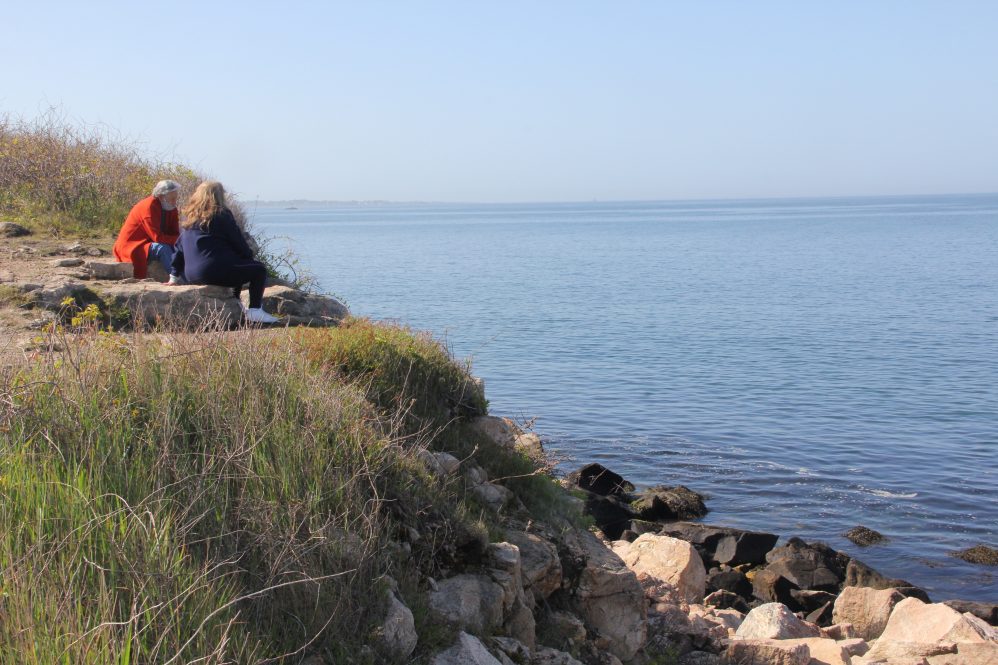
The UConn-led Connecticut National Estuarine Research Reserve (CTNERR), in cooperation with the Connecticut Department of Energy and Environmental Protection (DEEP), is planning major restoration and improvements at Bluff Point State Park.
The project is being facilitated by $2.87 million in federal funding provided by the National Oceanic and Atmospheric Administration (NOAA) Habitat Protection and Restoration program. The endeavor seeks to restore critical salt marsh habitat and improve public access at Bluff Point State Park, Coastal Reserve, and Natural Area Preserve in Groton.
Over the next three years, the project will replace two aging culverts beneath the park’s main hiking trail with elevated boardwalks. It will improve both ecological function and visitor access at one of the largest undeveloped coastal properties between New York and Cape Cod. Notably, the project will restore and protect tidal flow to three high-value coastal marshes totaling approximately 1,850 square meters.
“Building on the Lamont administration’s historic commitment to restoring our treasured Connecticut state parks, this project partnership between the CTNERR and DEEP will strengthen Bluff Point’s resilience to sea level rise while restoring healthy tidal flow and improving reliable access to the outdoors for the thousands of people who visit each year,” says DEEP Commissioner Katie Dykes. “By elevating flood-prone trails and protecting critical coastal habitats, we are ensuring the public can continue to enjoy and steward this special place as our climate changes.”
Addressing Multiple Challenges
Bluff Point State Park is a popular year-round destination, which receives as many as 300,000 visitors annually. The park is a jewel of the Connecticut shoreline, and its long-term stewardship is a priority of both DEEP and the NERR.
This project seeks to address long-term impacts to the park in the form of sea level rise, invasive species, and high levels of recreational use. The current main recreational trail frequently floods, resulting in restricted access. Additionally, the culverts underneath the trail, which were originally designed to allow sufficient tidal flow to the coastal marshes, are aging and in need of renovation.
This restoration project will:
- Restore natural tidal flow to coastal salt marshes along the trail
- Install elevated boardwalks to improve accessibility and reduce trail flooding
- Elevate the main trail for improved emergency access
- Reduce invasive species such as Phragmites through improved tidal circulation
- Enhance habitat for critical fish and wildlife species
SLR International Corporation will provide engineering design and construction oversight for the project. The new boardwalks will accommodate pedestrians, bicyclists, equestrians, and emergency vehicles while allowing natural tidal flow.
“Bluff Point is one of our state’s most valuable public and ecological resources,” says SLR Principal Water Resources Engineer Jim Murac. “As part of our commitment to sustainability and protection of our natural resources, we are very proud to have the opportunity to partner with DEEP, CTNERR, and UConn in applying our expertise in nature-based solutions to enhance the natural habitat and public enjoyment of the Bluff Point property.”
The improvements at Bluff Point State Park— which is federally funded as part of the NERR– add to a historic amount of state-funded maintenance and restoration work across Connecticut’s state park system. Through the RestoreCT Parks initiative, dozens of state parks, wildlife management areas, and boat launches are being refurbished and improved across the state.
Community Benefits and Engagement
The project builds on extensive public input gathered in 2024 through a visitor survey and public engagement effort supported by the Long Island Sound Futures Fund. The visitor survey received more than 600 responses and two public meetings had over 100 combined attendees. Survey respondents and meeting attendees identified trail flooding and erosion as top concerns.
Community engagement activities for the upcoming project will include:
- Three annual celebration days featuring guided nature activities
- Three volunteer days for invasive plant removal and ecological monitoring
- Two coastal training workshops for restoration practitioners and decision-makers
- Installation of Chronolog™ photo stations for community science monitoring
- Ongoing communication through signage, email updates, and social media
Additionally, the project includes comprehensive pre- and post-restoration monitoring to document ecosystem changes and inform future restoration efforts. The high visibility and accessibility of this site make it an ideal location for demonstrating restoration techniques and sharing lessons learned with other communities facing similar challenges.
“This project represents a significant investment in both coastal resilience and community access, which are key focus areas for the National Estuarine Research Reserve System. We want people to be able to enjoy this incredibly special place for decades to come” says Jason Krumholz, stewardship coordinator with the CTNERR and principal investigator of the project.
About the Connecticut National Estuarine Research Reserve
The Connecticut National Estuarine Research Reserve is a partnership between the National Oceanic and Atmospheric Administration and the University of Connecticut that protects and studies more than 52,000 acres of estuarine lands and waters in Eastern Connecticut and Long Island Sound. The Reserve conducts research, provides education programs, and offers training for coastal decision-makers to promote informed stewardship of Connecticut’s coastal resources.
For more information about the project, visit s.uconn.edu/bluffpoint.