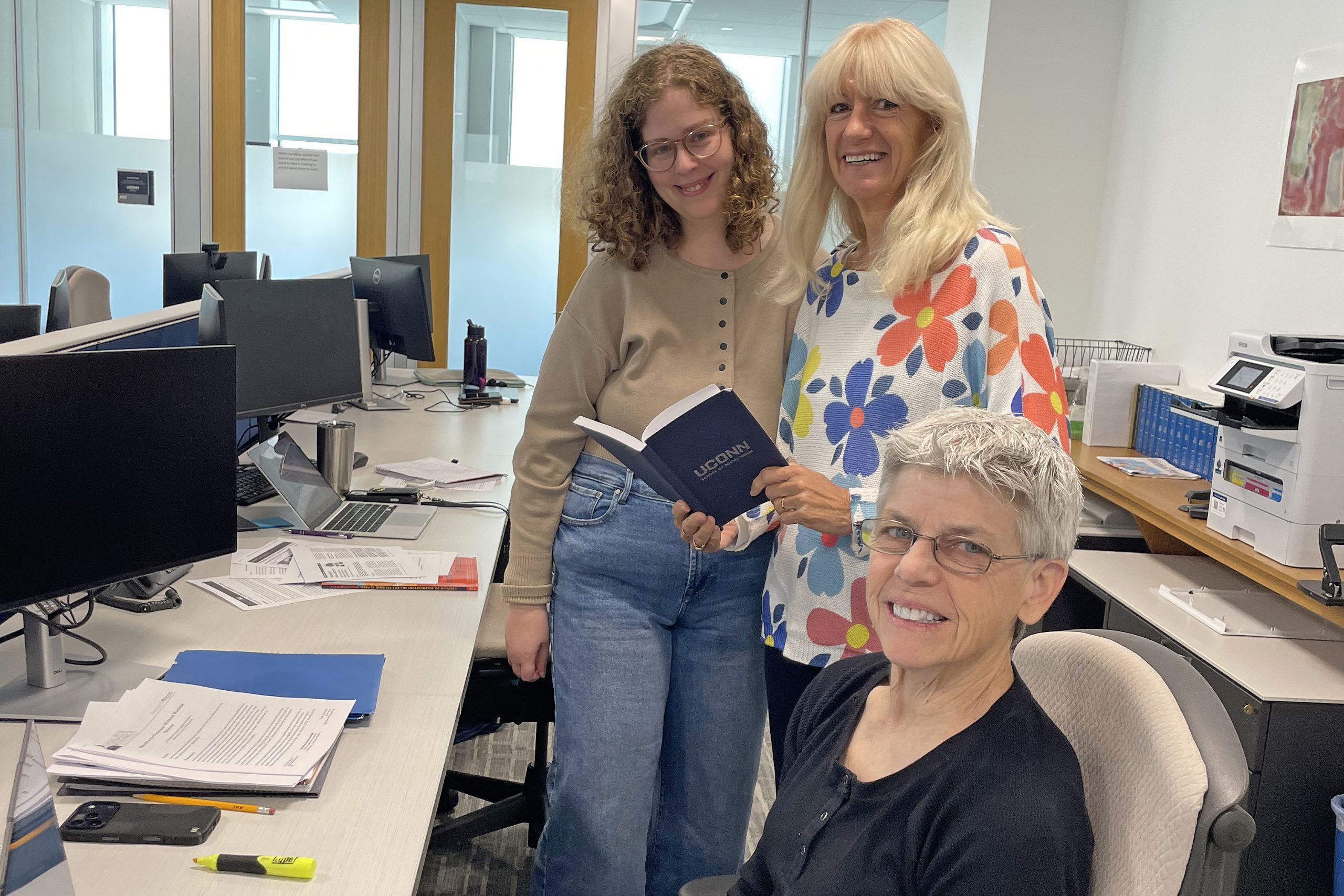
Volunteers have long been essential to UConn Extension, ensuring that residents in all 169 Connecticut communities can access the research-based education and resources Extension’s programs provide. Rooted in the land-grant tradition of teaching, research, and community engagement, the Cooperative Extension System depends on strong local connections to understand and address community needs. UConn Extension is administered through UConn’s College of Agriculture, Health and Natural Resources (CAHNR).
At UConn, those connections are strengthened by the volunteer Extension Councils that support each of the eight Extension centers. These council members serve as trusted community voices and liaisons, helping Extension professionals stay attuned to local priorities and ensure that UConn Extension programs remain relevant, responsive, and impactful.
Gina Cubbage of Bethel is president of the Fairfield County Agricultural Extension Council and brings an energetic commitment to community service, strategic thinking, and advocacy for UConn Extension.
“We’re here as an educational resource aligned with UConn,” she explains. “Extension is a place where people can trust our knowledge. We’re here to make people’s lives better.”
UConn Extension Councils also play an important role in elevating local voices and shaping the direction of Extension programs. Council members identify emerging issues, share feedback from residents, and help Extension professionals understand what matters most in their communities, from agricultural challenges and youth development needs to environmental concerns and opportunities for lifelong learning. Council members’ on‑the‑ground insight ensures that Extension remains responsive and forward‑thinking, while their advocacy helps raise awareness of programs and strengthens partnerships with local organizations and municipal leaders. Together, they help build the connection between university expertise and community priorities, reinforcing Extension’s mission across the state.
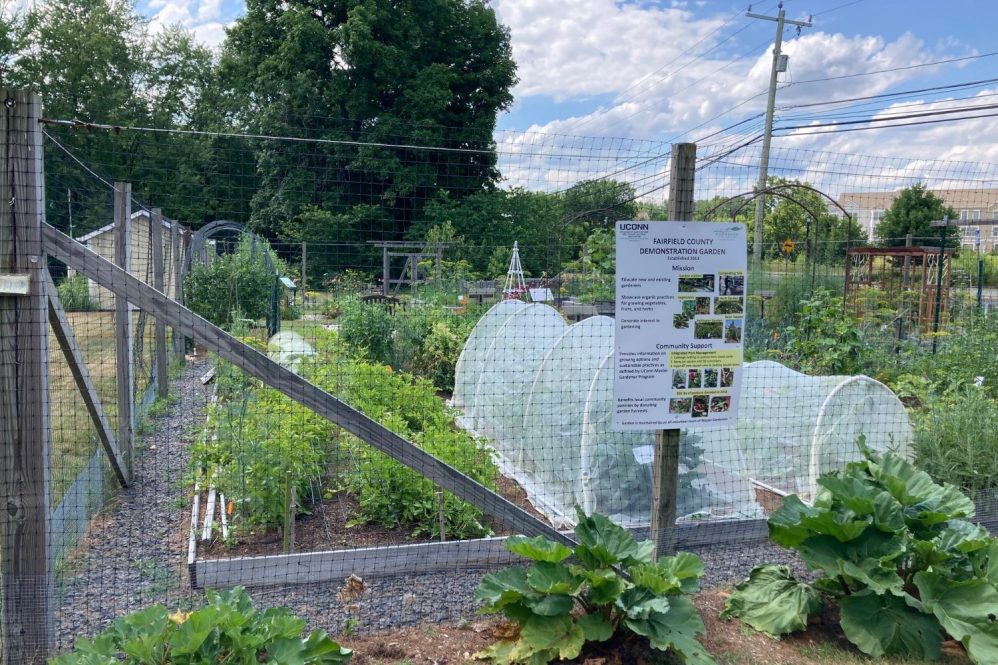
For example, Cubbage and the Fairfield Council are connecting Extension’s Master Gardener program to Fairfield County residents who are interested in gardening but seeking more knowledge and resources. They’re also supporting ongoing efforts related to developing urban agriculture programs across the state.
In 2025, Extension’s volunteers contributed over 183,000 hours, valued at $7.02 million, to Connecticut communities, efforts that are facilitated by Extension Councils.
“Extension Councils provide critical information to UConn about the needs of the community. This is where UConn receives important input on what the state needs. Our thousands of statewide volunteers are in all 169 cities and towns across the state and provide insight about where they live and work to enhance the way UConn engages the public in decision making,” Bonnie Burr, assistant director of UConn Extension says.
Identifying Community Needs
Cubbage’s introduction to Extension began with a roadside sign advertising UConn 4‑H. Curious, she stopped in and quickly discovered the breadth of Extension’s work. Her connection was solidified after meeting a local Master Gardener and becoming part of the UConn Extension Master Gardener Program. Through her participation, she expanded her knowledge of Extension’s impact and later accepted an invitation to join the council.
She notes that Extension professionals are experts in their fields but not always connected to the business, civic, or fundraising networks in their communities that can support Extension’s growth. Councils can bridge that gap.
“We bring a business‑like perspective. We can tap into small and mid‑sized grants or donations and help local people better understand what Extension does,” Cubbage says.
For example, Cubbage’s background in business analysis has shaped her approach. She is currently completing a SWOT analysis and community assessment to help the Fairfield County Extension Council create clearer connections between residents, local organizations, and Extension professionals, through children’s activities, after-school programs, and local community events. Council membership brings together volunteers from many industries, including media, education, business, public relations, finance, and project management, among others. Cubbage sees this as key for connecting Extension to the broader community.
“We’re starting to build a paradigm that we are here to serve the community. We promote Extension through our networks.”
Strengthening the Community and Building Partnerships
The priorities of each Council vary some, but all are committed to advancing the work of Extension in their communities and improving the quality of life for residents.
Cubbage hopes more potential volunteers can experience the benefits of UConn Extension, which she sees as a trusted resource to help with agriculture, youth development through UConn 4-H, home gardening, disaster preparedness, and land use resilience, among the other programs UConn Extension offers.
“Over a century ago when Cooperative Extension began, experts were charged with taking research-based information out to communities,” says associate dean for Extension, Amy Harder. “Now, we still share our university expertise, but we’ve learned that partnering with volunteers and community advocates to solve needs is even more effective for making a positive difference.”
For Cubbage, serving on the Extension Council is deeply rewarding.
“It’s a way for us to help our community. Everyone who works with Extension has a community‑oriented heart. That’s the part I’m proud of.”
UConn Extension is part of the College of Agriculture, Health and Natural Resources and fulfills the land-grant mission of translating the university’s research for the public. UConn Extension’s statewide locations and programs help serve all 169 Connecticut municipalities. Programs include health and wellbeing, agriculture, horticulture, natural resources, and positive youth development. UConn Extension provides answers you can trust on issues ranging from health and wellness to agriculture, horticulture, natural resources, and positive youth development.
Follow UConn CAHNR on social media