A formerly eradicated parasitic fly called the New World Screwworm (NWS) has been making headlines as an outbreak takes hold in the Southwest.
So far, the outbreak has been limited to cattle, goats, and sheep in Texas and a pet dog in New Mexico. While human screwworm cases are rare, outbreaks could impact food supply. However, the USDA confirms that NWS is not a food safety issue, and the U.S. food supply remains safe. Current risk to people and animals is the U.S. is very low.
Camila Hamond, assistant research professor of pathobiology and veterinary science in the College of Agriculture, Health and Natural Resources (CAHNR), answers some key questions about what Connecticut residents need to know about the current outbreak.
What is a screwworm?
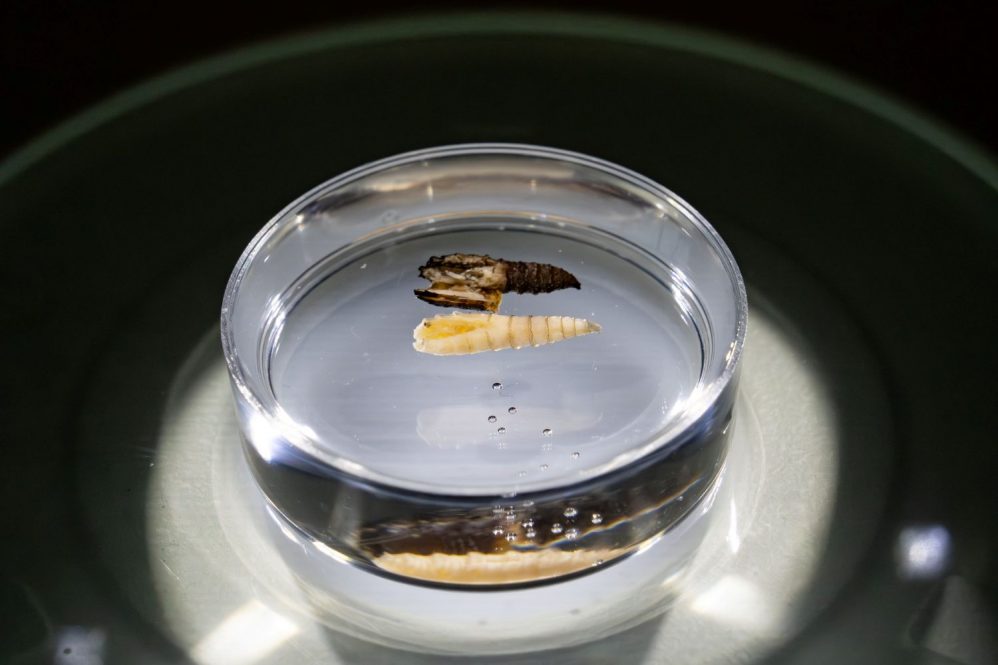
New World Screwworm (NWS) or Cochliomyia hominivorax, is a species of parasitic blowfly that completes part of its lifecycle by feeding on the tissue or flesh of warm-blooded animals and people. C. hominivorax can travel up to 12 miles in warm, humid climates to find a host. If there are ample hosts and preferred climate conditions, this blowfly generally remains within a two-mile range.
How do they infect animals?
Contact with the NWS blowfly is required for transmission, by which the female lays 200-300 eggs at the edge of a wound. While they only mate once, a single female can lay several batches of eggs in its lifetime. The name screwworm refers to the maggots’ feeding behavior as they burrow or “screw” into the wound, feeding as they go like a screw being driven into wood. Maggots cause extensive damage by tearing at the hosts’ tissue with sharp mouth hooks. The wound can become larger and deepen as more maggots hatch and feed on living tissue. As a result, NWS can cause serious, often deadly damage to an infected animal. According to the USDA, this is a highly preventable and treatable condition using approved products and animal care. However, left untreated, animals can die within one week of infestation.
What are the symptoms of screwworm infection?
Feeling maggots (larvae) move or seeing maggots within a skin wound or sore, or in the mouth, nose, ears, nose, or eyes; a foul-smelling odor from the site of the infestation; painful skin wounds or sores that worsen within a few days; and bleeding from open sores. Bacteria can also infect wounds where NWS maggots are present and may cause infection that can lead to symptoms like fever or chills.
What kinds of animals are most vulnerable to screwworm infection?
Livestock including cattle, sheep, and goats are highly susceptible due to their living conditions. Pets can be affected, especially if they have open wounds. Deer and other wildlife can also be infected, particularly in areas where screwworms are prevalent. Neonatal and juvenile animals are more vulnerable due to their weaker immune systems as are animals with existing health issues or injuries. Those in unsanitary environments are also more likely to attract screwworms.
Are screwworms a concern for humans?
Screwworm infestations in humans are less common than in animals but follow the same pattern. Any open wound or sore can serve as an entry point. The larvae can also establish in the ears, nose, eyes, or mouth. The symptoms are the same for humans and animals.
Screwworm has been absent from the U.S. since the 1960s. Do we know why it is reemerging now?
Beginning in the mid-20th century, U.S. scientists developed a special technique to stop screwworm reproduction. The “sterile insect technique” involved breeding millions of male screwworm flies in specialized facilities, sterilizing them with radiation, and releasing them into the wild. Because female screwworm flies mate only once, they produce no offspring after they mate with a sterile male fly. Over time, the screwworm population dies off. Using this approach, screwworm was eliminated from the United States by the mid-1960s.
The program then moved south, in collaboration with Mexico and Central American countries. By the early 2000s, screwworm had been pushed as far south of the United States as Panama. This screwworm control program remains one of the most successful examples of international disease control in the Americas.
For decades, screwworm was largely absent from the United States and Mexico. That changed in 2023, when outbreaks began spreading northward through Central America and into southern Mexico. The reasons are still being investigated, but likely include interruptions in sterile fly production during the Covid pandemic, increased movement of cattle and people, climate change expanding the suitable habitat for screwworms, the decline of natural predators, genetic adaptations, and the sheer difficulty of maintaining surveillance across remote terrain.
How big of a concern is this current outbreak for consumers in the U.S.?
Consumers may see higher prices for affected livestock products, like beef. It’s important to remember though that all animal meat and poultry must meet food safety standards, and no contaminated meat or poultry products can be sold. Increased monitoring and control measures are being implemented by authorities and public health officials are actively managing the situation to prevent spread. Awareness and education are key to mitigating consumer concerns.
How about Connecticut specifically?
People should monitor livestock and pets for signs of screwworm infestations, such as unusual wounds or excessive licking and report any suspected cases to the Connecticut Department of Agriculture or local veterinary services. Maintaining proper sanitation and hygiene in animal housing areas can reduce screwworm breeding sites. If infestations occur, people can use approved insecticides or treatments as recommended by agricultural authorities.
People can find information about veterinary considerations for pets that travel internationally or within the U.S. from the USDA. This includes rescue animals that may be transported from areas like the Southwest where potential for transmission is higher.
Questions about infestations in any animal, whether livestock, pets, or wildlife, should be directed to a veterinarian or animal health official. Visit the USDA website for more information about NWS in animals.
This Q&A was developed in consultation with the CT Department of Agriculture, state veterinarian, and UConn Extension diversified livestock expert. This work relates to CAHNR’s Strategic Vision area focused on Enhancing Health and Well-Being Locally, Nationally, and Globally and ensuring a Vibrant and Sustainable Agricultural Industry and Food Supply.
Follow UConn CAHNR on social media