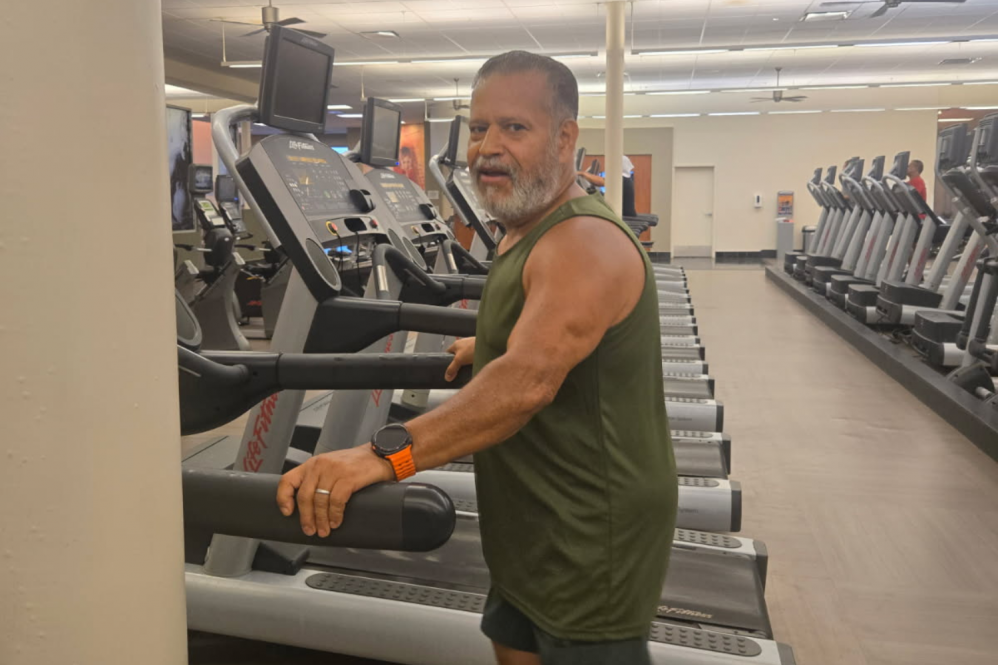
Jose Figueroa, 66, of New Britain is “so grateful” for UConn and its powerful cross-campus collaboration helping improve the health and quality of life of Parkinson’s disease patients just like him.

Figueroa has been battling Parkinson’s disease for 16 years since being diagnosed in 2012 following his visit to the Emergency Department when a provider noticed his legs and arms were continuously shaking. He is a longtime patient at UConn Health and now its Brain and Spine Institute with Dr. Bernardo Rodrigues.
“Dr. Rodrigues is excellent. Anytime there is a new program or resource for Parkinson’s patients he always tells us,” says Figueroa. “It has helped so much.”
His wife also sees a big difference in the last year.
“Jose’s Parkinson’s used to be like an Earthquake,” says his wife, Emily. “But now there has been a big improvement. He no longer needs to use a cane to walk.”

His successful progress is all thanks to a UConn cross-campus collaboration to advance research between the Brain and Spine Institute’s faculty like Rodrigues at UConn School of Medicine with the researchers of UConn Storrs’ Department of Kinesiology and its dedicated Movement for Life Lab.
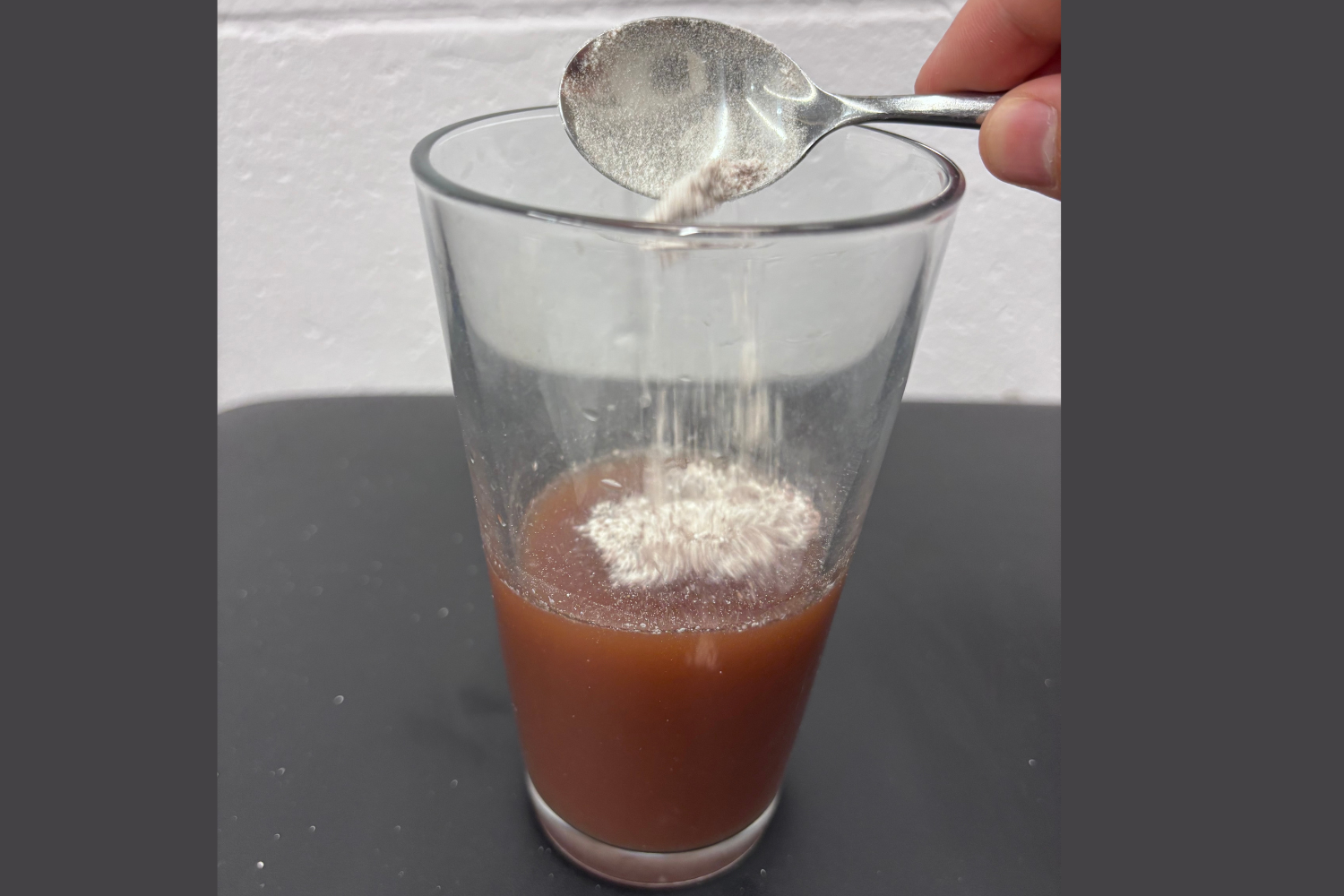
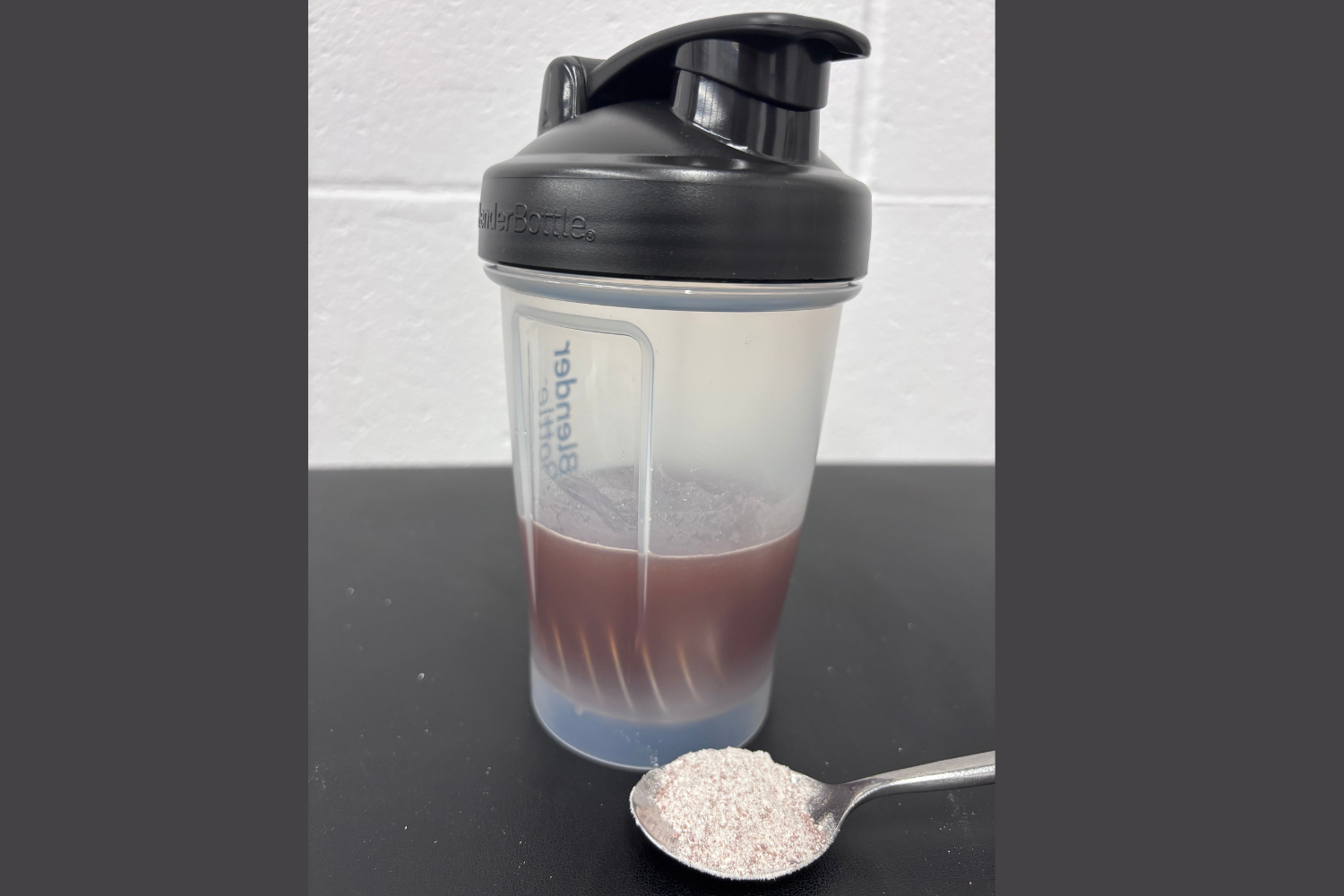
Just a year ago Figueroa started participating in an initial, three-week nutritional supplement study beginning to test the benefits of consuming a targeted, amino-acid protein shake developed by the Storrs research team led by Dr. Jacob Earp and Dr. C. Colon-Semenza. Their goal was to find a new way to assist PD patients like Figueroa by using a nutritional supplement designed specifically for those with Parkinson’s disease that is intended to be easier to consume than conventional supplements, reduce inflammation, and provide nutrients that support an active lifestyle.
“I felt really good while taking the shake. I definitely had more energy,” reports Figueroa. “A healthy shake can feel better than medicine. I would still take the shake if it was still available to me,” says Figueroa who also has learned the true benefits of not only the shake but adding daily exercise too.
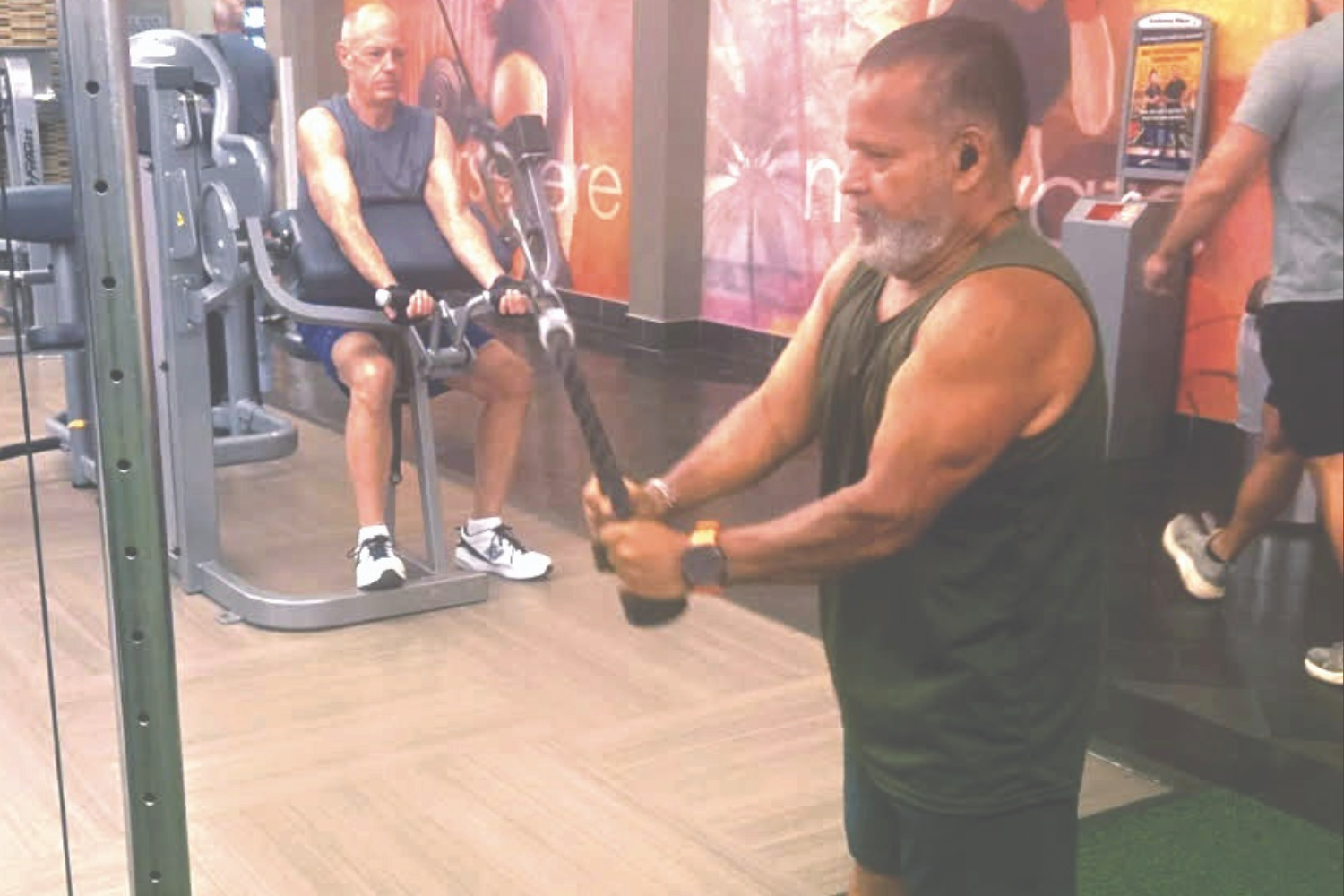
“Last year I started exercising with the Storrs research team every week on Fridays, including over Zoom,” says Figueroa. “And my Parkinson’s disease symptoms started doing better! My shaking slowed and my imbalance is not as bad. I no longer need my cane to walk,” he exclaims.
Figueroa began going to the gym daily and a year later has lost a significant amount of weight too. “When I started exercising, I could only walk a quarter of a mile, now I can do 7 miles every day!”
His wife agrees, “He’s definitely healthier. He has more energy and I can see a big difference. He still feels his Parkinson’s, but it is not as bad!”
Figueroa has a strong message to others diagnosed with PD.
“I almost gave up on my Parkinson’s disease. But you can’t ever give up! First, it is hard to start exercising but keep with it and you will see a difference!”
His wife Emily is also so grateful for her husband’s success thanks to UConn researchers collaborating on advancing science and patient programming.
“If you have Parkinson’s disease Jose’s story truly shows you the power of the impact of adding a healthy lifestyle and exercise, and how you can be happy and have energy again, and enjoy your life!” shares his wife.
UConn and UConn School of Medicine researchers have now started a 6-month study of the potential impactful benefits of study participants consumption of its targeted Amino-Acid supplement shake for Parkinson’s patients being cared for at UConn Health.
The shake was designed to work to correct Amino-Acid deficiencies related to PD and provide potential beneficial effects to improve the long-term health of people living with the disease by reducing inflammation, encouraging heathy metabolism, and providing the nutritional building blocks the body needs to ensure proper brain and muscle health.
The study is currently recruiting patients 60-80 years old to enroll during the 6-month period for taking the shake daily, and sharing periodic blood samples, and completing physical function assessments and questionnaires.
“This novel, targeted protein supplement shake may really improve Parkinson disease patient’s function and nutrition,” says Rodrigues about the new UConn-designed supplement, protein powder made out of a select series of amino-acids, which are like the Lego bricks of proteins, which may be too low and need to be higher in PD patients.
The Storrs research team’s work identified what amino-acids are actually low in PD patients to create the unique shake. They successfully applied to the FDA for a new investigational drug application and are now principal investigators for the FDA. Their clinical study is comparing their UConn-made shake with over-the-counter ones.
Initial study results have shown that study participants with PD who took the shake experienced an increase in more amino-acids.
“It’s working! The shake may be just the protein boost our PD patients need,” concludes Rodrigues.
To learn more about the UConn supplement study read the study flyer, and contact Carlos Rehbein: +1 (860)-634-8203, email: movementforlifelab@gmail.com