Fourteen people got sick after attending a Quinceañera, a traditional celebration of a 15-year-old Latino girl’s birthday, and it looks like something on the party menu was the culprit. Was it the beef tamales? Green salad? Ceviche? Or the cake?
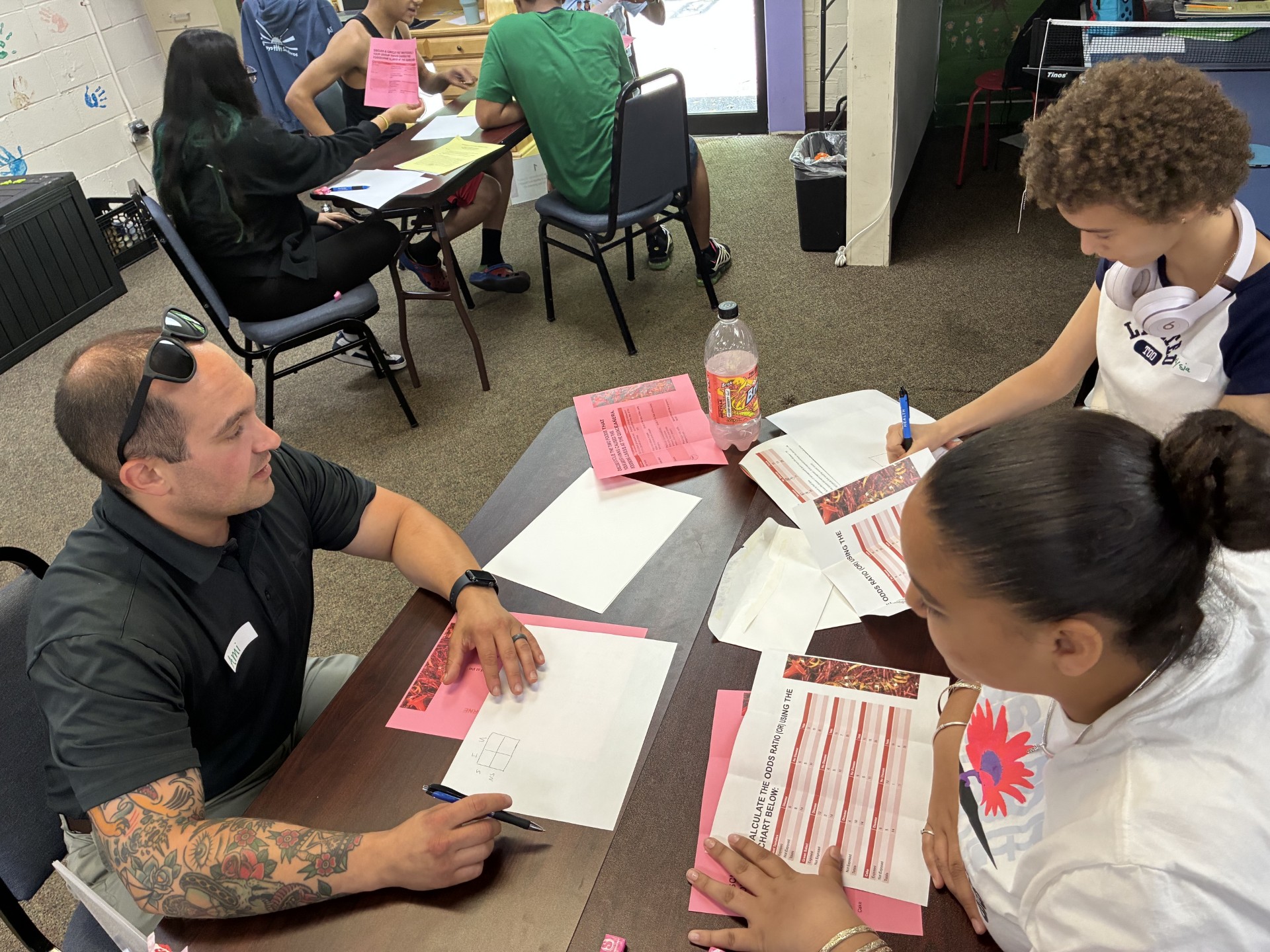
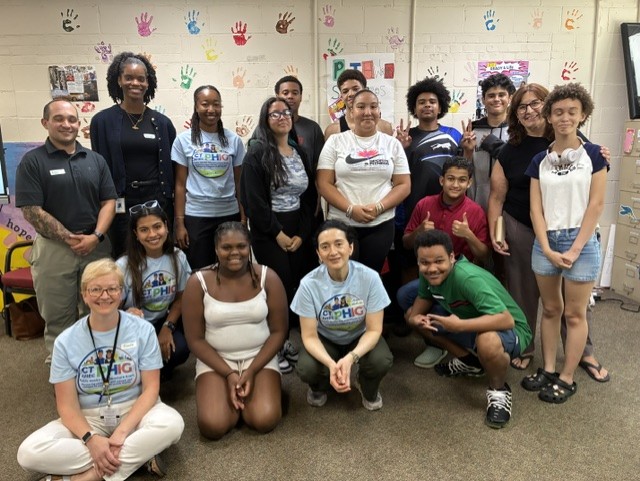
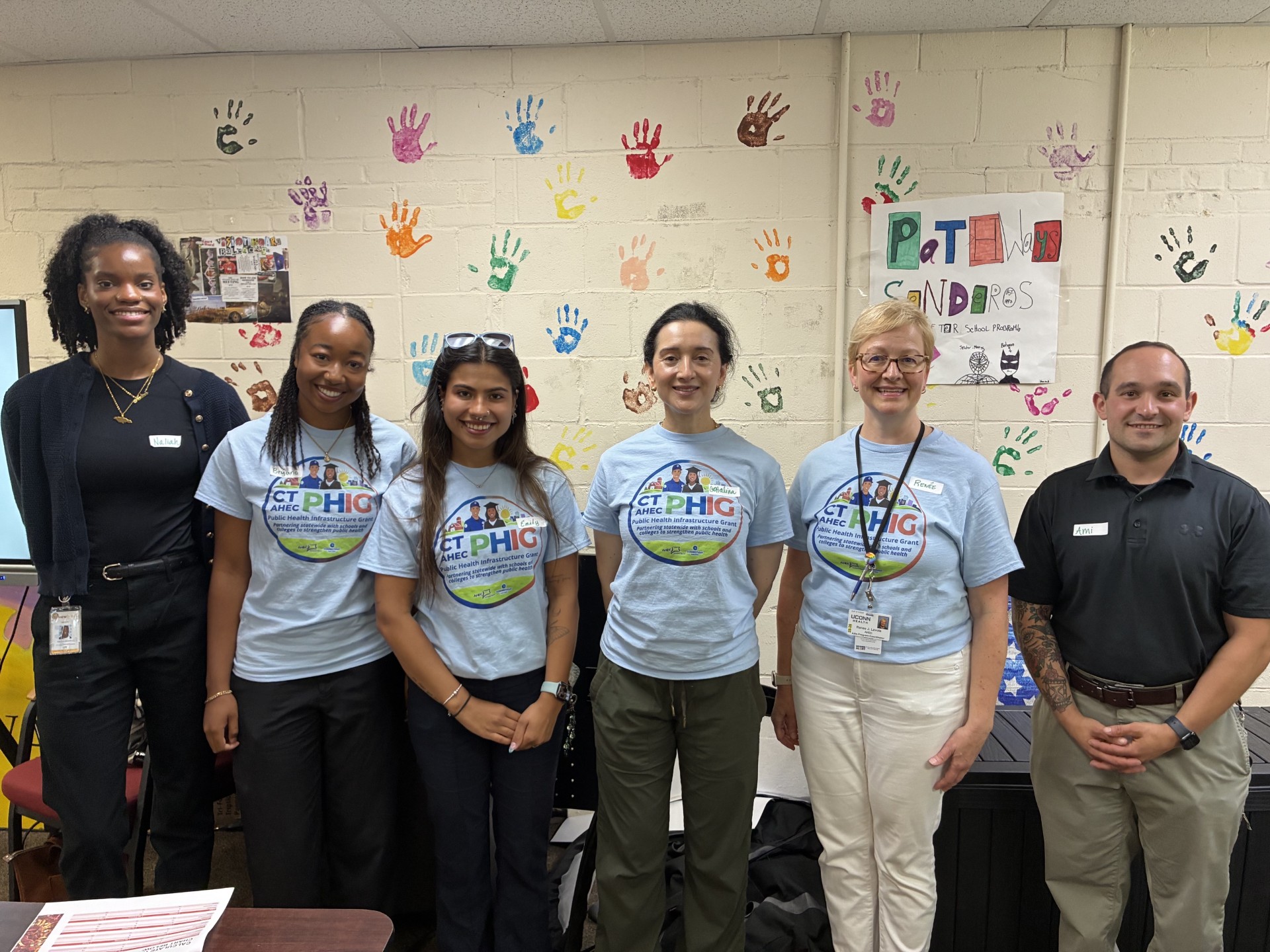
Ten teens enrolled in the Pathways/Senderos Center summer career exploration program were tasked to find out the cause during an activity organized by the Connecticut Area Health Education Center (CT AHEC), located at UConn Health, as part of its Public Health Infrastructure Grant (PHIG) program. They were joined by two sanitarians from their City of New Britain Public Health Department, Amitan Rubin and Naliah Grannell, who know how to track down the cause too well.
“The aim of our PHIG program is to teach young people about public health issues and public health careers so we were thrilled when Amitan and Naliah accepted our invitation to help facilitate the Quinceañera learning activity,” said Catalina Quesada, PHIG’s community education specialist. “Their presence made a difference. The young people were interested in learning about their work and asked thoughtful questions,” she said.
Rubin said he participated because activities like this “bring awareness of public health to kids and hopefully get them interested in the field as they graduate high school. Many people do not know what we do or how broad the field of public health is.” Grannell added she was grateful for the chance to deepen young people’s understanding of the field and the profession. “Educational access and opportunity play a large role in public health, and Pathways/Senderos was a way for my colleague and me to share our knowledge to help expand theirs,” she said.
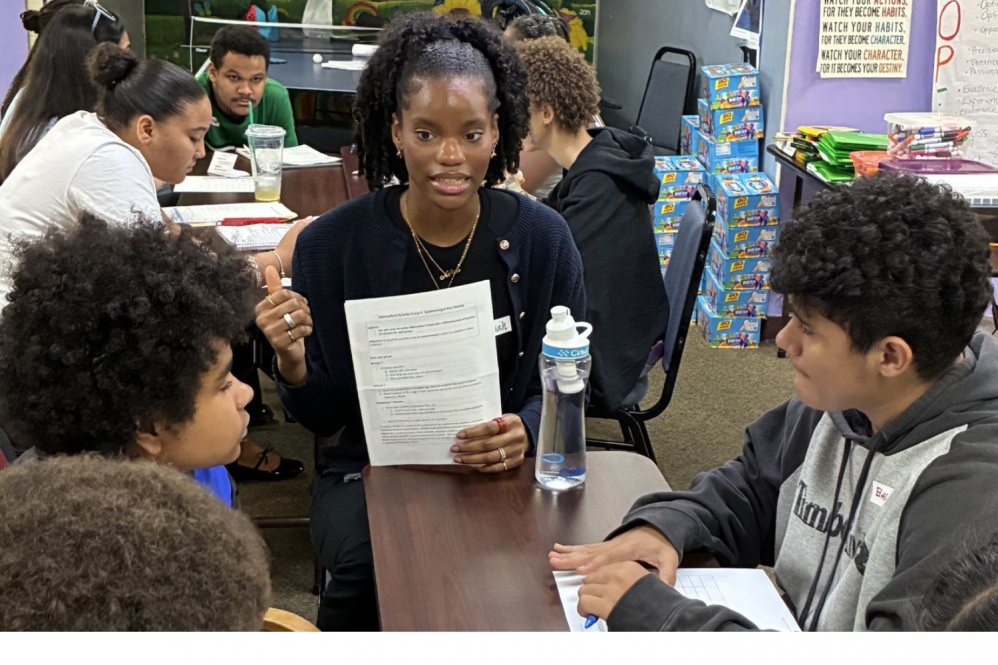
After remarks by the sanitarians and a brief introduction to public health, the teens were introduced to the Quinceañera case before rotating through four interactive stations where they learned about foodborne illness, calculating an odds ratio, and the roles of an epidemiologist and sanitarian in a food illness outbreak. The stations were facilitated by Rubin, Grannell and two CT AHEC summer interns, Bryana Wilson (Yale University) and Emily Silva (Central Connecticut State University).
“The groups responded well! They leveraged personal strengths and knowledge, created a collaborative environment, and it was clear they were interested not just in solving the problem, but also in learning more about public health,” said Grannell.
Renee Lavoie, PHIG’s administrative program coordinator, adapted the Quinceañera learning activity for the day’s format and encouraged the facilitators to talk about themselves, their schooling and career pathways, as well as any experiences they had around managing foodborne illnesses.
Lavoie also administered a pre/post activity survey to the 10 teenage participants. “The pre-activity survey found that six participants had never heard of a sanitarian, and eight knew nothing about an epidemiologist,” she said. “By the end, nine knew what a sanitarian does, and two indicated they were now considering a career as a sanitarian. We were also pleased to see that eight participants now understood the role of an epidemiologist,” she added.
When asked what went well, the teens cited teamwork, group work, and how they were treated in the groups—with eye contact and calm voices. “One student identified Amitan and Naliah’s talk about public health and their work as sanitarians as something they felt went very well,” said Lavoie.
Kim Rosa-Gionfriddo, youth development program coordinator at Pathways/Senderos Center, a nonprofit youth development program in New Britain, said it was a “fantastic” experience for the teens. “They learned about the career field of public health. They also were able to take part in a simulation that was engaging to them. I was happy there were two student facilitators who were closer to the teens’ age so they could hear about their experiences and see what is attainable,” said Gionfriddo.
The teens also learned that CT AHEC has a healthcare-focused online career resource. “We wanted them to know about our H.O.T. Guide (https://www.healthcareersinct.com/) because it provides information on public health careers as well as almost 80 health and biotechnology careers for which there is an educational program offered in Connecticut,” said Quesada. “The guide contains job and typical workplace descriptions, estimated annual salaries, and where to get the necessary education and training in Connecticut.”
The PHIG program funds were awarded to CT AHEC by the Connecticut Department of Public Health to provide public health education and careers programming for high school and emergency medical technician college students. “Starting in September, we will be working with four high schools–ACES Chase Academy (Waterbury), The Gilbert School (Winsted), Highville Charter School (New Haven), and New London High School Multi-Magnet Campus–for our high school pathways program, and with Connecticut State Community College for the EMT and paramedic public health program,” said Quesada.
“After such a successful collaboration with health department representatives and seeing how much the teens learned about public health and careers in the field, we look forward to continuing our collaboration with the health departments where the PHIG schools are located,” added Quesada.
So which food caused the outbreak? Almost all of the teens picked green salad, the correct answer, based on their odds ratio calculation and what they had learned about foodborne illness.
For more information about CT AHEC and PHIG visit: https://health.uconn.edu/connecticut-area-health-education-center-network/