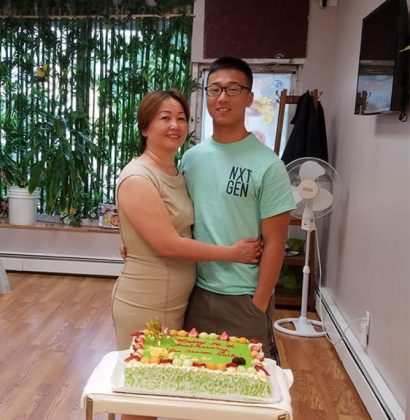
When he was 12, Nick Angell-Huynh started working at his mother’s nail salon. Anh Thi dedicated her life to the business, putting in more than 80 hours a week to keep it afloat.
“As I worked with her, I realized that her weeks were spent on all these manual tasks,” Angell-Huynh says of the multitude of operational duties required to run a successful salon: booking appointments, scheduling and paying staff, dealing with no shows, handling marketing and promotion, and on and on. “All these different hats, by herself, with very little help.”
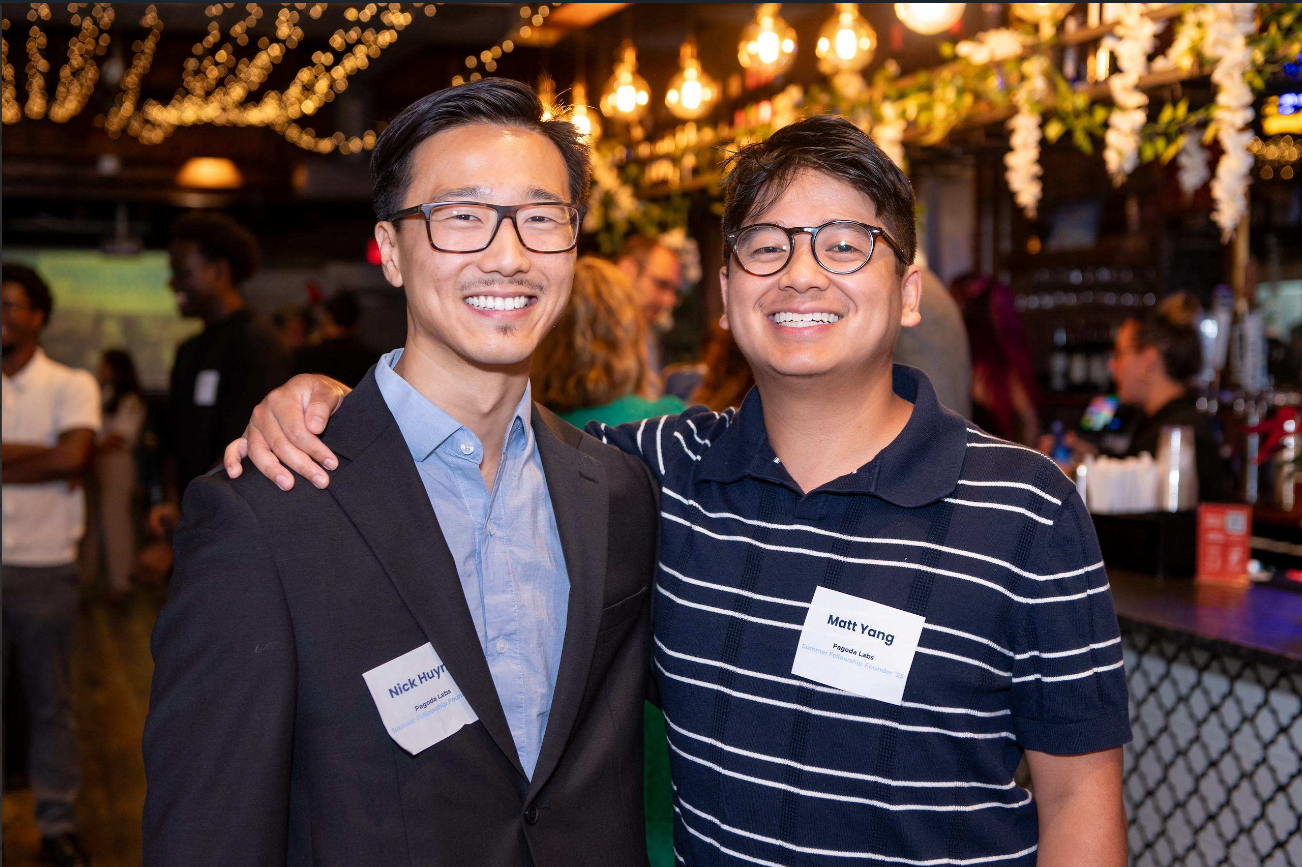
More than 15 years later, Four Seasons Nails has closed. But Angell-Huynh and his business partner Matthew Yang, both 2020 College of Engineering graduates, are keeping small business owners like Thi at the heart of their startup, Pagoda Labs, an all-in-one operating system that streamlines websites, booking, payments, marketing, and more for beauty and wellness businesses.

Pagoda estimates owners are losing up to a day a week and 15% of revenue to administrative tasks.
“We’re designing Pagoda to be such a great experience that they don’t have to think about it,” says Yang, Pagoda’s CEO. “We want to reduce their operational burden and help them build more resilient, profitable businesses.”
Launched in 2025 and built in their apartments and co-working spaces across Boston, Pagoda Labs recently added a chain of med spa franchises to its roster of 15 clients across the U.S. and has grown by 25%, month over month. The startup is the latest in a string of ventures for the founders, supported in part by the robust entrepreneurship programs available to UConn undergrads.
“Thinking back on my time at UConn, it’s hard to believe the progress that we’ve made,” Yang says.
Customer-Obsessed
Angell-Huynh, a computer science major, and Yang, who studied civil engineering, both arrived at UConn as first-years interested in forming their own businesses.
They took advantage of offerings across UConn’s entrepreneurship ecosystem to test their ideas and hone their innovative mindsets, from courses to mentorship programs, Innovation Quest, the Get Seeded pitch competition, and more through the School of Business, the College of Engineering, the Connecticut Center for Entrepreneurship and Innovation (CCEI), and the Werth Institute for Entrepreneurship and Innovation.
“UConn just gave me so many opportunities to flex my entrepreneurship muscles,” says Yang.
As roommates their senior year, Angell-Huynh and Yang built a startup called Robin Food to help bakeries track food waste data to reduce shrinkage. The project— which won $1,000 through Accelerate UConn, UConn’s National Science Foundation Innovation Corps program, and $500 through Get Seeded — was halted when the COVID-19 pandemic shuttered restaurants overnight.
All these experiences honed their abilities to evaluate a business concept, develop a plan, communicate their ideas, and “fixate on a problem that is worth solving,” as Yang puts it.
The former roommates came together to start Pagoda after they’d both spent time in the workforce. Last summer, Pagoda participated in CCEI’s Summer Accelerator, an eight-week, immersive program.
There, Angell-Huynh and Yang refined their pitch, learned about fundraising, and accessed legal services to get Pagoda off the ground. Perhaps most critical, the Accelerator challenged the founders to get out of the classroom and into salons, learning from owners about their hurdles and needs. Yang got his hair cut at a different salon every other month to chat with their customer base.
The knowledge gained and the pressure-testing the team performed through the Accelerator means Angell-Huynh and Yang are well-positioned to balance the company’s growth with the customer-first mindset that sets them apart from their competitors.
“As companies scale, some stop being obsessed with delivering the best possible experience, the best possible product for the customer,” says Angell-Huynh, chief technology officer. “Obviously, it’s a business, we are trying to get our numbers up. But what I want to build towards is that experience that people love.”
The recently signed Chicago-based med spa chain cited that experience as the reason they chose Pagoda over well-established competitors.
“When they picked us, they were like, ‘This is the group I want to work with, because not only are they a better user experience, but I like their team, I like what they stand for, the direction they’re going,’” says Angell-Huynh. “That meant a lot for me. It was like, yeah, we’re doing the right thing.”
Yang, whose mother is an accountant with her own small business, says, “At the end of the day, we’re building for a customer base that is represented by our moms. We want to make sure that we’re building something that is really valuable and really intuitive for them to use.
“We are being extremely customer-centric to enable the best possible experience, because our customer base wants to be behind the chair, interacting with clients.”
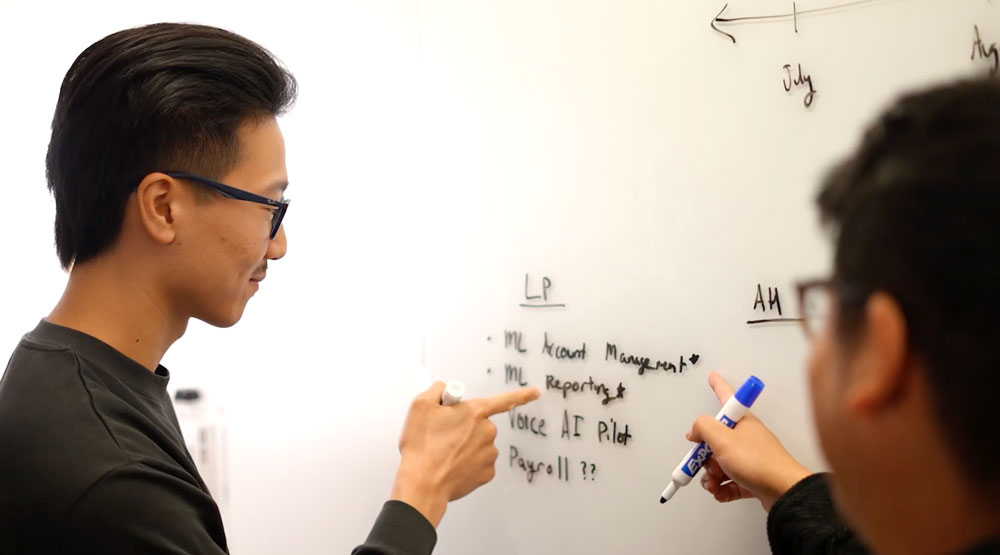

‘He wasn’t trying to sell me anything.’
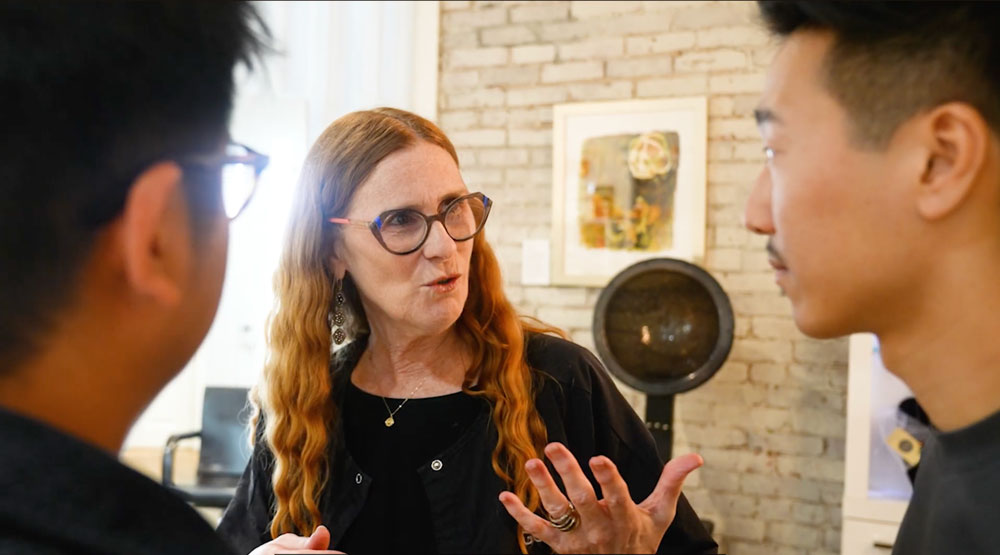
On a sunny Wednesday in June, the Pagoda team walked into HC Studio in Brookline, Massachusetts, greeted warmly by manager Jen Healy.
A year prior while in the Summer Accelerator, Yang walked through the same doors on a cold call to talk to Jen and her sister, salon owner Susan. The Healys quickly became valuable consultants on how Pagoda’s AI-native software could best serve the salon niche.
“What I loved about Matt is that he was talking about solutions for me,” says Susan Healy. The salon she’s owned for 26 years is the largest operation Pagoda currently serves, by staff count and by volume.
“He wasn’t trying to sell me anything,” she continues. “He wasn’t trying to tell me about all this fancy technology, and he asked me, what do you feel that you need?”
At the top of her list was a new website, which Pagoda created and launched in October 2025.
“Pagoda takes the whole customer experience into consideration. It’s not just, ‘Oh, we’re creating a new technology,” Healy says. “It’s very specific to the salon industry.”
In June, Healy said she had already seen a significant increase in Google referrals in the eight months since Pagoda redesigned her website, optimizing it for search engines.
She’s looking forward to using Pagoda’s system to dive deep into the salon’s data, identifying growth opportunities based on the program’s AI insights.
“I think the way they’re merging technology with the human experience is probably the most important element of Pagoda that I find sets them apart and aligns with my vision as a salon owner,” Healy says. “I believe I got to where I am today because of the human element, and I don’t ever want technology to take that away.”
The human element at the center of HC Studio, and of Pagoda, is also what makes UConn and its entrepreneurship programs so valuable, the founders say.
Beyond the formal programming, faculty, and staff, their fellow students — several of whom now run their own successful startups — challenged the founders to think bigger.
“When it comes to the people you’re surrounded by at UConn … You’ll get everyone from different walks of life,” Angell-Huynh says. “There’s a very, very driven, smart population that is going to change the world.”

Big ideas come from out of the blue.
Behind every breakthrough, there’s a story of creativity and commitment. One where individuals come together, fueled by a shared vision and sustained by imagination and persistence.