UConn Health has reached a major milestone in cancer care with the launch of its CAR-T cell therapy program, making the Carole and Ray Neag Comprehensive Cancer Center the first program to bring this advanced cancer treatment to patients in the Hartford County area.
The program establishes UConn Health as an accredited treatment center for CAR-T cell therapy, joining Yale as one of only two centers in the state offering the innovative treatment. Its launch follows nearly two years of extensive preparation involving clinical teams, nursing, pharmacy, laboratory services, information technology, finance, quality and hospital leadership.

“This is truly cutting-edge, life-changing therapy,” says Dr. Kapil Meleveedu, director of UConn Health’s Blood and Marrow Transplant and Cellular Therapy Program. “CAR-T cell therapy has been one of the most significant advances in the treatment of blood cancers over the past decade. Bringing it to UConn Health means more patients can access this highly specialized care closer to home.”
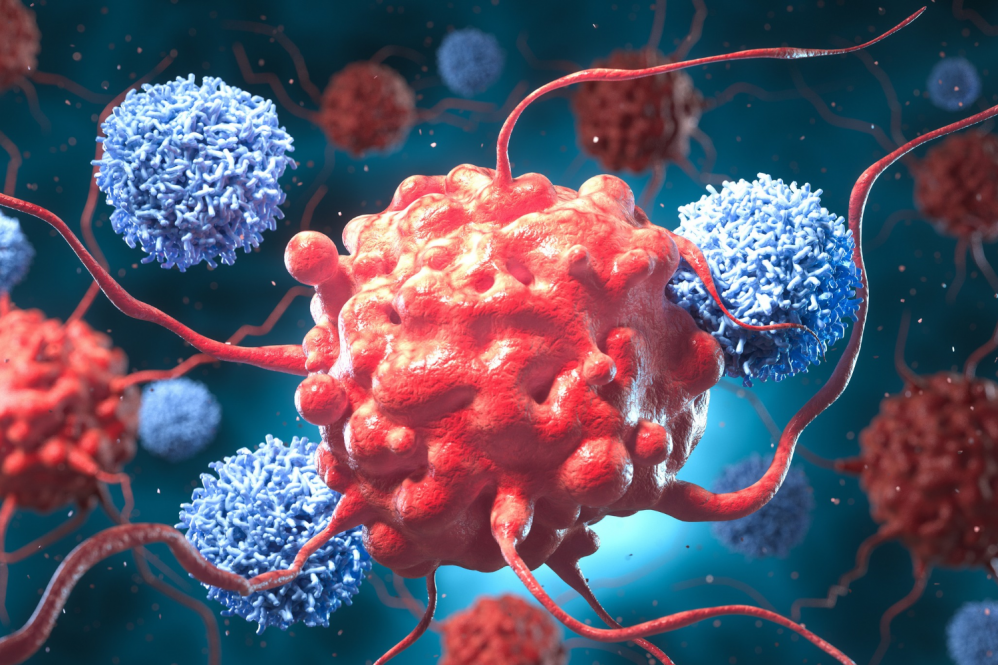
Unlike traditional medications, CAR-T therapy uses a patient’s own immune cells to fight cancer. T cells, a type of white blood cell that helps protect the body, are collected from the patient’s bloodstream and sent to a specialized manufacturing facility. There, the cells are genetically modified to produce chimeric antigen receptors, or CARs, that enable them to recognize and attack specific cancer cells.
The modified cells are multiplied and returned to UConn Health, where they are infused back into the patient. Because the cells can continue to grow and function inside the body, CAR-T therapy is sometimes described as a “living drug.”
“We are taking the patient’s own immune cells and training them to identify and attack the cancer,” Meleveedu says. “Once they are returned to the patient, these cells can act like an internal army that continues to search for its target.”
The first CAR-T therapy was approved by the U.S. Food and Drug Administration in 2017. Today, the treatment is approved for several blood cancers and may be an option for certain patients whose cancer has returned or has not responded to other therapies.
For some of these patients, CAR-T therapy has changed the outlook dramatically. Meleveedu says long-term data show that certain patients who once had few remaining treatment options are now achieving durable remissions, with some potentially cured of their disease.
“These are patients who, historically, may have had a life expectancy of only months because other treatments were no longer working,” Meleveedu says. “CAR-T therapy has given many of them a new opportunity and, in some cases, long-term survival. That is what makes this advancement so meaningful.”
The preparation required to become an authorized treatment center has been extensive. Every step, from collecting and transporting cells to safely receiving, storing, and administering the finished therapy must meet rigorous standards. Clinical teams also completed training and practice runs to ensure they are prepared to manage every part of the patient’s care.
“This has been a truly multidisciplinary effort,” Meleveedu says. “So many people across UConn Health recognized the value of bringing this treatment here and worked together to make it possible. After nearly two years of preparation, we are ready to provide this therapy safely and effectively.”
Patients receiving CAR-T therapy are monitored closely because the treatment can produce serious side effects. One potential complication is cytokine release syndrome, an intense immune response that can cause fever, body aches, low blood pressure, or difficulty breathing. Some patients may also experience temporary neurological effects, such as confusion or difficulty finding words.
“Our first priority is always safety,” Meleveedu says. “We know these therapies can work. Our responsibility is to make sure we have the expertise, systems and support in place to guide patients through treatment as safely as possible.”
UConn Health already has its first patient moving through the CAR-T process, beginning with the collection of the patient’s T cells. Manufacturing typically takes several weeks, with the infusion scheduled after the modified cells are returned.
The launch also expands access to advanced cancer care for patients throughout central Connecticut and surrounding areas. Until now, many patients seeking CAR-T therapy have had to travel farther from home, creating added burdens during an already difficult time.
“Patients facing a serious blood cancer should not have to leave their community or travel long distances to receive this level of care,” Meleveedu says. “They can now come to UConn Health for a consultation, learn whether CAR-T may be appropriate for them and receive this highly specialized treatment from a team close to home.”
“This program is emblematic of UConn’s commitment to enabling access to top-notch, cutting edge cancer care for patients in the state of Connecticut,” says Dr. Margaret Callahan, Professor of Medicine and Chief of the Hematology and Oncology Division at UConn Health.
While CAR-T therapy was first developed for cancer, researchers are now studying whether the same technology could be used to treat autoimmune and neurological conditions. Meleveedu says that potential makes cellular therapy an especially promising area of medicine.
“This is more than a new treatment, it is a new technology that has the potential to transform how we approach many diseases,” he says. “As an academic medical center, UConn Health is at the forefront of advances like this. Most importantly, it gives us another powerful way to help patients who urgently need new options.”
“As an academic medical center, UConn Health has a mission not only to treat cancer, but to innovate and advance cancer treatment, so that our patients today have better options than what was available in the past. Drs. Kapil Meleveedu and Swarup Kumar, along with their multidisciplinary teams have been tireless in working to advance the treatment options available for patients here at UConn, ” Callahan says.
“Bringing CAR T-cell therapy to UConn Health has been a truly multidisciplinary effort,” says Dr. Meleveedu. “Our hospital leadership made this program a priority and provided the support and timely decisions that allowed us to launch ahead of schedule to meet a patient’s needs. Andrea Moran, BMT/cell therapy operational program director and our cell therapy team coordinated the many steps needed to prepare the program, with vital contributions from our nursing, pharmacy, lab, IT, finance, contracting, and Cancer Center teams. Their work has made it possible to offer this treatment to patients here.”