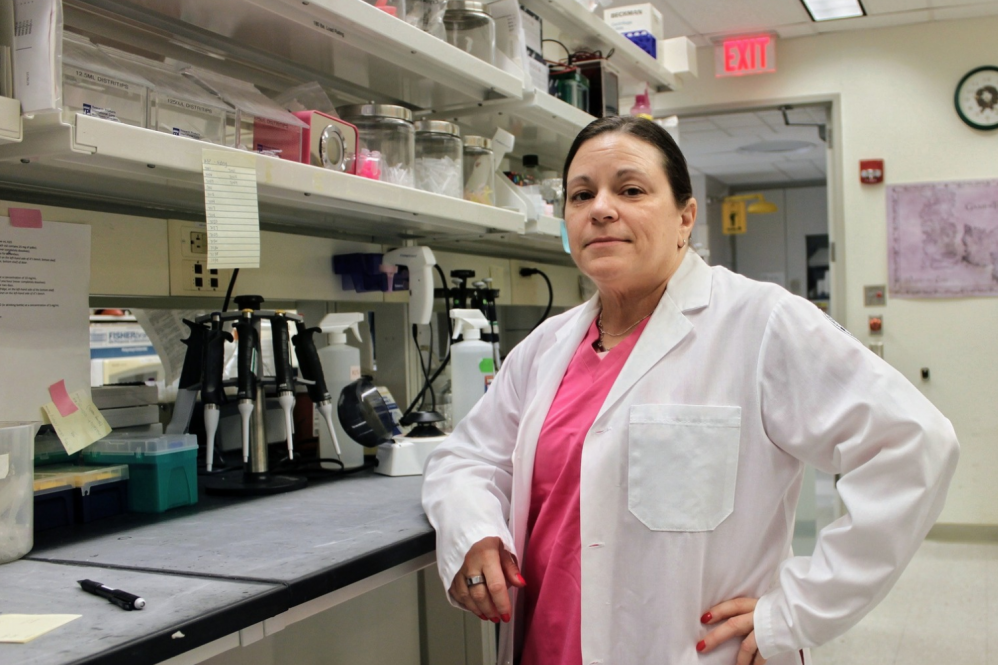
If you passed Dr. Jessica Costa an assistant research professor in the Center for Molecular Oncology at UConn Health in the hallway, you might never know she was living with metastatic breast cancer.
She goes to work, takes part in everyday life and, on most days, feels much like herself. But each day also includes treatment for breast cancer that had already spread to her bones when she was diagnosed.
“I have this incurable disease, but my day-to-day life is really not that different,” says Costa, “For the most part, I’ve been able to continue doing just about everything else that I was able to do before the diagnosis.”
Costa wants people to understand that both things can be true: someone can be living with a serious illness and still look and feel well. Sharing that experience, she hopes, can help others better understand metastatic breast cancer and the people living with it.
For Costa, the path to diagnosis began with back pain. Learning that she had breast cancer and that it had spread to her bones came as a surprise.
Metastatic breast cancer, also called stage IV breast cancer, is cancer that has spread beyond the breast and nearby lymph nodes to another part of the body, such as the bones, liver, lungs, or brain. Some people develop it after being treated for an earlier breast cancer. Others, like Costa, learn that the cancer has already spread when they receive their first diagnosis.
Even when it spreads to the bones, it is still breast cancer. The tumors are made up of breast cancer cells, and doctors choose treatments that target those cells.
In Costa’s case, the cancer weakened her bones and contributed to fractures. Her care includes medication to help protect her bones, along with treatment to control the cancer.

Dr. Daniel Morgenstern, her oncologist at UConn Health’s Carole and Ray Neag Comprehensive Cancer Center guides that care based on the particular features of her disease. Costa’s cancer is hormone receptor positive and HER2 negative. That means hormones, including estrogen, can help the cancer grow, while another protein called HER2 is not elevated in the way it is in HER2-positive cancers. These features help doctors determine which treatments may work best.
Costa takes medications that limit the cancer’s ability to use estrogen. Her treatment has also included a targeted medication from a class called CDK4/6 inhibitors, which helps slow cancer cell division and growth.
For her, treatment looks different from what many people expect.
She has not needed surgery, radiation, or intravenous chemotherapy as part of her treatment plan so far. Instead, she takes medication in a pill form each day and receives an injection to help protect her bones. Having an oral treatment plan has allowed her to continue working without an extended leave or regular hours spent receiving infusions.
That does not mean treatment has been easy or free of side effects. There have been days when she has not felt well, and her medications have needed adjustments.
But overall, she says, treatment has helped her feel progressively better.
Her background in cancer research gave her some familiarity with the medications being discussed and helped her ask questions. Still, she has had to learn what it means to live with cancer herself: to take treatment each day, manage its effects and adjust when her care changes.
“There’s something special about caring for a patient who is also a scientist. Her understanding of cancer biology and interest in the latest research bring a thoughtful perspective to our conversations and make her care a true collaboration,” says Morganstern.
She also has learned how easily people can misunderstand an illness they cannot see.
Without some of the outward signs people associate with cancer treatment, Costa can appear well even while she is managing an ongoing disease. She wants people to recognize that someone’s appearance does not tell the whole story.
There may be times when a person with metastatic breast cancer looks or feels sick, she explains, and other times when they do not. They need understanding, care, and support through both.
Metastatic breast cancer is generally considered incurable, but it is treatable. The goal is to control the cancer, manage symptoms and help people live as well as possible for as long as possible. Some people live with the disease for years, and treatment may change over time depending on how the cancer responds.
For Costa, advances in treatment are a source of hope. She has seen options continue to evolve since her diagnosis, underscoring why ongoing research matters to people living with metastatic disease.
She recently began working with METAvivor, an organization focused on metastatic breast cancer research and advocacy. By sharing her own experience, she hopes to bring more attention to a part of breast cancer that can be less visible and to the people whose treatment continues long after the initial diagnosis.
Costa’s life includes cancer, but it also includes the routines and experiences she enjoyed before it. She hopes her story helps others understand that living with metastatic breast cancer can mean ongoing treatment alongside a full, active life, and that feeling well does not lessen the need for support.