Elementary school teachers often put such care into creating their classroom libraries: shelving multiple copies of each book, stringing fairy lights around them to set the mood, situating beanbag chairs and magic carpet squares strategically to encourage students to settle in.
Now imagine that cozy nook turned into a battleground – parents squabbling over the appropriateness of even the most well-loved, spine-broken-in copies of classics, and outside organizations demanding titles be pulled from shelves and topics from curriculums.
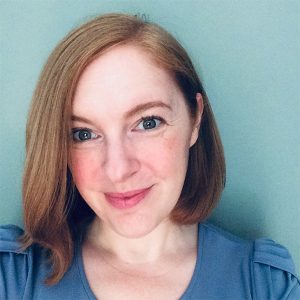
The last time UConn associate professor Victoria Ford Smith taught the University’s children’s literature course, she noted that her English students, many of them teachers-in-training, already were thinking about the resistance they’re likely to encounter one day.
“I’ve had students say things like, ‘I would be afraid to have this in my classroom library,’” she says. “They’re 19, and they’re anticipating complaints from parents or outside organizations. I’m sometimes surprised by how uncomfortable they are. But those moments are great, because I can say, ‘Why do you think this is inappropriate? What child are you imagining? Can we think of a child for whom this would be completely appropriate?’”
Their instinct to self-censor reflects the findings of “Reading in a Permacrisis: Building Critical Literacies with Children’s Literature,” a collaboration between researchers at UConn and the University of Glasgow who surveyed teachers and librarians on censorship and book bans and developed for them a toolkit to help before challenges arise.
“We all think about this when we put together a college syllabus, what pressures our own students will be under when they are in classrooms,” Smith says. “For me, this project was a great way to talk to people who are in the classroom, hear their experiences, and learn about the ways censorship is happening.”
Coping with Censorship
About 18 months ago, English professor Katharine Capshaw says she partnered with UConn’s Global Affairs to develop the project with Smith and Anna Mae Duane, director of the UConn Humanities Institute and an English professor. They immediately pulled in colleague Melanie Ramdarshan Bold from the University of Glasgow, and this spring brought on UConn Ph.D. student Amber Weinstock.
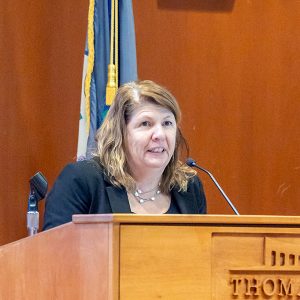
The group used their networks to find 14 K-12 teachers, school librarians, and public librarians in the U.S. and United Kingdom, and interviewed them individually and in small groups to hear about their encounters with censorship and book bans. The educators also participated in two collaborative workshops.
“I had thought the extremes of book banning were just a U.S. issue, but it is an issue in Scotland too,” Duane says. “The emphasis over there is on different things, but there exists the sense that if a parent is unhappy, it could become a legal battle.
“Another takeaway,” she continues, “was how often some of these battles are not coming from parents at all. They come from organizations like Moms for Liberty, which have large legal budgets. Sometimes there’s no children belonging to anyone at the school, and these organizations still will pursue a complaint.”
The group further found that educators report feeling isolated, so they’re electing to self-censor reading lists and book availability to preemptively sidestep problems, even in places where they’ve traditionally enjoyed widespread parent and community support.
Not unexpectedly, the project found that books dealing with gender and sexuality see the most frequent challenges, along with those that contain violence and, mostly in the U.K., migration and refugee status. Books that raise the issue of death also often are objected to – even for teen readers.
“One of the things the teachers said when we surveyed them was their communities were what’s sustaining them, whether they just came out of school and have a cohort of peers or they have a cohort within a school system that can help them work through procedures and approaches,” Capshaw says. “We heard that over and over again, that those networks were vital. So, our first goal from this is to support them.”
Toolkit Offers Tips
Bold, from the University of Glasgow, co-authored a volume in the book series, “Children’s Classics, Critically,” which seeks to offer deeper, more thematic readings of children’s classics, Capshaw says. She took the children’s classic, “A Bear Called Paddington,” and read it as the story of a refugee who ascends the social hierarchy.
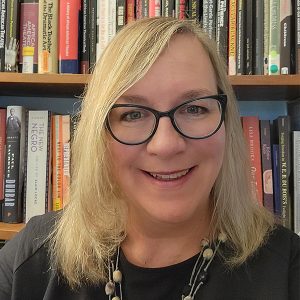
“‘Paddington’ is such an interesting example because it’s a book about a refugee that doesn’t look like a book about a refugee,” Smith says. “Since we’ve done this project, I’ve taught it twice in my UConn classes to think about how you can start these conversations in your classroom from texts that might feel a little easier to introduce, that might feel a little less risky but still open up opportunities for thinking about these heavy subjects.”
The team shared the “Paddington” example with the teachers and librarians in their survey and learned that many educators already had adopted the technique. Teachers told them they also frequently ask students to choose their own books for assignments, which gives the double benefit of agency to the student and an explanation to an unhappy parent who then can query their child about the selection.
It’s one of the tips in the toolkit that Weinstock created for educators and expects to soon disseminate more widely.
In it, she includes current events and news about censorship, legal history and court cases, along with sample policies and procedures for school systems that don’t already have them and a guide for educators on walking a parent or complainant through their decision-making process.
“This is also a resource for teachers to justify book choices for themselves, to scope out their own biases on what they deem appropriate,” Weinstock says, noting that she’s also working on a way to give teachers access to academic scholarship about censorship and text selection, especially those who’ve just graduated from college.
Veteran teachers tend to be more confident in their abilities and in confronting an upset parent, the group found, while those who are early in their careers often find similar confidence if they can stay connected to the latest academic research on children’s literature.
Young people need to see themselves in the stories they read, and having access to them helps them feel affirmed and empowered. — Amber Weinstock, UConn Ph.D. student
“During this time of book bans, challenges posed by AI, falling literacy levels, and the creep of fascist politics that threaten democratic life, particularly free speech and intellectual freedom, thinking and talking about this is important,” Weinstock says of censorship in general. “Young people need to see themselves in the stories they read, and having access to them helps them feel affirmed and empowered.”
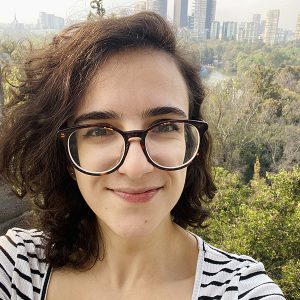
“It’s interesting to be in this field and think about how, when you go into a classroom, everyone’s bringing their own constructs of what childhood happens to be for them,” Capshaw says. “Some of my students would really object to any suggestion that children aren’t innocent and carefree. Then other students will come in with a wealth of experience and understanding about the complexities of economic injustice, racism, and the need for climate justice and are looking to teach those kinds of texts.”
Smith agrees and suggests that in today’s polarized world, children and their presumed innocence can be weaponized in speech and action.
“‘We can’t do this because we have to protect the children,’ ‘We can do that because we have to protect the children,’ and I think teachers already know that’s a false statement, that actually the very things people are doing to ‘protect children’ are causing many children harm,” she says.
Banning books and ideas is one of those things, Duane says, even as teachers have become “smart and savvy” in how they manage their students’ literacy needs and come to expect each academic year will bring new challenges.
“Some books will make you uncomfortable, and that is part of being a good citizen. That’s part of being in a community. That’s part of being able to tolerate give and take with other people, by engaging with their stories and thinking about them,” she says. “It’s a lifelong practice to make yourself uncomfortable because the world requires it of us. You can’t only tell the story you want to hear. It’s a very small world to live in.”