UConn College of Engineering’s Vergnano Institute for Impact (VII) hosted the fifth annual Queer Science Conference on October 17, 2026, with fun hands-on science activities geared towards high schoolers from across Connecticut.
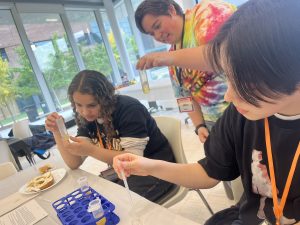
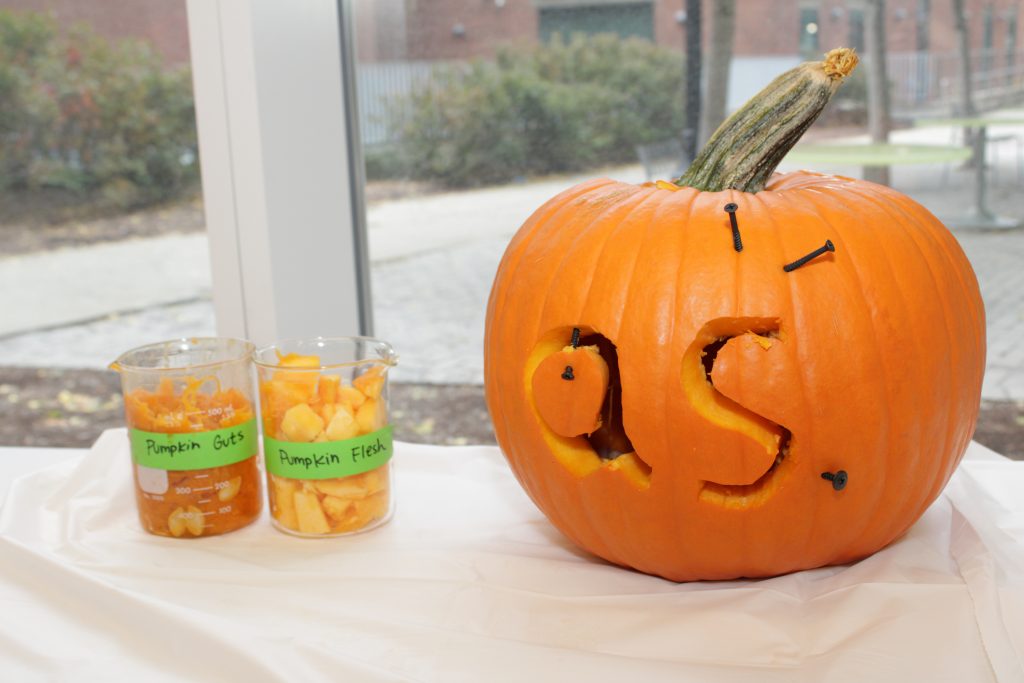
Previously held in June, this year’s event moved to the fall and incorporated a seasonal twist – DNA extraction from a pumpkin, led by Nicole Tillquist ‘23 Ph.D., a research scientist in the genomics lab of professor Rachel O’Neill.
“They could see the DNA goo, which is pretty exciting,” says Tillquist.
Tillquist still fondly recalls doing a similar experiment in high school, when she extracted DNA from her own cheek swab.
“I took it home and I was all excited about it…I guess it makes sense why I’m into DNA now,” she says. “Hopefully these students will go home curious: I wonder what else I could get DNA from?”
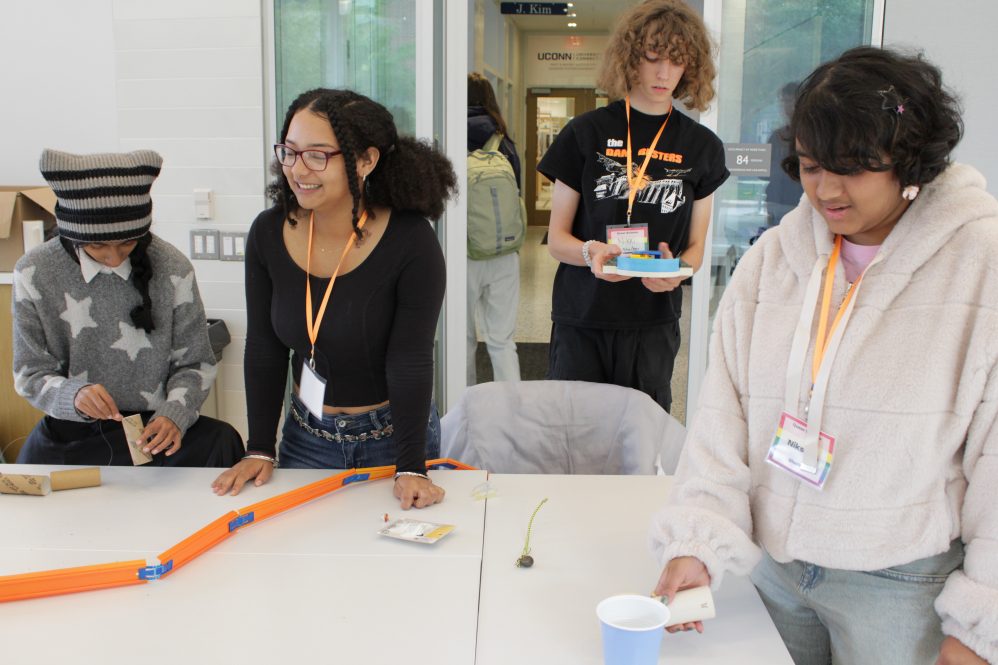
Attendees strolled beneath UConn’s vibrant fall foliage to learn more about various research and career paths in STEM fields. They got a personal tour of UConn’s world-class pathobiology facilities, where scientists conduct research and testing for a variety of human and animal diseases. They were introduced to the world of engineering through a Rube-Goldberg-machine-building competition. Non-squeamish students had the opportunity to conduct a dissection to learn more about neuroscience (a scalpel-free option was also available).
The cherry on top was an interactive ice cream–making demo at lunchtime – using the wonders of chemistry (liquid nitrogen) to flash-freeze fresh cream. (Mooove over, Dairy Bar?)
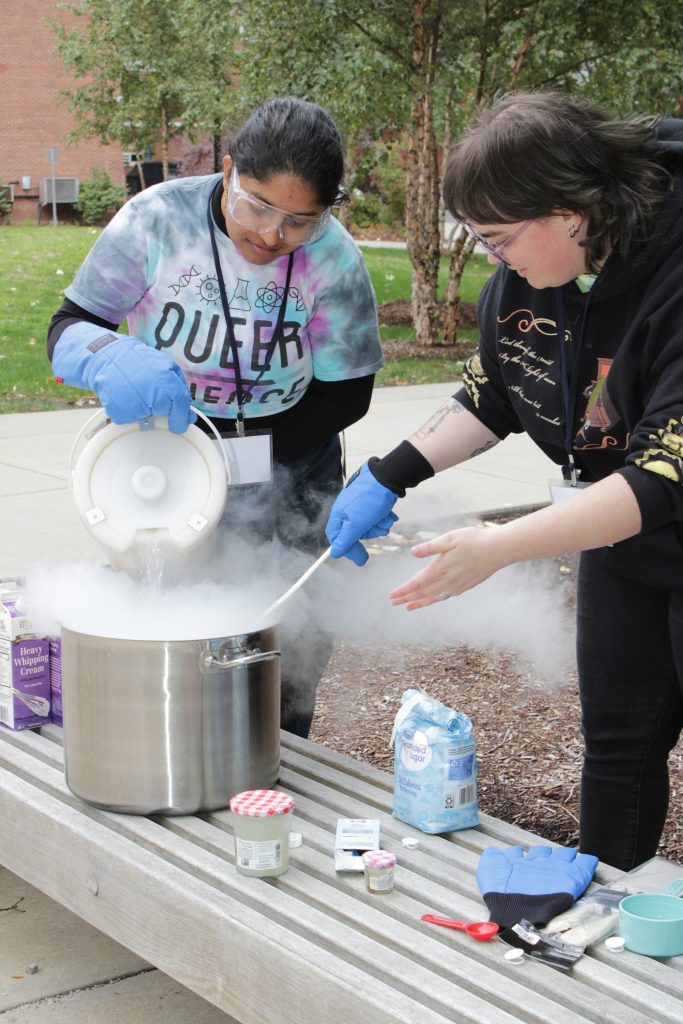
“Liquid nitrogen has ended up being a large part of the conference, because students really like it,” says Maggie Willson, a doctoral researcher in the chemistry lab of professor J. Nathan “Nate” Hohman. “Can’t blame them – it’s a lot of fun, and it’s really good.”
This year’s conference drew 18 students from high schools across Connecticut, who were able to attend at no cost thanks to the event’s sponsorship from the VII.
What exactly is “queer science”? Well, it can be any science conducted by a queer researcher. (Allies are also welcome to attend QS.) The goal of the conference is to show young queer and allied people a sampling of the exciting careers in STEM fields that could be available to them. It provides an opportunity to counter the stereotypical image of a “scientist” as a straight, white, cisgender man – which the academy tends to consider the “default” identity – and invite students of other identities to imagine themselves joining these fields.
Planning the conference is a labor of love for the organizing team, who are all queer-identified STEM researchers at UConn.
Michael Vaccaro ‘21, ‘25 Ph.D., the event’s chief organizer, has helped plan Queer Science every year since he was a doctoral student in the Department of Civil Engineering – he’s now an assistant research professor in the same department.
“It’s really nice to have the community and be able to inspire some young kids,” says Vaccaro. “I’m happy if students can take away anything from the event – whether it’s, ‘Oh, I really like neuroscience and I want to study that when I graduate,’ or ‘Maybe I don’t want to go into any of these disciplines.’ Whatever they get out of it, that’s what makes me happy.”
A fellow long-timer on the planning committee, Tillquist adds, “I keep doing it because I like seeing how excited the students get. When they show up in the morning, they’re so shy, and then you can see a few of them will start to talk to each other, and then they’ll start opening up. And I think us just being there, it creates a ‘normal’ environment – we are all in science, but we’re all queer, and we exist and have normal lives.”
“There’s a lot of heart in it,” says Willson. “And it has a very concrete goal. It’s not, let’s fix the world. It’s let’s give these kids a fun day, so they can see other queer scientists. It’s very practical – and it’s very fun.”
Know a high schooler who might be interested in attending next year’s Queer Science event? Fill out the interest form here.