UConn researchers are wrapping up another year worth celebrating. Some research news stories traveled far, attracting national attention and highlighting state and federal investment in UConn research excellence. But others stayed closer to home. 2025 saw breakthroughs in understanding the science of music, supporting pandemic recovery, nurturing Connecticut’s social workers, and more.
Here are ten stories worth revisiting from UConn research in 2025, spanning programs, schools, and colleges and showcasing the diversity and creativity of University researchers.
Advocating for Disability Inclusion in Graduate Study: While 19.4% of undergraduate students identify with disabilities, only 12% of graduate students do. A multi-institutional team is embarking on a mission to understand the barriers to graduate study that exist for disabled students, and to identify proactive strategies to increase disability representation. Erin Scanlon, assistant professor-in-residence in the physics department, is leading the UConn portionof this joint, NSF-funded $1.3 million project (with the University of Wisconsin and University of Illinois) investigating the challenges disabled graduate students face in the field of physics.
“We are really trying to combat ableism in the academy and physical science community in higher education,” says Scanlon. “The physical science community has not always been supportive. We’re trying to understand the experiences of disabled people, so we can create opportunities for the disabled and so physicists can be aware and be anti-ableist in their own practice. We want to make sure that anyone who can do science is able to do science.” Read more.
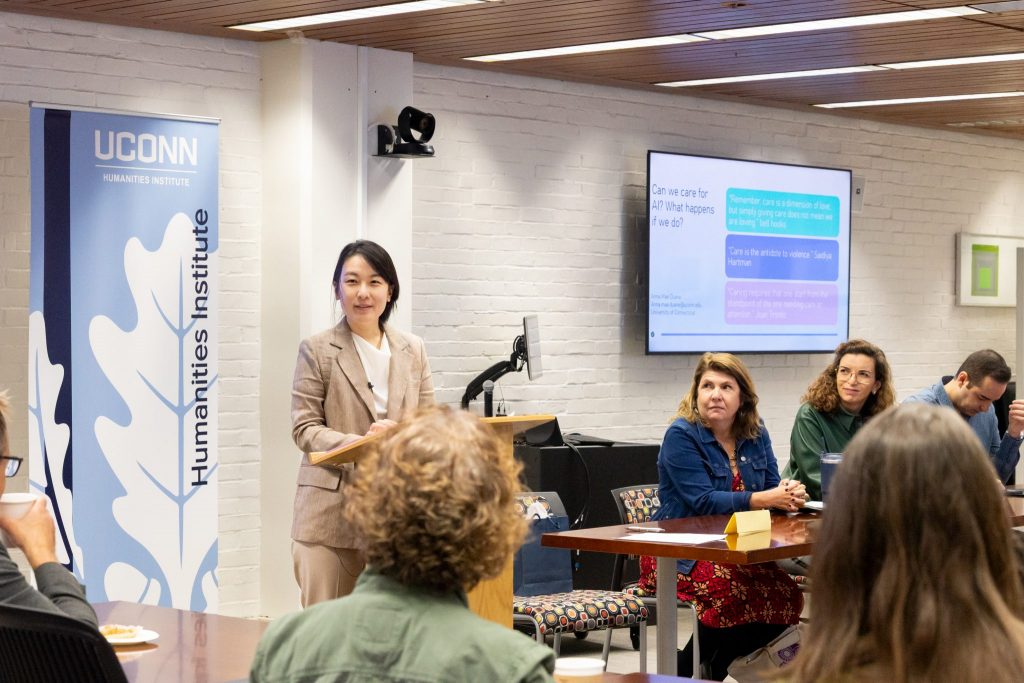
Bringing a Humanities Approach to AI: An international collaboration between researchers at the UConn Humanities Institute (UCHI) and the University of Rabat in Morocco is investigating how cultural and linguistic differences shape the creation and use of AI. UCHI Director Anna Mae Duane argues that as AI becomes more prominent in all sectors, the need for critical, humanities-inflected engagement with the technology will only become more vital.
The “Reading Between the Lines: An Interdisciplinary Glossary for Human-Centered AI” project spanned all of 2025, including a series of podcasts with interdisciplinary experts weighing in on these critical AI conversations and culminating in a cross-campus, in-person symposium in the fall. Read more.
First-Year Student’s Cancer Research Gains Global Recognition: Tehreem Fatima’s ‘28 (CLAS) independent research on glioblastoma has been accepted into dozens of academic conferences – a major accomplishment for anyone, especially an undergraduate who has just completed her first year of college.
Fatima’s work focuses on immune checkpoint genes or molecules that glioblastoma tumors use to evade detection by the immune system. By analyzing patient data, she aimed to identify correlations among gene expression, patient survival, and chemotherapy effectiveness. Her findings suggested potential avenues for improving glioblastoma treatment strategies. Read more.
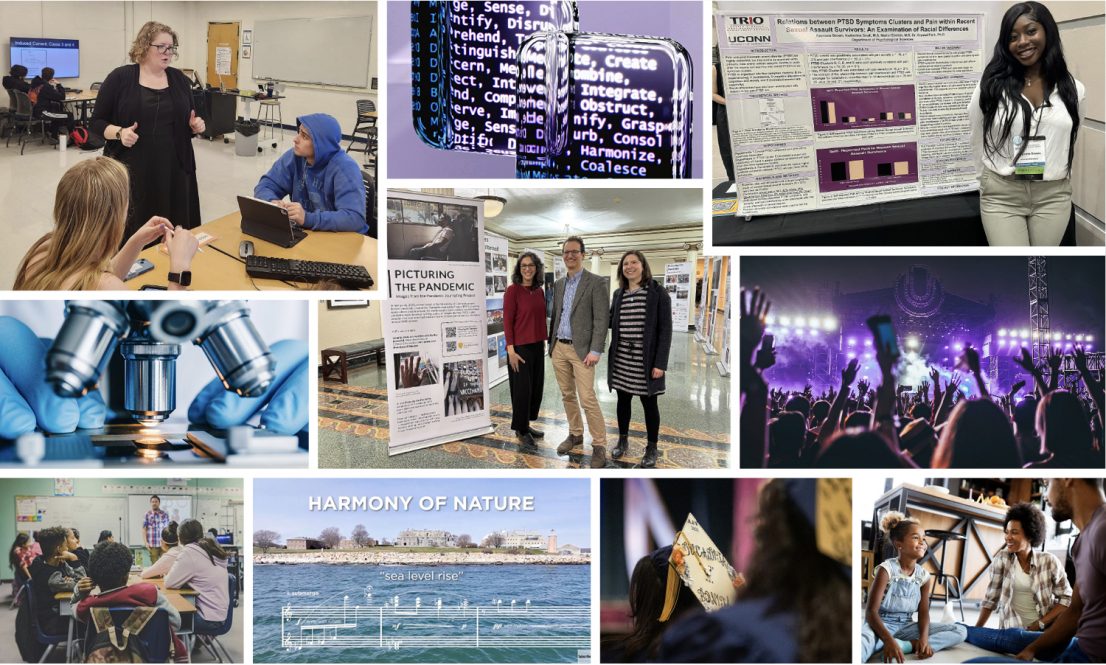
UConn Senior Studies Links Between PTSD and Pain: Kayvona Brown ‘25 (CLAS) is a truly interdisciplinary scholar: a psychological sciences major with minors in sociology and women’s, gender, and sexuality studies (WGSS). Over her four years at UConn, she found a way to braid together her interests in psychology and supporting the health and development of women and children of color, especially Black mothers and children.
Brown’s current research revolves around pain and post-traumatic stress – and ultimately, healing — among sexual assault survivors.
“Typically, when we study PTSD, we are looking at veterans, survivors of natural disasters; those types of traumas, not necessarily sexual assault,” she says. “For people who do not have this experience, it can be a really taboo topic, and we don’t necessarily do a lot of that research within psychology.” Read more.
This Is Your Brain on Music: A groundbreaking study led by UConn psychological sciences and physics professor Edward W. Large shows how the human brain processes music. Large’s research introduces neural resonance theory, or NRT. NRT explains how physical structures in the brain and nervous system resonate with the structures of music, turning sequences of sounds into profound physiological and emotional experiences.
“This is the way I always intuitively understood music, before I went into science,” Large says. “But people wanted to talk about the brain as a computer, and its computing input/output functions. It just didn’t seem like how I experience music, or how people in general experience music. But this idea of resonance? I thought that was really compelling.
“So, what I set out to do was make it science,” he continues. “Instead of just New Age terminology — ‘oh, I’m resonating to this music, man’ — I wanted to ask whether, scientifically, this really does happen.” Read more.
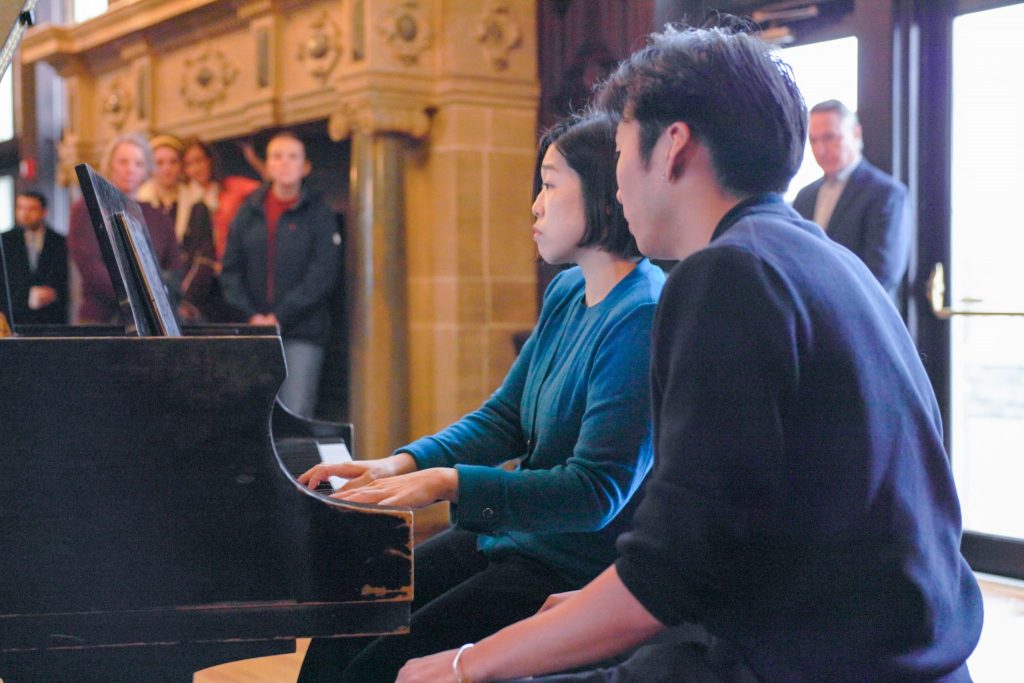
“Harmony of Nature” Makes Music from Oceanography: Oceanography Ph.D. candidate Molly James wanted to find a way to make sea level rise more understandable and compelling to more people. Tide charts and scientific reports just weren’t cutting it.
So she collaborated with a pianist and composer, both trained at Julliard, to develop a moving musical score, translating the complex phenomenon of sea level rise into something that can resonate with listeners.
“There’s a lot more in common between STEM fields and humanities and arts fields than a lot of people recognize,” James says. “Music theory is a lot of math; it’s a lot of relationships between frequencies that we happen to hear through a piano note or a trombone.” Read more.
Tracking K-12 Education Pandemic Recovery: Working with Connecticut’s Department of Education, Morgaen Donaldson (associate dean for research at the UConn Neag School of Education) is investigating K-12 student performance post-pandemic across the state. The collaboration is providing education researchers and educators alike with more data to help understand how the pandemic impacted students’ learning, and how they can better support students to help close achievement gaps.
“COVID really drove a huge wedge [among students],” Donaldson says. “There were big gaps in learning and achievement between different groups to begin with, but COVID just made them even worse. And if we have any hope of closing them, we have to start by meeting students where they are.”
If there’s a silver lining to how the pandemic upended education, Donaldson says, it’s how educators seized the opportunity to support whole-student development. Read more.
Pandemic Journaling Project Preserves a Painful and Profound Moment in Time: As the world was facing the unexpected during the COVID-19 pandemic, anthropologists Sarah Willen (UConn) and Katherine Mason (Brown University) had the future at the forefront of their thinking.
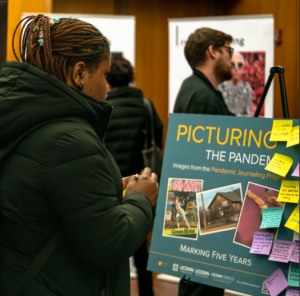
As co-founders of the Pandemic Journaling Project (PJP), their goal was to create a dataset to help people in the future understand the experience of living through a pandemic. Now, the first wave of data from the weekly journaling platform, containing nearly 27,000 entries from over 1,800 people around the world, is available to approved researchers at the Qualitative Data Repository (QDR) at Syracuse University. Read more.
UConn MSW Program Supports Spanish Speakers: More than 400,000 Connecticut residents speak Spanish. How can the state’s social workers better communicate with them? Enter the UConn School of Social Work’s program ¡Adelante!.
The two-year program offers bilingual courses for MSW (Master of Social Work) students – one per semester, across three semesters – specializing in the language and terminology of social work and mental health, along with a required elective.
“Understanding the richness and diversity of the Latine community is vital to our work as social workers. We must continue to recognize the uniqueness of this community, including the various dialects of the Spanish language,” explains Milagros Marrero-Johnson, Senior Director of Strategic Initiatives and Community Engagement, who oversees the program. Read more.
“The Ability to Give and Receive Love”: The Ronald and Nancy Rohner Center for the Study of Interpersonal Acceptance and Rejection is devoted to understanding interpersonal relationships, especially parent-child relationships, and intimate adult relationships, and their long-term effects. Researchers associated with the Center coordinate national and international projects and consult with state and national agencies to assess and promote sound parenting, healthy social and emotional development, and healthy adult relationships.
Center researchers Ronald Rohner and his former graduate student Sumbleen Ali ’21 Ph.D., recently published a new book, Global Perspectives on Parental Acceptance and Rejection: Lessons Learned from IPARTheory. It’s all about the long-term effects of childhood experiences of rejection and acceptance, tracking how these effects manifest over a lifetime, across different cultures.
“There’s no single experience in human life that’s more important than the experience of being cared about by the people who are most important to you,” says Rohner. Read more.