With two new grants, totaling $16.5 million, the Connecticut Transportation Institute (CTI) is continuing to advance transportation systems and improve safety throughout the state, for drivers, passengers, and pedestrians.
CTI is a unit within the College of Engineering that serves as the center for transportation research across the University. In collaboration with the state of Connecticut, CTI is home to multiple research centers that aim to advance the maintenance, safety and enhancement of transportation systems and safety, focusing on Connecticut’s current and future needs.
“The main goal of our work is to capture trends that didn’t exist 10 years ago and to further understand how emerging technologies are impacting traffic safety,” says Eric Jackson, the executive director of CTI and a research professor in the School of Civil and Environmental Engineering.
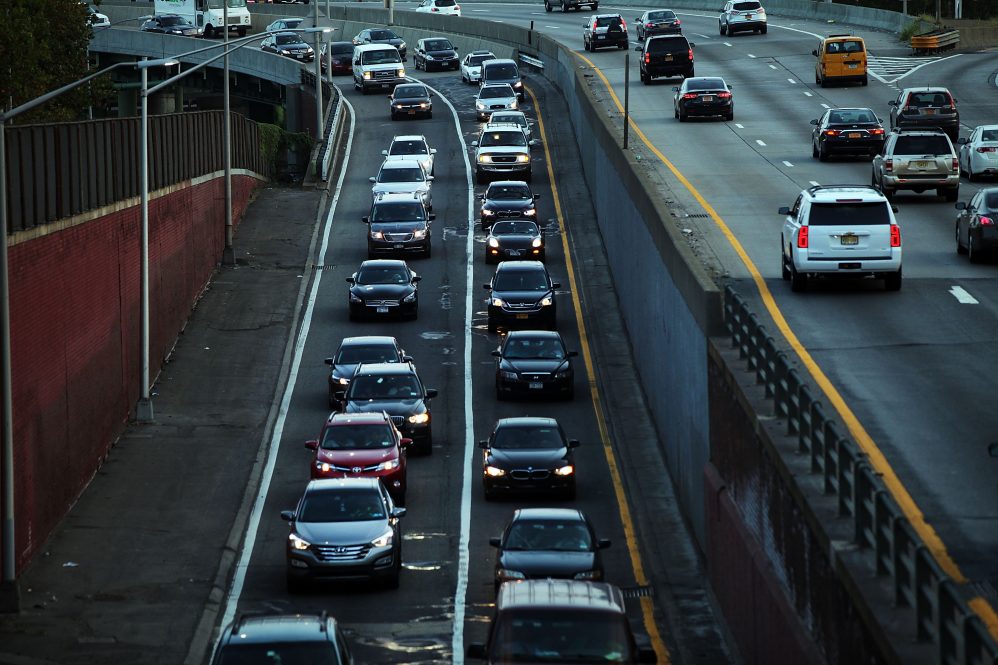
And while the research projects being funded involve cutting-edge technology and science, at the heart of all CTI’s work is a deep and abiding concern for the safety of everyone traveling on Connecticut’s roadways, where last year 274 people were killed in accidents.
“I speak to a lot of different groups that have lost a loved one due to a crash, one in particular is the Luke Roux Foundation,” Jackson says. “Being able to talk to those groups and let them know that we’re working on solutions and trying to stop other families from experiencing that type of loss.”
Through the first grant – $10.4 million from the Federal Highway Administration (FHWA) and Connecticut Department of Transportation (CT DOT) – Jackson and his team will be able to further develop the Connecticut Roadway Safety Management System (CRSMS).
“The goal is that the government and local agencies can use a centric tool to identify the risk of the entire grouping network across Connecticut, and also find the solutions to moderate those risks and improve traffic safety,” says Kai Wang, a project manager at the Connecticut Transportation Safety Research Center (CTSRC) at CTI and an assistant research professor in the School of Civil and Environmental Engineering.
This grant will also expand the integration of modern technologies – such as computer vision, machine learning/deep learning, natural language processing and large language models – to real-time traffic operations and safety analyses for the state.
“We want to build a thorough, comprehensive and dedicated system which combines different technologies and different domains for the safety of transportation,” says Wang. “This the overarching goal of our five-year project.”
With the second grant – $6.1 million from the National Highway Traffic Safety Administration (NHTSA) through a partnership with the CT DOT – enhancements and upgrades will be made to motor vehicle crash report forms in Connecticut.
“We now have e-bikes, e-scooters and autonomous vehicles, so it was time to update that data collection tool so we can start tracking crashes that are occurring based on these new specialized vehicles,” says Jackson, who also serves as the Director of CTSRC.
As these grants allow researchers at CTI to collect and analyze data with newer systems, they aim to yield better insight on how new technologies are actually performing.
“My focus for my team is to keep all of our projects up to date with technology. Some of these projects kicked off 10 years ago, but at that time, the technology is not comparable with the current date,” explains Wang. “In this project, we are going to apply a lot more popular technology to how DOT can maintain their safety conveniently.”
In addition to state efforts, CTI plays a vital role in campus safety.
“We have a new project to build a safer campus that uses sensor cameras to detect the location around campus where the most dangerous driver behavior occurs, which could impose a risk to students. We want to consider improvements to make all students feel comfortable walking around campus,” says Jackson.