On March 25 community leaders, policymakers, educators, and advocates from across Connecticut gathered for Bridging the Digital Divide: AI and Communities of Color—Exploring Education, Access & Cultural Equity, an AI Awareness Webinar hosted by the Commission on Women, Children, Seniors, Equity & Opportunity (CWCSEO). The virtual forum focused on how artificial intelligence is reshaping education, economic opportunity, and access to technology and what it will take to ensure that communities of color are not left behind.
The webinar, part of CWCSEO’s ongoing AI Awareness Series, explored four key areas: educational innovation through AI tools, career pipeline development in AI fields, community-driven solutions and grassroots initiatives, and breaking systemic barriers to technology access. Throughout the event, speakers emphasized that AI is not just a technological issue, but a question of equity, power, and opportunity.
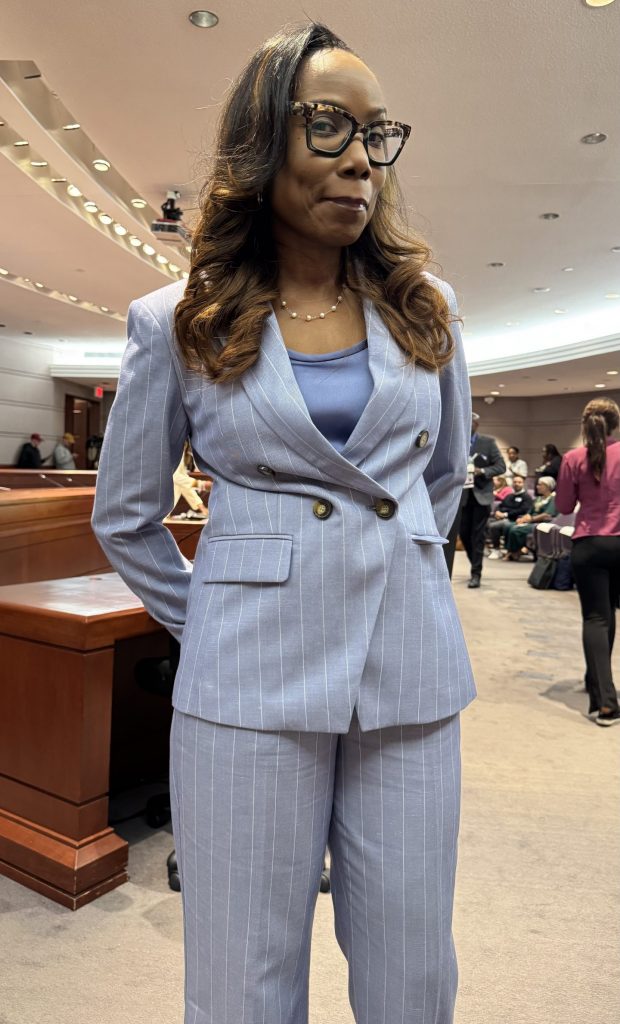
Among the featured panelists was UConn School of Medicine’s Dr. Linda Barry, professor of surgery and public health sciences, associate director of the UConn Health Disparities Institute (HDI), and associate dean of the Office of Multicultural and Community Affairs. Barry brought a health equity lens to the conversation, highlighting how AI can both mitigate and deepen disparities depending on how it is designed, governed, and deployed.
“AI has enormous potential to expand access to information, care, and opportunity—but only if we are intentional about equity from the start,” Barry noted during the discussion. “While I am not an engineer who codes, as an avid user and educator with lived and professional perspectives, I believe it is essential to be part of the conversation. When communities of color are excluded from the table, the tools that emerge often reproduce the very inequities they claim to solve.”
She underscored cultural humility as foundational to culturally responsive AI in education and health, noting the risks of biased data, opaque algorithms, and misaligned tools. Barry highlighted the importance of creating pathways for young people of color, particularly girls and underrepresented students, to pursue AI and technology careers while learning to use these tools responsibly. “If we want AI to work for our communities, our communities have to be in the room—as creators, decision-makers, and beneficiaries,” she said.
Dr. Barry’s ongoing partnership with CWCSEO
CWCSEO Executive Director Melvette Hill emphasized how central Barry’s leadership has been to the Commission’s broader efforts to advance equitable AI in Connecticut.
“Dr. Barry has been a steadfast partner in our work to make sure AI is developed and used in ways that honor the dignity, needs, and aspirations of communities of color,” Hill said. “She consistently brings community voice, health equity, and a deep understanding of structural racism into conversations that might otherwise stay purely technical. Her ongoing contributions help us move from awareness to action.”
Hill noted that Barry’s participation across multiple Commission initiatives has helped bridge the gap between policy, practice, and community experience especially at the intersections of health, education, and technology.
AI, equity, and the future of opportunity
Throughout the webinar, panelists discussed how AI is already shaping classroom experiences, hiring practices, and access to digital tools. They also highlighted community-driven strategies to ensure that AI supports, rather than undermines, educational equity and economic mobility.
For Barry, these conversations are inseparable from broader efforts to advance health equity.
“When we talk about the digital divide, we are also talking about a health divide, an opportunity divide, and a power divide,” she noted. “More substantive efforts are needed to definitively close the digital divide to ensure equitable access to all that AI has to offer. Access to technology, accurate information, and systems that are equitable and accountable is a determinant of health.”
A reflection on Dr. Barry’s impact
HDI Director Dr. Linda Sprague Martinez reflected on the significance of Barry’s role in this work.
“Dr. Barry’s contributions are invaluable to our collective efforts to advance health equity in Connecticut,” Sprague Martinez said. “She brings community engagement to the center of every conversation, whether it’s about AI, clinical care, or policy. Her leadership ensures that the people most affected by inequities are not only heard, but actively shaping the solutions.”
CWCSEO AI Webinar Series:
Chatbot Protections for Children and Older Adults
https://youtube.com/live/q-YEP4iOqqE?feature=share
Empowering Women in the AI Economy: Opportunity, Access & Small Business Support https://youtu.be/BP_tE-xMCCI
Bridging the Digital Divide – AI and Communities of Color: Exploring Education, Access & Cultural Equity
https://youtu.be/VVinRoD7hv4